
The key difference is that a stand mixer handles heavy doughs and large batches with hands-free operation, while a hand mixer is more portable and affordable for quick tasks. Choose a stand mixer for intensive baking projects and ample counter space, as it frees up your hands and offers more power. Opt for a hand mixer when you need a compact, inexpensive tool for light mixing or have limited storage in your kitchen.
Picking between a stand mixer and a hand mixer can feel tricky when you’re just starting out. Both are super helpful in the kitchen, but they do different jobs.
Knowing the Stand Mixer vs Hand Mixer Differences helps you pick the right one for what you want to bake or cook.
Key Takeaways
- Stand mixers are best for large batches and heavy doughs.
- Hand mixers are more portable and great for quick tasks.
- Stand mixers offer hands-free operation, freeing up your time.
- Hand mixers are generally less expensive and take up less space.
- Consider your typical baking needs and kitchen space when choosing.
- Both mixers come with different attachments for various cooking tasks.
Don’t worry, we’ll break it all down simply so you can get cooking right away. Let’s see what makes them unique.
![Stand Mixer Vs Hand Mixer Key Differences[1]](https://creativehouseblog.com/wp-content/uploads/2026/03/Stand_Mixer_Vs_Hand_Mixer_Key_Differences1.jpg)
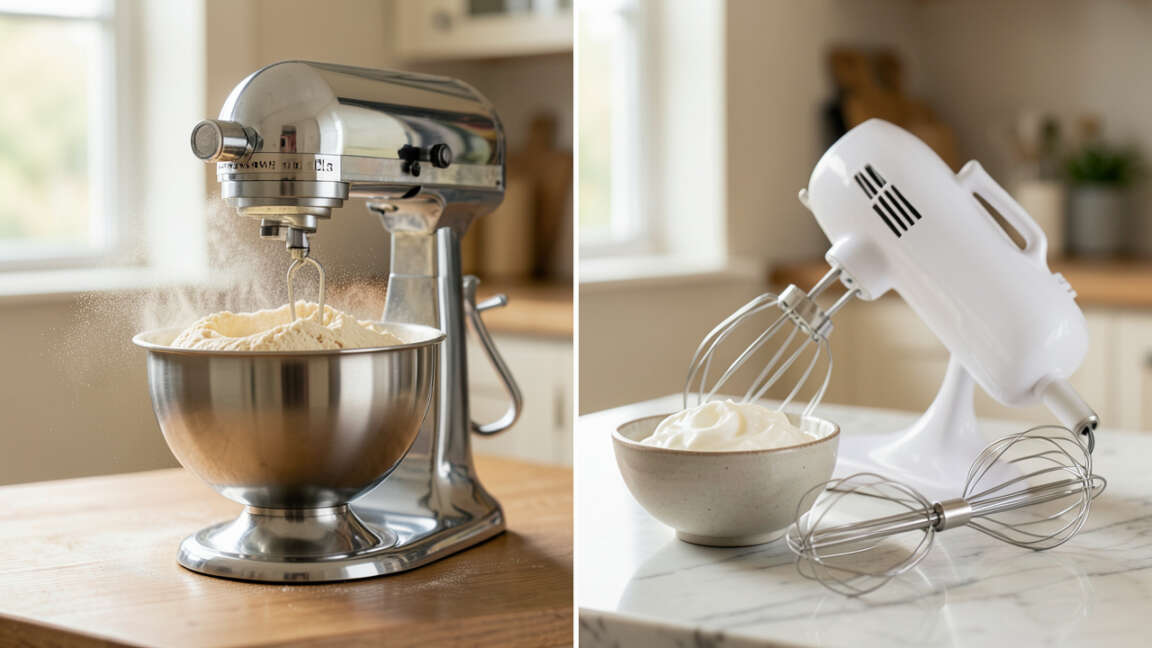
Stand Mixer vs Hand Mixer Differences Explained
When you’re baking, having the right tools makes a big difference. Two very popular kitchen helpers are the stand mixer and the hand mixer. Many people wonder about the Stand Mixer vs Hand Mixer Differences.
It’s a common question because they look different and do things a bit differently. Let’s explore what each one is good for.
What Is a Stand Mixer?
A stand mixer is a kitchen appliance that has a motor built into its base. It has a mixing bowl that sits on the base, and a mixing attachment (like a whisk, dough hook, or flat beater) that hangs over the bowl. The mixer itself stands on your counter, hence the name “stand mixer.”
These mixers are designed to stay in one place. They are great for doing the heavy lifting in the kitchen. Think about making bread dough.
Kneading dough by hand takes a lot of effort and time. A stand mixer can do this for you with its powerful motor and specialized dough hook attachment. You just put the ingredients in the bowl, attach the hook, turn it on, and let it do the work.
Stand mixers are also fantastic for whipping large amounts of cream or egg whites. They can also mix cake batters, cookie doughs, and even mashed potatoes. Because they are stationary, they are often more powerful than hand mixers.
This means they can handle thicker, heavier mixtures without struggling.
Key Features of Stand Mixers
- Power: Stand mixers typically have more powerful motors, allowing them to handle tough jobs like kneading bread dough.
- Capacity: They usually come with larger mixing bowls, making them ideal for big batches of ingredients.
- Hands-Free Operation: Once you start the mixer, you don’t need to hold it. This frees up your hands to measure other ingredients or prepare your workspace.
- Attachments: Most stand mixers come with several attachments, such as beaters for general mixing, whisks for aeration, and dough hooks for kneading. Many also have ports for additional accessories like pasta makers or meat grinders.
- Stability: Their weight and design keep them stable on the countertop, even when mixing heavy ingredients at high speeds.
What Is a Hand Mixer?
A hand mixer, also known as a handheld mixer, is a portable kitchen appliance. It’s much smaller and lighter than a stand mixer. It usually has a handle with a motor inside, and two beaters that stick out from the bottom.
You hold it in your hand and move it around in a bowl to mix your ingredients.
Hand mixers are perfect for smaller jobs and quick tasks. Need to whip up some cream for dessert or mix a small batch of pancake batter? A hand mixer is usually the go-to choice.
They are easy to use and don’t take up much storage space. You can also easily move them from one bowl to another.
While they are not as powerful as stand mixers, hand mixers are very convenient. They are often less expensive, making them a good option for beginners or those on a budget. They are also simpler to clean because they are smaller and often have detachable beaters that can be put in the dishwasher.
Key Features of Hand Mixers
- Portability: They are lightweight and easy to hold, allowing you to mix directly in any bowl.
- Compact Size: Hand mixers take up very little storage space.
- Affordability: They are generally much cheaper than stand mixers.
- Ease of Use for Small Tasks: They are ideal for quick jobs like mixing eggs, whipping cream, or making frosting.
- Simple Attachments: Most come with basic beaters and sometimes a whisk attachment.
Stand Mixer vs Hand Mixer Differences in Action
Let’s look at how these two mixers perform in real-world baking scenarios. This will highlight the Stand Mixer vs Hand Mixer Differences more clearly.
Kneading Dough
Stand Mixer: Excellent. The powerful motor and dough hook can easily handle stiff bread dough for extended periods. You can walk away and let it knead perfectly.
This is one of the biggest advantages of a stand mixer.
Hand Mixer: Not ideal. Hand mixers are not designed for heavy kneading. The motors can overheat, and the beaters aren’t shaped for this task.
You would likely end up doing most of the kneading by hand anyway.
Whipping Cream or Egg Whites
Stand Mixer: Very effective. The whisk attachment on a stand mixer can quickly and efficiently whip large volumes of cream or egg whites to stiff peaks. The consistent speed helps create a stable foam.
Hand Mixer: Good. A hand mixer with a whisk attachment can also do a good job with smaller quantities of cream or egg whites. It might take a bit longer and require you to hold and move the mixer.
Mixing Cake Batter
Stand Mixer: Excellent. The flat beater attachment is perfect for creaming butter and sugar, and then mixing in dry and wet ingredients for cakes. It ensures even mixing without overworking the batter.
Hand Mixer: Good for smaller batches. For a standard cake recipe, a hand mixer can work well. You’ll need to scrape the bowl often to make sure everything is incorporated evenly.
For very large cake recipes, a stand mixer is more efficient.
Making Cookie Dough
Stand Mixer: Excellent. Especially for recipes with butter and sugar creaming, and then adding flour. The stand mixer’s power prevents the motor from straining, and the dough hook or flat beater handles the thicker dough well.
Hand Mixer: Capable, but can be challenging. For softer cookie doughs, a hand mixer is fine. However, for thicker doughs with a lot of flour or chunks like chocolate chips, a hand mixer might struggle.
You may need to finish mixing by hand.
Mashed Potatoes
Stand Mixer: Good. The flat beater can make smooth, fluffy mashed potatoes. It’s a hands-free way to get them done.
Hand Mixer: Okay. You can use the beaters to mash potatoes, but you need to be careful not to overmix, which can make them gummy. It’s also more manual work.
When To Choose A Stand Mixer
You should consider a stand mixer if you:
- Bake frequently, especially bread or large batches of cookies.
- Want to make your baking process more efficient and hands-free.
- Are making recipes that require heavy mixing or kneading.
- Have the counter space to dedicate to a larger appliance.
- Are willing to invest more for a powerful and versatile tool.
When To Choose A Hand Mixer
A hand mixer is a great choice if you:
- Bake only occasionally or for small batches.
- Need a mixer for simple tasks like whipping cream or mixing frosting.
- Have limited kitchen counter and storage space.
- Are on a tighter budget.
- Want a tool that is easy to store and clean.
Comparing Attachments
Both mixers come with attachments, but the types and purposes can differ.
Stand Mixer Attachments
- Flat Beater: This is your all-purpose mixer. It’s great for cakes, cookies, frostings, and general batters.
- Dough Hook: Specifically designed for kneading bread, pizza dough, and other yeast-based doughs.
- Wire Whisk: Used for whipping cream, egg whites, and making meringues. It incorporates air very effectively.
- Optional Attachments: Many stand mixers have a power hub that can drive other accessories like pasta makers, ice cream makers, and grinders.
Hand Mixer Attachments
- Standard Beaters: These are typically what come with most hand mixers. They are good for general mixing, like cake batters and cookie dough.
- Wire Whisk: Some hand mixers include a whisk for whipping cream or egg whites, though it might not be as powerful as a stand mixer’s whisk.
- Dough Hooks: Less common, but some higher-end hand mixers might offer small dough hooks. They are usually only suitable for very small or soft doughs.
Price and Value
The Stand Mixer vs Hand Mixer Differences extend to their price tags and overall value.
Hand Mixers: These are generally very affordable. You can find a good quality hand mixer for anywhere from $20 to $70. They offer great value for their price, especially for casual bakers or those new to baking.
Stand Mixers: These are a significant investment. Prices can range from $150 for basic models to $500 or more for high-end, professional-grade machines. The value comes from their power, versatility, and durability, especially if you use them often for demanding tasks.
Storage and Counter Space
This is a major practical difference.
Hand Mixers: They are small and easy to store. You can tuck them away in a drawer or a small cabinet. They don’t take up valuable counter real estate.
Stand Mixers: They are bulky. Most people leave them out on the counter because they are heavy and used often. If you have a small kitchen, finding a permanent spot for a stand mixer can be a challenge.
FAQ Of Stand Mixer Vs Hand Mixer Key Differences
Question: What is the main difference between a stand mixer and a hand mixer?
Answer: The main difference is that a stand mixer sits on your counter with a bowl attached, doing the work hands-free. A hand mixer is portable and held in your hand to mix ingredients in any bowl.
Question: Can a hand mixer knead dough?
Answer: No, a hand mixer is generally not suitable for kneading dough. Its motor is not powerful enough, and the beaters are not designed for this task. It could overheat or break.
Question: Which mixer is better for baking cakes?
Answer: Both can be used, but a stand mixer is generally better for cakes, especially larger batches. It ensures even mixing and prevents overworking the batter more easily than a hand mixer.
Question: Do I need a stand mixer if I already have a hand mixer?
Answer: It depends on your baking habits. If you bake a lot of bread, large batches of cookies, or recipes requiring heavy mixing, a stand mixer would be a valuable addition. If your baking is light and occasional, a hand mixer might be enough.
Question: Are stand mixers worth the extra cost?
Answer: For avid bakers and those who regularly tackle challenging recipes, yes, a stand mixer is often worth the investment. Its power, efficiency, and versatility save time and effort.
Final Thoughts
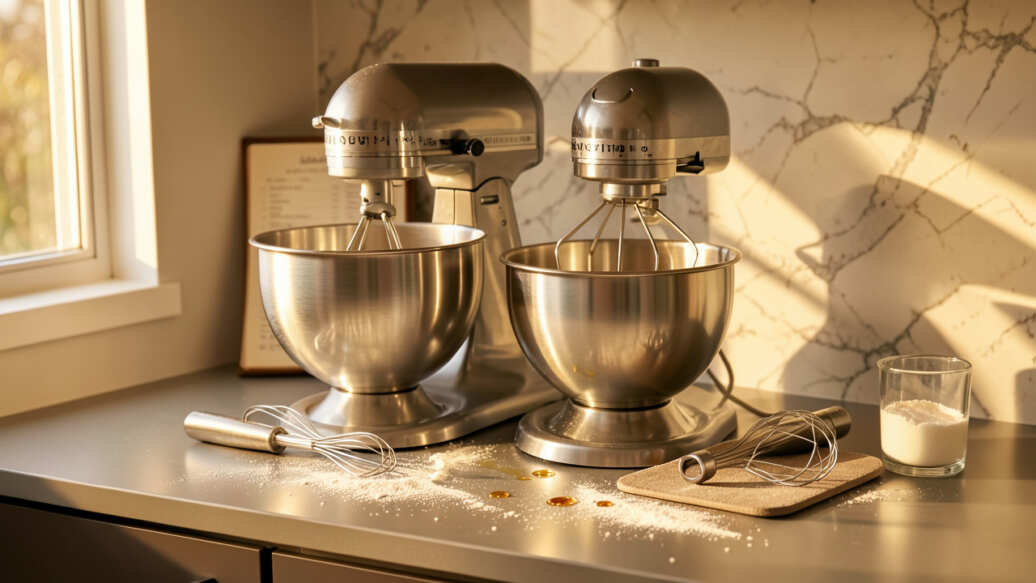
Deciding between a stand mixer and a hand mixer comes down to what you bake and how often.
Stand mixers are powerhouses for big jobs and doughs, freeing your hands. Hand mixers are your friendly helpers for quick tasks and smaller kitchens, offering great value.
Consider your typical recipes and kitchen space to make the best choice for your cooking needs.

![When to Use a Food Processor Versus Blender[1]](https://creativehouseblog.com/wp-content/uploads/2026/03/When_to_Use_a_Food_Processor_Versus_Blender1-768x448.jpg)
![Rice Cooker Versus Instant Pot[1]](https://creativehouseblog.com/wp-content/uploads/2026/03/Rice_Cooker_Versus_Instant_Pot1-768x448.jpg)
![6 Reasons Your Fried Food Turns Out Too Greasy[1]](https://creativehouseblog.com/wp-content/uploads/2026/04/6_Reasons_Your_Fried_Food_Turns_Out_Too_Greasy1-768x448.jpg)
![Stop Air Fryer Fails Common Mistakes[1]](https://creativehouseblog.com/wp-content/uploads/2026/03/Stop_Air_Fryer_Fails_Common_Mistakes1-768x448.jpg)
![7 Foods That Taste Better In A Steam Oven[1]](https://creativehouseblog.com/wp-content/uploads/2026/04/7_Foods_That_Taste_Better_In_A_Steam_Oven1-768x448.jpg)
![7 Signs Your Home Wiring Is Outdated and Unsafe[1]](https://creativehouseblog.com/wp-content/uploads/2026/05/7_Signs_Your_Home_Wiring_Is_Outdated_and_Unsafe1-768x403.jpg)