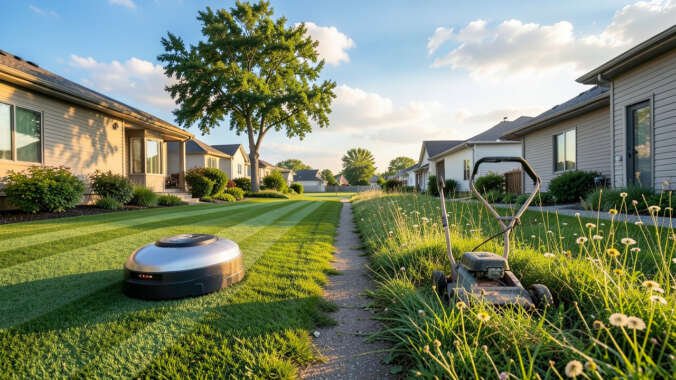
A quarter-acre lawn is the size where a gas mower often becomes inefficient, and if your mower takes more than 45 minutes, weighs over 70 pounds, requires frequent maintenance, or produces around 90 decibels of noise, it is likely the wrong tool for the job. Modern electric mowers offer comparable power and runtime for this lawn size with zero emissions and lower operating costs. The key takeaway is that switching to a lighter, quieter alternative can save time, reduce hearing damage risk, and eliminate fuel storage hassles.
You push a heavy gas mower across your quarter-acre lawn every week. You wonder if it is really the best tool for the job. This guide helps you spot the signals that your gas mower is a bad fit for your lawn size and lifestyle.
Quick Verdict: A quarter-acre lawn is in the sweet spot where gas mowers start to become overkill. If your mower takes more than 45 minutes to finish, weighs over 70 pounds, requires constant maintenance, or leaves you with ringing ears, you may be better off with a lighter, quieter, and lower-emission alternative.
Key Takeaways
- A gas lawn mower that takes longer than 45 minutes to mow a quarter-acre is likely too large or inefficient for the job.
- Gas mowers produce around 90 decibels of noise, which can cause hearing damage with prolonged exposure without protection.
- Electric mowers now offer comparable power and runtime for quarter-acre yards, with zero emissions and lower operating costs.
- If you store your mower in a garage or shed, fuel storage and smell are common complaints among quarter-acre owners.
- Switching to a cordless electric mower can save you up to $100 per year in fuel and maintenance costs.

What You Need to Know Before Assessing Your Mower
Before you decide if your gas lawn mower is wrong for your quarter-acre lawn, you need to understand the key factors that matter for this specific lawn size. A quarter-acre is about 10,890 square feet. That is enough space to need a decent mower, but small enough that you do not need a commercial machine.
Here are the five factors to evaluate:
- Mowing time. A gas mower should complete a quarter-acre in 30 to 45 minutes. Any longer means the mower is too slow or your lawn has obstacles that make gas mowers inefficient.
- Weight and maneuverability. Most gas mowers weigh 70 to 90 pounds. Pushing that around corners, flower beds, and trees for 40 minutes is hard work. Electric mowers typically weigh 40 to 60 pounds.
- Noise level. Gas mowers run at 85 to 95 decibels. According to the, exposure above 85 dB for more than 8 hours can cause hearing loss. A 40-minute mowing session at 90 dB is risky without ear protection.
- Emissions and smell. The reports that an hour of gas mower operation emits as much volatile organic compounds as driving a modern car for over 100 miles. On a quarter-acre, you run the mower about 10 hours per season, adding up to significant pollution.
- Maintenance and storage. Gas mowers need oil changes, spark plug replacement, air filter cleaning, and fuel stabilization. Storage requires fuel tanks empty or filled with stabilizer. Electric mowers need none of that.
Important: The average cost of gas mower maintenance per season (oil, filters, spark plug, fuel stabilizer) is about $40 to $60, according to. Electric mowers have zero routine maintenance costs beyond blade sharpening.
Signs Your Gas Mower Is Wrong for Your Quarter-Acre
Here are the most common signals that your gas mower is a poor match. If three or more apply to you, it is time to reconsider.
- It takes you more than 45 minutes to mow. Quarter-acre lawns are usually simple rectangles or squares. If you are spending over 45 minutes, your mower may be too small (e.g., a 21-inch cutting deck) or you are fighting heavy, thick grass because the mower lacks power. Modern electric mowers with 21-inch decks can finish a quarter-acre in 35 to 40 minutes.
- Your arms hurt after mowing. The weight of a gas mower combined with its vibration can tire you out quickly. If you feel soreness in your shoulders, wrists, or hands after each session, the mower is too heavy for your needs.
- You have to store fuel in your garage. Gasoline vapors are flammable and create a strong smell. Many homeowners with attached garages dislike the odor and safety risk. Electric mowers eliminate fuel entirely.
- Your neighbors complain about noise. Quarter-acre lots are often close together. If you mow early on a Saturday and your neighbor glares, your gas mower’s loudness is the issue. Electric mowers are quiet enough to mow at 7am without disturbing anyone.
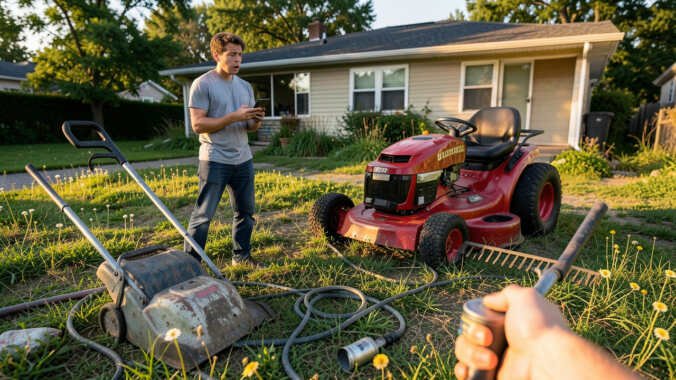
- You skip mowing because of the hassle. If you avoid mowing because you do not want to deal with starting the mower, checking oil, or cleaning the deck, that is a red flag. The simpler maintenance of an electric mower can make you more consistent.
Warning: Never store a gas mower with fuel indoors. Gasoline vapors can ignite from a pilot light or electrical spark. Always let the mower cool before storing. Electric mowers eliminate this fire hazard entirely.
Step-by-Step Evaluation Process
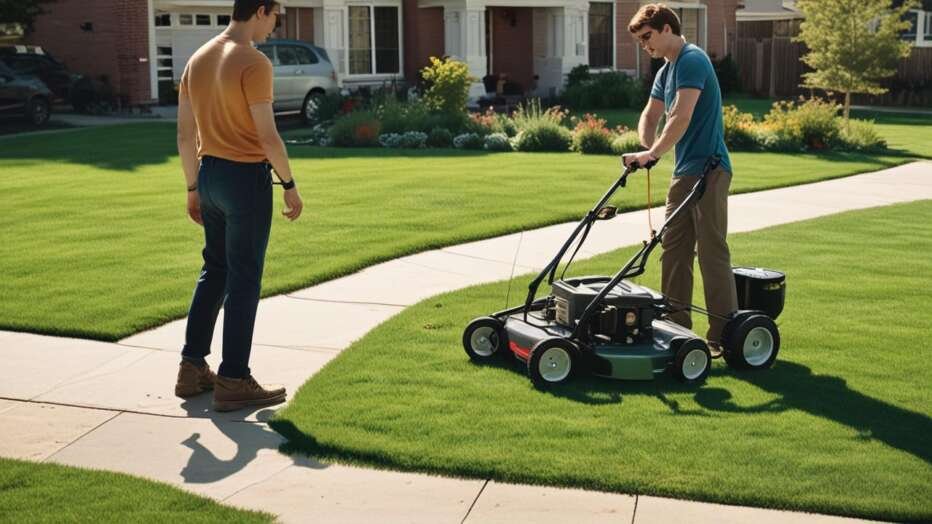
Follow these steps to decide whether your gas mower is truly wrong for your quarter-acre lawn. This process takes about 30 minutes and requires only a stopwatch and a notepad.
- Time your next mow. Start a timer when you begin and stop it when you finish. Include all edges, trimming, and cleanup. If it exceeds 45 minutes, note that as a negative.
- Check your mower’s cutting width. Measure the deck from left to right. Most gas mowers have a 21-inch or 22-inch deck. For a quarter-acre, a 21-inch deck is adequate but not ideal. A 30-inch or 42-inch zero-turn would be overkill, but if you have a 21-inch gas mower and it takes 50 minutes, it is undersized.
- Weigh the mower. Use a bathroom scale to get the weight. If it is over 70 pounds and you struggle to turn it or lift it over curbs, that is a sign.
- Measure noise level. Download a free decibel meter app on your phone. Stand near the mower as you cut. If the reading is consistently above 85 dB, you are at risk and need hearing protection. If you find yourself not wearing ear plugs because of discomfort, that is another strike.
- Assess your energy after mowing. Do you feel exhausted? Do you need a shower because of sweat? Gas mowers produce heat and vibration. Electric mowers are cooler and lighter, leaving you less fatigued.
- Calculate your annual cost. Add up fuel, oil, filters, spark plugs, and the cost of a starter rope if needed. Compare to an electric mower which costs $0 to run (just electricity, about $0.50 per season). If your gas mower costs over $80 per year in upkeep, the savings from switching are real.
Tip: Many local equipment rental shops let you try an electric mower for a day. Rent one before you buy. Mow your quarter-acre with it and compare the experience. This hands-on test is the best way to confirm if the switch works for you.
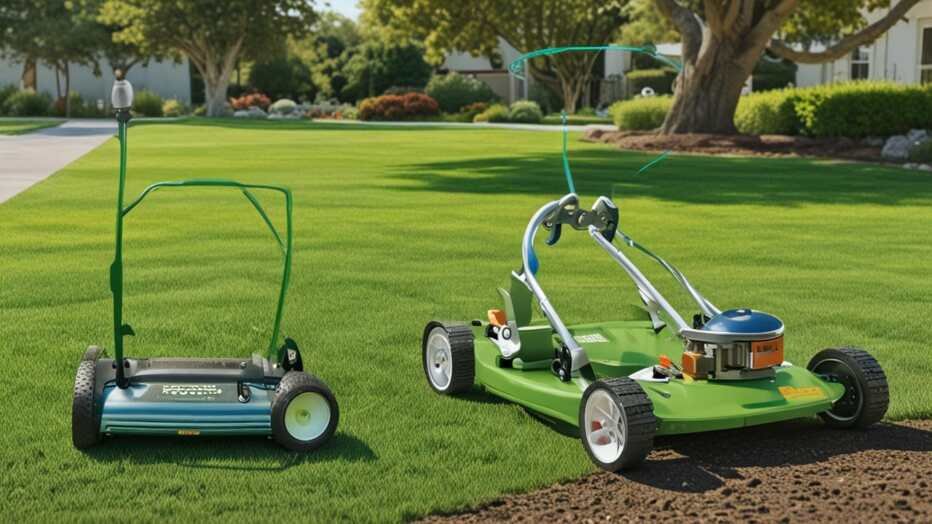
What the Numbers Say: Comparing Mower Types for Quarter-Acre Lawns
| Feature | Gas Mower (21″ deck) | Cordless Electric (21″ deck) | Manual Reel Mower |
|---|---|---|---|
| Weight | 70-90 lbs | 40-60 lbs | 10-15 lbs |
| Noise Level | 85-95 dB | 65-75 dB | 70-80 dB (blade noise) |
| Annual Operating Cost | $40-$100 (fuel + maintenance) | $0.50 (electricity only) | $0 |
| Time to Mow Quarter-Acre | 35-50 min | 30-45 min | 60-90 min (requires perfect grass height) |
| Emissions (CO2 per season) | ~100 lbs CO2 (EPA estimate) | 0 (if grid powered non-fossil), ~5 lbs from coal generation | 0 |
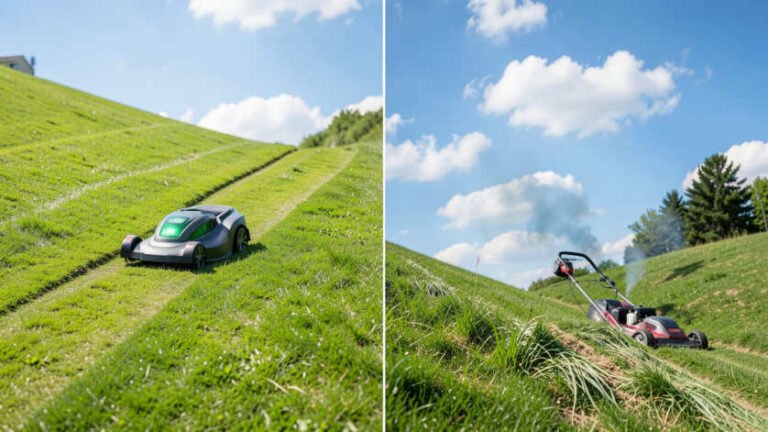
The table shows that for a quarter-acre lawn, cordless electric mowers offer the best balance of weight, noise, cost, and emissions. Gas mowers are only superior if you need to cut very thick, wet, or tall grass on a slope, but for typical suburban turf, electric mowers perform just as well.

Common Myths vs Facts
Misconceptions about gas mowers often keep people using them even when they are a bad fit. Here are three common myths and the facts.
- Myth: Gas mowers are always more powerful than electric mowers. Fact: Modern brushless electric mowers deliver comparable torque. The and 80V models cut through thick Bermuda grass without stalling. Independent tests by show electric mowers score equal or higher on cutting performance for typical residential lawns.
- Myth: Electric mowers do not last as long as gas mowers. Fact: A quality cordless electric mower from a reputable brand (like Toro, Ryobi, or EGO) easily lasts 5 to 8 years with battery replacement. Gas mowers also require engine repairs that can cost more than a new electric mower. Battery technology has improved; lithium-ion batteries now handle hundreds of charge cycles.
- Myth: Gas mowers are cheaper upfront. Fact: A basic gas mower costs $200 to $400. A comparable cordless electric mower costs $300 to $500. Over three years, the gas mower’s fuel and maintenance costs often outweigh the upfront difference. The total cost of ownership for electric is typically lower for quarter-acre lawns.

Pro Tips for Making the Right Switch
If you decide to replace your gas mower, use these tips to avoid common mistakes and get the best value.
- Choose the right battery voltage. For a quarter-acre lawn, a 40V or 56V battery mower is sufficient. Higher voltage (80V) gives more power but heavier weight. Most quarter-acre owners find 56V (like or systems) ideal.
- Buy a mower with a large battery or get a second battery. A 5.0Ah battery typically mows a quarter-acre on a single charge. If your grass is thick or wet, buy a second battery to finish without waiting to recharge.
- Keep the blades sharp. Dull blades tear grass, leading to brown tips. Sharpen electric mower blades twice per season. Gas mower blades need the same care, but many gas users neglect it.
- Consider a self-propelled model. If you have a slight slope or any hills on your quarter-acre, a self-propelled electric mower saves effort. Most brands offer variable speed control.
- Sell your gas mower quickly. Gas mowers in good condition fetch $100 to $250 on Craigslist or Facebook Marketplace. Sell it before you buy the electric to offset the cost.
Important: When testing an electric mower for the first time, use it on a dry day with grass that is not too tall. Wet or overgrown grass can drain the battery faster and give you a skewed impression of performance. Mow frequently enough that you never cut more than one-third of the grass blade length.
Frequently Asked Questions
How do I know if my gas mower is too small for a quarter-acre?
If your mower has a cutting deck smaller than 20 inches and takes longer than 50 minutes to finish, it is too small. A 21-inch deck is the minimum for a quarter-acre. According to, a quarter-acre lawn is best served by a mower with at least a 21-inch deck and a self-propel drive.
Is it worth switching to an electric mower if my gas mower still works fine?
Yes, if you value lower noise, zero emissions, and less maintenance. A working gas mower can be sold for $100-$200. The new electric mower will pay for itself in fuel savings over two to three years. You also gain the convenience of not storing gasoline.
Can a manual reel mower handle a quarter-acre lawn?
It can, but only under ideal conditions. Reel mowers work best on short, level, weed-free grass. For a quarter-acre with obstacles, the mowing time can exceed 90 minutes. Most homeowners find reel mowers too slow and tiring for lawns over 5,000 square feet.
What is the best electric mower for a quarter-acre lawn?
The and the consistently top reviews for quarter-acre lawns. Both have self-propel, brushless motors, and enough battery capacity for a full cut. The is a more affordable alternative.
How much does it cost to maintain a gas mower per year?
The estimates annual gas mower maintenance at $40 to $100, including oil changes ($5), air filters ($5), spark plugs ($3), fuel stabilizer ($5), and blade sharpening ($10). Electric mowers require only blade sharpening ($10) and an occasional battery replacement after 3-5 years.
Final Thoughts
Your quarter-acre lawn does not need the power of a gas mower. The weight, noise, emissions, and maintenance are all trade-offs that rarely pay off for small suburban lots. If your mower takes over 45 minutes, leaves you exhausted, or bothers your neighbors, the evidence is clear. Switch to a cordless electric mower and enjoy a quieter, cleaner, and cheaper mowing season.