
Key Takeaways
- A bread maker offers convenience and automation for consistent results.
- Oven baking provides greater control over the crust and texture of bread.
- Bread makers are ideal for busy individuals seeking effortless baking.
- Oven baking appeals to bakers who enjoy the hands-on process and customization.
- The choice depends on your personal preferences for effort and control.
- Both methods can produce wonderfully fresh, homemade bread.
Deciding between a bread maker and your oven for baking bread can feel tricky, especially when you’re just starting out.
Both ways get you delicious bread, but they work a bit differently! This can make choosing the right path confusing.
But don’t worry, this guide makes it super simple. We’ll walk through everything you need to know, step by step, so you can bake amazing bread with confidence. Let’s find out what makes Bread Maker vs Oven Baking easier for you.
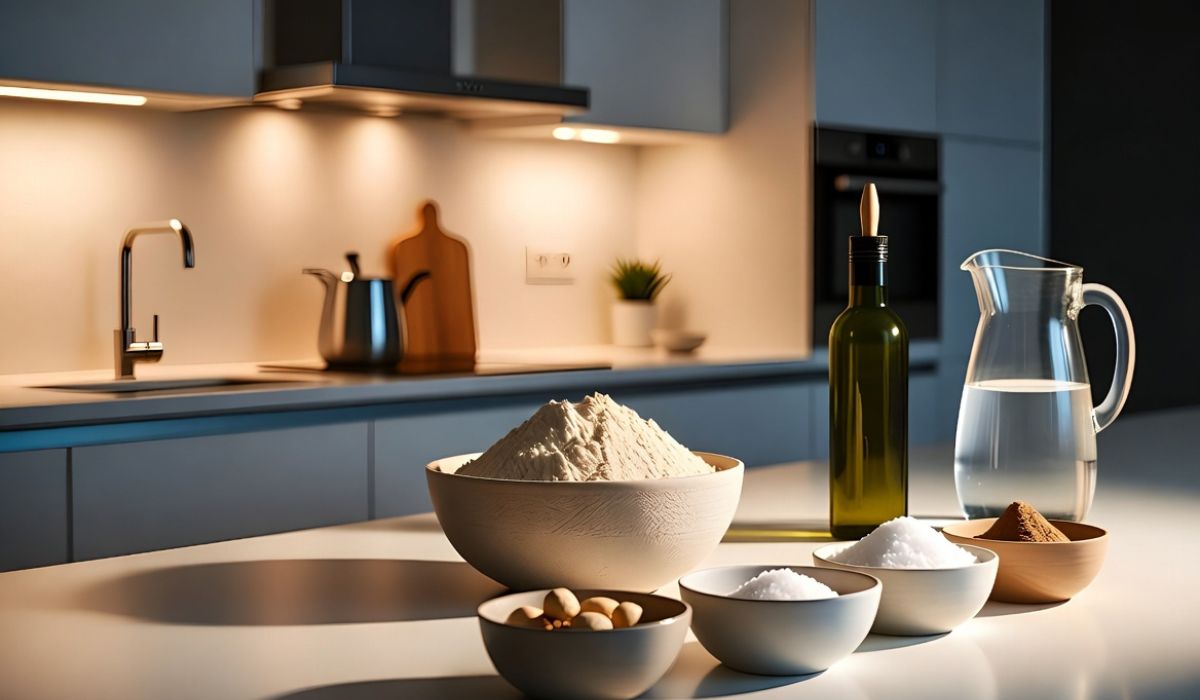
Bread Maker vs Oven Baking Understanding The Options
The Magic Of A Bread Maker
A bread maker is like a mini bakery in your kitchen. You just add your ingredients – flour, water, yeast, salt, and any extras – put them in the pan, select a program, and press start. That’s it!
The machine mixes, kneads, rises, and bakes the bread all by itself. It’s fantastic because you don’t need to do any of the hard work like kneading or monitoring the dough.
Think of it as a set-it-and-forget-it appliance. This is a huge win for people who have busy schedules but still crave that fresh bread smell. Bread makers are designed to give you a good loaf every time, with minimal fuss.
You can find them in various sizes, and many have different settings for different types of bread, like whole wheat, sourdough, or even quick breads. They are very user-friendly.
Pros Of Using A Bread Maker
- Simplicity: Add ingredients, press start, and the machine does the rest.
- Consistency: Excellent at producing reliably good loaves with each use.
- Convenience: Saves time and effort, perfect for busy mornings.
- Variety: Many machines offer programs for different bread types and doughs.
- Clean Up: Usually involves just washing the bread pan.
Cons Of Using A Bread Maker
- Crust: The crust can sometimes be softer and less crisp than oven-baked bread.
- Shape: The bread loaf often has a cylindrical shape due to the pan.
- Size: You are limited to the loaf size the machine can produce.
- Cost: An initial purchase cost for the appliance.
The Art Of Oven Baking
Oven baking bread is the traditional way many of us learned or remember from our grandparents.
It involves mixing ingredients, kneading the dough by hand or with a stand mixer, letting it rise in a warm place, shaping it, letting it rise again, and then baking it in a hot oven. This method requires more involvement and a bit more knowledge about bread making.
With oven baking, you have much more control over every step. You can decide how long to knead, how to shape your loaf – round, long, braided – and you can influence the crust. Do you want a super crispy crust?
You can achieve that with specific oven techniques. Do you want a chewy interior? That’s also something you can aim for.
It’s a more hands-on, rewarding process for many people.
Pros Of Oven Baking Bread
- Crust Control: You can achieve a perfectly crisp, golden-brown crust.
- Texture and Shape: Full control over the crumb structure and loaf shape.
- Flexibility: Experiment with countless recipes and variations.
- Sensory Experience: The process of kneading and shaping can be very satisfying.
- No Extra Appliance: Uses equipment most kitchens already have.
Cons Of Oven Baking Bread
- Time and Effort: Requires significant hands-on time for kneading, rising, and shaping.
- Learning Curve: Can take practice to perfect dough consistency and baking times.
- Potential for Errors: Dough might not rise properly or bake evenly if not done correctly.
- Clean Up: Involves multiple bowls, surfaces, and baking pans.
Comparing The Process Step By Step
Let’s look at how the basic steps differ between these two methods. It really highlights why people choose one over the other.
Mixing and Kneading
Bread Maker:
You simply pour the liquid ingredients into the bread pan first, followed by the dry ingredients.
Then you add the yeast on top, usually in a small compartment or a designated spot. The machine takes over, mixing everything into a dough and then kneading it until it’s smooth and elastic.
This usually takes about 10-20 minutes of machine time.
Oven Baking:
This is where the hands-on work comes in. You typically mix dry ingredients in a large bowl, then add wet ingredients. You'll mix until a shaggy dough forms.
Then, you’ll turn the dough out onto a lightly floured surface and knead it for 5-15 minutes. This involves pushing, folding, and stretching the dough.
Alternatively, you can use a stand mixer with a dough hook, which automates the kneading but still requires you to set it up.
First Rise (Bulk Fermentation)
Bread Maker:
Once the mixing and kneading cycle is complete, the bread maker automatically sets its internal temperature and humidity to allow the dough to rise perfectly within the machine. You don’t need to do anything.
Oven Baking:
After kneading, you place the dough in a lightly oiled bowl, cover it with plastic wrap or a damp towel, and let it rise in a warm, draft-free spot.
This could be a slightly warm oven (turned off!), near a sunny window, or just on your counter if your kitchen is warm. This rise usually takes 1-2 hours, depending on the dough and room temperature.
You need to watch it to ensure it doubles in size.
Shaping and Second Rise
Bread Maker:
The bread maker handles this step internally. After the first rise, the machine will punch down the dough slightly and allow it to rise again, all within the same pan. There's no shaping required by you.
Oven Baking:
Once the dough has risen, you’ll gently punch it down to release some of the air. Then, you’ll shape it into your desired loaf form – a round boule, a long baguette, a sandwich loaf for a loaf pan, or a braided challah.
After shaping, the dough is placed on a baking sheet or in a prepared loaf pan and allowed to rise for a second time, often for 30-60 minutes, until puffy.
Baking
Bread Maker:
After the second rise, the bread maker automatically switches to its baking cycle. It regulates the temperature and time precisely to bake your loaf. The end result is a fully baked bread directly from the machine’s pan.
Oven Baking:
You preheat your oven to the required temperature, often quite hot (around 375-450°F or 190-230°C).
You might score the top of the loaf with a sharp knife or razor blade for decorative effect and better expansion. The loaf is then carefully placed into the hot oven.
Baking times vary greatly depending on the size and type of bread, typically ranging from 20-50 minutes.
You might also use techniques like placing a pan of water in the oven to create steam for a crispier crust.
Cooling
Bread Maker:
Once the baking cycle is finished, the machine often has a ‘keep warm’ function. It’s best to remove the bread from the pan as soon as possible after baking to prevent a soggy bottom crust. Let it cool completely on a wire rack.
Oven Baking:
After removing the bread from the oven, you immediately transfer it from the baking sheet or loaf pan to a wire rack.
This allows air to circulate around the entire loaf, preventing the bottom from becoming soggy and ensuring even cooling. Allowing bread to cool completely is crucial for its texture and flavor to develop fully.
Key Differences At A Glance
To make the comparison even clearer, here’s a quick look at the main differences:
| Feature | Bread Maker | Oven Baking |
|---|---|---|
| Effort Required | Very Low (add ingredients, press start) | Moderate to High (mixing, kneading, shaping, monitoring) |
| Control Over Crust | Limited (often softer) | High (can achieve very crisp crusts) |
| Control Over Shape | Limited (typically cylindrical) | High (any shape imaginable) |
| Consistency | High (reliable results) | Variable (depends on skill and recipe) |
| Time Investment | Low active time, but baking cycle can be long | High active time, but baking can be faster |
| Ideal For | Beginners, busy individuals, those seeking convenience | Hobbyists, experienced bakers, those wanting full creative control |
Who Should Use A Bread Maker?
A bread maker is your best friend if you love the idea of fresh homemade bread but don’t have a lot of time or don’t enjoy the more physical aspects of baking.
If you’re new to baking and feel intimidated by kneading and proofing, a bread maker removes all that guesswork.
It’s perfect for busy parents, professionals, or anyone who wants delicious bread without a lot of fuss.
It’s also great for people who want to ensure a perfect loaf every single time, without worrying about whether the dough rose correctly or if the crust is just right.
Who Should Choose Oven Baking?
Oven baking is for you if you find joy in the process of making bread. If you love the tactile experience of kneading dough, the satisfaction of watching it rise, and the artistry of shaping it, then the oven is your canvas.
It appeals to those who want to experiment with different flours, techniques, and flavorings.
If you’re a bit of a perfectionist and want to achieve a specific crust texture or an artisanal-looking loaf, oven baking gives you that power.
It’s also a good choice if you already bake other things in your oven and don’t want to invest in another appliance.
Tips For Success With Each Method
No matter which way you choose, a few tips can help you get the best results.
Bread Maker Tips:
- Measure accurately: Use dry measuring cups for flour and liquid measuring cups for water. Spoon flour into the cup and level it, don’t scoop directly from the bag.
- Check yeast freshness: Old yeast won’t activate properly.
- Use room temperature ingredients: Unless the recipe states otherwise, this helps everything combine well.
- Don’t overfill: Stick to the recipe’s recommended amounts to avoid problems.
- Clean promptly: Wash the bread pan and paddle right after use.
Oven Baking Tips:
- Use a kitchen scale: For consistent results, especially with flour, weighing is more accurate than volume.
- Proof your yeast: If unsure about yeast freshness, dissolve it in warm water with a pinch of sugar and let it sit for 5-10 minutes. If it foams, it’s active.
- Warm spot for rising: If your kitchen is cold, turn your oven on to its lowest setting for a minute, then turn it off and place the dough inside to rise.
- Invest in a good baking stone or steel: This helps create a fantastic crust by distributing heat evenly.
- Use a thermometer: An oven thermometer ensures your oven is actually at the temperature it says it is.
FAQ Of Bread Maker Vs Oven Baking Which Is Best
Can a bread maker make artisan style bread?
While bread makers excel at basic loaf shapes and textures, they generally can’t replicate the complex crust and open crumb of true artisan bread. However, many machines have dough-only cycles that allow you to use the machine for kneading and rising, then shape and bake in your oven for a more artisan result.
Is bread maker bread healthier than oven-baked bread?
The healthiness of bread depends entirely on the ingredients used, not the method of baking. Both a bread maker and an oven can produce very healthy bread if you use whole grains, minimal sugar, and healthy fats.
How long does bread take to make in a bread maker compared to an oven?
A typical bread maker cycle for a standard loaf can take anywhere from 2.5 to 4 hours from start to finish. Oven baking, including kneading and rising times, can also take a similar amount of time, but the active hands-on time is much greater.
Can I use my own recipes in a bread maker?
Yes, many bread makers allow you to use custom recipes. You would essentially follow the machine’s dough cycle for mixing and kneading, then potentially use the bake cycle or remove the dough to bake in your oven if you want more control over the crust and shape.
Which method is cheaper to start with?
Oven baking is generally cheaper to start with if you already have an oven, basic mixing bowls, and baking pans. A bread maker requires an initial purchase of the appliance itself, which can range from $50 to $200 or more.
Final Thoughts
The choice between a bread maker and oven baking truly comes down to what you value most in your baking experience.
If convenience and consistent, no-fuss results are your goal, a bread maker offers unparalleled ease.
If you crave creative control, the hands-on satisfaction, and the ability to craft a perfect crust and shape, then traditional oven baking is your path.
Both methods will fill your home with the wonderful aroma of fresh bread and result in a delicious reward.

![High Speed Versus Regular Blenders Explained[1]](https://creativehouseblog.com/wp-content/uploads/2026/03/High-Speed_Versus_Regular_Blenders_Explained1-768x448.jpg)
![How to Use a Rice Cooker Properly[1]](https://creativehouseblog.com/wp-content/uploads/2026/03/How_to_Use_a_Rice_Cooker_Properly1-768x448.jpg)
![Electric Kettle vs Stove Kettle A Simple Choice[1]](https://creativehouseblog.com/wp-content/uploads/2026/03/Electric_Kettle_vs_Stove_Kettle_A_Simple_Choice1-768x448.jpg)
![Essential Ingredients For Bread Makers[1]](https://creativehouseblog.com/wp-content/uploads/2026/03/Essential_Ingredients_For_Bread_Makers1-768x448.jpg)
![Fixing Common Toaster Problems Simply[1]](https://creativehouseblog.com/wp-content/uploads/2026/03/Fixing_Common_Toaster_Problems_Simply1-768x448.jpg)
![What Materials Are Used in Air Fryers[1]](https://creativehouseblog.com/wp-content/uploads/2026/03/What_Materials_Are_Used_in_Air_Fryers1-768x448.jpg)