Yes, you can use a cantilever umbrella on a pool deck without damaging it by selecting a heavy, non-abrasive base made of rubber or resin to prevent scratches, lowering the umbrella during windy conditions to avoid tipping, and choosing an aluminum frame with corrosion-resistant coating to withstand pool chemicals and moisture. Proper base weight and placement on raised decks are critical to stability, while canopy fabrics like solution-dyed acrylic resist fading and mold from sun and chlorine exposure. The key is to balance durability with proactive care, ensuring the umbrella enhances shade without harming the deck surface or structure.
Adding a cantilever umbrella in a pool deck setting creates a flexible and modern shade solution. This guide covers the essential steps to prevent scratches, corrosion, and wind damage while protecting your investment.
Quick Verdict: In short, you can use a cantilever umbrella on a pool deck without damage if you choose a non-abrasive base, manage wind exposure carefully, and protect the frame from pool chemicals. The main risks are scratches from an unguarded base, tipping from insufficient weight, and corrosion from chlorine or salt water. These are all preventable with the right setup.
Key Takeaways
- A cantilever umbrella requires a heavy, non-abrasive base, such as rubber or resin, to avoid scratching pool deck surfaces like concrete, pavers, or wood.
- Wind is the primary threat to both the umbrella and the deck; you must lower the umbrella during gusty conditions or when not in use to prevent it from tipping.
- Corrosion from pool chemicals and constant water exposure is a real risk for aluminum and steel components unless they are specifically rated for marine or wet environments.
- Using a cantilever umbrella on a raised pool deck with wind exposure requires significantly more base weight than standard patio use to maintain stability.
- Regular inspection and rinsing of the umbrella frame and base will extend their lifespan and prevent rust stains on your pool deck.
no text, no words, no letters, no signs, no watermarks
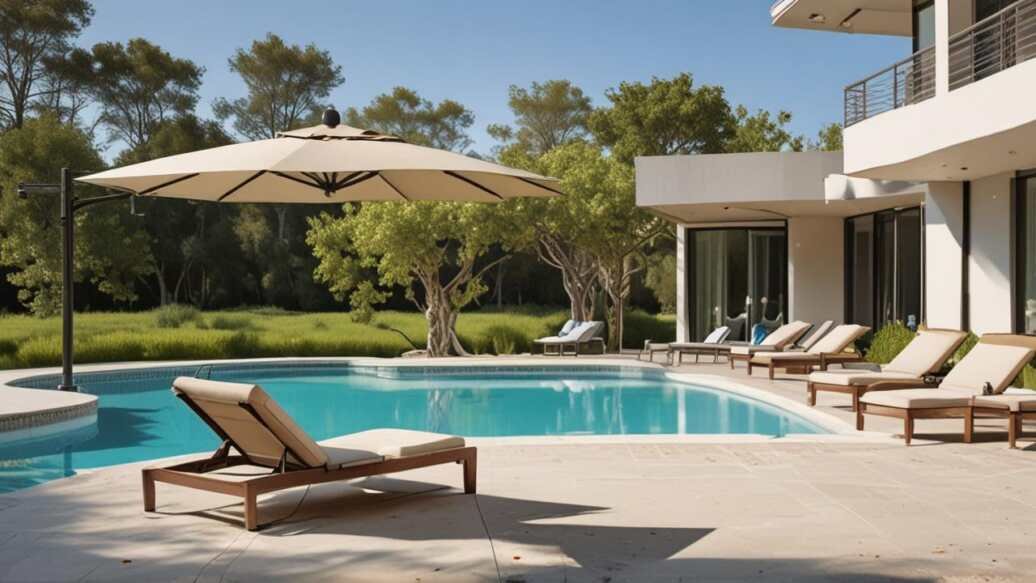
What Is a Cantilever Umbrella and How Does It Work on a Pool Deck?
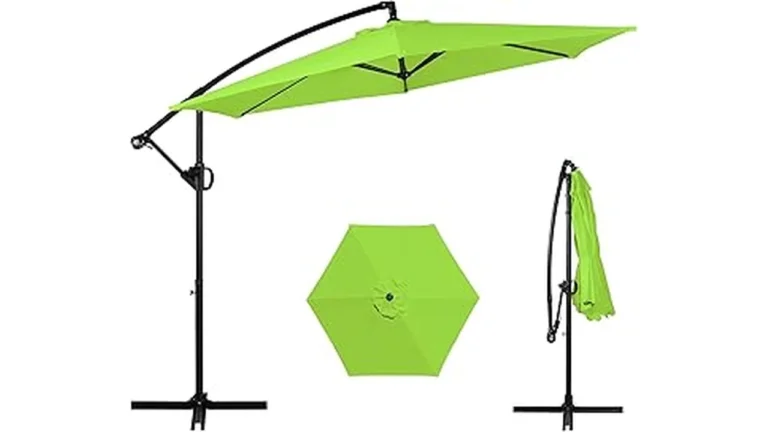
A cantilever umbrella uses an offset pole and a heavy base to provide shade without a center post. This design makes it ideal for a cantilever umbrella in a pool deck arrangement. You can position the canopy over lounge chairs or the water while the base sits safely on the side.
The physics of a cantilever umbrella differ from a standard market umbrella. The weight of the canopy and arm is balanced against the base. If the base is too light, the umbrella becomes unstable. If the base has sharp edges, it can scratch the deck surface.
| Feature | Cantilever Umbrella | Market Umbrella |
|---|---|---|
| Pole Position | Offset to the side | Center of the table |
| Shade Flexibility | High – canopy swings 360 degrees | Low – limited to table location |
| Wind Stability | Lower – acts as a sail on a lever | Higher – center pole is more stable |
| Space Usage | Requires wide base footprint | Requires table with hole |
| Best for Pool Deck | Covering chairs or pool edge | Covering a dining set |
According to the, the standard wind rating for residential patio umbrellas is typically around 20 to 30 mph. High-quality cantilever units can be rated up to 45 mph. You should always check this rating before use.
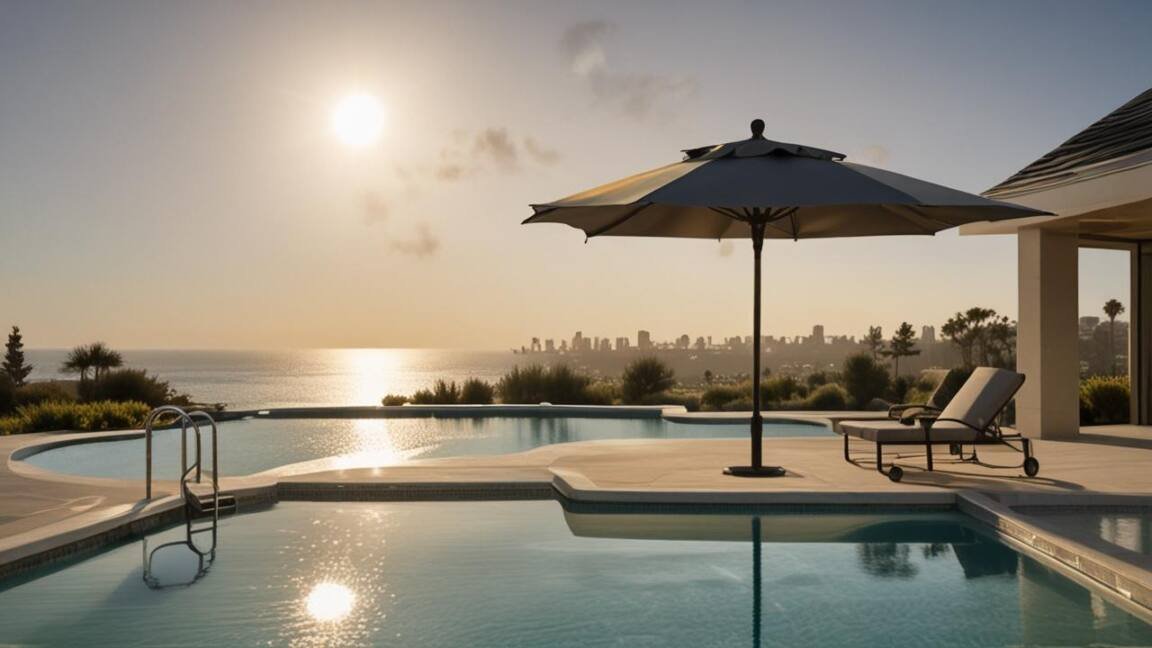
Why Pool Decks Pose Specific Risks to Umbrellas and Your Setup
Pool decks have unique conditions that can damage both the umbrella and the deck surface. The reports that over 90 percent of new in-ground pools feature a concrete or stone paver deck. These materials are abrasive and porous.
Risk 1 – Scratches and Scuffs from the Base
A bare concrete or metal base will grind dirt into porous pavers. This creates permanent stains and scratches. The friction from wind moving the umbrella slowly shifts the base over time. This grinding action is the most common cause of cosmetic damage to a pool deck from an umbrella.
- Concrete decks can develop a polished wear pattern where the base sits.
- Stone pavers can have their sealant worn away by a shifting base.
- Wood decks are easily gouged by an unprotected metal base.
- Tile decks can crack if a heavy base is dragged across the surface.
Risk 2 – Wind Exposure and Tipping
Open water areas often have higher and more consistent wind speeds. A cantilever umbrella catches the wind like a sail. If the base is too light, the umbrella will tip over. A falling umbrella can scratch the deck or hit someone in the pool.
Warning: A cantilever umbrella that tips over can cause serious injury. The lever action of the arm can generate significant force. Always lower the umbrella in moderate to high winds. Do not rely on the base alone to hold it.
Risk 3 – Corrosion from Pool Chemicals
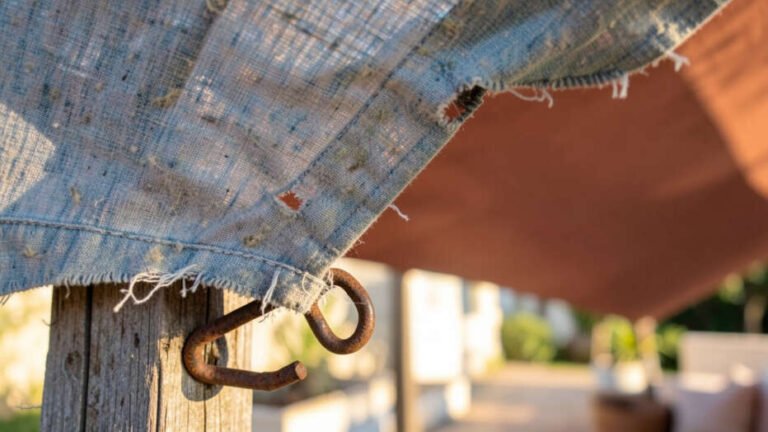
Chlorine and salt water are highly corrosive. The notes that even diluted pool water can accelerate corrosion on non-marine-grade metals. If you use a steel or standard aluminum umbrella, you may see pitting and rust within one season. Rust stains are very difficult to remove from concrete and stone decks.
Risk 4 – Base Stability on Raised Decks
Many pool decks are raised above the ground. Placing a 100-pound umbrella base directly on a raised deck concentrates the load. You need to ensure the base sits over a support joist. If the deck is not reinforced, the weight could cause sagging or structural damage over time.
no text, no words, no letters, no signs, no watermarks
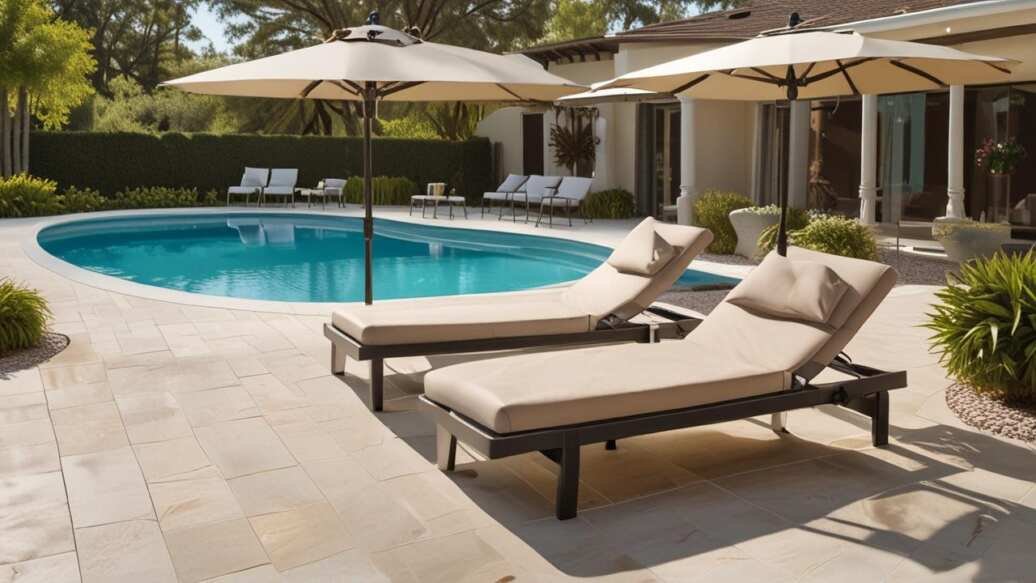
Best Types of Cantilever Umbrellas for Pool Decks
Choosing the right materials is essential for long-term use. A cantilever umbrella in a pool deck environment needs to resist moisture, sun, and chemicals. Here are the best material choices for each component.
| Component | Material | Pool Deck Suitability |
|---|---|---|
| Frame | Marine-Grade Aluminum | Excellent – resists salt and chlorine |
| Frame | Powder-Coated Steel | Fair – can chip and rust over time |
| Frame | Wood | Poor – cracks and warps from moisture |
| Canopy Fabric | Sunbrella Acrylic | Excellent – UV and water resistant |
| Canopy Fabric | Olefin | Good – fades faster than Sunbrella |
| Base Material | Resin with Rubber Bottom | Excellent – scratch-free and stable |
| Base Material | Bare Concrete | Fair – can scratch porous decks |
Canopy Fabric Choices
The canopy is exposed to constant UV rays and pool chemicals. A solution-dyed acrylic fabric like Sunbrella is the best choice. It resists fading and mildew. You should avoid PVC canopies near pools because they can get brittle from the chlorine and heat.
How to Use a Cantilever Umbrella on a Pool Deck Without Damage
Follow this step-by-step process to set up your cantilever umbrella in a pool deck area with zero damage. The total setup time takes about 30 minutes.
Step 1 – Inspect the Deck Surface
Check your pool deck for cracks, loose pavers, or worn sealant. Placing a heavy base on an unstable surface can cause further damage. The suggests that repairing a scratched paver deck costs between $10 and $25 per square foot. Prevention is much cheaper.
Step 2 – Choose a Non-Abrasive Base
Buy a base made from resin or rubber. If you already own a metal or concrete base, buy a rubber base pad to place underneath. This pad prevents the base from grinding against the deck. You can find these pads at most home improvement stores.
Step 3 – Use the Correct Weight
A 10-foot cantilever umbrella typically needs between 75 and 100 pounds of base weight. A 13-foot umbrella needs at least 100 pounds. Use water-fillable bases or interlocking concrete blocks. Do not use less weight than the manufacturer recommends.
Important: More weight is always better than less. A heavier base reduces wind rocking. It also keeps the base firmly planted on the deck, which stops the rubbing motion that causes scratches.
Step 4 – Position the Base Properly
Place the base on a solid, flat section of the deck. If you have a raised deck, place the base directly over a support beam or joist. For ground-level concrete or paver decks, any flat area will work. Leave at least 2 feet of clearance between the base and the pool edge for safety.
Step 5 – Assemble and Secure the Umbrella
Follow the manufacturer’s instructions closely. Apply a thread-locking compound to the bolts that attach the arm to the pole. This prevents vibration from loosening the hardware over time. Tighten all bolts to the recommended torque.
Step 6 – Operate with Care
Use the crank mechanism to open the canopy. Do not force it if it sticks. Set the tilt to block the sun. If wind speeds exceed 25 mph, lower the canopy completely. This protects the umbrella and prevents the base from sliding.
Step 7 – Rinse and Maintain
After each pool session, rinse the frame and canopy with fresh water from a garden hose. This washes away chlorine and salt residue. Dry the metal parts with a soft cloth. Apply a silicone spray to the moving joints once a month.
- Inspect the base pad for wear every season.
- Tighten all bolts at the start of the season.
- Wash the canopy with mild soap and water twice a year.
- Store the umbrella indoors during winter.
Common Myths vs Facts
Myth 1 – Any Heavy Base Works Without Damage
This is not true. An unguarded concrete or metal base acts like sandpaper on porous stone and concrete decks. Even a small amount of sand or dirt trapped underneath will grind into the surface. You need a rubber or resin base to avoid scratches.
Myth 2 – Cantilever Umbrellas Are Too Heavy for Pool Decks
This is false. A standard 10-foot cantilever umbrella and base weighs roughly 100 to 150 pounds. The estimates that residential pool decks are built to support over 100 pounds per square foot. The weight is well within safety limits for standard construction.
Myth 3 – You Can Leave the Umbrella Up All Season
Leaving the umbrella up invites damage from storms and UV rays. Constant sun exposure fades the canopy fabric. Wind stress weakens the frame joints. You should lower the umbrella during storms and high winds to extend its life.
Pro Tips for Long-Term Pool Deck Umbrella Use
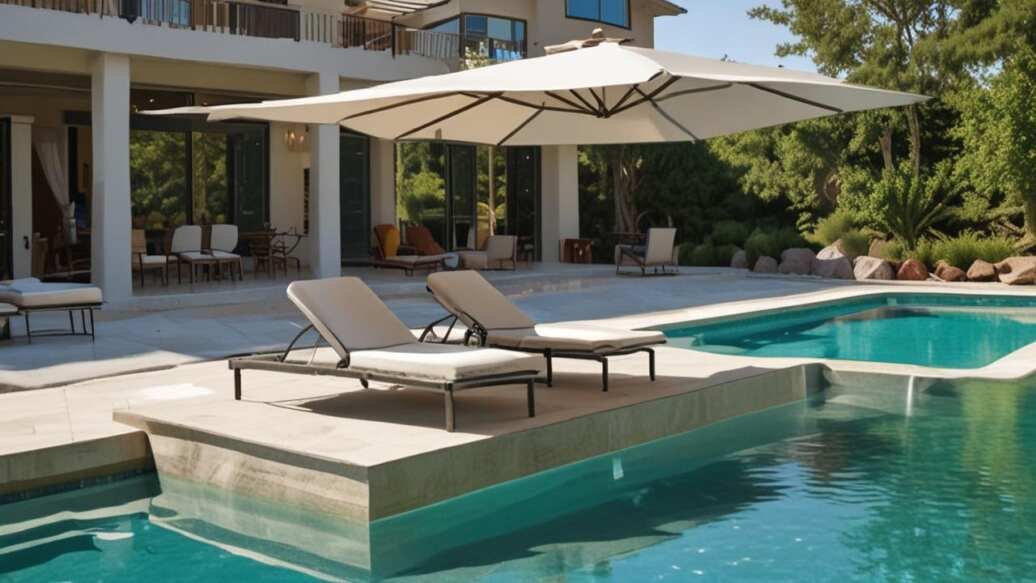
- Use a cantilever umbrella with a tilt mechanism to block the low-angle afternoon sun without moving the heavy base.
- Place the umbrella downwind of the primary seating area. The offset pole acts as a pivot point in light breezes.
- For saltwater pools, invest in a stainless steel or marine-grade aluminum frame to resist pitting and corrosion.
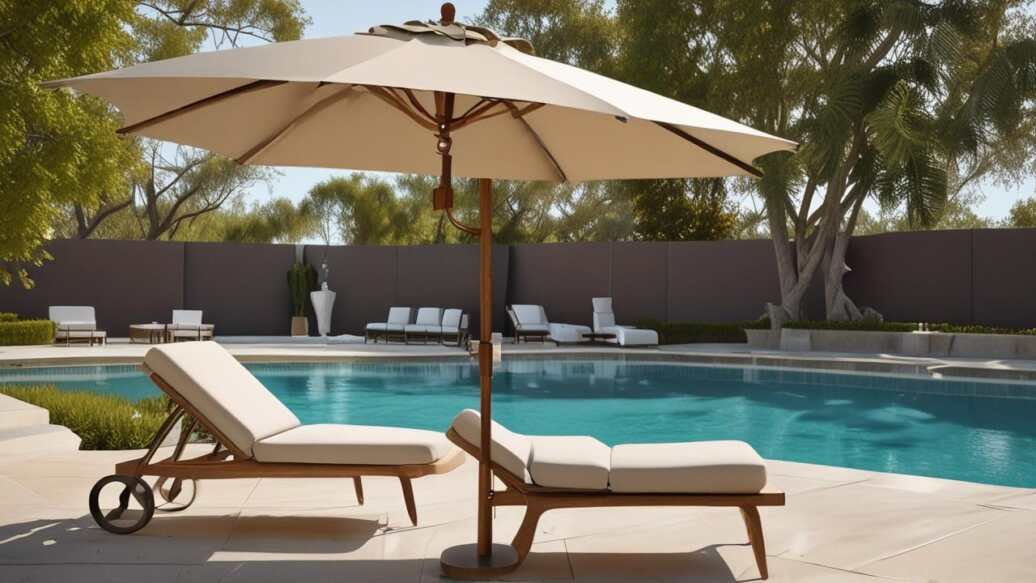
- Buy a base with wheels. Moving a 100-pound base around the pool deck is difficult without them.
- Apply a UV protectant spray to the canopy fabric at the start of each season to slow down fading.
- Use a base cover to protect the resin or rubber from direct sun exposure when not in use.
Tip: Mark the base position with a piece of chalk or a small piece of tape on the deck. This helps you return the base to the exact same spot. It prevents repeated adjustments that can wear down the deck sealant.
no text, no words, no letters, no signs, no watermarks
Resources and Tools
Use these tools and resources to maintain your setup and prevent damage.
- Rubber Base Pad – Placed under a metal or concrete base to prevent scratches.
- Silicone Lubricant Spray – Protects moving parts from rust and keeps the crank mechanism running smoothly.
- UV Protectant Spray – Extends the life of your canopy fabric by blocking sun damage.
- Umbrella Storage Cover – Protects the entire umbrella during winter or long periods of non-use.
- Thread-Locking Compound – Prevents bolts from loosening due to wind vibration.
Frequently Asked Questions
Can a cantilever umbrella tip over and damage my pool deck?
Yes, it can tip over if you do not use enough base weight. A wind gust can overturn an underweighted umbrella, potentially scratching or cracking the deck surface. Always use the manufacturer’s recommended base weight and lower the umbrella in high winds.
What is the best base material for a pool deck?
A rubber or resin base is the best choice because it will not scratch stone, concrete, or wood surfaces. If you use a metal base, ensure it has a rubber bottom pad to protect the deck underneath.
How much wind can a cantilever umbrella handle?
Most cantilever umbrellas are rated for winds up to 25 to 35 mph according to ASTM standards. You should lower the umbrella when wind speeds exceed this limit. Even if it does not tip, the rocking motion can cause the base to rub against the deck.
Will pool chlorine damage my cantilever umbrella?
Yes, chlorine is corrosive and can rust and pit aluminum and steel frames over time. You should rinse the umbrella with fresh water after each use. Apply a protective silicone wax to the frame every season to add an extra layer of defense.
Can I use a cantilever umbrella on a raised wooden pool deck?
Yes, you can use it on a raised wooden deck. You need to place the base directly over a support joist to distribute the weight safely. A freestanding base should be placed near a load-bearing wall. Consider using a deck-mounted base plate if you want extra stability.
no text, no words, no letters, no signs, no watermarks
Final Thoughts
You can absolutely use a cantilever umbrella on a pool deck without damage if you prioritize the right base and weather management. Protecting your investment means rinsing the frame after use, lowering it in high winds, and ensuring the base will not scratch the surface. With these precautions, your cantilever umbrella in a pool deck setting will provide versatile shade for years of enjoyment.