
Deciding between a Cold Press vs Centrifugal Juicers can feel a bit tricky when you’re new to juicing. You might wonder which one is better for getting the most juice or keeping the most healthy stuff. Don’t worry, it’s simpler than it seems.
Key Takeaways
- Cold press juicers use a slow masticating process to extract juice.
- Centrifugal juicers use a fast spinning blade to separate juice from pulp.
- Cold press juicers generally yield more juice and retain more nutrients.
- Centrifugal juicers are typically faster and more affordable.
- Cold press juicers are better for leafy greens and tougher vegetables.
- Centrifugal juicers are good for fruits and softer vegetables.
This guide will break it all down for you step by step so you can pick the right juicer for your needs. We’ll cover what makes them different and which one is best for you.
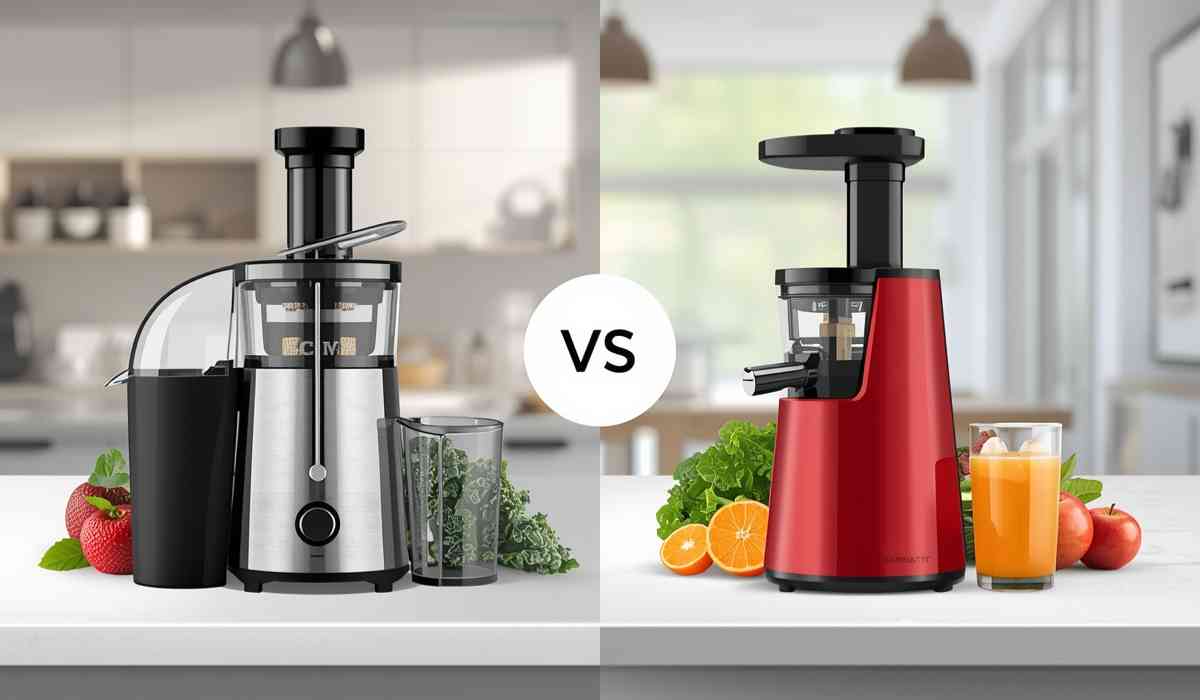
Cold Press Juicers Explained
Cold press juicers, also known as masticating juicers, work by slowly grinding and pressing fruits and vegetables. They use an auger, a slow-moving screw, to crush the produce. This gentle action extracts juice without generating much heat.
Because the process is slow, it keeps more of the vitamins, minerals, and enzymes intact. This is why they are often called “slow juicers.”
The slow speed also means less oxidation. Oxidation happens when juice is exposed to air and can break down nutrients. With a cold press juicer, your juice stays fresher for longer.
You often get a higher juice yield from your produce too. This means you need less fruit and veg to make the same amount of juice.
How Cold Press Juicers Work
The auger in a cold press juicer first grinds the produce into a pulp. Then, it presses this pulp against a sieve or screen. This action separates the liquid juice from the solid pulp.
The entire process happens at a low speed, typically between 40 and 120 RPM (revolutions per minute).
This low speed is the key to preserving nutrients. Unlike high-speed juicers, it doesn’t create friction or heat. Heat can degrade some of the beneficial compounds in your fruits and vegetables.
The result is a richer, more nutrient-dense juice.
Benefits of Cold Press Juicers
- Higher Nutrient Retention: The slow, cool process keeps more vitamins, enzymes, and minerals in the juice.
- Better Juice Yield: You get more juice from the same amount of produce.
- Less Oxidation: Juice lasts longer and tastes fresher.
- Handles Leafy Greens Well: Excellent at extracting juice from tough greens like kale and spinach.
- Quieter Operation: Generally less noisy than centrifugal juicers.
Drawbacks of Cold Press Juicers
- Slower Process: Takes longer to juice larger quantities of produce.
- More Expensive: Tend to have a higher initial cost.
- More Parts to Clean: Can have more components that require washing.
- Can Clog with Soft Produce: Sometimes struggle with very soft fruits like bananas.
Centrifugal Juicers Explained
Centrifugal juicers are the most common type of juicer. They work much faster than cold press juicers. They have a motor that spins a sharp blade at very high speeds, often over 1,000 RPM.
This blade grates the produce into tiny pieces.
Then, the centrifugal force pushes these pieces against a mesh filter. This process separates the juice from the pulp, with the juice flowing out one spout and the pulp being ejected into a separate container.
Because they spin so fast, centrifugal juicers do generate some heat. This heat can cause a small loss of nutrients compared to cold press juicers. They also introduce more air into the juice, which can lead to faster oxidation.
This means the juice might not last as long and could taste a bit different after a short time.
How Centrifugal Juicers Work
The high-speed motor is the defining feature of a centrifugal juicer. When you add produce, it’s fed into a chute and hits a rapidly spinning blade. This blade acts like a grater, breaking down the food.
The spinning motion then flings the shredded produce against a fine mesh filter.
The juice passes through the mesh, while the pulp gets caught. The pulp is then spun out into a waste bin. This entire process is very quick, making it easy to juice large amounts of fruits and vegetables in a short time.
Benefits of Centrifugal Juicers
- Fast Juicing: You can make juice very quickly, perfect for busy mornings.
- More Affordable: Generally less expensive than cold press juicers.
- Easy to Use: Simple operation, often with a wide chute for less prep.
- Less Mess: Pulp is usually collected in a separate bin, making cleanup quicker.
Drawbacks of Centrifugal Juicers
- Lower Nutrient Retention: Heat and oxidation can reduce nutrient content.
- Less Juice Yield: You might get less juice from your produce.
- Noisier Operation: The high-speed motor can be quite loud.
- Not Ideal for Leafy Greens: They struggle to extract juice from tough, fibrous greens.
- Shorter Shelf Life for Juice: Juice oxidizes faster and should be consumed right away.
Cold Press vs Centrifugal Juicers Key Differences
The main difference between these two types of juicers lies in their speed and how they extract juice. A Cold Press vs Centrifugal Juicers comparison really comes down to a few key areas:
| Feature | Cold Press Juicer | Centrifugal Juicer |
|---|---|---|
| Speed of Operation | Slow (40-120 RPM) | Fast (1000+ RPM) |
| Juice Quality (Nutrients) | Higher retention, less oxidation | Lower retention, more oxidation |
| Juice Yield | Higher | Lower |
| Noise Level | Quieter | Louder |
| Price | Higher | Lower |
| Best For | Leafy greens, hard vegetables, maximum nutrients | Fruits, soft vegetables, speed and convenience |
| Prep Time | Can require more chopping | Often has wider chutes, less prep |
When you think about Cold Press vs Centrifugal Juicers, consider what you want most from your juicing experience. Are you focused on getting every last drop of nutrition, even if it takes a bit longer? Or do you prioritize speed and ease of use for your daily juice fix?
Which Juicer Is Right For You
Choosing between a cold press and a centrifugal juicer depends on your personal needs and priorities. There’s no single “best” juicer for everyone. It’s about finding the one that fits your lifestyle and goals.
If You Prioritize Nutrition and Yield
If you are serious about maximizing the nutritional benefits of your juice and want to get the most juice from your produce, a cold press juicer is likely the better choice. They are excellent for those who want to incorporate a lot of leafy greens, wheatgrass, or hard root vegetables into their diet. The higher juice yield also means you can potentially save money on produce over time.
These juicers are also great if you plan to make larger batches of juice and store them for a short period. The lower oxidation means your juice will retain its freshness and nutrient profile for a bit longer.
If You Prioritize Speed and Convenience
If you’re often in a rush and need to make juice quickly, a centrifugal juicer is probably more suitable. They are perfect for busy mornings or when you just want a quick juice without a lot of fuss. The wide chutes on many centrifugal models mean less time spent chopping fruits and vegetables.
Centrifugal juicers are also a good entry point into juicing because they are generally more affordable. If you’re just starting out or want a simple way to add more fruit juice to your diet, this type of juicer is a solid option.
Consider Your Produce Preferences
Your choice can also depend on the types of produce you plan to juice most often. Cold press juicers excel at handling fibrous greens like kale, spinach, and celery. They are also very effective with hard vegetables such as carrots and beets.
Centrifugal juicers, on the other hand, are better suited for softer fruits like apples, oranges, and berries. While they can juice some vegetables, they are less efficient with leafy greens and can create a lot of foam when juicing softer items.
Cleaning Your Juicer
Cleaning is an important part of the juicing process, no matter which type of juicer you have. It’s best to clean your juicer immediately after each use to prevent pulp from drying and sticking, which can make it harder to clean.
Cleaning a Cold Press Juicer
Cold press juicers can sometimes have more parts, which means a bit more cleaning time. Most manufacturers provide brushes to help clean the screens and augers. It’s a good idea to rinse the parts under running water and use a brush to remove any stuck-on pulp.
Some parts might be dishwasher safe, but always check your manual.
Cleaning a Centrifugal Juicer
Centrifugal juicers are generally quicker to clean. The pulp is usually collected in a separate container, which you can empty and rinse. The filter basket and blade assembly will need to be scrubbed to remove residual pulp and juice.
Again, check if any parts are dishwasher safe to save time.
FAQ Of Cold Press Versus Centrifugal Juicers Explained
Question: Are cold press juicers really better for nutrients
Answer: Yes, cold press juicers retain more vitamins and enzymes because they don’t generate heat or excessive oxidation during the juicing process.
Question: How fast can I make juice with a centrifugal juicer
Answer: You can make juice very quickly with a centrifugal juicer, often in less than a minute for a glass, because of their high-speed operation.
Question: Which type of juicer is better for juicing leafy greens like kale
Answer: Cold press juicers are much better at extracting juice from leafy greens than centrifugal juicers, which tend to struggle with them.
Question: Is a cold press juicer worth the higher cost
Answer: If your main goal is maximum nutrient intake and juice yield, a cold press juicer’s higher cost can be justified by its performance.
Question: Can I store juice made with a centrifugal juicer
Answer: It is best to drink centrifugal juice immediately because the high speed introduces more air, causing it to oxidize and lose nutrients quickly.
Final Thoughts
Choosing between a Cold Press vs Centrifugal Juicers is about what matters most to you. Cold press juicers offer superior nutrient retention and juice yield, perfect for health enthusiasts. Centrifugal juicers provide speed and affordability, ideal for busy individuals.
Both can help you enjoy fresh juice, so pick the one that best fits your daily routine and health goals.

![How to Use a Food Processor Safely[1]](https://creativehouseblog.com/wp-content/uploads/2026/03/How_to_Use_a_Food_Processor_Safely1-768x448.jpg)
![Air Fryer Size Guide for Families[1]](https://creativehouseblog.com/wp-content/uploads/2026/03/Air_Fryer_Size_Guide_for_Families1-768x448.jpg)
![How Air Fryers Circulate Air[1]](https://creativehouseblog.com/wp-content/uploads/2026/03/How_Air_Fryers_Circulate_Air1-768x448.jpg)
![Stop Air Fryer Fails Common Mistakes[1]](https://creativehouseblog.com/wp-content/uploads/2026/03/Stop_Air_Fryer_Fails_Common_Mistakes1-768x448.jpg)
![Food Processor Versus Blender A Simple Guide[1]](https://creativehouseblog.com/wp-content/uploads/2026/03/Food_Processor_Versus_Blender_A_Simple_Guide1-768x448.jpg)
![How Long Coffee Makers Last A Simple Guide[1]](https://creativehouseblog.com/wp-content/uploads/2026/03/How_Long_Coffee_Makers_Last_A_Simple_Guide1-768x448.jpg)