
To choose the right blender power, consider its wattage, which directly indicates the motor's strength for handling various ingredients. Blenders ranging from 300 to 600 watts are sufficient for light tasks like soft fruits and smoothies, while 600 to 900 watts handle medium jobs such as leafy greens and frozen drinks. For heavy-duty blending like nuts, ice, and nut butters, select a blender with 900 watts or more, paying attention to the difference between peak and continuous wattage for true performance.
Picking the best blender can feel tricky. Lots of power numbers are out there, and it’s hard to know what they mean for your everyday cooking.
For folks new to blending, knowing How to Choose the Right Blender Power is a common puzzle.
Don’t worry! We’ll break it down simply, step by step. Get ready to find the perfect blender for your kitchen needs.
Key Takeaways
- Blender power is measured in watts and affects how well it blends tough ingredients.
- Lower wattage blenders are fine for simple tasks like smoothies and soft fruits.
- Higher wattage blenders are better for crushing ice, nuts, and making nut butters.
- Consider the types of food you will blend most often to select the right power.
- Look at the blender’s design, features, and warranty along with its power.
- Finding the right blender power leads to better results and longer appliance life.
![How to Choose the Right Blender Power[1]](https://creativehouseblog.com/wp-content/uploads/2026/03/How_to_Choose_the_Right_Blender_Power1.jpg)
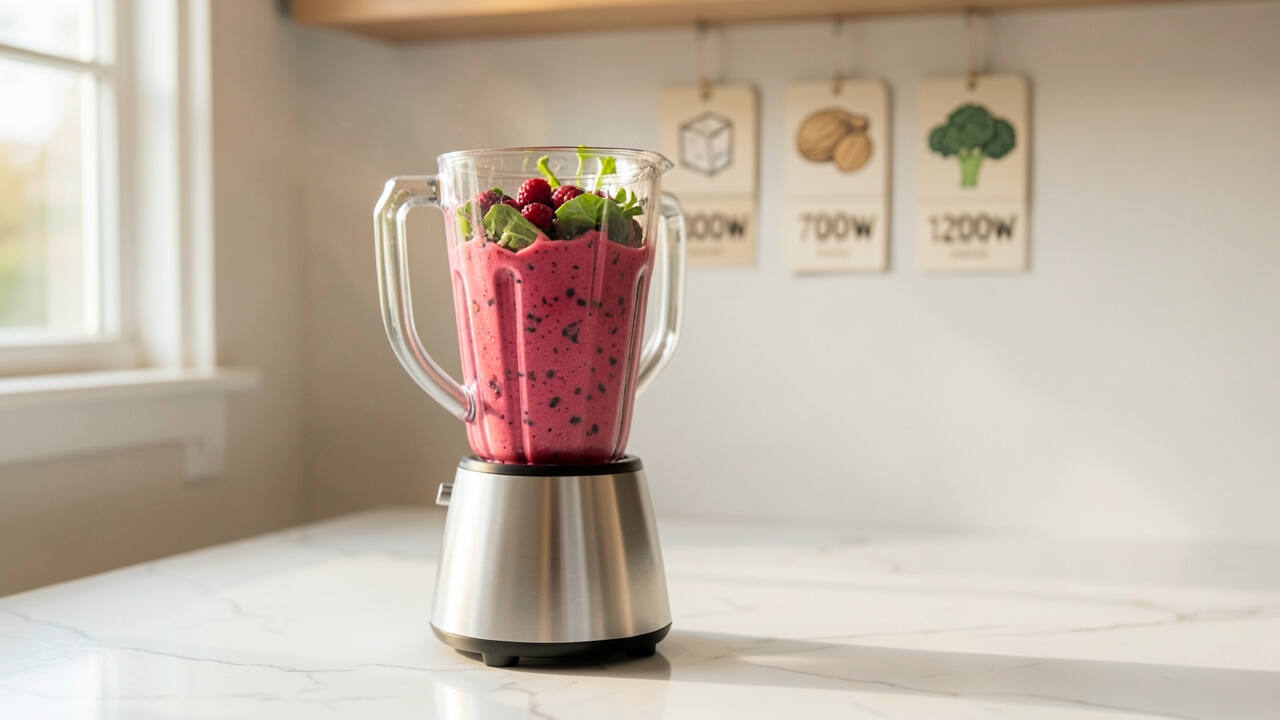
Understanding Blender Power Watts
When you look at blenders, you’ll see a number followed by ‘W’. This stands for watts, and it tells you how much energy the blender’s motor uses. More watts generally mean more power.
This power is what helps the blades spin fast and strong enough to break down different foods.
Think of it like a car engine. A small engine can get you around town, but a bigger engine can handle hills and go faster. In the same way, a blender with more watts can handle tougher jobs more easily.
Why Watts Matter for Your Blending
The wattage of a blender directly impacts its performance. It dictates how smoothly it can blend things, especially when you add harder ingredients.
For example, if you love making creamy smoothies with ice and frozen fruit, you’ll need a blender with enough power to break them down without straining the motor. If you only plan to make thin soups or mix baby food, a lower wattage blender might be enough.
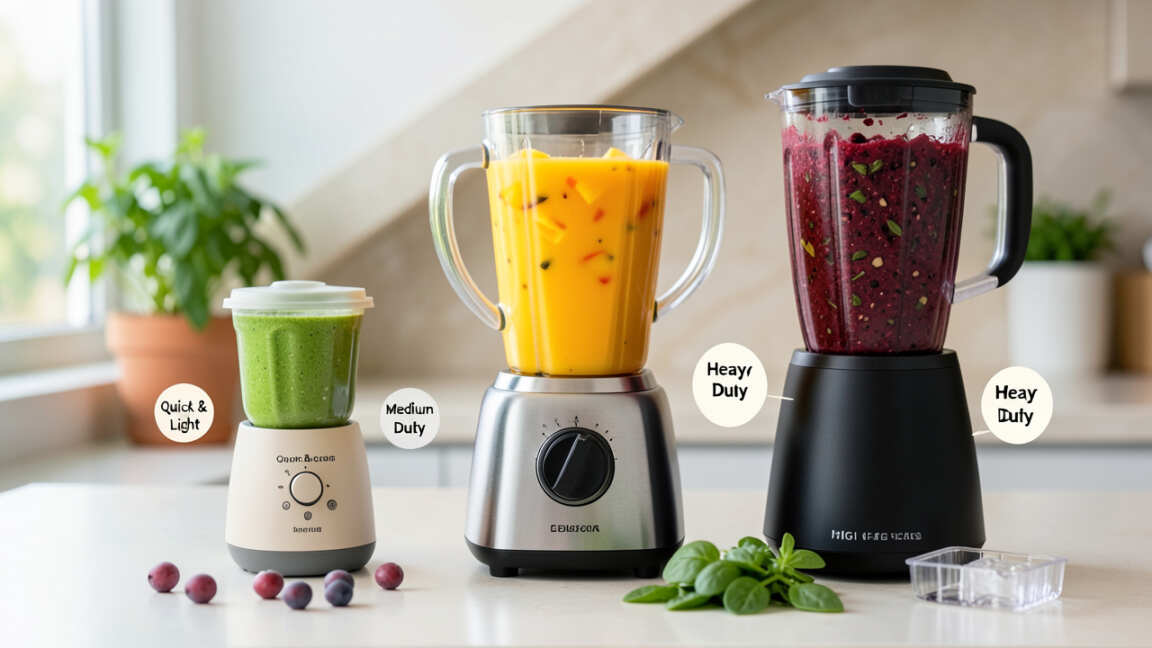
Blender Power Needs Based on Use
The best way to figure out How to Choose the Right Blender Power is to think about what you want to make.
For Light Blending Tasks
If your blending goals are simple, you don’t need a super powerful machine. This includes tasks like:
- Making basic fruit smoothies with soft fruits.
- Mixing protein shakes.
- Pureeing cooked vegetables for sauces or baby food.
- Making simple salad dressings.
For these uses, blenders in the 300 to 500-watt range are often sufficient. They can handle soft ingredients well and are usually more affordable.
For Medium Blending Tasks
If you want to tackle a bit more, like:
- Blending smoothies with a few ice cubes.
- Chopping small amounts of nuts or seeds.
- Making smooth soups from cooked ingredients.
- Mixing batters for pancakes or muffins.
A blender with 500 to 800 watts will give you more capability. This power level offers a good balance between performance and price for many home cooks.
For Heavy-Duty Blending Tasks
When you plan to do serious blending, like:
- Crushing large amounts of ice for frozen drinks.
- Making nut butters from scratch.
- Grinding tough ingredients like whole grains.
- Creating perfectly smooth purees from fibrous vegetables (like kale or celery).
- Making professional-style dips and sauces.
You’ll want a blender with 1000 watts or more. These high-powered blenders are built to last and can handle almost anything you throw at them. They have stronger motors and often more durable blades.

What Wattage Do Popular Blenders Have?
It’s helpful to see how different blenders stack up in terms of power. This can give you a clearer picture.
| Blender Type | Typical Wattage Range | Best For |
|---|---|---|
| Personal/Bullet Blenders | 175-600 watts | Single-serving smoothies, shakes, light chopping |
| Countertop Blenders (Basic) | 300-700 watts | Smoothies, purees, simple sauces |
| Countertop Blenders (Mid-Range) | 700-1200 watts | Ice crushing, thicker smoothies, nut chopping |
| High-Performance Blenders | 1200-2200+ watts | Nut butters, grinding, tough ingredients, large batches |
As you can see, there’s a wide range. Your choice depends entirely on your kitchen’s needs.
Peak vs. Continuous Wattage
Sometimes blenders list “peak” wattage. This is the highest amount of power the motor can use for a very short time, like when it starts up. What’s more important for consistent performance is the “continuous” or “running” wattage.
This is the power the motor can sustain over time.
Manufacturers sometimes use peak wattage to make their blenders sound more powerful than they are for everyday use. For best results, try to find the continuous wattage or assume that a blender’s listed wattage is its continuous power if not specified otherwise.
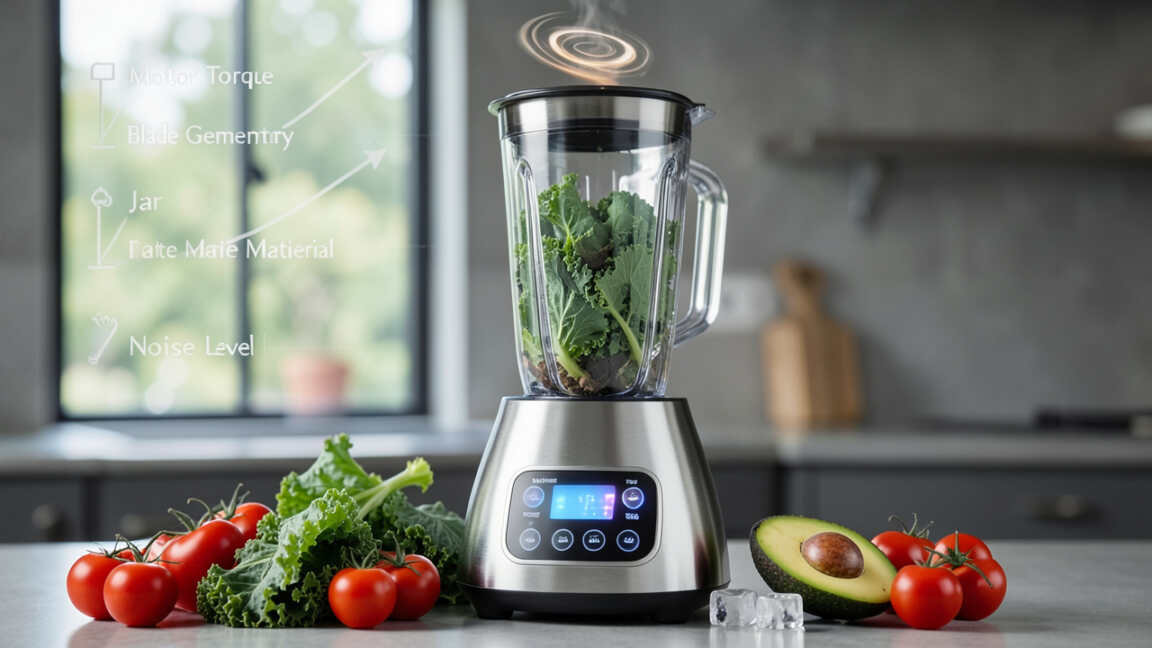
Beyond Watts What Else to Consider
While power is a major factor in How to Choose the Right Blender Power, it’s not the only thing. Other features can make a big difference in your blending experience.
Blade Design and Material
The shape, size, and material of the blades are crucial. Sharp, well-designed blades can cut through ingredients more effectively, even in blenders with slightly lower wattage. Stainless steel is the most common and durable material for blender blades.
Jar Material and Size
Blender jars come in glass, plastic, or stainless steel. Glass jars are durable and don’t scratch or absorb odors, but they are heavy. Plastic jars are lighter but can scratch over time.
Stainless steel is very durable and opaque. The size of the jar matters if you’re blending for a large family or just for yourself.
Speed Settings and Programs
More speed settings offer greater control over the blending process. Some blenders also have pre-programmed settings for specific tasks like making smoothies, crushing ice, or making soup. These can be very convenient.
Durability and Build Quality
A well-built blender will last longer. Look for sturdy construction, a strong motor housing, and a stable base. Read reviews to see how blenders hold up over time.
Ease of Cleaning
Some blenders have parts that are dishwasher safe, making cleanup much easier. Blenders with self-cleaning functions also save time and effort. Easy access to the blades for manual cleaning is also a plus.
Noise Level
Powerful blenders can be loud. If noise is a concern, look for models that advertise quieter operation or read reviews mentioning noise levels.
Warranty
A good warranty indicates the manufacturer’s confidence in their product. A longer warranty, especially on the motor, is a good sign of quality and durability.
FAQ Of How to Choose the Right Blender Power
Question: What is the minimum wattage for a good blender?
Answer: For basic tasks like simple smoothies, 300-500 watts is a good starting point. If you plan on crushing ice or tougher ingredients, aim for at least 700 watts or more.
Question: Can I make nut butter with a blender under 1000 watts?
Answer: It might be difficult and could strain the motor. Blenders with 1000 watts or higher are generally recommended for making nut butters to ensure smooth results and longevity of the appliance.
Question: Are personal blenders powerful enough for everyday use?
Answer: Personal blenders are great for single servings of smoothies or shakes. Their power can range, but for tougher ingredients or larger amounts, a full-sized blender might be a better choice.
Question: How do I clean my blender effectively?
Answer: Many blenders can be cleaned by adding a drop of dish soap and some water to the jar, then blending on high speed for a minute. Rinse thoroughly afterward. Always check your manual for specific cleaning instructions.
Question: Does blender wattage affect smoothie texture?
Answer: Yes, higher wattage blenders can break down ingredients more finely, resulting in a smoother, more uniform texture, especially with fibrous greens, ice, or frozen fruits.

Final Thoughts
Choosing the right blender power is simple when you match it to your kitchen tasks. Soft fruits and basic shakes need less power. Ice and tough ingredients need more.
Think about what you love to make. This helps you pick a blender that works well and lasts. You’ll get great results every time you blend.


![How to Seal Gaps Around Doors Before Cold Weather Arrives[1]](https://creativehouseblog.com/wp-content/uploads/2026/05/How_to_Seal_Gaps_Around_Doors_Before_Cold_Weather_Arrives1-768x403.jpg)
![10 Ways To Automate Your Kitchen[1]](https://creativehouseblog.com/wp-content/uploads/2026/04/10_Ways_To_Automate_Your_Kitchen1-768x448.jpg)
![10 Sweet & Savoury Crepe Variations[1]](https://creativehouseblog.com/wp-content/uploads/2026/04/10_Sweet__Savoury_Crepe_Variations1-768x448.jpg)
![6 Ways To Reduce Energy Use In Cooling Appliances[1]](https://creativehouseblog.com/wp-content/uploads/2026/04/6_Ways_To_Reduce_Energy_Use_In_Cooling_Appliances1-768x448.jpg)
![Condensation Between Window Panes Causes and Fixes[1]](https://creativehouseblog.com/wp-content/uploads/2026/05/Condensation_Between_Window_Panes_Causes_and_Fixes1-768x403.jpg)