
The primary difference between a coffee maker and an espresso machine is the brewing method, with espresso machines using high pressure to force water through finely ground coffee while coffee makers rely on gravity and drip filtration. This results in espresso machines producing a concentrated, rich shot that can be the base for lattes and cappuccinos, whereas coffee makers brew larger volumes of standard, milder coffee. Coffee makers are typically simpler to operate and maintain, while espresso machines require more skill and a greater initial investment for optimal performance.
Choosing between a coffee maker and an espresso machine can seem confusing at first. Many people wonder about the main differences and which one is right for them. Don’t worry, this guide makes the Coffee Maker vs Espresso Machine choice super clear.
Key Takeaways
- Coffee makers brew regular coffee using gravity and a filter.
- Espresso machines use pressure to force hot water through finely ground coffee.
- Espresso machines can make a wider variety of drinks like lattes and cappuccinos.
- Coffee makers are generally simpler to use and clean.
- Espresso machines require more attention to detail for optimal results.
- Price and complexity are key factors when comparing the two.
We will break it all down step by step so you can pick the perfect machine for your morning brew or afternoon pick-me-up.
![Coffee Maker vs Espresso Machine Explained Simply[1]](https://creativehouseblog.com/wp-content/uploads/2026/03/Coffee_Maker_vs_Espresso_Machine_Explained_Simply1.jpg)
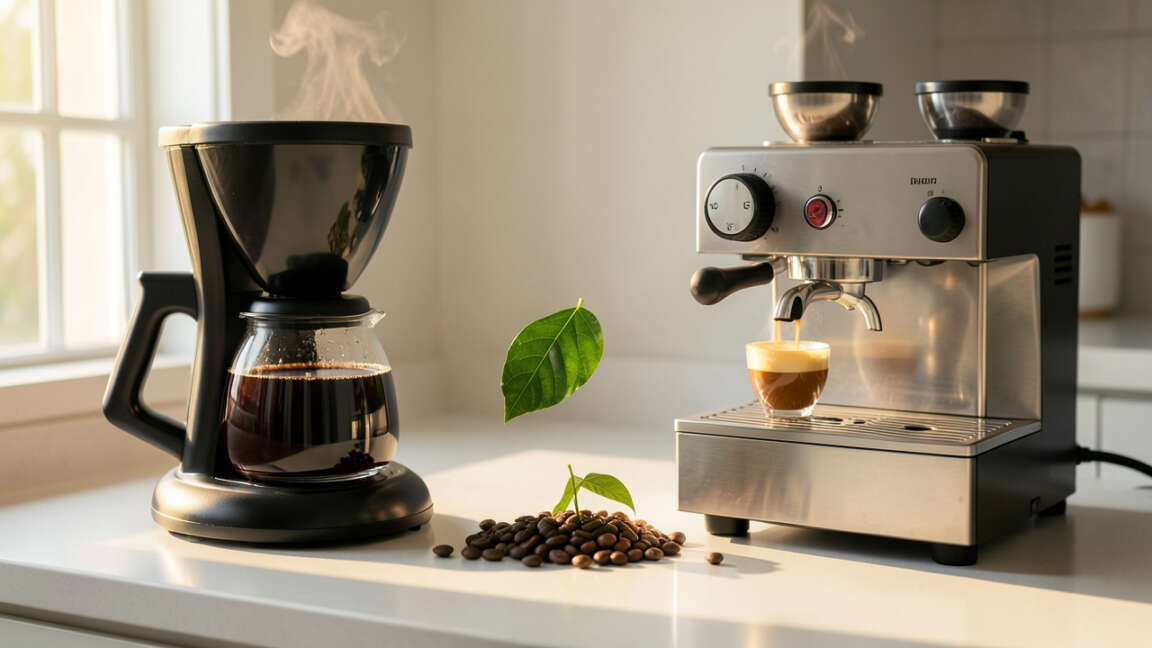
Coffee Maker vs Espresso Machine Understanding the Basics
What Is a Coffee Maker?
A coffee maker is a very common kitchen appliance. Its main job is to brew a pot of regular coffee. You put coffee grounds in a filter basket.
Then, you add water to a reservoir. The machine heats the water and lets it drip through the grounds and filter into a carafe or mug below. This process is mostly done using gravity.
Most coffee makers are pretty simple to operate. You just add your ingredients and press a button.
There are several types of coffee makers. The most common is the drip coffee maker. It’s what most people picture when they think of brewing coffee at home.
Other types include pour-over coffee makers, French presses, and single-serve pod machines. Each has its own way of making coffee, but the core idea is similar: water passes through coffee grounds to create a beverage.
What Is an Espresso Machine?
An espresso machine is different because it uses pressure to make coffee. Instead of gravity, it forces hot water through very finely ground coffee beans at high pressure. This high-pressure brewing is what creates a small, concentrated shot of coffee with a rich flavor and a layer of foam on top called crema.
This crema is a sign of a well-made espresso.
Espresso machines can be manual, semi-automatic, automatic, or super-automatic. Manual machines give you the most control but require the most skill. Semi-automatic machines have a pump and a group head, but you control the brewing time.
Automatic machines brew a set amount of espresso with the press of a button. Super-automatic machines do everything, from grinding the beans to frothing the milk, all with one touch.
The Core Difference Pressure and Extraction
The biggest difference between a coffee maker and an espresso machine is how they extract flavor from the coffee beans. Coffee makers rely on gravity and a slower drip process. This results in a less concentrated coffee.
The water has more time to interact with the grounds, extracting a broader range of flavors but less intensity.
Espresso machines, on the other hand, use high pressure. This forces the water through the coffee grounds very quickly. This rapid extraction under pressure pulls out more oils and soluble solids.
This is why espresso is so bold and concentrated. The pressure is typically around 9 bars, which is about 9 times the atmospheric pressure. This high pressure is essential for creating that signature crema.
What Kind of Coffee Do They Make?
A standard coffee maker brews what we call “drip coffee” or “filter coffee.” This is the kind of coffee most people drink daily. It’s usually served in mugs and can be enjoyed black or with milk and sugar. The flavor profile is often described as smooth, balanced, and sometimes slightly acidic, depending on the beans and brewing method.
An espresso machine makes espresso. As mentioned, espresso is a concentrated coffee shot. But, espresso is also the base for many popular coffee drinks.
Think of lattes, cappuccinos, macchiatos, and Americanos. These drinks combine espresso with steamed milk, milk foam, or hot water in various ways. If you enjoy these types of beverages, an espresso machine is what you need.
Ease of Use and Maintenance
When comparing a coffee maker vs espresso machine, ease of use is a big factor. Most drip coffee makers are incredibly easy to use. You add coffee and water, press a button, and wait.
Cleaning is usually straightforward, often involving rinsing the filter basket and carafe. Some machines have descaling cycles, but overall, they are very user-friendly.
Espresso machines can range from simple to quite complex. A basic espresso machine might be relatively easy to operate, but mastering the art of pulling a perfect shot takes practice. Cleaning and maintenance are also more involved.
You need to clean the portafilter, the group head, and often the steam wand after each use. Regular descaling and backflushing are also necessary to keep the machine in good working order.
Cost and Investment
The price range for coffee makers is vast, but even high-end models are often much less expensive than most espresso machines. You can find a reliable drip coffee maker for as little as $20, and premium ones might cost a few hundred dollars. They are generally an affordable addition to any kitchen.
Espresso machines represent a larger investment. Basic home espresso machines can start around $100-$200, but good quality machines, especially those with manual or semi-automatic controls, can easily cost $500 to over $1000. High-end professional-grade machines can run into thousands of dollars.
If you’re just starting, a simpler model might be a good way to explore the world of espresso.
What About Grinding Beans?
Many standard coffee makers do not come with built-in grinders. You would typically buy pre-ground coffee or use a separate coffee grinder. The grind size for drip coffee is usually medium.
Too fine a grind can lead to bitter coffee, while too coarse a grind can result in weak coffee.
Espresso machines require very finely ground coffee. The grind size is critical for proper extraction. If the grind is too coarse, the water will pass through too quickly, and you’ll get a weak, sour shot.
If it’s too fine, the water might not pass through at all, or the shot will be overly bitter. For this reason, many people who own espresso machines also invest in a good quality burr grinder that allows for precise grind adjustments.
Making Different Coffee Drinks
With a coffee maker, you primarily make one thing: brewed coffee. You can add milk, cream, or sugar to it, but the base beverage is always the same. It’s great for a quick cup or a whole pot to share.
An espresso machine opens up a world of possibilities. The espresso shot itself is a wonderful drink, but it’s the foundation for so many other coffees. By adding steamed milk, you can create lattes, cappuccinos, flat whites, and more.
This versatility is a major appeal of owning an espresso machine, especially if you enjoy visiting coffee shops for specialty drinks.
Comparison Table
| Feature | Coffee Maker | Espresso Machine |
|---|---|---|
| Brewing Method | Gravity drip | High pressure forced water |
| Coffee Type | Brewed coffee, drip coffee | Espresso, basis for lattes, cappuccinos etc. |
| Crema | None | Yes, characteristic foam layer |
| Grind Size Needed | Medium | Very Fine |
| Ease of Use | Very Easy | Varies from Easy to Advanced |
| Maintenance | Simple | More Involved |
| Cost | Generally Lower | Generally Higher |
| Drink Variety | Limited to brewed coffee | Wide range of espresso-based drinks |
FAQ Of Coffee Maker vs Espresso Machine Explained Simply
Question: What is the main difference in how they work?
Answer: A coffee maker uses gravity to drip hot water through coffee grounds. An espresso machine uses high pressure to force hot water through finely ground coffee, creating a concentrated shot.
Question: Can I make lattes with a regular coffee maker?
Answer: No, you cannot make lattes with a regular coffee maker. Lattes are made with espresso as the base, which a regular coffee maker does not produce.
Question: Which is better for beginners?
Answer: For beginners, a standard coffee maker is generally easier to use and maintain. Espresso machines can have a steeper learning curve.
Question: Do espresso machines always cost a lot of money?
Answer: While high-end espresso machines are expensive, there are entry-level models available that are more affordable for home use. However, they typically still cost more than most coffee makers.
Question: What kind of coffee grounds do I need?
Answer: Coffee makers usually need medium-ground coffee. Espresso machines require a very fine grind to work properly.

Final Thoughts
Deciding between a coffee maker and an espresso machine comes down to what you like to drink and how much effort you want to put in.
If you enjoy a simple, straightforward cup of coffee, a coffee maker is perfect. If you dream of frothy milk drinks and rich, concentrated shots, an espresso machine is your path.
Both have their place in making delicious coffee at home, and either choice can bring joy to your mornings.

![What to Do If a Pipe Bursts Before Plumber Arrives[1]](https://creativehouseblog.com/wp-content/uploads/2026/05/What_to_Do_If_a_Pipe_Bursts_Before_Plumber_Arrives1-768x403.jpg)
![How to Flush Water Heater Prevent Sediment Build[1]](https://creativehouseblog.com/wp-content/uploads/2026/05/How_to_Flush_Water_Heater_Prevent_Sediment_Build1-768x403.jpg)
![7 Meat Grinder Mistakes To Avoid[1]](https://creativehouseblog.com/wp-content/uploads/2026/04/7_Meat_Grinder_Mistakes_To_Avoid1-768x448.jpg)
![Electrical Safety Checks Every Homeowner Should Know[1]](https://creativehouseblog.com/wp-content/uploads/2026/05/Electrical_Safety_Checks_Every_Homeowner_Should_Know1-768x403.jpg)
![Choosing The Right Rice Cooker Size[1]](https://creativehouseblog.com/wp-content/uploads/2026/03/Choosing_The_Right_Rice_Cooker_Size1-768x448.jpg)
![8 Deep Fryer Safety Tips Everyone Should Follow[1]](https://creativehouseblog.com/wp-content/uploads/2026/04/8_Deep_Fryer_Safety_Tips_Everyone_Should_Follow1-768x448.jpg)