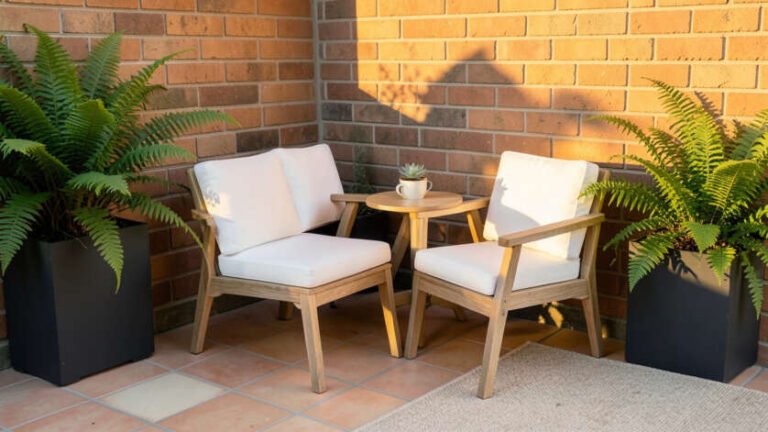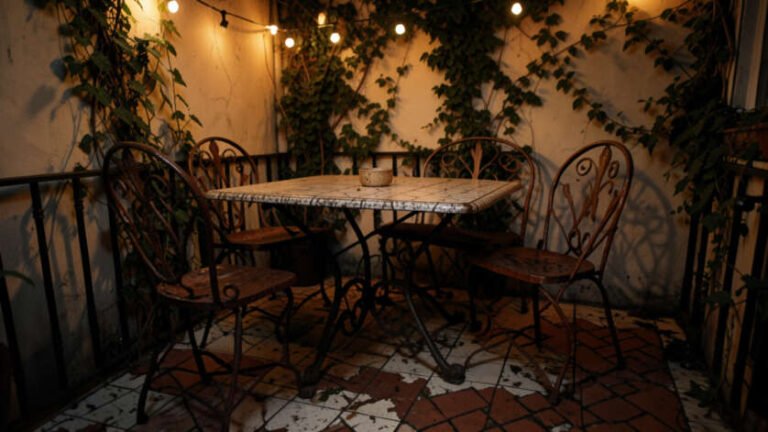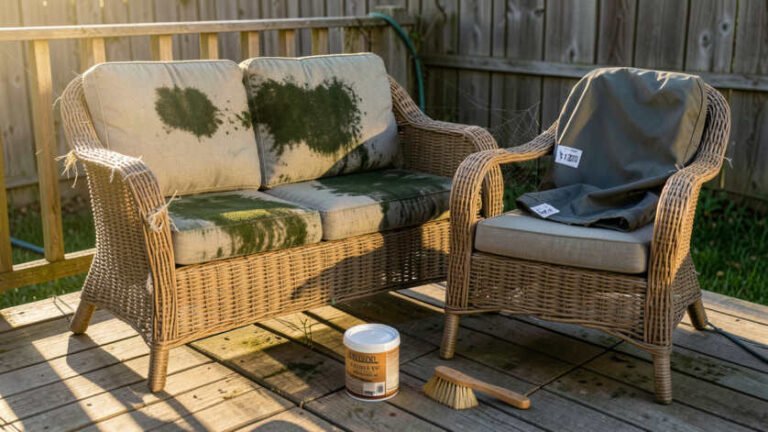
Yes, you can use a patio furniture set on a small patio without damage by matching furniture material to your specific patio surface and using protective barriers. Lightweight aluminum or resin furniture reduces surface wear, while outdoor rugs and furniture pads effectively block scratches, stains, and moisture trapped under legs. This combination allows you to arrange a full set comfortably while preserving the floor’s condition.
You want a comfortable outdoor space, but you worry about scratches and stains on your small patio floor. This guide explains exactly how to use a patio furniture set on a small patio without damaging it.
Quick Verdict: Simply put, yes, you can place a full patio furniture set on a small patio without causing damage. The trick is matching the furniture material to your specific patio surface and using basic protective gear like outdoor rugs and felt pads. A little planning keeps your floor spotless and your furniture stable.
Key Takeaways
- Using a patio furniture set on a small patio without damaging it is entirely possible when you choose the right materials and protective accessories.
- Scratches and stains come from dirt trapped between furniture feet and the floor and from moisture left sitting under legs.
- Aluminum and lightweight resin furniture cause less surface wear than heavy wrought iron or uncoated steel sets.
- Outdoor rugs and furniture pads are the most effective low-cost tools for preventing permanent floor damage.
- You must clean both your furniture and your patio surface regularly to stop debris from grinding into the finish.
What Causes Damage to Small Patio Surfaces?
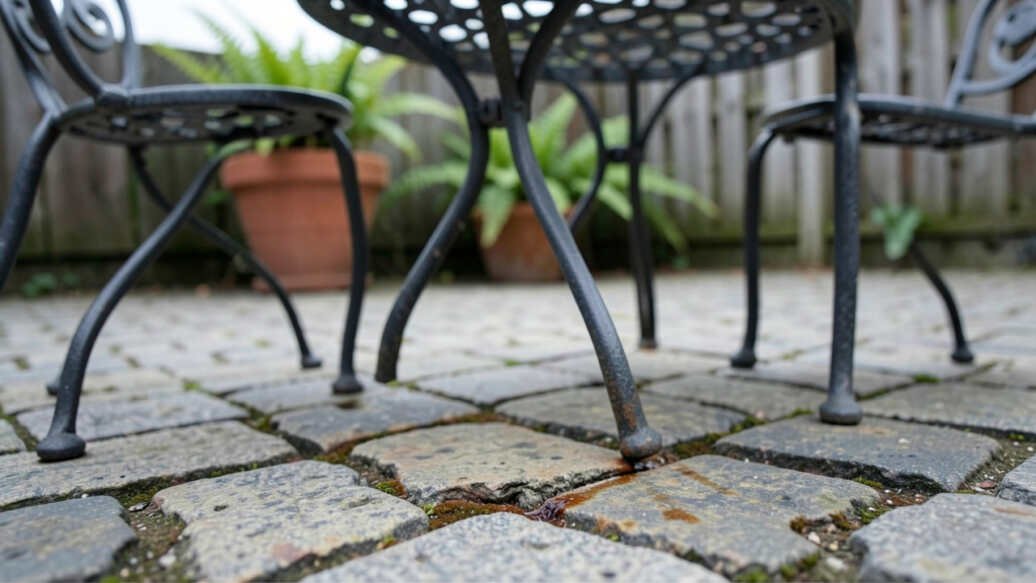
Most people assume furniture is the enemy of a patio floor. In reality, the combination of weight, friction, moisture, and debris creates the damage. When you use a patio furniture set on a small patio without damaging it, you must control these four factors.
The Four Main Culprits
- Point Pressure – A heavy table leg presses all its weight into a tiny area. On wood decks, this can leave permanent indentations.
- Scratching from Debris – Dirt and small pebbles get trapped under furniture feet. When you slide a chair or the wind moves it, that grit scratches the surface like sandpaper.
- Rust and Moisture Stains – Metal furniture, especially on concrete, traps water underneath. This leads to rust drips or mildew stains that are very hard to remove.
- UV Fading – While not friction damage, sunlight can change the color of your patio flooring around the furniture, leaving ghost outlines.
Warning: Concrete is porous even when sealed. Placing metal furniture directly on wet concrete for extended periods nearly always leaves rust rings. Always use a barrier like a rubber mat or furniture cup.
How to Choose a Patio Furniture Set That Won’t Damage Your Space
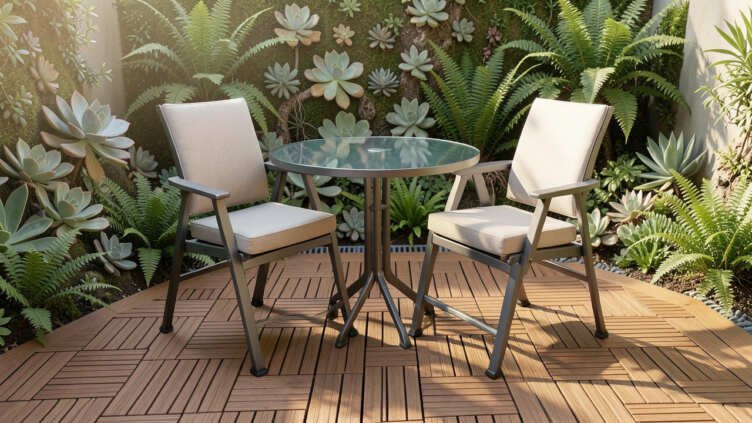
Your choice of patio furniture material directly affects the risk of damage to your small patio. Some materials are naturally gentle, while others require extra precautions.
Materials Comparison for Small Patios
| Material | Weight | Damage Risk to Patio | Best Surface Pairing |
|---|---|---|---|
| Aluminum | Light | Very Low (with plastic feet) | Wood decks, tile, concrete |
| Teak Wood | Medium-Heavy | Low (non scratching by nature) | Concrete, stone, tile |
| Resin Wicker | Light-Medium | Moderate (traps debris) | Concrete, composite decking |
| Wrought Iron / Steel | Very Heavy | High (rust + deep scratches) | Rugged concrete only |
Key Features to Look For
- Rubber or Plastic Feet – These are non scratching and provide grip. Check the bottom of every leg before you buy.
- Curved or Sled Bases – Instead of four point legs, a sled base distributes weight over a larger area.
- Powder Coated Finishes – This prevents rust from bleeding onto concrete and stone surfaces.
- Stackability – Stacking chairs when not in use prevents them from blowing over and scraping the floor.
Important: According to, teak is naturally oily and resists rot and moisture. This makes it one of the safest choices for patios because it rarely stains the surface underneath.
What Is the Best Way to Protect Your Patio Floor When Using Furniture?
Protecting your patio floor takes two steps. First, you prepare the surface. Second, you add barriers between the furniture and the floor.
Step 1: Assess Your Patio Surface
Different surfaces need different protection. Here is a breakdown of common patio types.
- Concrete – Porous and prone to staining. Seal concrete every two years. Use furniture cups that lift legs off the ground.
- Wood Decking – Soft and easy to dent. Never use narrow metal feet directly on wood. Always use wide plastic glides or a rug.
- Tile or Stone – Hard but brittle. A heavy drop can crack a tile. Use rubber mats under dining sets. Avoid dragging chairs.
- Composite Decking – Resists rot but scratches easily. Debris trapped under furniture will scuff the finish. Sweep often and use felt pads.
Step 2: Use Protective Barriers
These accessories are cheap and highly effective. They are the core of using a patio furniture set on a small patio without damaging it.
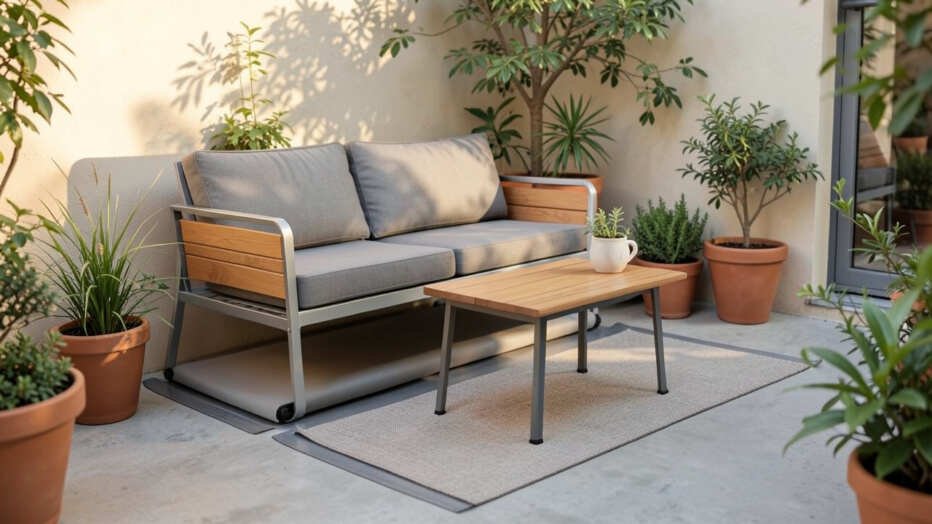
- Outdoor Rug – A rug creates a soft buffer zone. It catches debris and prevents direct contact between the furniture and the floor. Choose a low pile, quick dry rug.
- Furniture Glides or Pads – Stick self adhesive felt or rubber pads to the bottom of each furniture leg. Replace them once a year.
- Furniture Cups – These are small rubber or plastic saucers that go under each leg. They lift the leg off the wet floor and are great for concrete.
- Coasters or Trays – Use these under planters and beverage stands to catch water rings and dirt.
What Is the Right Way to Arrange Furniture on a Small Patio?
How you arrange your furniture affects how much it moves and rubs against the floor. A well planned layout reduces friction and prevents accidental scrapes.
Arrangement Tips for Zero Damage
- Keep furniture away from walls – This prevents the back of chairs from scraping against siding or stucco.
- Give chairs breathing room – Overcrowding means chairs bump into each other. When you sit down, the chair scoots and scratches the floor.
- Use one large rug instead of multiple small mats – A large rug stays put. Small mats shift under foot traffic and bunch up, creating tripping hazards and friction points.
- Anchor lightweight sets – Wind can blow aluminum chairs across a patio. Place them against a heavy table or use weights to prevent sliding.
Common Myths vs Facts About Patio Furniture Damage
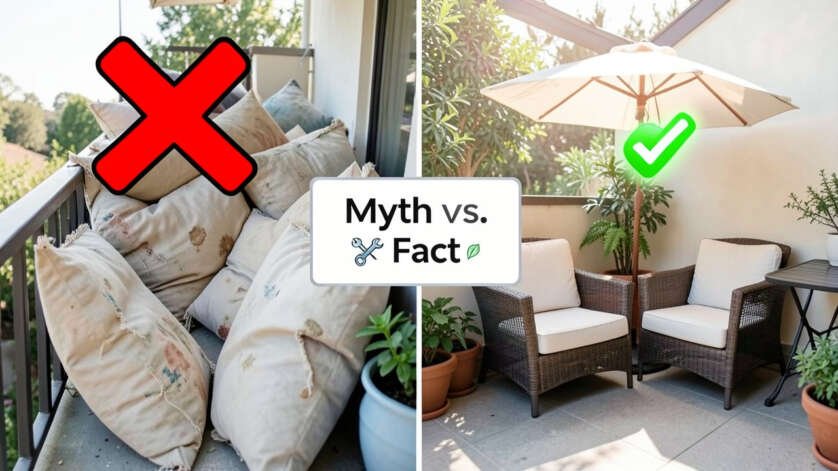
Many homeowners avoid buying patio furniture because they believe common myths. Here are the facts.
- Myth: Concrete is too tough to scratch.
Fact: Concrete is porous and soft enough to be etched by gritty debris trapped under furniture legs. Those gray scrape marks are actually ground in dirt or micro scratches in the sealant. According to, unsealed concrete stains easily from metal rust and planters. - Myth: Vinyl and plastic furniture is always safe for decks.
Fact: Low quality vinyl can contain plasticizers that leach out in hot sun. This leaves a sticky or greasy residue on wood and composite decks. Always choose high grade resin furniture for patios. - Myth: You don’t need a rug under furniture on a covered patio.
Fact: Covered patios still get dust, pollen, and moisture. A rug traps this debris so it doesn’t grind into the floor. It also prevents scratches from the constant micro movements of your chair when you shift your weight.
How to Clean and Maintain Your Patio to Prevent Damage
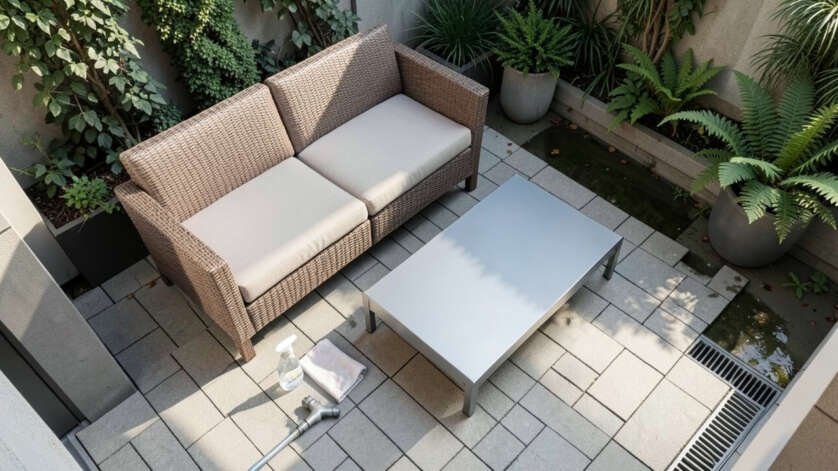
Regular maintenance is the final piece of the puzzle. Even the best furniture setup can cause damage if you neglect the floor underneath.
Monthly Maintenance Checklist
- Move furniture and sweep thoroughly – At least once a month, lift (don’t drag) all furniture to the side and sweep the entire patio. This removes the grit that scratches surfaces.
- Rinse furniture feet – Dirt builds up on the bottom of legs. Hose them off or wipe them with a damp cloth.
- Check for rusty screws or exposed metal – The bottom of a metal chair leg can rust from moisture. Sand and repaint any rusty spots before they stain your patio.
- Clean outdoor rugs – Rugs trap moisture against the floor. Hang them to dry fully if they get wet. Wash them according to the manufacturer’s instructions.
Pro Tip: Set a calendar reminder for the first of each month. A quick 10 minute sweep and furniture check prevents 90% of long term patio damage. It also keeps your outdoor space ready for guests at any time.
Frequently Asked Questions
What is the best patio furniture for a small balcony to avoid damage?
Aluminum with plastic glides is the safest choice for a small balcony. It is lightweight, rust proof, and the plastic feet prevent scratches on tile or concrete surfaces. Always pair it with a compact outdoor rug for extra protection.
How do you stop metal furniture from rusting on concrete?
Concrete holds moisture against metal. To prevent rust, apply a clear concrete sealer to the floor and use rubber furniture cups under each leg. The cups lift the metal off the damp surface and allow air to circulate underneath.
Can you put wicker furniture directly on a wood deck?
Yes, but only if the wicker has wide, smooth feet. Many resin wicker sets have thin wire frames that can dig into wood. Attach furniture glides to the bottom of the wicker legs to prevent indentations and snagging on wood splinters.
What is the best way to clean under patio furniture to prevent scratches?
Use a leaf blower or a soft bristle broom to push debris out from under the furniture. Do not use a metal rake or a pressure washer directly under the furniture, as these can damage both the floor and the furniture finish.
Do furniture covers prevent damage to the patio floor?
Furniture covers protect your set from rain and sun, which extends its life. However, covers do not prevent scratches on the floor. Use a rug or pads underneath the furniture specifically for floor protection.

Resources and Tools for Protecting Your Patio
- Thompson’s WaterSeal – A popular concrete sealer that helps prevent stains from furniture and planters.
- Wikipedia – Teak Wood – Explanatory resource on why teak is naturally resistant to moisture and rot.
- Furniture Glides (Felt Pads) – Self adhesive felt pads designed for outdoor furniture legs.
- Ruggable Outdoor Rugs – Machine washable outdoor rugs that provide a protective barrier for patios.
Final Thoughts
You can absolutely use a patio furniture set on a small patio without damaging it. Focus on choosing furniture with protective feet, using a quality outdoor rug, and cleaning your space monthly. These simple steps preserve your patio floor and let you enjoy your outdoor furniture for years.