
Picking the right kitchen gadget can be tricky. Many people wonder about the Juicer vs Blender Differences because they both seem to make drinks. It’s easy to get confused when you’re just starting out with healthy eating or making smoothies.
But don’t worry! We’ll break it all down super simply. We’ll look at what makes them different and what each one is best for.
Key Takeaways
- Juicers separate liquid from pulp, creating smooth juice.
- Blenders combine ingredients, including pulp, for thicker drinks.
- Juicers are ideal for extracting pure fruit and vegetable liquids.
- Blenders are versatile for smoothies, soups, sauces, and nut butters.
- The consistency and nutrient profile differ significantly between juice and smoothies.
- Choosing between them depends on your desired end product and ingredients.
You’ll know exactly which one you need after this.
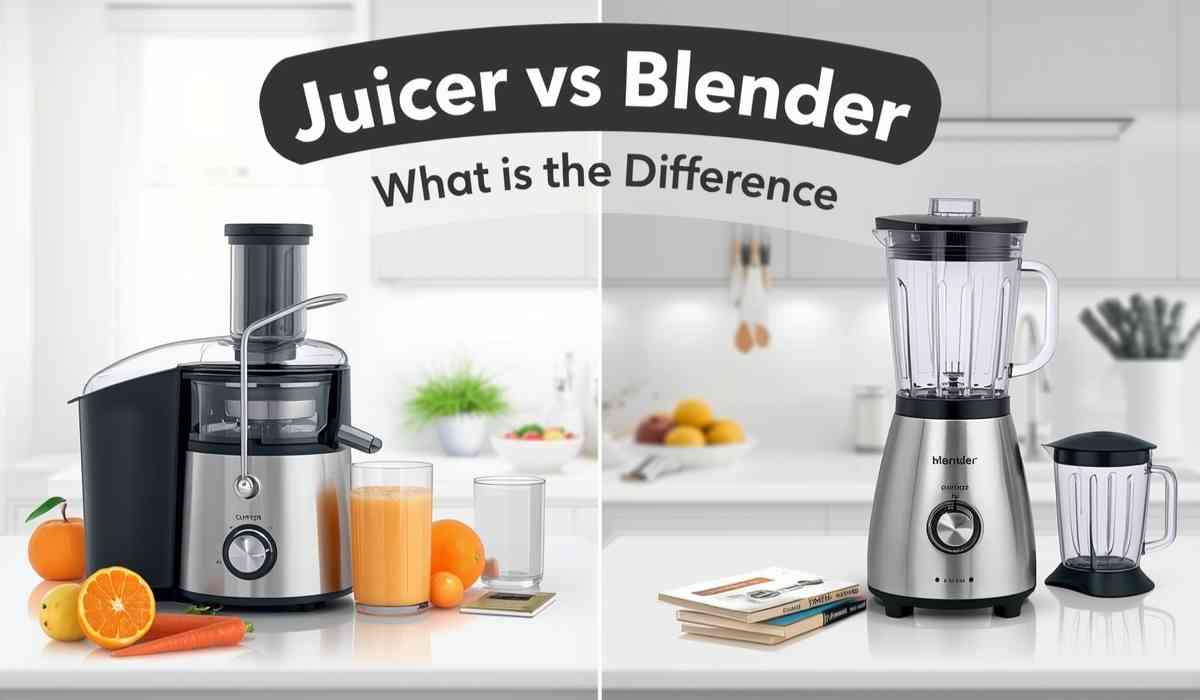
Juicer vs Blender Understanding The Basics
You’re probably looking at a juicer and a blender and wondering, “What’s the big deal? They both make drinks from fruits and veggies!” It’s a fair question, especially when you’re just starting out on a healthier lifestyle or trying to make more homemade drinks. The confusion often comes from the fact that both machines involve processing produce.
However, the end results and how they get there are quite different. This post will clear up all those Juicer vs Blender Differences so you can pick the right tool for your needs.
What Is A Juicer
A juicer is a machine designed for one main job: to extract the liquid from fruits and vegetables. Think of it as a super-efficient squeezer. It spins or grinds your produce, and then it separates the juice from the fibrous pulp.
The pulp is usually pushed out into a separate container, leaving you with pure liquid. This liquid is packed with vitamins, minerals, and enzymes. It’s like getting a concentrated shot of goodness from your fruits and veggies.
How A Juicer Works
There are a few main types of juicers, but they all follow a similar principle. Most use a spinning blade or a grinding mechanism to break down the produce. Then, a mesh screen or filter helps to strain out the juice from the solid parts.
Some juicers use centrifugal force to push the juice through a sieve. Others, called masticating or slow juicers, use a screw-like auger to crush and press the produce. This method is gentler and can extract more juice, especially from leafy greens.
Types Of Juicers
Centrifugal Juicers: These are often the most common and affordable. They spin very fast, using centrifugal force to separate the juice. They work well for hard fruits and vegetables but can create some foam and heat, which might reduce nutrient content slightly.
They are generally quick to use and clean.
Masticating Juicers (Slow Juicers): These use a single or twin auger to crush produce slowly. They produce less foam and heat, preserving more nutrients. They are great for leafy greens, soft fruits, and even making nut butters or pasta.
They are usually more expensive and take a bit longer to process.
Twin Gear Juicers: These have two interlocking gears that crush and chew the produce. They are very efficient and produce high-quality juice, especially from fibrous greens. They are typically the most expensive type of juicer.
What Is A Blender
A blender, on the other hand, is designed to mix ingredients together. It has blades at the bottom that spin very fast. When you add fruits, vegetables, liquids, and other ingredients, the blades chop them up and blend them into a smooth mixture.
Unlike a juicer, a blender keeps all the parts of the produce – the pulp, fiber, and skin (if you choose to include it). This is what gives you that thicker, smoothie-like consistency.
How A Blender Works
Blenders work by creating a vortex. The fast-spinning blades pull ingredients down towards them, where they are chopped, pureed, and mixed. You can add liquid like water, milk, or juice to help the blades move freely and achieve the desired consistency.
You can also add ice, nuts, seeds, yogurt, and protein powder to create a wide range of textures and flavors.
Types Of Blenders
Countertop Blenders: These are the standard blenders you see in most kitchens. They are powerful and can handle a variety of tasks, from smoothies to crushing ice. They usually have multiple speed settings and come with a pitcher.
Personal Blenders (Bullet Blenders): These are smaller and designed for single servings. They are quick and easy to use for making smoothies on the go. You can often blend your drink in a portable cup and then take it with you.
High-Performance Blenders: These are very powerful blenders capable of creating incredibly smooth textures, heating soups, and even grinding grains. They are more expensive but offer a wider range of capabilities.
Juicer vs Blender Key Differences
Now that we know what each machine does, let’s really look at the Juicer vs Blender Differences side-by-side. The main difference is what happens to the fiber. Juicers remove it, while blenders keep it.
This leads to very different results.
Fiber Content
Juicers remove almost all the fiber from fruits and vegetables. This means you get a liquid that is easily digested and absorbed. The upside is that you can consume a large amount of produce in one serving without feeling too full.
The downside is that you lose out on the benefits of dietary fiber, such as improved digestion and feeling full for longer.
Blenders, however, keep all the fiber. When you make a smoothie in a blender, you’re consuming the whole fruit or vegetable. This fiber is great for your digestive system, helps you feel satisfied after eating, and can help regulate blood sugar levels.
Because you’re eating the whole thing, smoothies can be more filling than a glass of juice.
Nutrient Absorption
With juicing, the idea is that removing the fiber allows your body to absorb the vitamins and minerals more quickly. Some people feel more energetic after drinking juice because the nutrients are readily available. However, the rapid absorption of sugars, especially from fruit juice, can lead to a quicker spike in blood sugar compared to eating whole fruit or drinking a smoothie.
Blenders deliver nutrients along with fiber. While the absorption might be a little slower due to the fiber, you get the complete package of nutrients, including the benefits of fiber. The combination of nutrients and fiber in a smoothie helps provide sustained energy release.
Texture And Consistency
Juices are thin, smooth, and watery. They have a light consistency, similar to water with flavor. You can drink them quickly.
Smoothies are thick and creamy. They can range from slightly chunky to perfectly smooth, depending on your blender and ingredients. They are meant to be sipped or eaten with a spoon.
Ingredient Flexibility
Juicers are primarily for fruits and vegetables. While some can handle herbs and wheatgrass, they aren’t designed for nuts, seeds, ice, or frozen ingredients. You generally use fresh produce.
Blenders are incredibly versatile. You can blend fruits, vegetables, leafy greens, nuts, seeds, oats, protein powders, yogurt, ice, and even cooked ingredients like vegetables for soup. They can handle a much wider range of ingredients and textures.
Ease Of Cleaning
This can vary greatly between models. However, juicers often have more parts to clean, especially those with fine mesh filters. Pulp can sometimes get stuck in crevices, making cleaning a bit more time-consuming.
Blenders, especially personal blenders, can be very easy to clean. Often, you just need to rinse the pitcher and blades. High-performance blenders might require a bit more attention, but generally, they are simpler to maintain than most juicers.
When To Choose A Juicer
You might choose a juicer if your main goal is to:
- Consume large quantities of fruits and vegetables in liquid form.
- Enjoy the pure taste of fruits and vegetables without pulp.
- Are looking for a quick way to get vitamins and minerals without feeling full.
- Want to support your body’s detoxification processes (though this is a debated topic).
- Have specific dietary needs that benefit from easily digestible nutrients.
Examples of good uses for a juicer include:
- Fresh orange juice
- Green juice with kale, spinach, cucumber, and apple
- Carrot and ginger juice
- A quick shot of wheatgrass
When To Choose A Blender
You might choose a blender if your main goal is to:
- Make filling and nutritious smoothies for breakfast or snacks.
- Incorporate more fiber into your diet.
- Create a variety of recipes like soups, sauces, dips, nut butters, and baby food.
- Enjoy thicker, more satisfying drinks that can replace a meal.
- Want a more versatile appliance that can do more than just make drinks.
Examples of good uses for a blender include:
- Fruit smoothies with yogurt or milk
- Green smoothies with spinach, banana, and almond milk
- Protein shakes
- Homemade hummus or pesto
- Creamy vegetable soups
- Nut butters from almonds or peanuts
Juicer vs Blender Which Is Healthier
This is where the Juicer vs Blender Differences get interesting from a health perspective. Neither is definitively “healthier” than the other; it really depends on what you’re trying to achieve.
Juicing offers a concentrated dose of vitamins and minerals. It can be great for people who struggle to eat enough fruits and vegetables or need easily digestible nutrients. However, it lacks fiber and can lead to faster sugar spikes if you juice a lot of fruit.
So, a juice made mostly of vegetables with a little bit of fruit is often considered healthier than a fruit-heavy juice.
Blending keeps the fiber, which is excellent for digestion, satiety, and blood sugar control. Smoothies are more filling and can serve as a more complete meal
Ultimately, the healthiest option is the one that fits your lifestyle and dietary goals best, and that you will actually use. Both can be part of a healthy diet.
Juicer vs Blender Comparison Chart
Here’s a quick look at the key differences in a table format:
| Feature | Juicer | Blender |
|---|---|---|
| Main Function | Extracts liquid, removes pulp | Mixes and purees ingredients |
| Fiber Content | Very low (removed) | High (retained) |
| Nutrient Delivery | Concentrated, fast absorption | Whole food, sustained release with fiber |
| Texture | Thin liquid | Thick, creamy, can be chunky |
| Versatility | Limited to fruits/vegetables | Wide range of ingredients (fruits, veggies, nuts, seeds, ice, etc.) |
| Ease of Cleaning | Can be more complex with many parts | Generally simpler, especially personal blenders |
| Best For | Pure juice, quick nutrient intake | Smoothies, shakes, soups, sauces, meal replacements |
FAQ Of Juicer vs Blender What Is The Difference
Question: Can I make smoothies with a juicer
Answer: No, you cannot make smoothies with a juicer. Juicers are designed to extract liquid and discard the pulp, which is the main component of a smoothie.
Question: Can I make juice with a blender
Answer: You can make a type of juice with a blender, often called a “whole fruit smoothie” or a “blended juice.” However, it will be much thicker than traditional juice because it contains all the fiber. You would need to strain it thoroughly through a fine mesh sieve or cheesecloth to get a thinner juice, but this is labor-intensive and less effective than using a juicer.
Question: Which is better for weight loss juicer or blender
Answer: For weight loss, a blender is often recommended because smoothies made with blenders are more filling due to their fiber content. This can help you feel satisfied longer, potentially reducing overall calorie intake. Juices can cause blood sugar spikes and are less filling, which might lead to more snacking.
Question: What are the best fruits and vegetables for juicing
Answer: For juicing, apples, cucumbers, celery, carrots, beets, spinach, kale, ginger, and lemons are excellent choices. They provide good juice yield and great nutrients. Heavy fruits like bananas or avocados are not suitable for juicing.
Question: What are the best ingredients for smoothies
Answer: For smoothies, you can use a wide variety of fruits (berries, bananas, mangoes), vegetables (spinach, kale, avocado), liquids (water, milk, plant-based milk, yogurt), and additions like nuts, seeds, protein powder, oats, and ice.
Final Thoughts
When you look at Juicer vs Blender Differences, it’s clear they serve different purposes. A juicer gives you pure, liquid nutrition without the fiber, great for a quick nutrient boost. A blender creates thick, filling smoothies and so much more, keeping all the beneficial fiber.
Your choice depends on whether you want juice or a smoothie and what other kitchen tasks you want your appliance to handle. Both can be fantastic tools for a healthy lifestyle. Choose the one that best fits your goals and what you enjoy making.

![Air Fryer Size Guide for Families[1]](https://creativehouseblog.com/wp-content/uploads/2026/03/Air_Fryer_Size_Guide_for_Families1-768x448.jpg)
![Toaster vs Toaster Oven Which Is Best[1]](https://creativehouseblog.com/wp-content/uploads/2026/03/Toaster_vs_Toaster_Oven_Which_Is_Best1-768x448.jpg)
![How to Clean Your Coffee Maker Easily[1]](https://creativehouseblog.com/wp-content/uploads/2026/03/How_to_Clean_Your_Coffee_Maker_Easily1-768x448.jpg)
![What Can You Make With A Stand Mixer[1]](https://creativehouseblog.com/wp-content/uploads/2026/03/What_Can_You_Make_With_A_Stand_Mixer1-768x448.jpg)
![What Foods Should Not Go in a Food Processor[1]](https://creativehouseblog.com/wp-content/uploads/2026/03/What_Foods_Should_Not_Go_in_a_Food_Processor1-768x448.jpg)
![Air Fryer Digital Vs Manual Controls A Simple Guide[1]](https://creativehouseblog.com/wp-content/uploads/2026/03/Air_Fryer_Digital_Vs_Manual_Controls_A_Simple_Guide1-768x448.jpg)