
So, you want to make fresh juice at home, that’s great! But looking into juicers can feel a little confusing. There are many different kinds, and knowing which one is best for you can be tough.
Key Takeaways
- You will learn about the main types of juicers available.
- Understand how each juicer type works.
- Discover the pros and cons of different juicer models.
- Find out which juicer is best for your needs and budget.
- Gain confidence in choosing the right juicer for fresh, healthy drinks.
This guide makes Types of Juicers Explained easy. We will break down each type step-by-step so you can pick the perfect juicer for your kitchen.
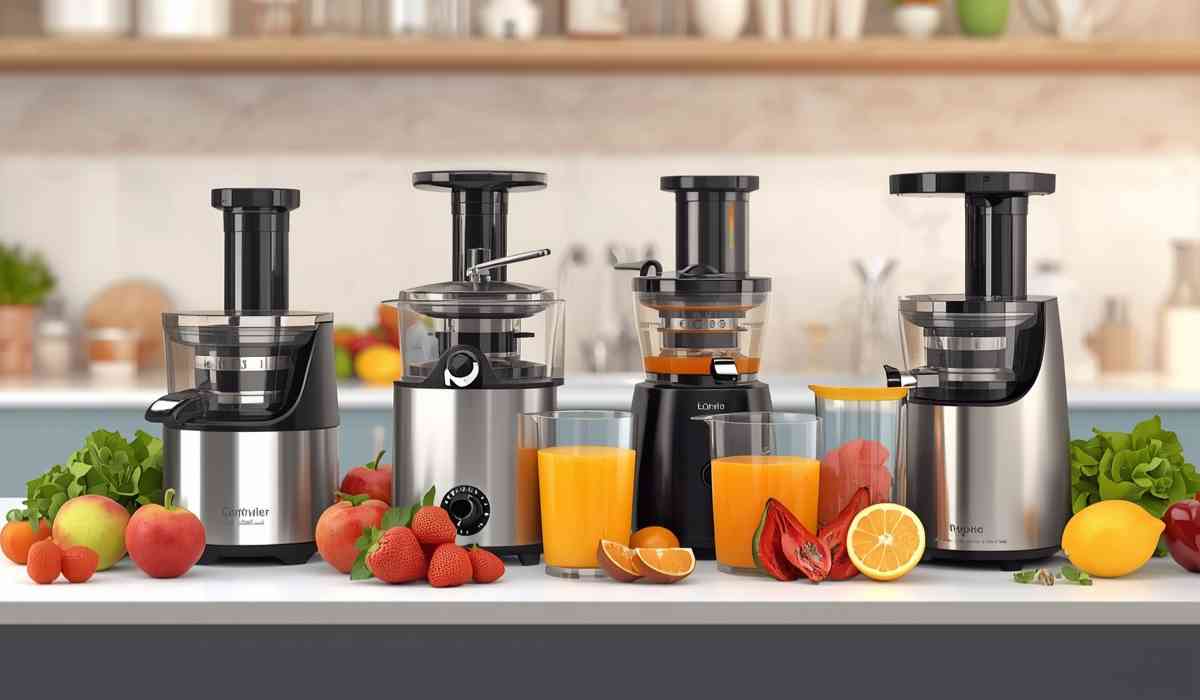
Understanding Different Types of Juicers
Making fresh juice at home is a wonderful way to get more vitamins and minerals into your diet. It tastes so much better than store-bought juice. However, the first step, choosing a juicer, can stop people.
There are several popular types of juicers, and they all do things a bit differently. Knowing the differences helps you find the one that fits your kitchen and your juicing habits best.
Centrifugal Juicers
Centrifugal juicers are perhaps the most common type you’ll find in stores. They work by spinning very fast, using a sharp blade to shred fruits and vegetables. The spinning action then flings the juice out through a mesh filter.
The pulp, the solid leftover bits, gets pushed to a separate container.
These machines are usually quite fast. They are also often more affordable than other types. This makes them a good choice for beginners or people who don’t juice very often.
They handle hard fruits and vegetables well, like carrots and apples. However, they can create more heat when juicing, which might reduce some nutrients in the juice. They can also be noisy and might not work as well with leafy greens.
Pros of Centrifugal Juicers
- Fast juicing speed
- Generally more affordable
- Easy to find and use
- Good for hard produce
Cons of Centrifugal Juicers
- Can be noisy
- May create heat that affects nutrients
- Not ideal for leafy greens
- Juice may have more foam
Masticating Juicers
Masticating juicers, also known as slow juicers, work differently. They use a slow-turning auger, like a screw, to crush and press the produce. This gentle crushing action extracts the juice without generating much heat.
This method is great because it helps keep more of the vitamins and enzymes in your juice.
Masticating juicers are very efficient. They can get more juice out of your fruits and vegetables compared to centrifugal juicers. They also do a much better job with leafy greens, like spinach and kale, and can even juice wheatgrass.
The juice they produce is often smoother with less foam. The main downsides are that they are slower and tend to be more expensive. They also require a bit more prep time as you might need to cut produce into smaller pieces.
Pros of Masticating Juicers
- High juice yield
- Preserves more nutrients
- Excellent for leafy greens and herbs
- Produces smoother juice with less foam
- Quieter operation
Cons of Masticating Juicers
- Slower juicing speed
- Generally more expensive
- May require more produce preparation
Twin Gear Juicers
Twin gear juicers are a type of masticating juicer, but they have a unique design. Instead of one auger, they use two interlocking gears that spin towards each other. These gears catch and crush the produce very effectively.
This double-crushing action is extremely efficient at extracting juice and pulp.
These juicers are known for being the most efficient at extracting juice. They can handle a wide variety of produce, including very fibrous vegetables and leafy greens. They also produce very dry pulp, meaning you get the most juice possible from your ingredients.
Twin gear juicers are also great for making other things like nut butters and sorbets. The main drawbacks are their high cost and that they can be a bit more complex to clean.
Pros of Twin Gear Juicers
- Highest juice yield
- Excellent for all types of produce including leafy greens
- Produces very dry pulp
- Versatile for other food preparations
Cons of Twin Gear Juicers
- Most expensive type
- Can be more difficult to clean
- Slower juicing speed
Juicer Comparison Table
| Feature | Centrifugal Juicer | Masticating Juicer | Twin Gear Juicer |
|---|---|---|---|
| Juicing Speed | Fast | Slow | Slow |
| Juice Quality | Good, some foam | Excellent, smooth | Excellent, very smooth |
| Produce Handling | Good for hard produce | Excellent for all produce, greens | Best for all produce, greens |
| Nutrient Retention | Good | Excellent | Excellent |
| Noise Level | Noisy | Quiet | Quiet |
| Price | Affordable | Moderate to High | High |
| Ease of Cleaning | Moderate | Moderate | More Difficult |
How to Choose the Right Juicer for You
Now that you know about the different types of juicers, how do you pick the one that’s perfect for your home? Think about what you plan to juice most often. If you love making quick juices with fruits and hard vegetables, a centrifugal juicer might be a good starter.
They are budget-friendly and easy to use.
If you want to get the most nutrients from your ingredients and juice lots of leafy greens, a masticating juicer is a better choice. They are more efficient and give you a smoother juice. For those who want the absolute best juice yield and the most versatility, and have a larger budget, a twin gear juicer is the top-tier option.
Consider your budget, how much time you have, and how much counter space you can spare. Cleaning is also a factor; some are easier to clean than others. Reading reviews for specific models can also help you make your final decision.
No matter which type you choose, fresh homemade juice is a tasty and healthy treat!
FAQ Of Types of Juicers Explained Simply
Question: What is the difference between a centrifugal and a masticating juicer?
Answer: Centrifugal juicers use a fast-spinning blade to shred produce, while masticating juicers use a slow-turning auger to crush and press it. Masticating juicers are gentler and retain more nutrients.
Question: Are masticating juicers better for leafy greens?
Answer: Yes, masticating juicers are much better at juicing leafy greens like spinach and kale because their slow-crushing action can effectively break them down.
Question: Which type of juicer is the most efficient?
Answer: Twin gear juicers are generally considered the most efficient because their double-interlocking gears extract the maximum amount of juice from produce.
Question: Which juicer is best for beginners on a budget?
Answer: Centrifugal juicers are often recommended for beginners because they are more affordable and quicker to use, though they may not be as efficient with leafy greens.
Question: How does the heat generated by a juicer affect the juice?
Answer: Centrifugal juicers can generate heat from the fast spinning blade, which can potentially reduce some heat-sensitive nutrients and enzymes in the juice.
Final Thoughts
You now know the main kinds of juicers. From fast centrifugal models to powerful twin gear machines, there’s an option for everyone. Each type has its own strengths, whether it’s speed, efficiency, or nutrient retention.
Choosing the right one means matching the juicer to your habits and what you want to juice. Enjoy making your fresh, healthy drinks!

![Slow Cooker vs Crockpot What's The Difference[1]](https://creativehouseblog.com/wp-content/uploads/2026/03/Slow_Cooker_vs_Crockpot_Whats_The_Difference1-768x448.jpg)
![Are Induction Cooktops Energy Efficient[1]](https://creativehouseblog.com/wp-content/uploads/2026/03/Are_Induction_Cooktops_Energy_Efficient1-768x448.jpg)
![How Air Fryer Heating Elements Work[1]](https://creativehouseblog.com/wp-content/uploads/2026/03/How_Air_Fryer_Heating_Elements_Work1-768x448.jpg)
![What Is a Blender Used For in the Kitchen[1]](https://creativehouseblog.com/wp-content/uploads/2026/03/What_Is_a_Blender_Used_For_in_the_Kitchen1-768x448.jpg)
![What Can You Make With a Blender[1]](https://creativehouseblog.com/wp-content/uploads/2026/03/What_Can_You_Make_With_a_Blender1-768x448.jpg)
![How Much Electricity Does an Air Fryer Use[1]](https://creativehouseblog.com/wp-content/uploads/2026/03/How_Much_Electricity_Does_an_Air_Fryer_Use1-768x448.jpg)