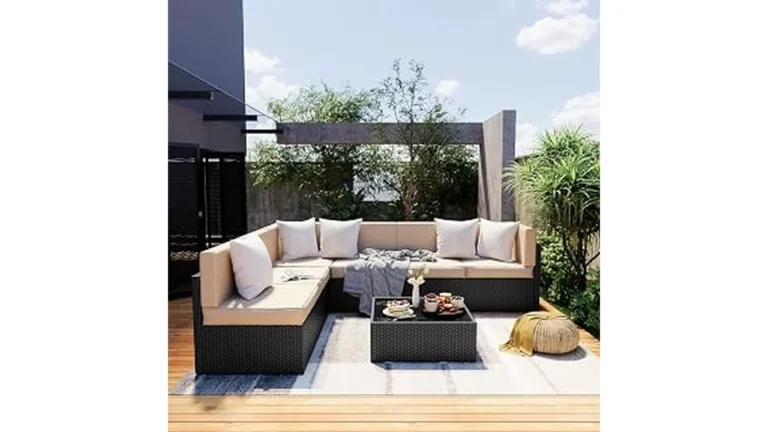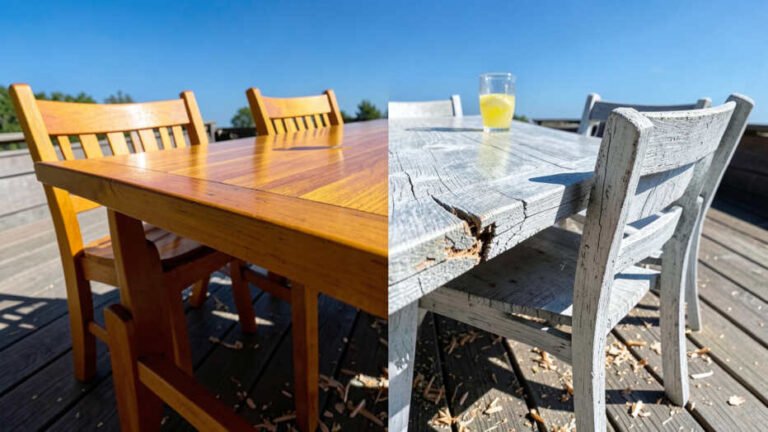
The real differences between a teak and acacia sectional patio set come down to longevity, maintenance, and cost: teak contains natural oils that resist water and rot without treatment, lasting 25–30 years, while acacia is harder on the Janka scale but requires annual sealing to prevent cracking and costs roughly 40–50% less upfront. Teak weathers naturally to a silver-gray patina, whereas acacia darkens over time unless sealed. The key takeaway is that teak offers lower long-term upkeep at a higher purchase price, while acacia provides greater scratch resistance and affordability but demands consistent annual care.
You want patio furniture that lasts. The choice between teak and acacia often comes down to budget versus longevity. This post breaks down the real differences in durability, cost, maintenance, and appearance for sectional patio sets.
In short, teak is denser, more water-resistant, and lasts 25-30 years with minimal upkeep, while acacia is harder on the Janka scale but requires yearly sealing to avoid cracking. Acacia costs roughly 40-50% less upfront. Your climate and budget determine the better fit.
Key Takeaways:
- Teak contains natural oils that resist water, rot, and insects without any chemical treatment.
- Acacia has a higher Janka hardness rating (1,750 lbf) compared to teak (1,155 lbf), making it more scratch-resistant.
- A teak sectional set typically costs twice as much as an acacia set of equivalent size and design.
- Acacia requires annual sanding and sealing to maintain its color and prevent surface cracking.
- Teak ages to a silver-gray patina naturally, while acacia turns dark brown over time unless sealed.
What Is Teak Wood?
Teak comes from the Tectona grandis tree native to Southeast Asia. It is one of the most durable hardwoods used in outdoor furniture. The wood contains high levels of natural oil and rubber that repel water and insects.
According to the, premium teak has a moisture content below 12% when properly kiln-dried. This low moisture level prevents warping in humid climates. The wood also contains up to 45% extractives – natural chemicals that act as preservatives.
Warning: Not all teak is equal. Plantation-grown teak from young trees often has less oil content than old-growth teak. Look for Grade A teak with tight grain lines for maximum durability.
Key characteristics of teak for patio furniture include:
- Natural oils that eliminate the need for chemical sealants or stains.
- Grain structure that resists splintering even after years of sun exposure.
- Dimensional stability – teak expands and contracts less than most hardwoods.
- UV resistance that slows surface degradation compared to other woods.
- Easy repair – light sanding can remove minor scratches or stains.
What Is Acacia Wood?
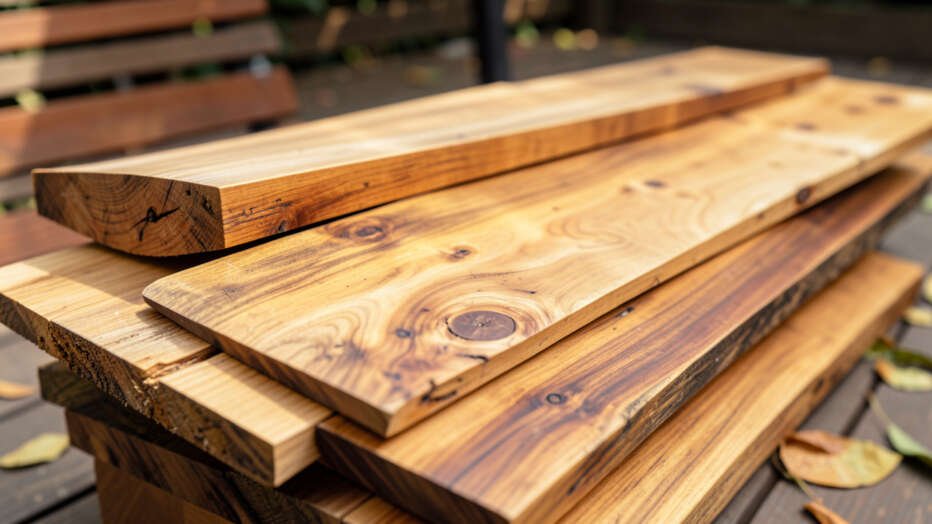
Acacia wood comes from the Acacia mangium tree, which grows rapidly in tropical regions like Indonesia and Vietnam. It is a hardwood with a Janka rating of 1,750 lbf, making it harder than teak. The wood has a reddish-brown color with striking grain patterns.
The USDA Forest Service notes that acacia wood has a density of approximately 50 pounds per cubic foot when dried. This density gives it excellent resistance to dents and scratches. However, acacia lacks the natural oil content of teak, which makes it more vulnerable to moisture.
Important: Acacia is an eco-friendly choice because the trees reach harvest size in 8-12 years versus 25-40 years for teak. This faster growth rate makes acacia a more sustainable option for budget-conscious buyers.
Key characteristics of acacia for patio furniture include:
- Higher surface hardness than teak, which resists scratches from pets or daily use.
- Visible grain patterns with dark streaks that create a unique appearance.
- Lower cost due to faster growth and wider availability.
- Need for annual sealing to protect against water damage and cracking.
- Limited natural rot resistance compared to teak.
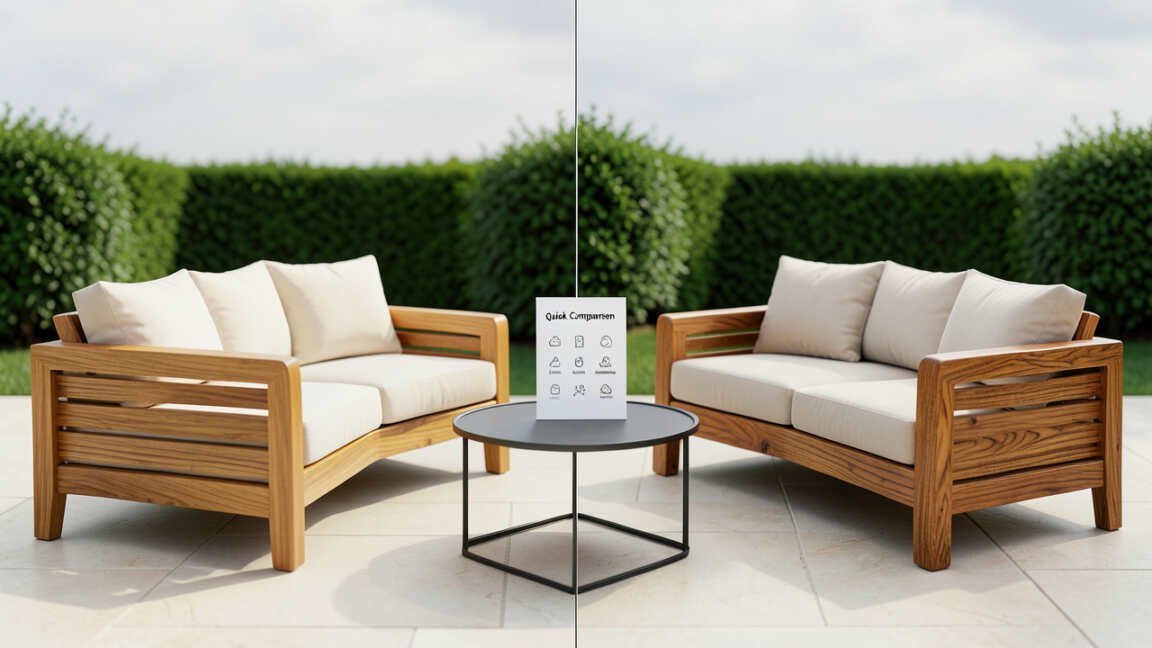
Quick Comparison Table
| Feature | Teak | Acacia |
|---|---|---|
| Janka Hardness | 1,155 lbf | 1,750 lbf |
| Natural Oil Content | High (25-45% extractives) | Low (requires sealing) |
| Average Lifespan | 25-30 years | 10-15 years |
| Cost (6-piece sectional) | $3,500 – $6,000 | $1,500 – $3,000 |
| Annual Maintenance | None required | Sand and seal yearly |
| Color Aging | Silver-gray patina | Dark brown |
| Sustainability | 25-40 year harvest cycle | 8-12 year harvest cycle |
How to Choose Between Teak and Acacia
Your decision rests on three factors: budget, climate, and desired appearance. Follow these steps to make the best choice for your patio.
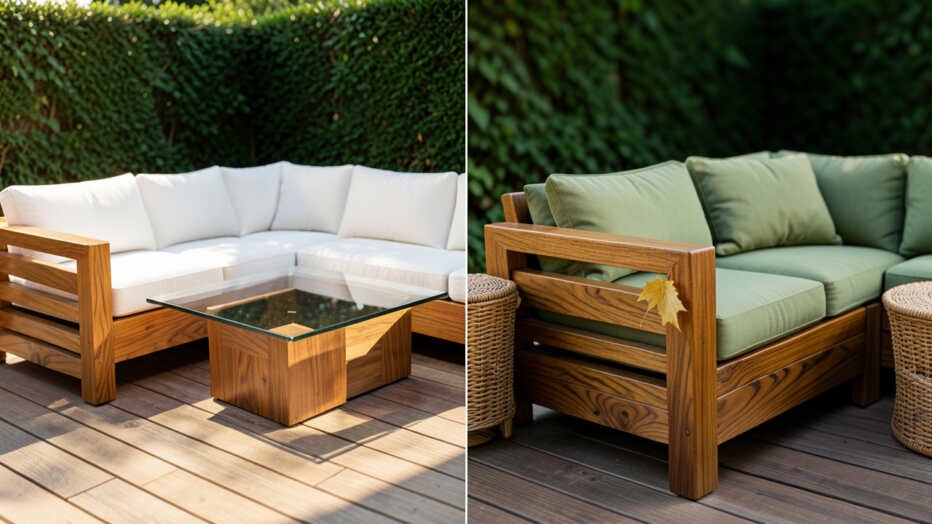
- Check your local climate – If you live in a humid or rainy region, teaks natural water resistance gives it a clear advantage. Acacia works well in dry climates with less rainfall.
- Set a realistic budget – Acacia costs roughly 50% less than teak for the same sectional size. Calculate your total budget including potential maintenance products.
- Decide on appearance preferences – Teak naturally turns silver-gray over time. Acacia turns dark brown. If you prefer a warm golden look, plan to seal either wood regularly.
- Consider care commitment – Acacia requires annual sanding and sealing. Teak needs no maintenance beyond occasional cleaning. Be honest about how much time you will invest.
- Test the feel – Visit a showroom to sit on both materials. Teak feels slightly oily and smooth. Acacia feels harder and can show grain texture more prominently.
Tip: If you choose acacia but want it to last longer, consider a set with a powder-coated aluminum frame underneath. This prevents the structural frame from rotting if the wood cracks due to weather changes.
Cost Comparison in Detail
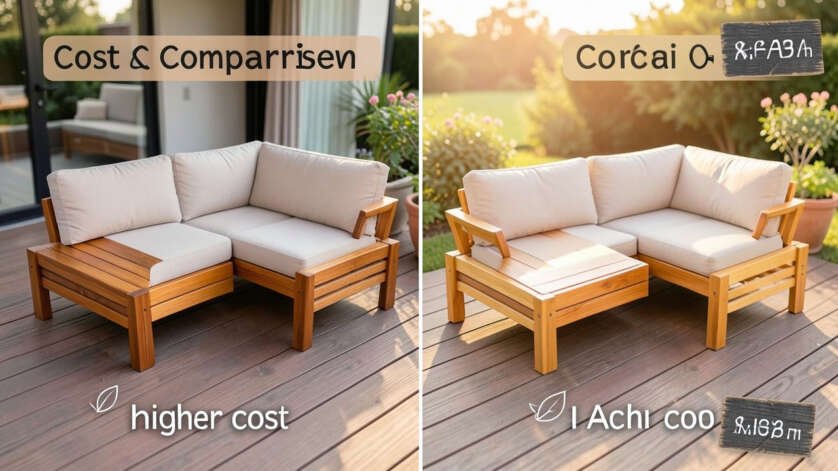
The price gap between teak and acacia is significant. A typical 6-piece teak sectional with cushions costs between $3,500 and $6,000. An acacia set of the same size ranges from $1,500 to $3,000. The difference comes from slower growth rates, higher demand, and strict harvesting regulations for teak.
Additional costs to factor into your teak and acacia sectional patio set decision include:
- Teak protectant spray: $15-25 per application (optional for teak, needed for acacia).
- Sanding equipment: $30-60 for a palm sander and sandpaper if you maintain acacia.
- Delivery fees: Typically $100-200 for a large sectional set.
- Cushion replacements: $200-500 every 3-5 years for either material.
- Storage covers: $50-150 to protect furniture during off-season months.
According to, the typical homeowner spends about $300-500 per year maintaining outdoor wood furniture when using sealants and cleaners. Teak owners typically spend 60-70% less on maintenance products over a 10-year period.
Maintenance and Longevity
Teak Maintenance Requirements
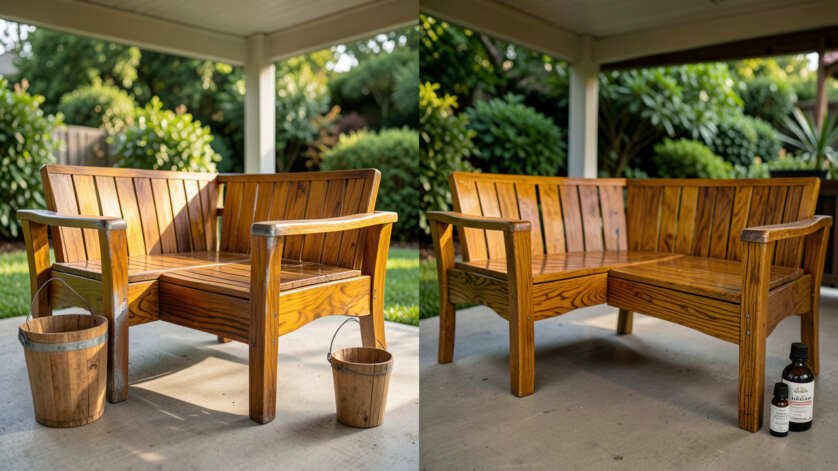
Teak requires almost no upkeep. Clean it once or twice a year with mild soap and water. Let it weather naturally to a silver-gray color. If you prefer the golden-brown look, apply a UV-protectant teak sealer every 1-2 years.
Important: Never use pressure washers on teak. High-pressure water forces the natural oils out of the wood, reducing its lifespan significantly.
Acacia Maintenance Requirements
Acacia needs annual care to prevent cracks and water damage. Follow this routine each spring:
- Lightly sand the surface with 120-grit sandpaper to remove any rough spots or mildew.
- Wipe away all dust with a damp cloth and let the wood dry for 24 hours.
- Apply a UV-resistant outdoor wood sealer or teak oil using a brush or cloth.
- Let the first coat soak for 30 minutes, then apply a second coat.
- Allow the furniture to cure for 48 hours before sitting on it or placing cushions.
The recommends using water-based sealers for outdoor wood furniture to reduce volatile organic compounds (VOCs) in your yard. Oil-based sealers last longer but produce stronger fumes during application.
Frequently Asked Questions
Which wood is stronger for a sectional patio set?
Acacia is harder than teak on the Janka hardness scale, scoring about 1,750 lbf compared to teaks 1,155 lbf. This means acacia resists scratches and dents better. However, teaks flexibility and oil content make it less prone to cracking under pressure.
Can I leave an acacia sectional outside in winter?
You can leave acacia outside in winter if you apply a high-quality water-repellent sealer each fall and cover the set with a breathable furniture cover. Freeze-thaw cycles can cause the wood to crack if it is not properly sealed.
How long does a teak sectional set last compared to acacia?
A teak sectional set typically lasts 25-30 years with minimal maintenance. An acacia set lasts 10-15 years when properly sealed and cared for. Without sealing, acacia may start to crack and deteriorate within 5-7 years.
Is acacia wood safe for people with allergies?
Acacia dust from sanding can cause respiratory irritation in sensitive individuals. Always wear a dust mask when sanding acacia furniture. The finished wood surface is generally safe for most people, but those with severe wood allergies should consult a doctor.
Can I paint or stain a teak or acacia sectional?
Yes, you can paint or stain both woods. However, teaks natural oils may cause paint to peel over time. Use an oil-based primer before painting teak. Acacia holds stain better because it lacks the high oil content. Test a small area first to confirm adhesion.
Final Thoughts
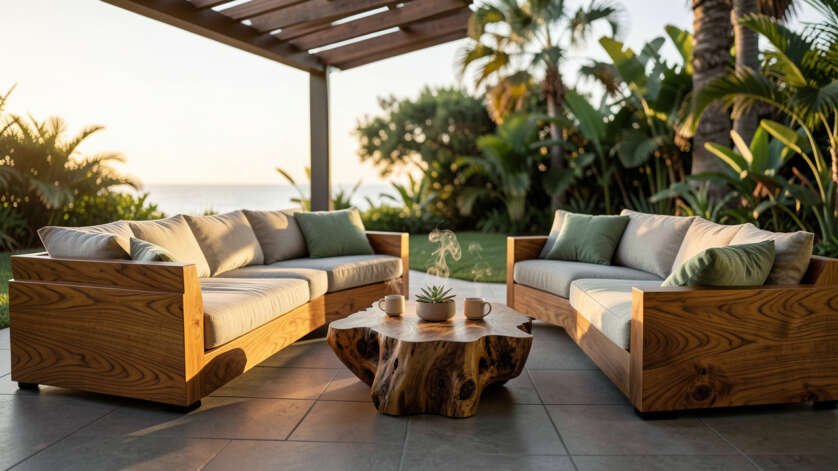
Teak offers unmatched longevity and zero-maintenance convenience for a higher upfront cost. Acacia gives you a budget-friendly entry into hardwood patio furniture with the trade-off of yearly upkeep. Choose teak if you want a set that will outlast your current home. Choose acacia if you want a great-looking sectional at half the price and are willing to seal it annually. Both woods deliver excellent outdoor performance when you understand their specific needs.