Using a wood-burning fire pit on a small patio rapidly fills the space with fine particulate matter (PM2.5) that concentrates without adequate ventilation, while radiant heat can crack concrete, melt siding, and ignite nearby furniture within feet. Most fire codes require 10 to 25 feet of clearance from structures, which small patios rarely provide, making the practice illegal in many jurisdictions and exposing you to denied insurance claims or HOA fines. The immediate takeaway is that wood-burning fire pits pose severe air quality, fire, and legal risks in compact outdoor spaces, and any use should be avoided unless the patio meets strict clearance and ventilation standards.
Lighting a wood fire in a tight space fills the area with smoke almost instantly. This guide explains the specific risks, safety rules, and fire codes you need to know.
Quick Verdict: Simply put, using a wood-burning fire pit on a small patio creates serious risks. Smoke accumulates fast, heat damages nearby surfaces, and a lack of clearance can easily ignite your home or furniture. Most fire codes require a clearance of 10 to 25 feet from structures, which a small patio usually cannot provide. This practice is often illegal and dangerous.
Key Takeaways
- Smoke from a wood fire releases fine particulate matter (PM2.5) that concentrates quickly in a small, enclosed space without proper ventilation.
- Radiant heat from the pit can crack concrete, melt vinyl siding, and ignite nearby furniture or walls within a few feet.
- Local fire codes and NFPA standards typically mandate a minimum 10-foot clearance between combustion sources and combustible structures.
- Homeowners insurance policies may deny claims if a fire originates from a code-violating placement on a patio.
- Apartment complexes and HOAs frequently ban wood-burning pits entirely on small patios and balconies.
What Happens to the Air Quality on a Small Patio
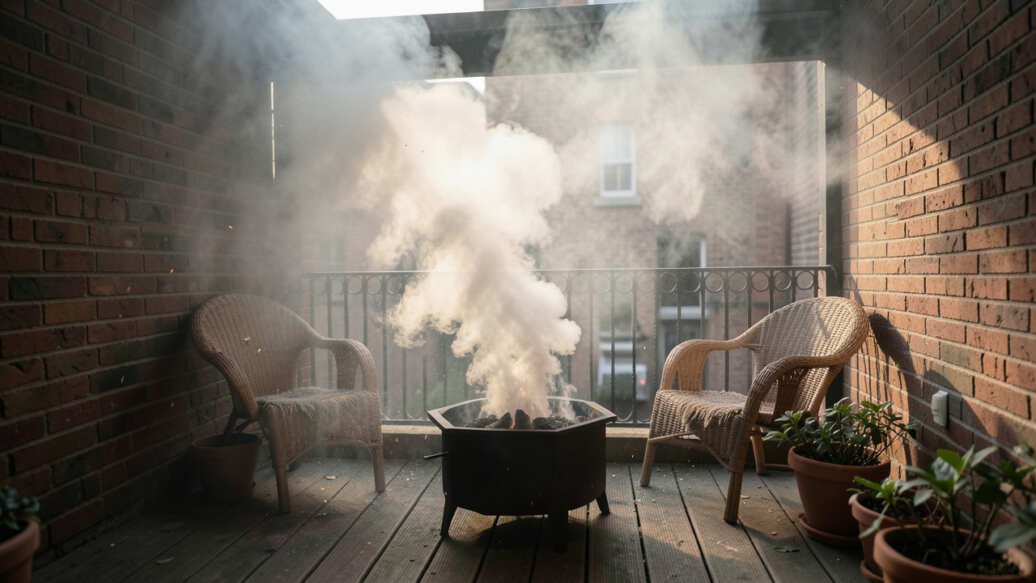
Wood smoke contains a mixture of gases and fine particles. According to the, these fine particles (PM2.5) can penetrate deep into your lungs. In a small patio, this smoke has nowhere to go. It recirculates instead of dissipating.
Carbon monoxide (CO) is another silent danger. You cannot see or smell CO, but it builds up rapidly in semi-enclosed patios. This is especially risky if your patio has high walls, a roof, or an awning. Symptoms include headaches, dizziness, and nausea. High levels can be fatal.
Warning: Never use a wood-burning fire pit under a covered patio, overhang, or balcony. The smoke and carbon monoxide will concentrate quickly, creating a serious health hazard for everyone present.