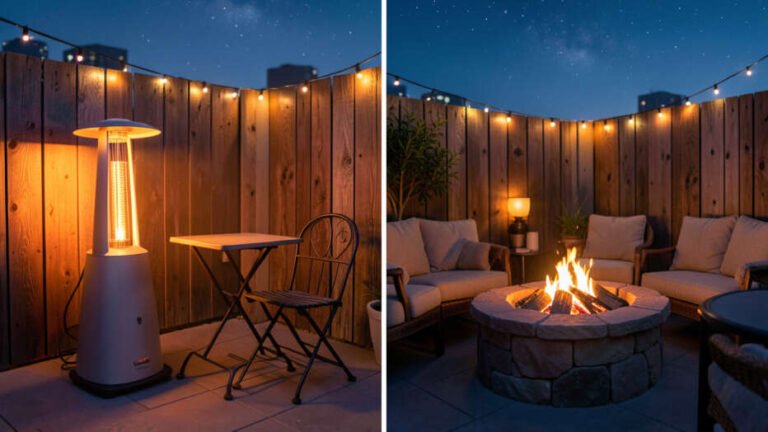
Electric infrared heaters are the most practical choice for a small patio because they produce no fumes and require minimal clearance, making them safer and more efficient than propane models. Propane heaters need at least three feet of clearance on all sides, which many small patios cannot provide, while approximately 40% of homeowners with a heater use it on patios under 100 square feet. Skipping the heater entirely saves floor space and eliminates safety risks, but it limits your ability to extend outdoor use into colder weather.
You want to enjoy your outdoor space year-round, but every inch counts in a small patio. This guide helps you decide whether a patio heater is worth it or if you should skip it entirely.
Simply put, a patio heater can work well on a small patio if you choose the right size and type. Infrared electric models are often the safest and most efficient choice for tight spaces. Propane heaters can work too but need careful placement and ventilation. Skipping the heater saves money and space but limits your outdoor season.
Key Takeaways
- Infrared electric heaters are the top recommendation for small patios because they produce no fumes and require little clearance.
- Propane patio heaters need at least 3 feet of clearance on all sides, which many small patios cannot provide.
- According to the Hearth, Patio & Barbecue Association (HPBA), approximately 40% of homeowners who own a patio heater use it primarily on small balconies or decks under 100 square feet.
- Skipping the heater frees up floor space and eliminates safety risks but limits your ability to use the patio in cooler months.
- The cost difference between buying a heater and skipping it is roughly $150 to $600 upfront, plus ongoing fuel or electricity costs.
What Is a Patio Heater and How Does It Work?
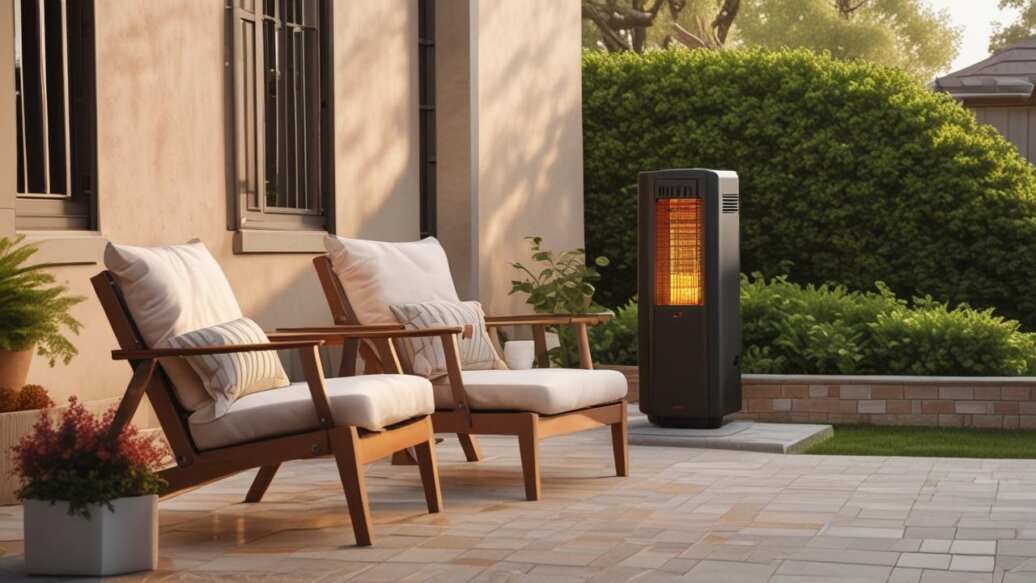
A patio heater is a device designed to radiate heat to outdoor areas, making them comfortable in cooler weather. Most models fall into three categories: propane gas, natural gas, and electric infrared.
- Propane heaters burn liquid propane stored in a tank Inside the unit. They produce high heat output (often 30,000 to 50,000 BTUs) but require ventilation and a stable base.
- Electric infrared heaters use heating elements to emit infrared radiation that warms objects and people directly, not the air. They have no flame and produce zero emissions.
- Natural gas heaters connect to a home gas line and offer continuous heat but require professional installation and are less common on small patios.
According to the, outdoor heating product sales have grown by 22% over the past five years, driven largely by smaller outdoor living spaces.
How to Decide: Patio Heater vs Skip It
This decision comes down to three main factors: space, budget, and usage. Use the table below to compare the key trade-offs quickly.
| Factor | Get a Heater | Skip the Heater |
|---|---|---|
| Floor space needed | 0-5 sq ft (wall or ceiling mount takes zero floor space) | No space used |
| Upfront cost | $80 – $600 | $0 |
| Annual operating cost | $30 – $200 (electric) or $50 – $300 (propane) | $0 |
| Safety concerns | Low with electric; moderate with propane (tip risk, gas leak) | None |
| Season extension | 3-6 extra months of comfortable use | No extension |
Key Insight: If you plan to use your small patio more than 10 times a year during cool weather, a heater pays for itself in comfort. For occasional use, skip it.
Types of Patio Heaters Suitable for Small Patios
Not every heater works well in a tight space. Here are the three most practical types for small patios, with their pros and cons.
Electric Infrared Heaters
These are the best overall choice for small patios. They mount on walls, ceilings, or under railings and take up zero floor space. Infrared heat warms people directly without heating the air, so you feel comfortable even on windy days.
- No open flame or gas fumes – safe for covered patios.
- Require a nearby electrical outlet or hardwiring.
- Typical output: 750-1500 watts (about 2,500-5,000 BTU).
- Average cost: $100-$400.
According to, electric infrared heaters that are UL-listed have passed strict safety tests for use in enclosed outdoor spaces.
Small Tabletop Propane Heaters
These portable units sit on a tabletop or the ground and use a 1-pound propane cylinder. They produce less heat than full-size models but take up very little space.
- Heat output around 5,000-8,000 BTU – enough for one or two people.
- Must be placed on a stable, non-flammable surface.
- Need at least 2 feet of clearance from walls and furniture.
- Average cost: $50-$150.
Safety Warning: Never use a propane heater on a small enclosed balcony without adequate ventilation. Carbon monoxide can build up quickly.
Wall-Mounted Propane or Natural Gas Heaters
These are less common but available for permanent installations. They mount on a wall and connect to a gas line or propane tank outside the unit. They produce significant heat but require professional installation and a larger upfront investment ($300-$600).
What a Patio Heater for Small Patios Is Not
Many homeowners carry misconceptions about using a patio heater in a tight space. Here are three common myths and the facts.
- Myth: A bigger heater always heats better. Fact: On a small patio, an oversized heater can overheat the area and waste energy. A 5,000-8,000 BTU unit is often sufficient for 50-80 square feet.
- Myth: Propane heaters are safe to use under a covered pergola. Fact: Many propane heaters require at least 6 feet of overhead clearance and open sides. Using them under a solid roof can trap gas and pose a fire hazard.
- Myth: Electric heaters are too weak for outdoor use. Fact: Infrared electric heaters are highly effective because they heat objects directly. According to the, infrared heating can feel up to 6 degrees warmer than the actual air temperature within minutes of turning on.
Pro Tips for Using a Patio Heater on a Small Patio
- Choose an infrared wall-mount or ceiling-mount heater to save floor space. Brands like Bromic Heating and Infratech offer slim, weather-resistant models specifically designed for small areas.
- Place the heater 18-24 inches above head height and angle it downward slightly for maximum coverage.
- If using a propane tabletop model, always secure the propane cylinder tightly and check for leaks with soapy water before each use.
- Install a timer or smart switch so the heater turns off automatically – this saves electricity and prevents overheating.
- Pair the heater with reflective patio furniture or a heat-retaining rug to amplify warmth.
When You Should Skip the Patio Heater
Skipping a patio heater is the right call in several scenarios. Evaluate your situation using these criteria.
- Your small patio is primarily used in summer or early fall when temperatures stay above 70 degrees Fahrenheit.
- Space is extremely tight – less than 40 square feet – and every square inch matters for seating or storage.
- You have a strict budget and prefer to invest in other upgrades like lighting, furniture, or plants.
- Your rental agreement or homeowners association (HOA) prohibits open flames or installed heaters on balconies.
- You are sensitive to electric bills and live in an area with high electricity rates.
If any three of these apply, you are better off saving your money and using blankets or a portable heated blanket instead.
How to Choose the Right Heater for Your Small Patio
Follow this step-by-step process to pick the perfect heater or decide to skip it.
- Measure your patio’s square footage and note any overhangs, walls, or railings.
- Determine how often you will use the heater – more than 15 times per year means a heater is worth it.
- Decide on fuel type: electric for safety and convenience, propane for higher heat and portability.
- Check local fire codes and HOA rules about outdoor heaters.
- Compare models based on BTU output (1,500 BTU per person is a good rule of thumb).
- Read reviews specifically from owners of small patios.
Tip: For a typical 80-square-foot small patio, an infrared 1,500-watt electric heater – about 5,100 BTU – is enough to keep two people comfortable down to 50 degrees Fahrenheit.
Resources and Tools
- Hearth, Patio & Barbecue Association (HPBA) – Industry body with safety tips and buying guides.
- Bromic Heating BTU Calculator – Online tool to estimate the heater size you need.
- National Fire Protection Association (NFPA) – Outdoor heating safety codes and recommendations.
- Energy Star – Find efficient electric heater models.
Frequently Asked Questions
Can I use a propane heater on a small balcony?
Yes, but with strict precautions. Ensure the balcony is open on at least two sides for ventilation. Keep the heater at least 3 feet from any walls, furniture, or curtains. Never leave a propane heater unattended.
What is the best patio heater for a very small space under 50 square feet?
An infrared electric wall-mounted heater is best because it uses zero floor space and produces no fumes. A 750-watt model typically works for a 4×12 foot balcony.
Will a patio heater increase my electricity bill significantly?
Electric heaters consume around 1.5 kWh per hour at the highest setting. Using it two hours per day for a month adds roughly $10-$15 to the bill, depending on local rates. This is often less than the cost of propane refills.
How close can a patio heater be to a wall?
For propane models, maintain at least 3 feet of clearance from walls, railings, and overhangs. Electric infrared models can be wall-mounted as long as the manufacturer specifies a minimum distance – often 6-12 inches.
Can I skip the heater and use something else to stay warm on a small patio?
Yes. Heated blankets, electric throw rugs, and mugs of hot drinks combined with good insulation (curtains, windbreaks) can extend your season without a dedicated heater. These options cost less money but offer less warmth for multiple people.
Final Thoughts
Choosing to put a patio heater in a small patio depends on your specific space, usage, and budget. Infrared electric models offer the best balance of safety and efficiency for tight areas. If you decide to skip the heater, focus on cozy alternatives like heated blankets and proper wind protection. Either way, you can enjoy your small outdoor space comfortably for more months of the year.