Electric grills for tailgating require a dedicated 15‑amp circuit or high‑capacity portable power source because most stadium outlets are shared and unreliable. Cold or windy weather can increase cook times by 30‑50 percent compared to propane or charcoal, and using a light‑gauge extension cord will ruin the cook. The flavor is noticeably different due to the absence of smoke from dripping fat, but that is acceptable if you adjust your cooking style and expectations.
You have seen the ads showing a perfect tailgate with an electric grill glowing on a fold-out table. The reality is more complicated. This post breaks down the real challenges, costs, and workarounds that come with grilling at a stadium parking lot using electricity.
Quick Verdict: In short, electric grills offer convenience and zero open-flame restrictions, but they bring serious power limitations, longer cook times, and weather sensitivity that most buyers discover only after their first tailgate. You need at least a 1500-watt power source, heavy-duty extension cords, and a willingness to adjust your cooking style for good results.
Key Takeaways
- Electric grills require a dedicated 15-amp circuit or a high-capacity portable power station, and most stadium outlets are shared with other tailgaters.
- Cooking on an electric grill in cold or windy weather can increase cook times by 30-50% compared to propane or charcoal.
- The flavor profile from an electric grill is noticeably different because there is no smoke from burning fat or charcoal drippings.
- Extension cord gauge matters more than length – a 50-foot 16-gauge cord can cause a dangerous voltage drop that damages the grill’s heating element.
- Most tailgating lots now allow electric grills but ban open flames, making electric your only option for hot food in those locations.
The Power Reality Nobody Mentions
Electric grills draw a massive amount of power. Most models consume between 1300 and 1800 watts at full heat. That is the same power draw as a space heater running on high.
Warning: Plugging a 1500-watt electric grill into a standard 15-amp circuit that already powers lights, a radio, or a small refrigerator will trip the breaker. According to the, overloading a single circuit is a leading cause of outdoor electrical fires.
You need to check the power rating on your specific grill model. The wattage determines how fast the grill heats up and how well it holds temperature in cold weather. A 1300-watt grill takes roughly 20 minutes to reach 400 degrees F in 50-degree weather. A 1700-watt model reaches the same temperature in about 12 minutes.
Stadium Outlets Are Not Reliable
Stadium parking lots were not designed for tailgate cooking. The outdoor outlets you find on light poles and building exteriors typically serve maintenance equipment, not cooking appliances. These outlets are often GFCI-protected, and GFCIs trip easily when they detect even small ground faults from a grill’s heating element.
According to the, nearly 75% of outdoor electrical receptacles in commercial parking areas are 15-amp circuits shared with lighting or signage. That means you cannot count on getting the full 1500 watts your grill needs.
You Need a Dedicated Power Source
The only reliable options for tailgating with an electric grill include:
- A portable power station like the Jackery Explorer 1000 or EcoFlow Delta 2 – these provide 1000-1800 watt-hours and can run a grill for 1-2 hours.
- A generator – a 2000-watt inverter generator handles an electric grill plus accessories without overload.
- A dedicated stadium outlet – some newer stadiums offer 20-amp outlets in premium tailgate zones, but you must reserve these spots in advance.
- Your vehicle’s power inverter – only works if you have a heavy-duty inverter rated at 2000 watts continuous, which requires a strong alternator.
| Power Source | Rated Wattage | Grill Runtime | Cost Range |
|---|---|---|---|
| Stadium 15A Outlet | 1500W max | Unlimited (shared risk) | Free |
| Portable Power Station (1000Wh) | 1200-1800W | 45-90 minutes | $600-$1,200 |
| 2000W Inverter Generator | 1600-2000W | 5-8 hours (1 gal gas) | $400-$800 |
| Vehicle 2000W Inverter | 2000W max | Variable (engine idling) | $200-$400 |
The portable power station option is the most popular choice among electric grill users. and both offer models with enough capacity for a full pregame cook. Just keep in mind that you cannot recharge your phone and run the grill at the same time on most mid-sized units.
Extension Cords Ruin Your Cook
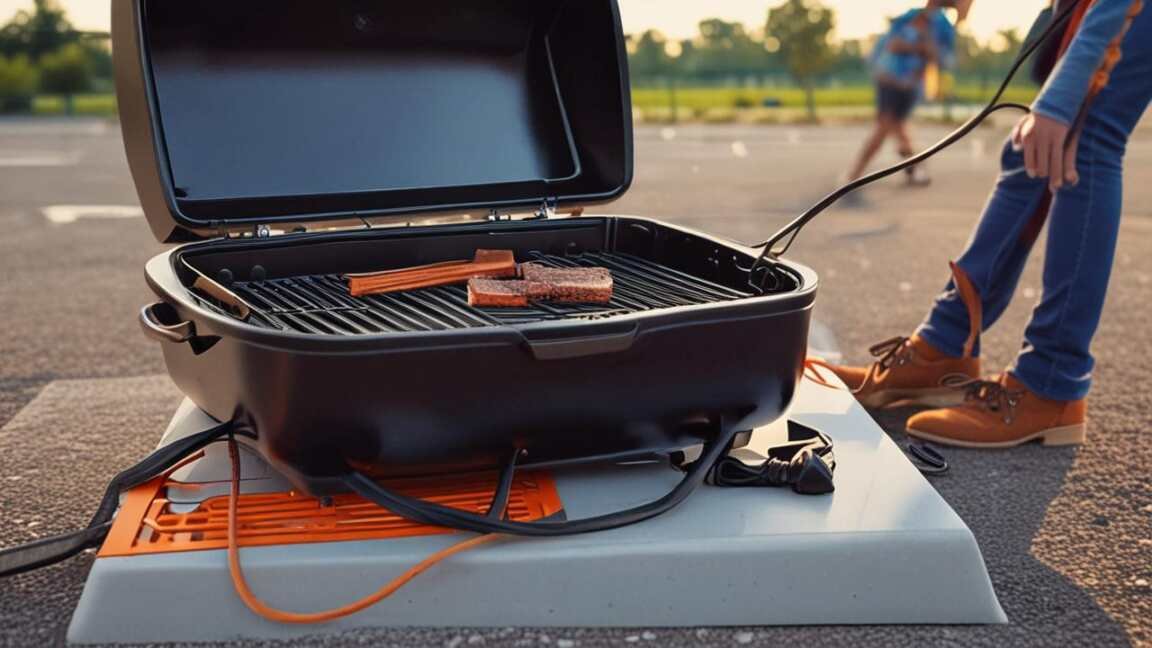
This is the single mistake that causes the most frustration. You buy a 100-foot extension cord because the outlet is far from your tailgate spot. The grill seems to heat slowly. The food never gets a good sear. You blame the grill.
The real problem is voltage drop. A long, thin extension cord reduces the voltage reaching your grill. At 110 volts instead of 120 volts, the heating element produces significantly less heat. Your grill’s thermostat keeps the element on longer, but it never reaches full temperature.
Use only a 12-gauge or 10-gauge extension cord for any electric grill. A 14-gauge cord works for runs under 25 feet. Never use a 16-gauge cord. recommend 12-gauge minimum for outdoor cooking appliances drawing 15 amps.
Tip: Buy a 25-foot 12-gauge extension cord and a 50-foot 10-gauge cord. Together they cover 75 feet of distance with minimal voltage drop. Always unplug the cord at the outlet, not at the grill, to avoid arcing damage to the connector.
Weather Changes Everything
Electric grills lose heat rapidly in cold air and wind. Unlike propane or charcoal grills that produce radiant heat from a flame, electric grills rely on a ceramic or metal heating element that heats the air directly above it. Wind strips that hot air away almost instantly.
At a tailgate in 40-degree weather with 10 mph wind, an electric grill set to 400 degrees F might actually cook at 280 degrees F. The heating element runs constantly to compensate, which draws more power and increases your cook times dramatically.
To counter this effect, you need a grill with a lid and a wind guard. Some electric grill models include built-in wind shields. For others, you can buy a third-party wind guard or use a folding table with side panels to block the breeze.
The reports that electric cooking appliances lose 15-25% of their heating efficiency for every 20-degree drop in ambient temperature when used outdoors. In contrast, propane grills lose only 5-10% under the same conditions because the flame heats the cooking surface directly.
Flavor Is Different and That Is Okay
Nobody tells you that electric grills produce a fundamentally different flavor than charcoal or propane. The reason is simple – there is no combustion. Charcoal grills create flavor from fat dripping onto hot coals, which creates smoke that deposits flavor compounds onto the food. Propane grills produce some smoke from drippings hitting the flame guard.
Electric grills produce very little smoke because the heating element is enclosed. The drippings fall onto a drip tray or a splash guard, not onto a hot surface that creates smoke. This means your burgers and steaks taste more like the seasoning you use and less like grilled flavor.
There are ways to add smoke flavor to electric grill cooking:
- Use a smoke box or smoker tube filled with wood chips placed directly on the heating element.
- Apply a dry rub with smoked paprika or chipotle powder to add a smoky element.
- Finish with liquid smoke – a few drops per pound of meat adds authentic smoke flavor.
- Use a cast iron griddle instead of the standard grill grate for better browning and flavor development.
The flavor difference is not a dealbreaker for most tailgaters. Many people actually prefer the cleaner taste. But if you are a longtime charcoal user, the transition to electric requires seasoning adjustments and a willingness to use smoke supplements.
What Nobody Tells Tailgaters About Cleanup
Electric grills are marketed as easier to clean than gas or charcoal models. That is true in some ways but misleading in others. The heating element is harder to clean because food residue bakes onto it at high heat. You cannot soak the element in water like you can with a grill grate.
The drip tray on most electric grills is shallow. Grease can overflow if you cook fatty foods like burgers or brats. A grease fire inside an electric grill happens when too much fat accumulates on the heating element. Unlike a gas grill where you can turn off the fuel, an electric grill stays hot until you unplug it.
Warning: Never put an electric grill in the dishwasher or use a high-pressure hose to clean the heating element. Water trapped inside the electrical housing can cause a short circuit or electric shock on the next use. Follow the manufacturer’s cleaning instructions exactly.
What to Look For When Buying an Electric Grill for Tailgating
Not all electric grills are built for tailgating. Some are designed for balcony use or camping with shore power. The features that matter most for parking lot cooking are different.
Critical Features for Tailgating
- Watts per square inch – Look for grills that produce at least 40 watts per square inch of cooking surface. A 1700-watt grill with 400 square inches delivers 4.25 watts per inch, which is acceptable. Anything under 3.5 watts per inch will struggle to sear meat.
- Removable heating element – Some grills have a drop-in heating element that lifts out for cleaning. This is a huge advantage because you can clean the element more thoroughly.
- Built-in wind protection – Models like the Weber Q 2800N or the Char-Broil Patio Bistro have side wind guards or low-profile designs that block wind better than open grills.
- Digital temperature control – A thermometer with a probe allows you to monitor internal meat temperature without opening the lid and losing heat.
- Locking lid – A latch that secures the lid during transport prevents the heating element from bouncing and cracking.
Top Electric Grill Models for Tailgating
| Model | Watts | Cooking Area | Best For |
|---|---|---|---|
| Weber Q 2800N | 1560W | 380 sq in | Wind resistance, consistent heat |
| Char-Broil Patio Bistro | 1700W | 320 sq in | High power, compact design |
| George Foreman 360 | 1400W | 240 sq in | Ultra-portable, budget-friendly |
| Hamilton Beach 31605A | 1500W | 290 sq in | Dishwasher-safe parts, affordable |
Common Myths vs Facts About Electric Tailgate Grills
Myth 1: Electric grills are safer than propane grills. Electric grills eliminate the risk of propane tank leaks and explosions. However, they introduce electrical shock risks, especially in wet conditions. According to the, electric grill-related emergency room visits have increased 27% over the past decade, mostly from electrical burns and shocks when using damaged cords in wet weather.
Myth 2: All electric grills are the same. Power output varies widely. A 1300-watt grill struggles to maintain 350 degrees F in cold weather. A 1700-watt grill holds 400 degrees F consistently. The heating element material also matters – ceramic elements heat more evenly than metal coil elements.
Myth 3: You can use any extension cord. Using a 16-gauge or 14-gauge cord longer than 25 feet causes voltage drop that reduces heat output. A 12-gauge or 10-gauge cord is essential for full performance. A 100-foot 16-gauge cord can drop voltage to 105 volts, reducing heat output by 15-20%.
Frequently Asked Questions
Can I use an electric grill in the rain?
No. Using any electric grill in rain or standing water creates a serious electrocution risk. The warns that outdoor electrical appliances should never be operated in wet conditions. If it starts raining, unplug the grill and wait for dry weather.
How long does it take to preheat an electric grill?
Most electric grills take 10-15 minutes to reach 400 degrees F at room temperature. In cold weather below 50 degrees F, preheat time can extend to 20-25 minutes. You can reduce preheat time by closing the lid and setting the temperature to maximum for the first 10 minutes.
Do electric grills use a lot of electricity?
A 1500-watt electric grill running for 2 hours uses 3 kilowatt-hours of electricity. At the average U.S. electricity rate of 13 cents per kWh, that costs about 39 cents. If you use a portable power station, the energy comes from the battery capacity, not your home meter.
Can I use an electric grill on a wooden tailgate table?
Yes, but you need a heat-resistant barrier between the grill and the table. Electric grills radiate heat downward through the base. A ceramic tile or a metal heat shield protects the table surface from scorching. Never place an electric grill directly on a plastic table.
What is the best fuel type for tailgating: electric, propane, or charcoal?
This depends on your stadium’s rules, your food preferences, and your setup time. Electric is best for lots that ban open flames, require quiet operation, or have available outlets. Propane offers better heat output and flavor. Charcoal provides the strongest smoke flavor but takes the longest to set up and clean. Electric is the most convenient but the least powerful option.
Resources and Tools
- Jackery Portable Power Station – High-capacity battery packs for running electric grills without a wall outlet.
- EcoFlow Delta Power Station – 1800W output power stations with fast recharge times.
- Weber Q Electric Grill – Top-rated electric tailgate grill with wind-resistant design.
- Char-Broil Patio Bistro – Affordable high-wattage electric grill for tailgating.
- U.S. Consumer Product Safety Commission – Safety alerts and recalls for electric grills.
Final Thoughts
Electric grills work well for tailgating when you understand their power needs and limitations. Invest in a quality power source, the right extension cord, and a wind-resistant grill model. You can still cook great food – just adjust your expectations for heat output and flavor. With the right setup, an electric grill becomes a reliable tailgate companion rather than a frustrating experiment.