Using a pellet grill on an apartment balcony typically violates local fire codes and most lease agreements while creating a serious fire hazard. Pellet grills burn solid wood pellets that produce hot ash and embers capable of drifting to neighboring units and starting fires. Users face potential fines, eviction, and full liability for any fire damage caused by the grill.
A pellet grill on an apartment balcony seems like a good way to cook outdoors in a small space. This article explains the real consequences and what you should do instead.
Quick Verdict: In short, using a pellet grill on an apartment balcony is usually illegal, violates most lease agreements, and creates a serious fire hazard. Most local fire codes ban all solid-fuel grills on balconies above the first floor. Pellet grills burn wood pellets and produce hot ash and embers, which can drift to neighboring units. You face fines, eviction, and potential liability for fire damage.
Key Takeaways
- Using a pellet grill on an apartment balcony violates most lease agreements and local fire codes, putting you at risk of fines and eviction.
- Pellet grills are classified as solid-fuel cooking devices and are banned on balconies above the first floor in many cities.
- Hot ash and embers from a pellet grill can travel to nearby units, causing fires that may not be covered by your renters insurance.
- Electric grills and countertop smokeless grills are safer alternatives that most apartments allow on balconies.
- If your lease or fire code bans grills, the best option is to use community grilling areas or indoor cooking appliances.
What Happens When You Use a Pellet Grill on an Apartment Balcony?
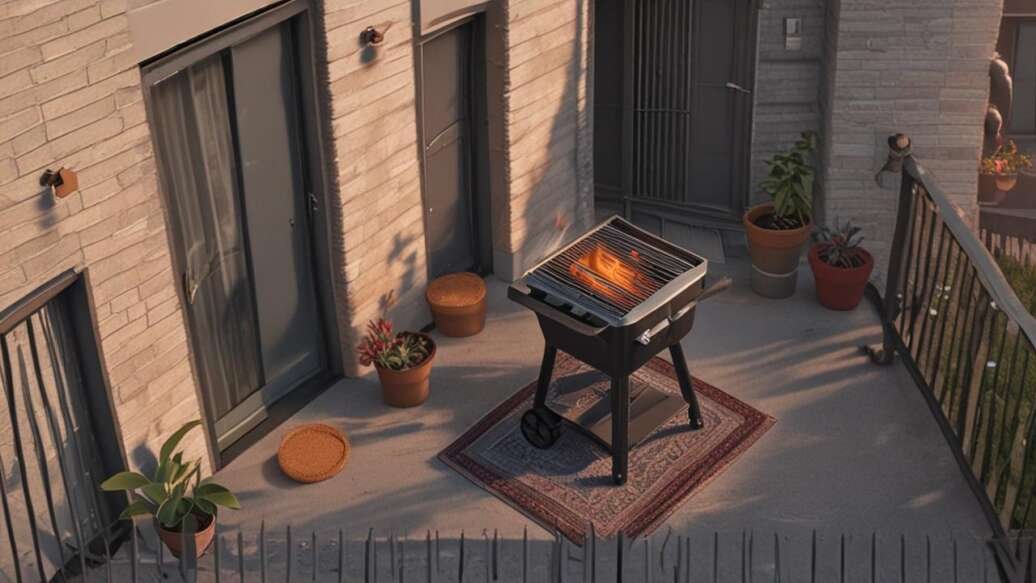
When you place a pellet grill on an apartment balcony, several things happen at once. First, you likely break your lease agreement. Second, you probably violate your local fire code. Third, you create a real fire risk for yourself and your neighbors.
According to the, grill fires cause an average of 10,600 home fires each year. Between 2017 and 2021, these fires led to approximately 19,700 emergency room visits. The property damage from grill fires amounts to $149 million per year on average.
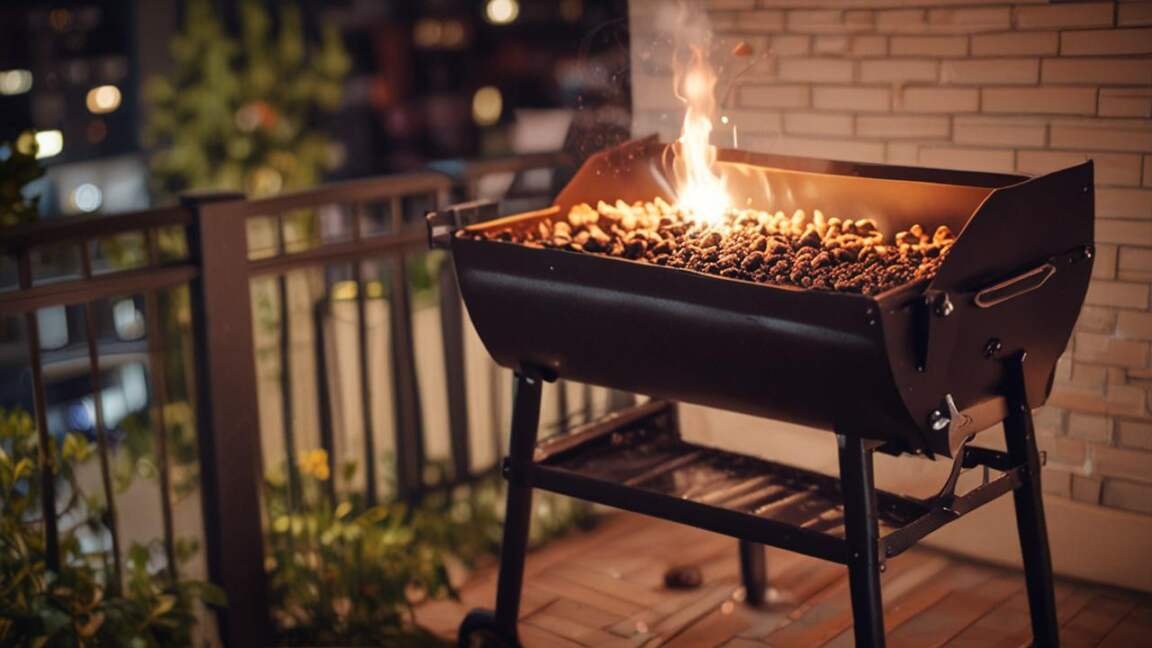
Pellet grills use burning wood pellets as fuel. They produce hot ash and embers that can escape the grill. On a balcony, wind can spread these embers to nearby units, dry vegetation, or building materials. Unlike a gas grill that turns off with a valve, a pellet grill continues to burn fuel until the fire runs out of pellets or is manually extinguished.
Warning: Even if you use a grill mat or fireproof pad, pellet grills still produce airborne embers and ash. These can travel over the edge of the mat and ignite nearby surfaces. No mat fully prevents this risk.
Why Pellet Grills Are Risky for Balcony Use
Pellet grills work by feeding wood pellets into a firepot. A hot rod ignites the pellets. A fan then circulates heat and smoke around the cooking chamber. The temperature inside can reach 500 degrees or higher.
The exterior surfaces of a pellet grill also get very hot. The metal sides, lid, and handles can cause burns if touched. On a small balcony, there is little distance between the grill and people walking past it.
Here are the specific risks that make pellet grills dangerous on balconies:
- Hot ash and embers can blow out of the grill vent and drift to other units or common areas.
- Wind can cause the fire to flare up or spread burning pellets beyond the firepot.
- The grill surface stays hot for hours after cooking, creating a lasting burn risk.
- Grease buildup inside a pellet grill can ignite at high temperatures, causing a grease fire.
- If the grill tips over, burning pellets can spill onto the balcony floor and start a fire.
According to the, grills should always be used on stable, non-combustible surfaces away from buildings. Apartment balconies often have wooden floors, vinyl siding, or building materials that catch fire easily.
The classifies pellet grills as solid-fuel appliances. This places them in the same category as charcoal grills and wood-fired smokers. Most fire codes restrict or ban solid-fuel grills on apartment balconies.
Legal and Lease Restrictions
The legal landscape for using a pellet grill on an apartment balcony is clear in most cities. You cannot do it. Local fire codes ban all solid-fuel cooking devices on balconies above the first floor. Some cities ban them on all balconies, including ground level.
Lease agreements almost always include a clause about grills. Landlords include these rules to limit their liability. If a grill causes a fire, the landlord is responsible for damage to the building and other units. By banning grills, they shift the liability to you.
Here is what you typically face if you use a pellet grill on an apartment balcony:
| Type of Restriction | Example Rule | Penalty |
|---|---|---|
| Local Fire Code | Ban on solid-fuel grills on balconies above first floor | Fine up to $1,000 or more per violation |
| Lease Agreement | No grills or open-flame devices on balcony | Eviction or lease termination |
| HOA Rules | Ban on outdoor cooking devices on patios and balconies | Fines up to $500 per violation |
| Renters Insurance | Exclusion for damage caused by prohibited items | Claim denial and financial liability |
The is one of the strictest enforcers of balcony grill bans. FDNY regulations prohibit all charcoal, gas, and pellet grills on balconies of buildings with three or more units. Similar rules exist in Chicago, Los Angeles, and Boston.
Important: Your renters insurance may not cover damage caused by a pellet grill if your lease prohibits it. Read your policy carefully. Many policies exclude claims related to prohibited items or activities.
Common Myths vs Facts
Many apartment residents believe that pellet grills are safer than other grill types. These myths can lead to serious mistakes. Here are the most common ones.
Myth 1: Pellet grills are safer than charcoal grills on a balcony
Fact: Both pellet grills and charcoal grills are solid-fuel devices. Both produce hot ash, embers, and smoke. The treats them the same in fire code classifications. There is no safety advantage between pellet and charcoal for balcony use.
Myth 2: A grill mat or fireproof pad makes a pellet grill safe on a balcony
Fact: Grill mats protect the floor from heat and grease drips. They do not stop hot embers from blowing out of the grill. Embers can travel 20 feet or more in windy conditions. A mat only protects the surface directly under the grill, not the surrounding area.
Myth 3: Small portable pellet grills are exempt from fire code restrictions
Fact: Fire codes apply to all solid-fuel cooking devices regardless of size. A small pellet grill produces the same type of hot ash and embers as a large one. The rules are based on fuel type, not on the size or brand of the grill. The confirms that pellet grills of all sizes fall under solid-fuel classifications.
What to Do Instead of a Pellet Grill on Your Balcony
You still have good options for cooking if you live in an apartment. The key is to choose a device that uses electricity instead of solid fuel. Electric grills and cookers do not produce open flames or hot ash. Most fire codes and lease agreements allow them on balconies.
Here are the best alternatives ranked by safety and legality:
- Electric grill: Uses electricity to heat a cooking surface. Most models are allowed on balconies. Look for models with a lid to reduce smoke and splatter.
- Indoor countertop grill: Works inside your kitchen. Smokeless models use infrared heat and a drip tray. Brands like Ninja Foodi and Philips make popular options.
- Electric smoker: Some electric smokers use wood chips for flavor but heat with electricity. Check your lease and fire code before buying one for your balcony.
- Community grilling area: Many apartment buildings have designated grilling zones with gas or charcoal grills for resident use. These are typically located away from the building in a safe area.
- Sous vide cooker: A precise water bath cooking method that works entirely indoors. You get restaurant-quality results without any fire risk.
Compare the options in the table below to see which fits your situation.
| Cooking Device | Fuel Type | Allowed on Balcony | Fire Risk |
|---|---|---|---|
| Pellet Grill | Wood Pellets | No (banned in most codes) | High |
| Charcoal Grill | Charcoal | No (banned in most codes) | High |
| Propane Gas Grill | Propane | Sometimes (first floor only) | Medium |
| Electric Grill | Electricity | Yes (most allowed) | Low |
| Indoor Smokeless Grill | Electricity | Yes (indoor use) | Very Low |
Pro Tips for Grilling Safely in an Apartment
If you want to grill while living in an apartment, follow these practical tips. They help you stay safe, avoid fines, and keep your landlord happy.
- Read your lease agreement carefully. Look for any clause about grills, open flames, or cooking devices on the balcony. If you are unsure, ask your landlord in writing.
- Check your local fire code online. Most city fire departments publish their regulations on their website. Search for your city name plus fire code grill regulations.
- Choose an electric grill that produces no open flame. Look for models with a UL or ETL safety certification. These are tested for safe operation.
- Keep the grill at least 10 feet away from windows, doors, and ventilation intakes. This prevents smoke from entering your unit or neighboring units.
- Never leave a grill unattended while it is on. This is the number one cause of grill-related fires according to the.
Resources and Tools
Use these resources to check the rules in your area and find safe alternatives.
- National Fire Protection Association (NFPA) – Grill fire safety tips and statistics.
- Consumer Product Safety Commission (CPSC) – Grill safety guidelines and product recalls.
- Hearth, Patio and Barbecue Association (HPBA) – Industry guidelines for grill types and fuel classifications.
- FDNY Grill Regulations – Example of strict fire code for grills on apartment balconies.
- Your Local Fire Department – Check your city fire department website for specific regulations in your area.
Frequently Asked Questions
Can I use a pellet grill on a first-floor apartment balcony?
Some cities allow solid-fuel grills on first-floor balconies, but many do not. Check your local fire code and lease agreement. Even on the first floor, a pellet grill can cause a fire if embers drift to nearby dry grass, mulch, or wooden structures.
What is the fine for using a pellet grill on an apartment balcony?
Fines vary by city and lease agreement. Local fire code fines range from $100 to $1,000 per violation. Your landlord may also charge a fee or begin eviction proceedings. In some cases, you can be held liable for damage caused by a grill fire.
Are electric pellet grills allowed on apartment balconies?
Electric pellet grills use electricity to heat pellets, but they still burn solid fuel. Most fire codes treat them the same as standard pellet grills. Check with your landlord and local fire department before buying one.
Can an apartment manager evict me for using a pellet grill on my balcony?
Yes. If your lease prohibits grills or open flames, your landlord can evict you for violating the terms. Courts typically uphold lease restrictions on grills because of the fire risk. Eviction for a grill violation is uncommon but possible after repeated warnings.
What grill is safest to use on an apartment balcony?
An electric grill is the safest option. It produces no open flame, no ash, and no embers. Electric grills also meet the requirements of most fire codes and lease agreements. Look for models that are UL or ETL certified for outdoor use.
Final Thoughts
Using a pellet grill on an apartment balcony creates fire, legal, and financial risks that are not worth the convenience. The safest path is to choose an electric grill or an indoor cooking alternative. Check your lease and local fire code before you buy any new cooking device. A small change in your cooking setup can prevent a major disaster for you and your neighbors.