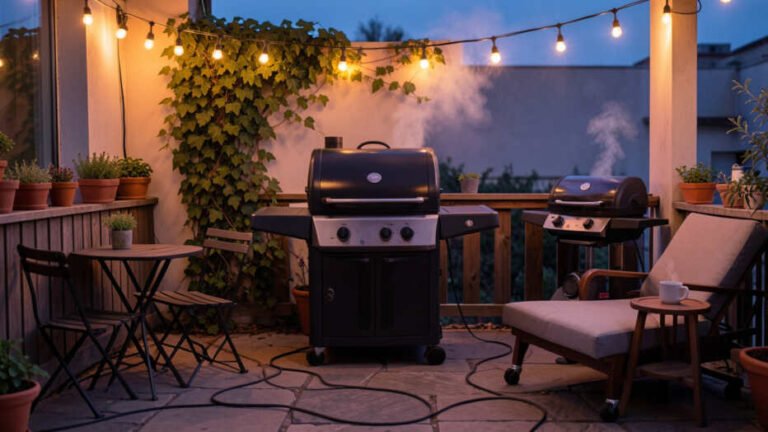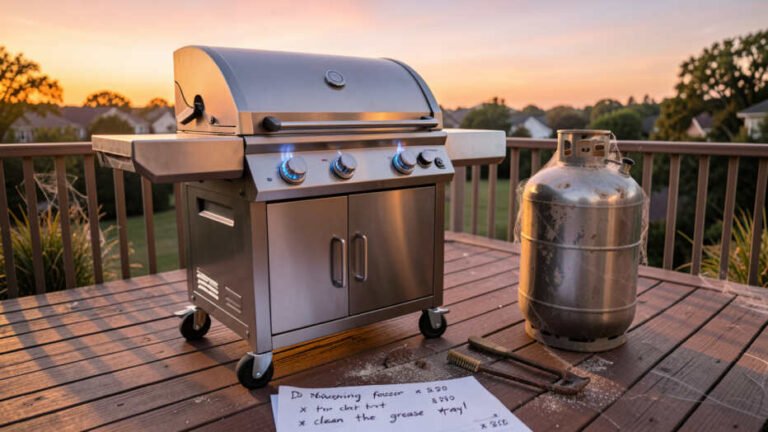
Many apartment dwellers buy a gas grill without realizing that most fire codes and NFPA regulations ban them on balconies, mandating a 10-foot distance from buildings. Propane tank storage is often prohibited by landlords and local fire departments, and grease fires on balconies spread rapidly due to confined spaces. A portable electric grill is frequently the safer, legal choice for apartment grilling, avoiding these common restrictions and hazards.
Apartment dwellers often buy a gas grill without knowing the real restrictions and safety hazards. This guide reveals what landlords, neighbors, and fire codes don’t tell you upfront.
Quick Verdict: Most apartments and condos ban gas grills on balconies due to fire codes and NFPA regulations. Even where allowed, you face limited space, smoke complaints, grease fire risks, and strict propane tank storage rules. A portable electric grill is often the safer, legal alternative for apartment grilling.
Key Takeaways
- Gas grills are banned on most balconies in the United States because of fire codes that require a minimum 10-foot distance from any building structure.
- Propane tank storage is restricted in apartments and often prohibited inside the unit or on the balcony by local fire departments and landlord policies.
- Grease fires spread faster on a balcony because the heat reflects off walls and ceilings, and there is no direct escape path to open ground.
- Most apartment leases include specific clauses that prohibit gas grills, and breaking these rules can lead to lease termination or fines from the HOA.
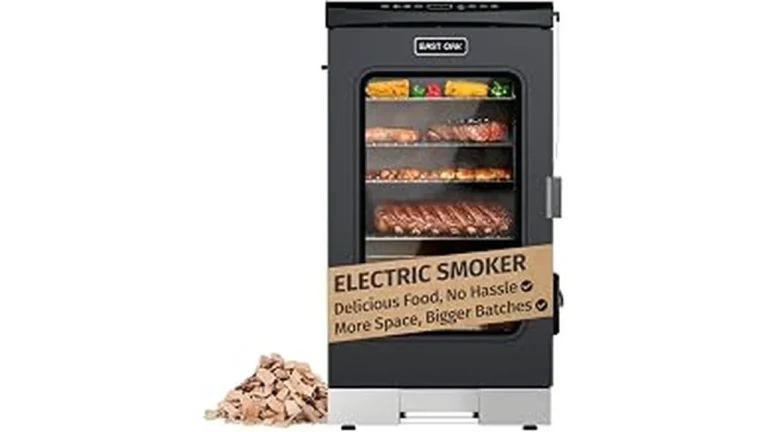
- An electric grill produces no open flame and is generally permitted under fire codes, making it the practical choice for apartment residents who want to cook outdoors.
What Nobody Tells You About Apartment Gas Grill Laws
Most people do not read their lease closely before buying a gas grill. According to the, grills cause an average of 10,600 home fires each year. A large percentage of these fires start on balconies and patios in apartment buildings.
Warning: Nearly 79% of all grill fires involve gas grills, according to NFPA data. A balcony fire can spread to adjacent units in under three minutes.
Your lease almost certainly has a clause about grills. Many landlords ban gas grills outright. The states that gas grills cannot operate on balconies of buildings with three or more units. This applies to most apartment complexes in the country.
- Check your lease for the words “open flame,” “grill,” or “propane.” These terms appear in most standard apartment agreements.
- Call your landlord directly. A verbal confirmation is not enough. Get written permission if the grill is allowed.
- Contact your local fire department. Many cities have local ordinances that are stricter than state or national codes.
- Ask your HOA or property manager about specific balcony grill rules. Some buildings allow only electric grills.
How to Check if Your Apartment Allows a Gas Grill
Start by reading your lease from start to finish. Look for the section on “fire hazards” or “prohibited items.” Many leases include a sentence like “Gas grills and charcoal grills are not permitted on any balcony or patio.
If your lease is silent on grills, do not assume it is allowed. Contact the property manager and ask directly. According to the, apartments with wood-frame construction face the highest risk from balcony fires. Managers of these buildings almost always ban gas grills.
| Question | Where to Check | What to Look For |
|---|---|---|
| Is a gas grill allowed on my balcony? | Your apartment lease | Look for “grill,” “open flame,” “propane,” or “fire hazard” clauses |
| Does the building have any local fire codes? | Your city or county fire department website | Search “balcony grill restrictions [your city]” |
| Are there HOA rules I need to follow? | HOA bylaws or condo association documents | Look for “exterior cooking” or “balcony use” sections |
| Can I store a propane tank on the balcony? | Local fire department and building management | Many codes ban propane storage on balconies entirely |
Common Myths vs Facts About Apartment Gas Grills
Myth 1: “A small gas grill is safe on any balcony”
Size does not matter to fire codes. Even a small portable gas grill produces an open flame and uses propane. The states that all gas grills must stay at least 10 feet away from any structure. Most apartment balconies cannot meet this requirement.
Myth 2: “If my neighbors grill on their balcony, I can too”
One neighbor breaking the rules does not make it legal. Many people use gas grills without knowing the lease terms. You could face eviction or fines regardless of what others do. Always check your own lease and local codes.
Myth 3: “An electric grill is basically the same as a gas grill”
Electric grills do not use an open flame and do not require propane. Fire codes and most leases treat them differently. According to the, electric grills pose a lower fire risk and are typically allowed where gas grills are banned.
What Nobody Tells You About Gas Grill Smell and Neighbors
Gas grills produce a strong smell. Propane combustion releases carbon monoxide and other gases. On a balcony, these gases drift into nearby windows and air conditioning units. Your neighbors will smell your cooking every time you use the grill.
According to the, nuisance complaints are one of the top reasons landlords revoke grill permission. A single complaint from a neighbor can lead to a warning or lease violation.
- Grill during reasonable hours only. Avoid early mornings and late evenings.
- Position the grill so the smoke blows away from neighboring units.
- Consider a grease tray or drip pan to reduce smoke and flare-ups.
- Talk to your neighbors beforehand. Let them know you plan to grill occasionally.
Important: According to the Consumer Product Safety Commission, approximately 16,000 people visit emergency rooms each year due to grill-related injuries. Most incidents involve burns from contact with hot surfaces or flare-ups.
How to Deal with Grease Fires on a Balcony
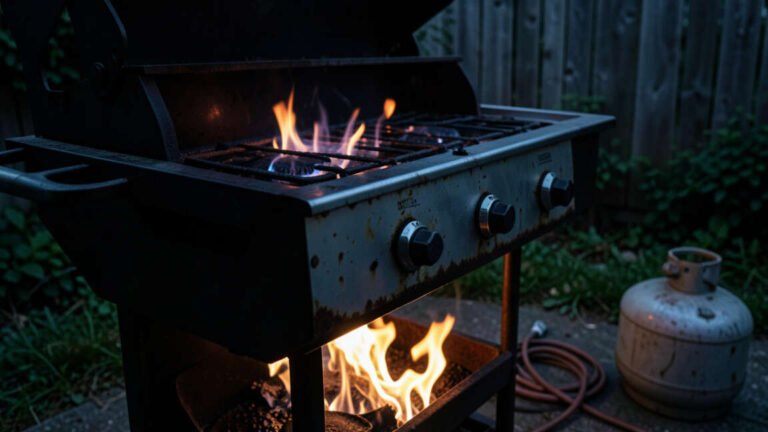
Grease fires are the most dangerous risk for apartment gas grill users. On an open lawn, a grease fire burns up and away from the user. On a balcony, the fire reflects off walls, ceilings, and furniture.
A grease fire on a balcony can spread to the building itself. The NFPA reports that grill fires cause an average of $120 million in property damage each year. Many of these fires start from unattended cooking or grease buildup.
- Keep a fire extinguisher rated for grease fires (Class K) on the balcony at all times.
- Clean the grease tray after every use. Built-up grease is the number one cause of flare-ups.
- Never leave a lit apartment gas grill unattended. A flare-up can happen in seconds.
- Do not use water on a grease fire. Water causes the grease to spread and the fire to grow.
- Close the grill lid and turn off the gas if a flare-up occurs. Cutting off oxygen can smother small fires.
Warning: Do not store the propane tank on the balcony when the grill is not in use. Many local fire codes prohibit propane tank storage within 10 feet of any building. Keep the tank in a secure, outdoor location away from the unit.

What Nobody Tells You About Propane Tank Logistics
Propane tanks are heavy. A standard 20-pound tank weighs about 37 pounds when full. Carrying this up and down apartment stairs every time you need a refill is exhausting. Many apartment dwellers underestimate this hassle.
You also need a place to store the tank. Most apartments do not allow propane storage inside the unit or on the balcony. You may need to keep the tank in a car or a locked outdoor shed. Some local fire departments require tanks to be stored in a well-ventilated area away from ignition sources.
- Check if your local propane exchange or refill station is nearby and accessible with a car.
- Consider a smaller 5-pound or 10-pound propane tank if you have limited space and strength.
- Never store propane tanks in a hot car or a basement. Heat buildup can cause the pressure relief valve to release gas.
- Always transport the tank upright and secured. Rolling a tank in a car trunk is dangerous.
Gas Grill vs Electric Grill: Which Is Safer for Apartments?
Many apartment residents face this choice. A gas grill gives you high heat and that classic grilled flavor. An electric grill is safer but may not reach the same temperature. Here is a direct comparison.
| Feature | Gas Grill | Electric Grill |
|---|---|---|
| Open flame? | Yes | No |
| Propane required? | Yes | No |
| Typical max temperature | 500-700 degrees F | 400-500 degrees F |
| Allowed on most apartment balconies? | Rarely | Usually yes |
| Carbon monoxide risk? | High | Low |
| Typical price range | $150 – $600 | $80 – $300 |
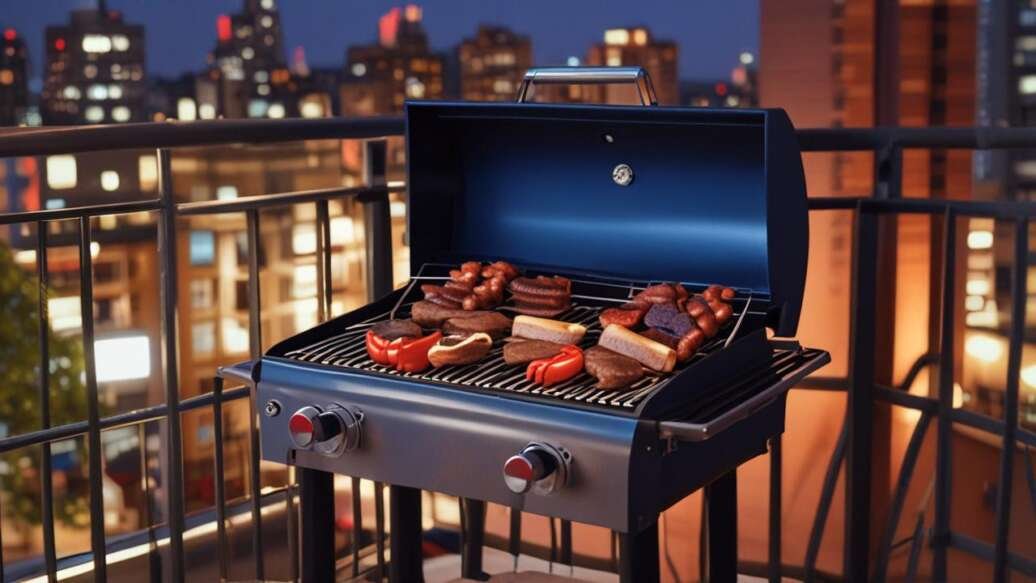
How to Minimize Risks If You Still Buy a Gas Grill
If your apartment building and local codes allow a gas grill, you still need to take extra precautions. The balcony environment creates unique hazards that do not exist in a backyard.
- Place a fire-resistant mat under the grill. This protects the balcony floor from grease drips and heat.
- Keep the grill at least 3 feet away from walls, railings, and furniture. NFPA recommends 10 feet from any structure, but that is rarely possible on a balcony.
- Use a wind guard or grill shield. Wind on balconies can blow flames sideways toward walls.
- Install a smoke alarm on the ceiling near the balcony door. Carbon monoxide detectors are also recommended.
- Keep a fire extinguisher within arm’s reach of the grill, not stored inside the apartment.
Tip: Consider buying a grill with a built-in thermometer. Overheating is more common on balconies because the enclosed space traps heat, making the grill run hotter than expected. A thermometer helps you avoid dangerous flare-ups.
What Nobody Tells You About Storage and Space
An apartment gas grill takes up significant space. Most balcony grills are at least 30 inches wide. When you add the propane tank, a side table, and a cover, the grill can take up a third of your usable balcony space.
Storage is another hidden issue. Grill covers trap moisture if the balcony gets rain or snow. Mold can grow under the cover. Propane tanks need a dry, ventilated storage location. Many apartment dwellers end up keeping the tank in a closet or laundry room, which is dangerous and often illegal.
- Measure your balcony before buying a grill. Leave at least 24 inches of walkway space around the grill.
- Choose a grill with a removable side table or folding shelves to save space.
- Use a grill cover that is waterproof and breathable. Look for covers with vent holes to prevent moisture buildup.
- Store the propane tank in a locked, ventilated cabinet on the balcony if your local code allows it.
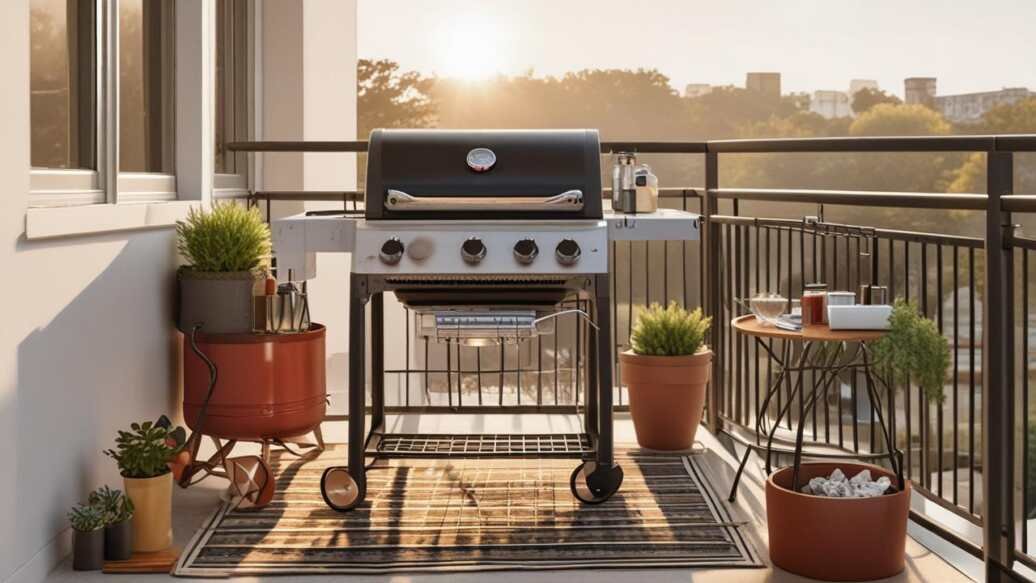
Resources and Tools for Apartment Grillers
NFPA Grilling Safety Guide – Official fire safety guidelines for grills including balcony-specific rules.
USFA Grill Fire Prevention – U.S. Fire Administration tips and statistics on grill fires in residential buildings.
Consumer Product Safety Commission – Grill-related injury reports and product recall information.
Weber Grill App – Digital temperature monitoring and recipe guide for gas and electric grills.
Hearth, Patio & Barbecue Association – Industry data on grill ownership and safety best practices.
Frequently Asked Questions
Can I use a gas grill on a wooden balcony?
Wooden balconies are extremely flammable. Most fire codes and leases ban gas grills on wooden balconies entirely. The NFPA recommends a non-combustible surface like concrete or stone for any grill use.
Do I need a fire extinguisher if I only grill once a month?
Yes. A fire extinguisher is essential regardless of how often you grill. Grease fires can start within seconds on any apartment gas grill. A Class K extinguisher is best for grease fires. Keep it accessible at all times.
What happens if my landlord finds out I have a gas grill?
Most landlords will issue a written warning on the first violation. A second violation can lead to lease termination or eviction. Some HOAs also impose fines of $50 to $200 per incident. Always check your lease before buying a gas grill.
Can I install a gas line on my apartment balcony?
This is rarely allowed. Running a natural gas line to a balcony requires building permits, landlord approval, and professional installation. Most apartment buildings do not have gas hookups on balconies. Portable propane tanks are the only option, but they come with their own restrictions.
Is an electric grill a good alternative for apartment dwellers?
Yes. An electric grill produces no open flame and no carbon monoxide. Most leases and fire codes allow electric grills on balconies. They do not reach the same high temperatures as gas grills, but they are significantly safer for apartment use.
Final Thoughts
Gas grills come with hidden risks and restrictions that most apartment dwellers discover too late. Fire codes, lease clauses, and neighbor complaints can make grilling more trouble than it is worth. An electric grill offers a safer, legal alternative that lets you cook outdoors without the hazards of propane and open flames. Always verify your lease and local codes before making a purchase.