Yes, beginners can successfully use a charcoal grill because it offers superior flavor and high heat at a low cost, and the learning curve is minimal with proper tools like a chimney starter and thermometer. Charcoal grills require learning vent control for temperature rather than a dial, but this skill is quickly mastered. With a total startup cost under $150 and the ability to achieve better sear and smoky flavor, charcoal grilling is a practical and rewarding choice for novices who want real grilling results.
Many beginners think charcoal grills are too hard to use. This guide explains why that concern is mostly wrong and shows you how to get started.
Simply put, charcoal grills are a great choice for beginners who want rich flavor and high heat without spending a lot of money. The learning curve is small with the right tools like a chimney starter and a reliable thermometer. Anyone can master charcoal grill basics in just a few tries.
Key Takeaways
- Charcoal grills produce higher temperatures than gas grills, which gives meat a better sear and deeper smoky flavor.
- Beginners can control temperature on a charcoal grill by adjusting the bottom and top vents, not by turning a dial.
- A chimney starter eliminates the need for lighter fluid, making charcoal grilling safer and easier for new users.
- Lump charcoal burns hotter and cleaner than briquettes, but briquettes are more consistent and easier for beginners to manage.
- The total startup cost for a basic charcoal grill and essential tools is typically under 150 dollars, much less than a gas grill.
What Is Charcoal Grilling?
Charcoal grilling is a cooking method that uses burning charcoal as the heat source. The charcoal sits in a metal bowl or kettle, and a grate above holds the food. Air flows through vents to control the temperature.
Unlike gas grills that use propane, charcoal grills rely on solid fuel. You light the charcoal, wait for it to ash over, and then cook. The result is a distinct smoky flavor that gas cannot match.
Tip: Start with a basic kettle-style charcoal grill. It is simple, affordable, and gives you the most control as a beginner.
According to the, about 64 percent of US households own a grill or smoker. Charcoal grills account for a large share of those sales because of their low cost and great flavor.
How Does Charcoal Grilling Work?
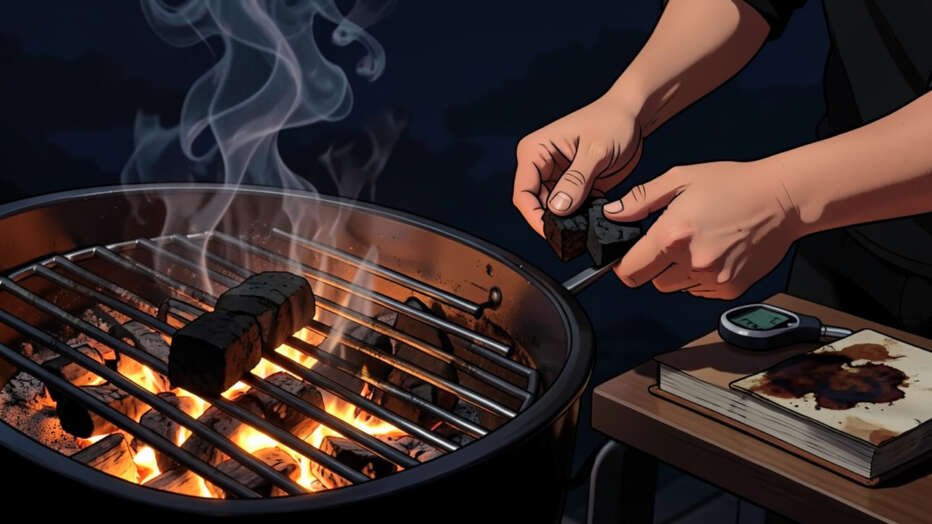
Charcoal grilling works through direct heat radiation and convection. The lit charcoal radiates heat upward to the food. Hot air rises through the grill and carries smoky flavor all around the meat.
The two key controls are the bottom vent and the top vent. Opening the bottom vent lets in more oxygen, which makes the charcoal burn hotter. Closing it reduces oxygen and lowers the temperature. The top vent controls how smoke and heat escape.
The Combustion Cycle
Charcoal is mostly carbon. When it burns, it combines with oxygen to produce heat and carbon dioxide. More airflow means a faster burn and higher heat. Less airflow means a slower burn and lower heat.
This is why vent management is the single most important skill in charcoal grilling. You do not turn a knob. You move a small metal slider.
Direct vs Indirect Heat
Beginners need to understand two cooking methods on a charcoal grill:
- Direct heat – Food sits directly above the hot charcoal. This is for searing steaks, burgers, chicken breasts, and vegetables. Temperatures reach 500 to 700 degrees Fahrenheit.
- Indirect heat – Charcoal is pushed to one side, and food sits on the opposite side. The grill lid traps the heat like an oven. This is for larger cuts like whole chickens, ribs, and roasts at 325 to 375 degrees Fahrenheit.
Important: Always use a two-zone fire arrangement. Keep charcoal on one side of the grill and leave the other side empty. This gives you a hot zone and a cooler zone to move food around.
Types of Charcoal Grills
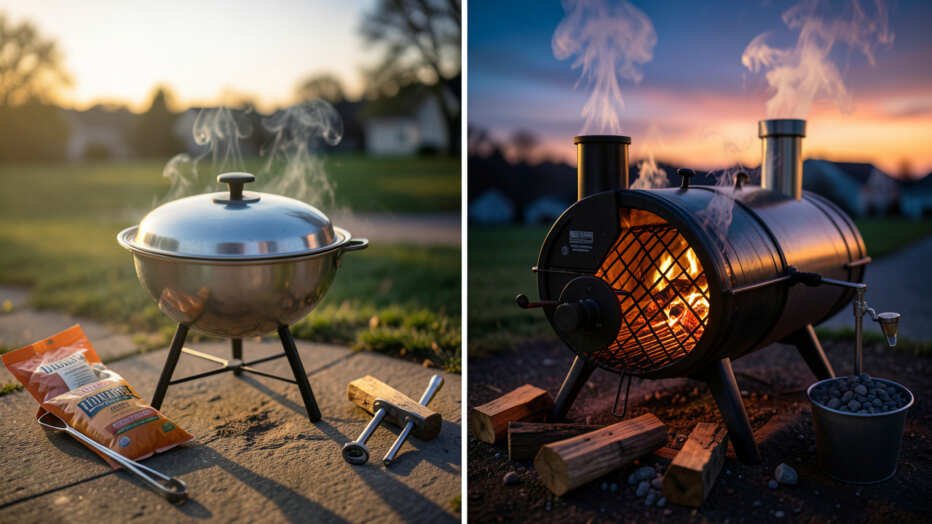
Not all charcoal grills are the same. Beginners should know the main types before buying one.
| Type | Best For | Price Range | Beginner Friendly |
|---|---|---|---|
| Kettle Grill | Everyday grilling, burgers, steaks, chicken | 50 to 200 dollars | High |
| Barrel Smoker | Low and slow smoking, ribs, brisket, pulled pork | 150 to 500 dollars | Medium |
| Portable / Tabletop | Camping, tailgating, small spaces | 30 to 100 dollars | High |
| Ceramic Kamado | High heat searing and slow smoking in one | 500 to 2000 dollars | Low |
The kettle grill is the best choice for most beginners. It is cheap, simple, and versatile. Brands like make classic kettle grills that last for years.
Who Should Use a Charcoal Grill?
Charcoal grills are not for everyone, but they fit certain people well.
Charcoal Is a Good Fit If You:
- Want the best possible flavor from your grilled food
- Enjoy the hands-on process of building and managing a fire
- Have a limited budget for your first grill purchase
- Do not cook outdoors more than two or three times per week
- Have outdoor space where smoke is not a problem
Charcoal Might Not Be for You If You:
- Need to cook quickly on weeknights with minimal setup time
- Live in an apartment or have strict smoke restrictions
- Prefer a set-it-and-forget-it cooking experience
- Grill very frequently and want consistent convenience
A survey by found that about 75 percent of grill owners who have tried both types say charcoal gives better flavor. But the same survey showed that gas grill owners cook more often because of the convenience.
How to Get Started with Charcoal Grilling
Getting started with a charcoal grill is simpler than most people think. Follow this step-by-step plan for your first cook.
Step 1: Gather the Right Tools
You need more than just the grill. Here is the minimum list:
- Chimney starter – A metal cylinder that lights charcoal without lighter fluid. It costs about 15 to 20 dollars.
- Long-handled tongs – For moving food safely over hot coals.
- Instant-read thermometer – The only reliable way to check meat doneness.
- Grill brush – For cleaning the grate before and after cooking.
- Heat-resistant gloves – For handling hot parts safely.
Warning: Never use lighter fluid with a chimney starter. The chimney does the job without chemicals. Lighter fluid can leave a bad taste on your food.
Step 2: Choose Your Charcoal
There are two main types of charcoal:
- Charcoal briquettes – Uniform shape, consistent burn, less expensive. They are easier for beginners because the heat is predictable.
- Lump charcoal – Natural wood chunks, burns hotter and faster, produces less ash. It is better for high-heat searing but can be harder to control.
According to, the leading charcoal brand in the US, briquettes are the top choice for new grillers because of their reliable burn time.
Step 3: Light the Charcoal
Fill the chimney starter with charcoal. Place two sheets of crumpled newspaper in the bottom compartment. Light the newspaper through the holes. Let the charcoal burn for about 15 to 20 minutes until the top coals are covered in white ash.
Pour the lit charcoal into the grill. Spread it out for direct heat or pile it on one side for indirect heat.
Step 4: Control the Temperature
Open both vents fully to reach the highest temperature quickly. To lower the temperature, close the bottom vent partially. Wait five minutes and check again with a grill thermometer.
Here is a quick reference for vent positions:
- Both vents wide open – 450 to 700 degrees, for searing
- Bottom vent half open – 350 to 450 degrees, for grilling
- Bottom vent one quarter open – 250 to 350 degrees, for smoking
Step 5: Cook and Clean
Place food on the grate. Close the lid to trap heat and smoke. Flip once halfway through cooking. Use the instant-read thermometer to check internal temperature.
After cooking, scrape the grate clean while it is still warm. Close all vents to starve the fire of oxygen. The charcoal will go out on its own.
Common Myths vs Facts
Many beginners avoid charcoal because of rumors that are not true. Here are the most common myths and the real facts.
Myth 1: Charcoal Grills Are Too Hard for Beginners
The truth is that charcoal grills have a short learning curve. Most beginners get good results by their second or third cook. The key is learning vent control, which takes about 30 minutes of practice. A gas grill is simpler, but charcoal is not difficult.
Myth 2: Charcoal Grilling Takes Too Long
Lighting charcoal with a chimney starter takes about 15 to 20 minutes. A gas grill heats up in 10 minutes. The difference is small for most cooks. For searing, charcoal actually reaches temperature faster than many gas grills can.
Myth 3: Charcoal Is Unhealthy Compared to Gas
Both charcoal and gas grilling produce similar compounds when cooking meat at high heat. The states that cooking methods, not fuel type, determine the formation of potentially harmful chemicals. Trimming fat and avoiding flare-ups reduces risks on any grill.
Tip: If you worry about health, focus on not charring meat black. Cook at moderate temperatures and flip often. This applies to gas and charcoal alike.
Frequently Asked Questions
How long does a charcoal grill take to heat up?
Using a chimney starter, most charcoal grills reach cooking temperature in 15 to 20 minutes. The coals are ready when they are covered in light gray ash. Dump them into the grill and start cooking immediately.
Do I need lighter fluid to use a charcoal grill?
No. A chimney starter uses newspaper and a match. It is cheaper, safer, and does not leave chemical taste on your food. Lighter fluid is not needed and is often discouraged by experienced grillers.
Can I cook the same things on charcoal as on gas?
Yes. You can cook steaks, burgers, chicken, fish, vegetables, and even pizza on a charcoal grill. The main difference is the smoky flavor. Some foods like thin fish fillets cook faster and require more attention on charcoal.
How do I clean a charcoal grill after use?
Scrape the grate with a brush while the grill is still warm. Empty the ash catcher after the coals are completely cold, which usually takes 12 to 24 hours. Do a deep clean of the interior once per season with a wire brush and mild soap.
Is it cheaper to use charcoal or gas?
Charcoal is cheaper overall. A 20-pound bag of charcoal costs about 15 to 20 dollars and lasts for 8 to 12 cooks. A propane tank refill costs about 20 dollars and lasts for 10 to 15 cooks. The grill itself is also much cheaper for charcoal.
Final Thoughts
Charcoal grills are a smart choice for beginners who value flavor and cost over convenience. The learning curve is short, and the results are rewarding. With a chimney starter, a good thermometer, and a little patience, you will be grilling like a pro in no time. Give it a try – the taste is worth the extra effort.