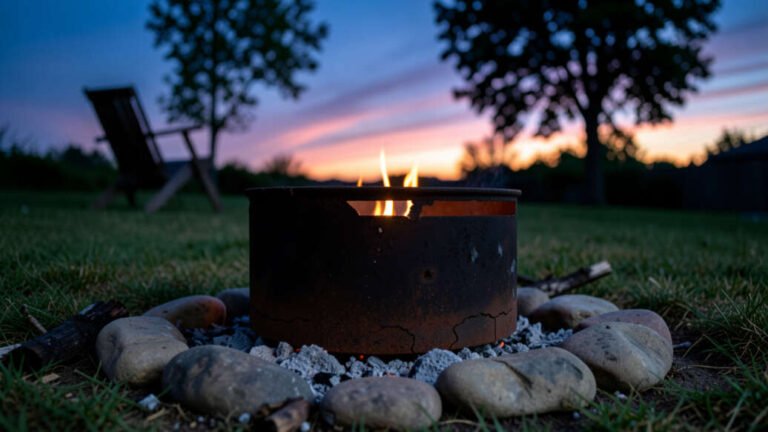
Buying a tabletop fire pit requires verifying safety certifications like CSA or UL, selecting the right fuel type for your heat and ambiance needs—propane for warmth, gel for smokeless flame—and confirming the unit uses durable materials such as stainless steel or ceramic fiber with a stable base and wind guard for safe, steady operation in outdoor settings only.
A tabletop fire pit adds warmth and style to any outdoor space, but a bad purchase can turn into a safety hazard or waste of money. This guide walks you through nine critical checks so you buy the right model the first time.
Quick Verdict: In short, the best tabletop fire pit balances safety certifications, fuel type, portability, and build quality. Focus on units with CSA or UL listing, choose propane if you need heat or gel for ambiance, and always check the wind guard and stability. These nine checks will eliminate fire hazards and buyer’s remorse.
Key Takeaways
- Every tabletop fire pit should have a CSA, UL, or ETL safety certification to ensure it meets recognized standards.
- Fuel type determines heat output, runtime, and portability – propane offers high heat, gel fuel is smokeless but less warm.
- Materials like stainless steel and ceramic fiber resist heat better than thin aluminum or glass-based models.
- A stable base and wind guard are essential to prevent tipping and flame flicker in breezy conditions.
- Tabletop fire pits are designed for outdoor use only; using them indoors causes carbon monoxide buildup.
Quick Comparison Table
| Factor | Why It Matters | Quick Tip |
|---|---|---|
| Safety Certification | Shows the unit passed independent testing | Look for CSA, UL, or ETL marks on the body |
| Fuel Type | Affects heat, runtime, smell, and odor | Propane for heat, gel for ambiance, bioethanol for clean burn |
| Material & Build | Determines durability and heat retention | Choose powder-coated stainless steel or ceramic |
| Size & Portability | Impacts where you can place and store it | Measure your table space before buying |
| Wind Resistance | Prevents flame from sputtering or going out | Look for a built-in wind guard or dome |
| Heat Output (BTU) | Determines how much warmth you get | 5,000-10,000 BTUs is typical for tabletop units |
| Fuel Capacity & Runtime | Affects how long you can keep the fire going | Check if fuel is refillable or disposable |
| Cleaning & Maintenance | Some materials stain or rust quickly | Porcelain or ceramic finishes are easiest to wipe |
| Price & Value | Higher cost does not always mean better safety | Spend at least $40-$50 for a reliable unit |
1 – Safety Certifications
A certified tabletop fire pit has passed tests from a recognized lab. The marks you want are CSA (Canadian Standards Association), UL (Underwriters Laboratories), or ETL (Intertek). These ratings confirm the unit meets production and safety standards.
What to Look For
- Check the product page or the unit’s label for a logo that says CSA, UL, or ETL.
- The certification must cover the entire burner assembly, not just the fuel canister.
- Some imports claim “CE” certification – that is a European standard and not recognized in North America.
Common Mistakes
- Believing a brand name guarantees safety. Many big brands sell uncertified models.
- Buying from unregulated online marketplaces where counterfeit units lack any testing.
Our Tip
Tip: Visit the website to search for recalls on tabletop fire pits before you buy.
2 – Fuel Type
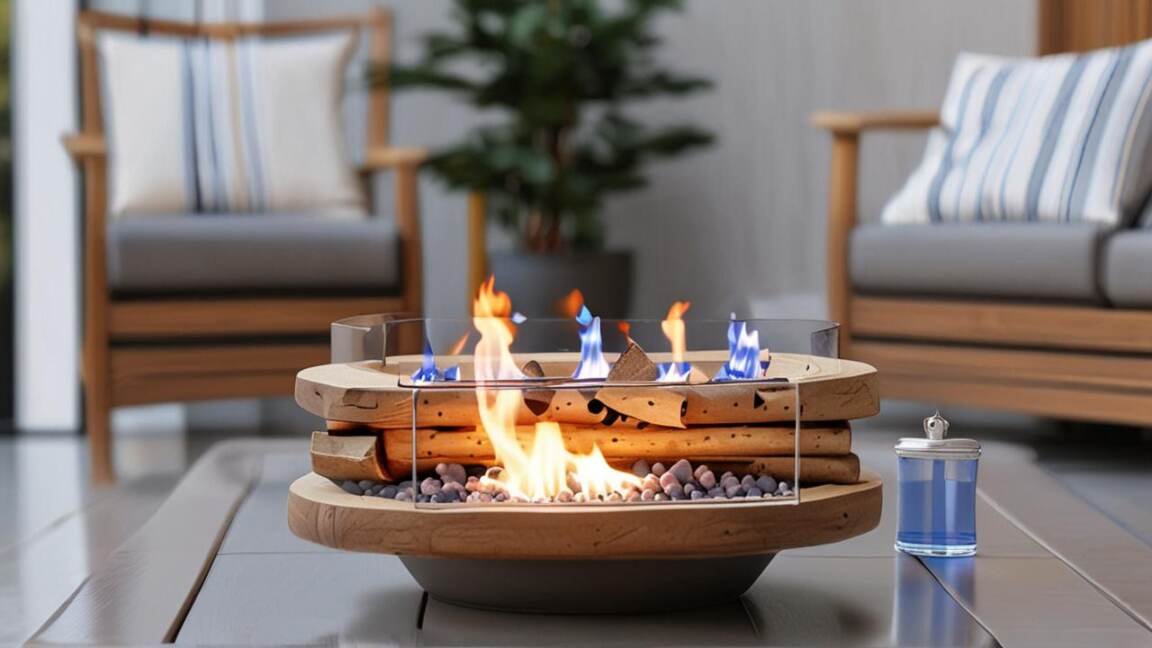
Tabletop fire pits use three main fuels: propane, gel fuel, or bioethanol. Each type changes how you use the pit.
| Fuel | Heat Output | Runtime | Smell |
|---|---|---|---|
| Propane | High (8,000-12,000 BTU) | 2-4 hours per small canister | Very little when burning |
| Gel Fuel | Low to Medium (3,000-5,000 BTU) | 45 mins to 1 hour per can | May smell like alcohol |
| Bioethanol | Medium (5,000-8,000 BTU) | 1.5-3 hours per fill | Odorless |
What to Look For
- Propane pits give the most heat and are good for colder evenings.
- Gel fuel is safer around children because the canisters are sealed until you light them.
- Bioethanol burns cleanly but requires careful refilling to avoid spills.
Warning: Never pour extra fuel onto a burning fire. Always let the unit cool completely before refilling.
3 – Material and Build Quality
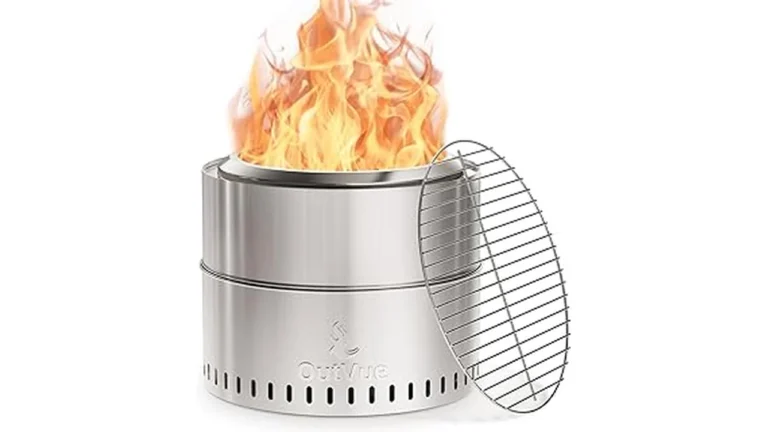
The material determines how long the pit lasts and how well it holds heat. Stainless steel is durable and rust-resistant. Powder-coated steel is cheaper but may chip. Cast iron is heavy but retains heat well. Ceramic fiber is lightweight and resists cracking.
What to Look For
- Check for double-wall construction – it prevents the outer surface from getting dangerously hot.
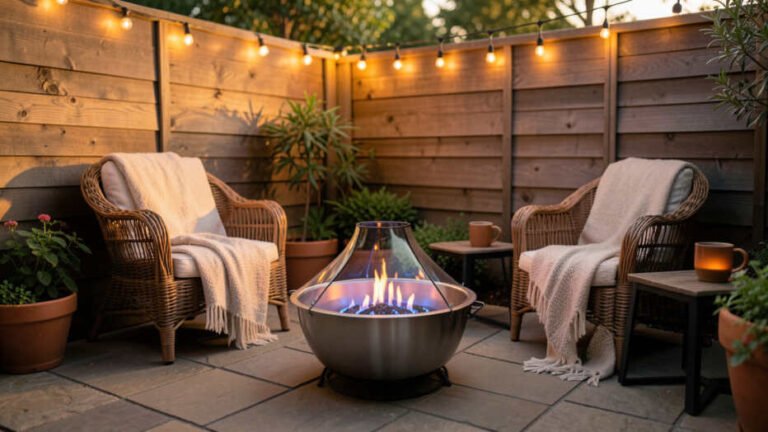
- Glass-based fire pits look beautiful but can break if placed on uneven surfaces.
- Models with a porcelain enamel finish are easy to clean and resist fading.
Common Mistakes
- Choosing a pit with a thin metal base that can warp from high heat.
- Buying a “stone” or “concrete” pit that may crack after a single season.
4 – Size and Portability
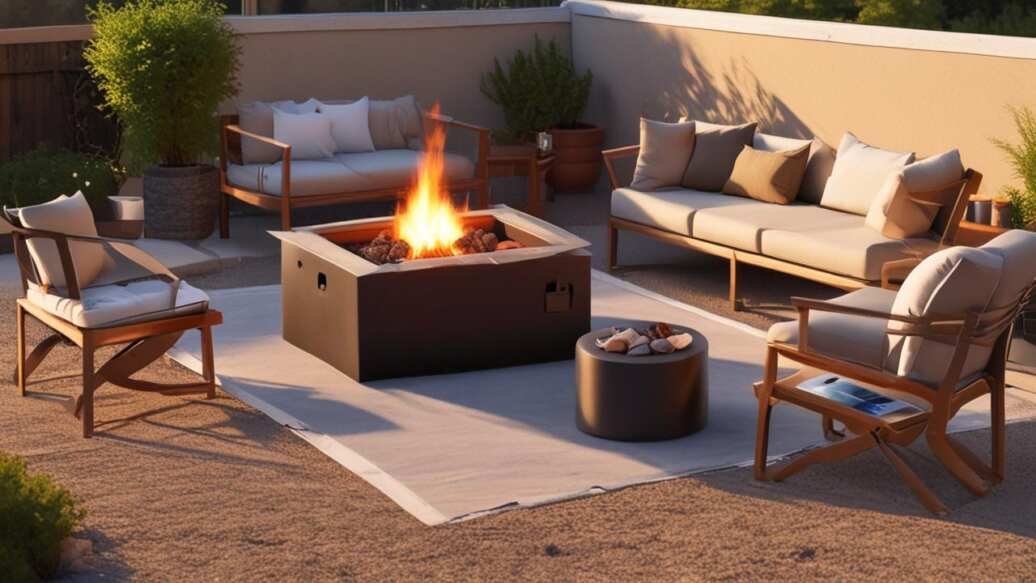
Tabletop fire pits come in diameters from 6 inches to 18 inches. A small pit fits on a coffee table but gives less heat. A larger pit works for camping but is heavier.
What to Look For
- Measure your table surface before buying. Leave at least 4 inches of clearance on all sides.
- If you plan to take it on trips, choose a model under 5 pounds.
- Look for a carrying handle or a padded carrying case.
Tip: For camping, a propane pit with a foldable tripod base is easy to pack and stable on grass.
5 – Wind Resistance and Stability
Wind can blow out the flame or make it flicker dangerously. A good wind guard surrounds the flame without blocking oxygen. Some models use a metal dome with small holes. Others rely on a recessed burner.
What to Look For
- Read customer reviews that mention “works fine in breezy conditions” or “flame stays lit even with wind.
- Check if the wind guard is removable for cleaning.
- Ensure the base is wide enough to prevent tipping. A pit with a narrow base and tall fuel canister can fall over easily.
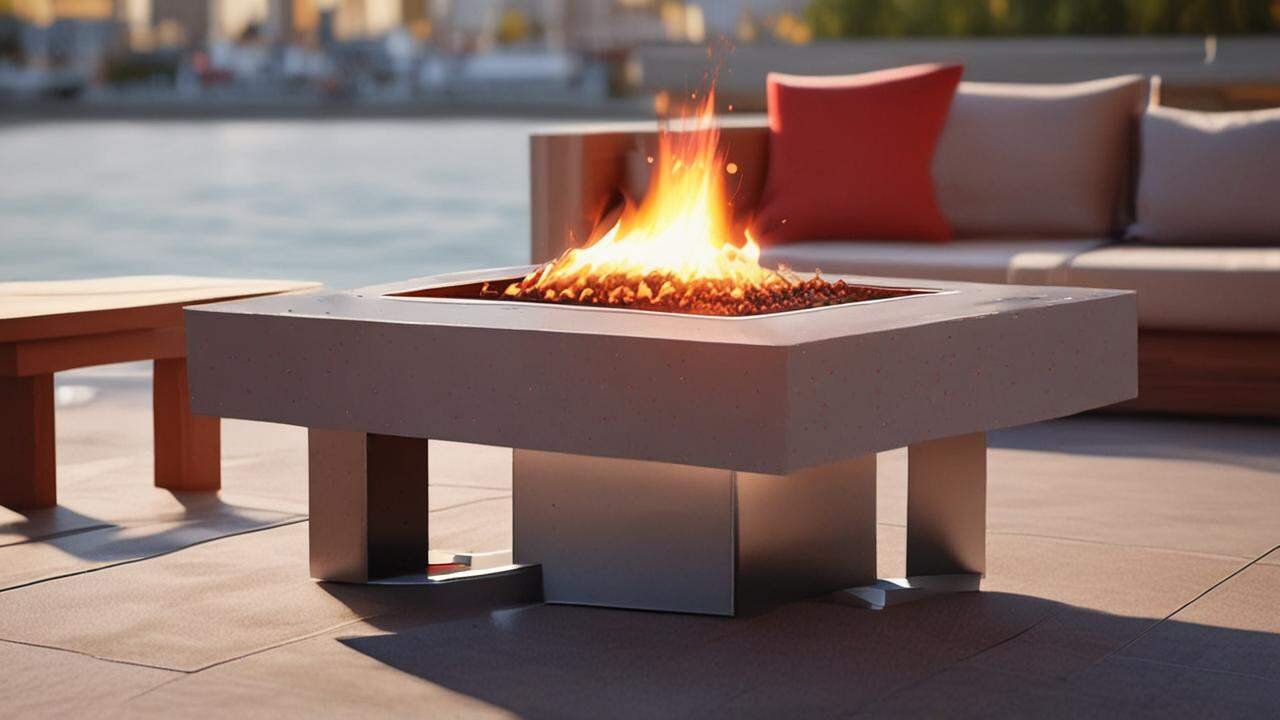
6 – Heat Output (BTU)
British Thermal Units (BTUs) measure heat. For a tabletop fire pit, 5,000 to 10,000 BTUs is common. A 5,000-BTU unit warms hands and faces within 2-3 feet. An 8,000-BTU unit radiates heat to a 4-foot circle.
What to Look For
- If you want real warmth on a cold night, choose propane with at least 8,000 BTUs.
- Gel fuel units usually produce less heat – perfect for ambiance, not warmth.
- Some manufacturers exaggerate BTUs. Look for verified test results in the manual.
7 – Fuel Capacity and Runtime
The fuel source determines how long the fire burns. Disposable 1-pound propane canisters last 2-4 hours. Gel fuel cans typically burn 45-60 minutes each. Bioethanol burners hold 500 ml to 1 liter, giving 1-3 hours per fill.
What to Look For
- Consider whether you want single-use fuel or refillable containers. Refillable is cheaper long-term.
- Check if the pit comes with a fuel canister or if you need to buy separately.
- Some propane pits have an adjustable valve – you can control the flame height and save fuel.
8 – Cleaning and Maintenance
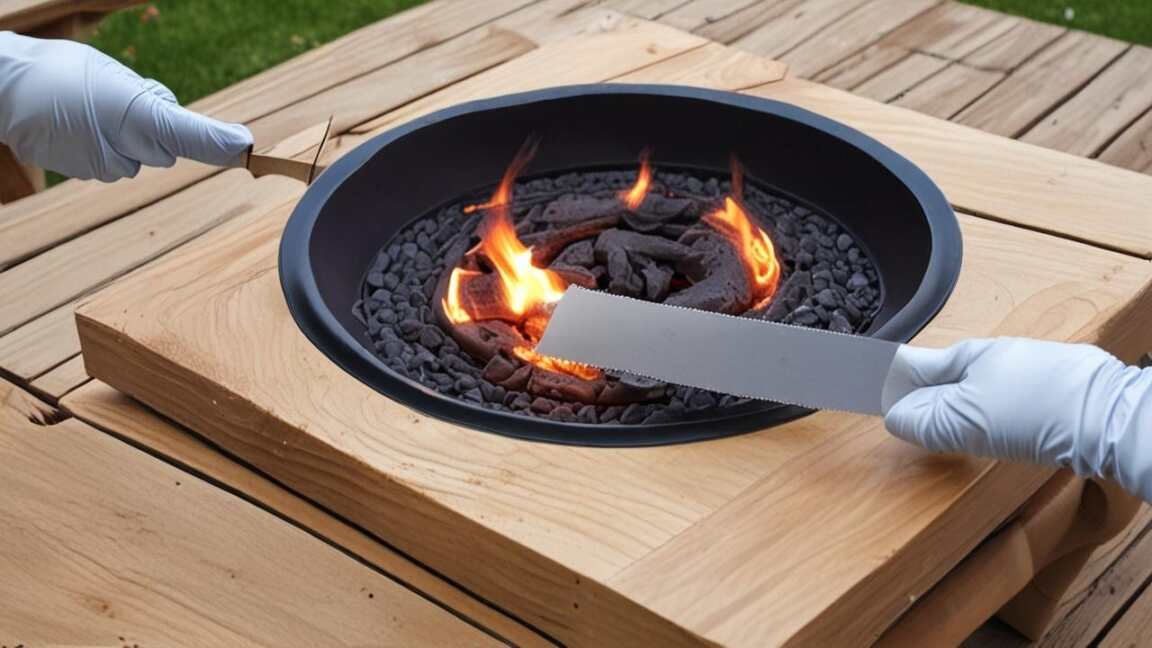
Tabletop fire pits collect soot, ash, and spilled fuel. Porcelain-coated steel wipes clean easily. Raw stainless steel may show fingerprints. Pits with exposed burner holes need brushing to keep them clear.
What to Look For
- A pit with a removable burner tray is much easier to clean.
- Avoid models with tight crevices where fuel residue can build up.
- For gel fuel pits, check if the canister holder can be removed and washed separately.
Tip: Wipe the pit after each use with a dry cloth. Once a month, use mild soap and water on non-porous surfaces.
9 – Price vs Value
Tabletop fire pits range from $15 to $150. A $15 pit may have no certification and thin metal. A $50 pit from a known brand usually includes a wind guard and safety features. Spending $60-$80 gives you a durable, certified unit that lasts years.
What to Look For
- Set a budget but prioritize safety over aesthetics.
- Check warranties – a 1-year warranty is standard; 2 years is better.
- Read return policies. Some online sellers charge restocking fees for fire pit returns.
How to Make Your Final Decision
Use this checklist before you click “add to cart”:
- Confirm the pit has a CSA, UL, or ETL label.
- Choose a fuel type that matches your typical use (propane for heat, gel for ease).
- Measure your table and verify the base is stable on your surface.
- Read reviews for wind performance and cleanliness.
- Check whether fuel is included and how much extra it costs.
- Compare warranty and return policies.
Common Myths vs Facts
Myth: Tabletop fire pits are safe to use indoors.
Fact: They produce carbon monoxide and are only approved for outdoor use. Using a tabletop fire pit inside a home, tent, or garage can be fatal. Even gel fuel pits release CO. The warns against any portable fuel-burning device indoors.
Myth: Gel fuel is completely smokeless and odorless.
Fact: Gel fuel burns with almost no smoke, but it often has a mild alcohol smell. Some brands add fragrances like citronella, though that is not guaranteed.
Myth: A higher price always means better safety.
Fact: Price does not guarantee certification. Some expensive designer pits lack UL listing. Always check the certification mark, regardless of how much you spend.
Frequently Asked Questions
What certifications should a tabletop fire pit have?
Look for CSA, UL, or ETL. These are recognized safety standards in North America. A CE mark is a European standard and may not be accepted by your local fire department.
Can I use a tabletop fire pit on a plastic table?
No. Plastic tables can melt or catch fire from the heat. Use a metal, stone, ceramic, or wood table with a heat-resistant barrier. According to the, surfaces must be non-combustible.
How do I clean a tabletop fire pit after use?
Wait for the unit to cool completely. Dispose of any leftover fuel. Wipe the exterior with a damp cloth. For the burner, use a soft brush to remove debris. Never use abrasive cleaners that can scratch the finish.
How long does a 1-pound propane canister last in a tabletop fire pit?
On a medium flame, a standard 1-pound canister lasts about 2 to 4 hours. Higher BTU pits burn through fuel faster. Always check the manufacturer’s runtime estimates.
Are tabletop fire pits allowed on balconies?
It depends on local fire codes and your building’s rules. Many apartment buildings ban any open flame device. Check with your landlord or building management. Some states prohibit propane on balconies altogether.
Final Thoughts
A good tabletop fire pit adds warmth and style to your outdoor life. Focus on safety certifications, choose a fuel type that fits your habits, and never skimp on stability. Use the nine checks above to skip the bad models and find one that you will enjoy for seasons to come.