
Waffles commonly stick to the maker due to insufficient preheating, using too much batter, or not applying the correct amount and type of grease. A primary technical cause is that the batter does not form a proper crust on a cold surface, instead bonding to the metal or any damaged non-stick coating. The most critical immediate fix is to always allow the waffle maker to fully preheat according to the manufacturer's instructions before adding any batter.
Do your waffles always get stuck in the maker? It’s a common problem, especially when you’re just starting out. You pour in the batter, get excited for a perfect waffle, and then… disaster!
Don’t worry, it happens to everyone. This guide will show you the 6 Reasons Your Waffles Stick to the Maker and give you easy fixes. We’ll cover simple steps to make sure your waffles slide out perfectly every time.
Key Takeaways
- Learn why your waffle maker might be sticking.
- Discover the importance of preheating your waffle maker.
- Understand how using the right amount of batter helps.
- Find out why not greasing your waffle maker causes issues.
- See how batter consistency affects waffle release.
- Get tips on how to properly clean your waffle maker for future use.
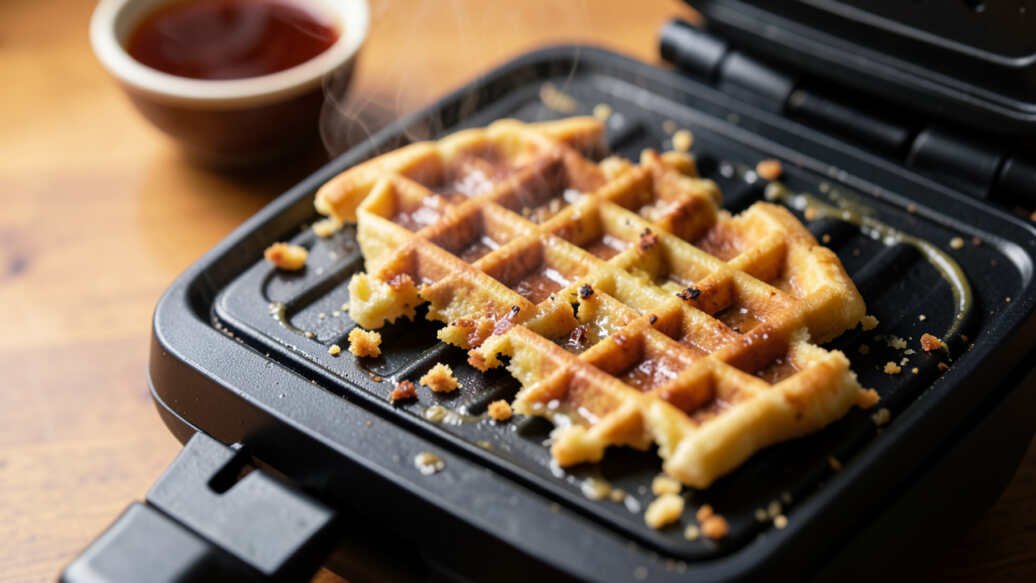
Why Waffles Stick to the Maker
Not Enough Heat
One of the biggest reasons waffles stick is a waffle maker that isn’t hot enough. Think of it like cooking an egg. If the pan is too cool, the egg will stick.
The same goes for waffles. The heat helps to cook the outside of the waffle quickly, creating a slight crust that prevents it from clinging to the metal. When the maker is cold, the batter just cooks into a sticky mess.
It’s important to give your waffle maker plenty of time to get to the right temperature. Most makers have a light that turns on when they are ready. Wait for that light, and then wait just a little bit longer.
This extra bit of time ensures the entire surface is hot and ready for your batter.
Using Too Much Batter
When you put batter into the waffle maker, it needs room to spread. If you add too much, the batter will ooze out the sides and create a sticky mess. This overflow can get into the hinges and the electrical parts of the maker, making it harder to clean and potentially causing future sticking issues.
The batter also needs to cook evenly. Too much batter means the inside might not cook through before the outside gets too browned. This can lead to a gummy texture that really sticks.
It’s better to start with less batter and add a little more if needed, rather than overloading it from the start.
Not Enough Grease (or the Wrong Kind)
This might seem obvious, but it’s a very common mistake. Waffle makers need a bit of fat to create a non-stick surface. Even if your waffle maker has a non-stick coating, it’s still a good idea to grease it, especially when it’s new or if you’ve had it for a while.
The type of grease you use matters too. Some cooking sprays can leave a residue that builds up over time. Butter can burn easily at high temperatures.
Oils like vegetable oil, canola oil, or melted coconut oil are usually good choices. You only need a thin layer.
Here’s a quick look at greasing:
- Vegetable Oil: Good for most waffle makers.
- Canola Oil: Similar to vegetable oil, works well.
- Melted Coconut Oil: Adds a subtle flavor.
- Cooking Spray: Use sparingly to avoid buildup.
- Butter: Can burn easily; use with caution.
Old or Worn-Out Non-Stick Coating
Over time, even the best non-stick coatings can start to wear down. If your waffle maker is old, you might notice that food starts sticking more and more, no matter how well you grease it. The coating can get scratched or lose its effectiveness.
If you suspect your non-stick coating is failing, you might need to consider getting a new waffle maker. Before you do that, try a thorough cleaning (more on that later) to see if you can revive it. Sometimes, residue can make it seem like the coating is gone when it’s just dirty.
Batter Consistency is Off
The thickness of your waffle batter plays a big role. If your batter is too thin, it will spread out too much and might not form a good structure, leading to sticking. If it’s too thick, it might not cook evenly and can become dense and gummy, also making it hard to get out.
A good waffle batter should be thick enough to pour but still flow smoothly. It should coat the back of a spoon without dripping off too quickly. You can often fix a batter that’s too thick by adding a tablespoon or two of milk or water.
If it’s too thin, add a tablespoon or two of flour.
Improper Cleaning
This is a huge one. If you don’t clean your waffle maker properly after each use, bits of batter and cooked waffle can build up. These crumbs get burnt onto the plates and create a rough surface.
This rough surface makes it much easier for fresh batter to stick.
Cleaning can be a bit tricky because waffle makers can’t usually be submerged in water. You need to use a gentle approach to avoid damaging the non-stick coating. Letting the maker cool down slightly but still be warm can make it easier to wipe away residue.
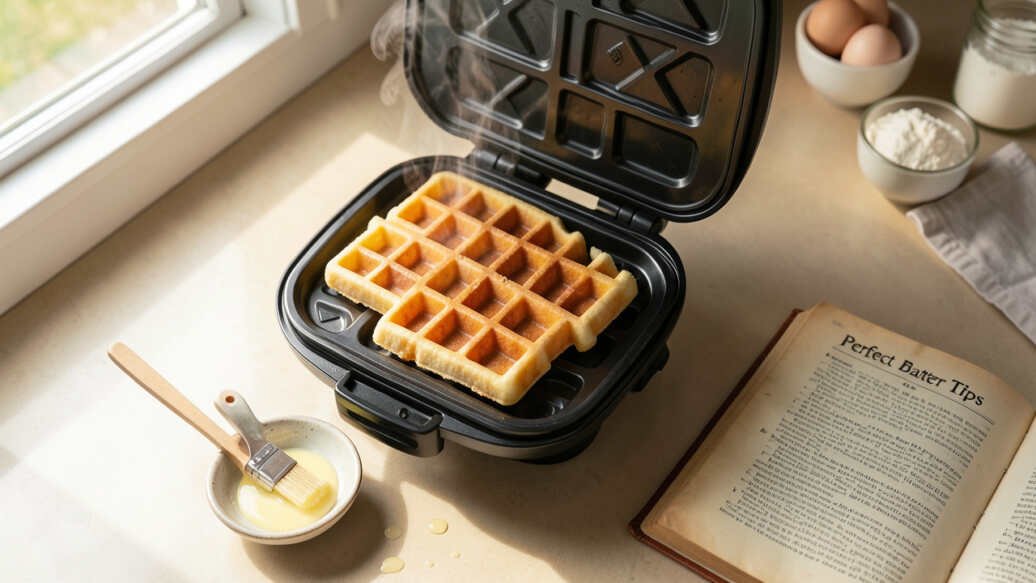
How to Prevent Waffles from Sticking
Now that you know why your waffles might be sticking, let’s talk about how to fix it. These tips are simple and easy to follow.
Preheat Properly
Always let your waffle maker heat up completely. Don’t rush this step. Follow the manufacturer’s instructions, and wait for the indicator light to signal it’s ready.
Sometimes, giving it an extra minute after the light comes on is beneficial.
Use the Right Amount of Batter
Start with less batter than you think you need. Pour the batter into the center of the bottom plate. The batter should spread out as you close the lid.
You want it to fill about two-thirds to three-quarters of the plate. If needed, gently close the lid to spread it, but avoid overfilling.
Grease Generously (But Not Too Much)
Even with a non-stick maker, a light coat of oil or melted butter is a good idea. Use a pastry brush or a paper towel dipped in oil. Make sure to cover all the nooks and crannies.
Re-grease lightly between waffles if you are making several.
Clean Your Waffle Maker After Every Use
This is crucial. Let the waffle maker cool for a few minutes so it’s warm, not scorching hot. Then, wipe down the plates with a damp cloth or a soft sponge.
For stubborn bits, you can use a nylon brush or even a toothbrush. Never use abrasive scrubbers or metal utensils.
If there are burnt-on bits, you can try putting a damp paper towel on the warm plates for a few minutes to loosen them. Then wipe away. Make sure the maker is unplugged and completely dry before storing it.
Check Your Batter Recipe
Use a recipe specifically designed for waffles. Ensure the batter isn’t too watery or too thick. If you’re using a mix, follow the instructions closely.
Sometimes, adding an extra egg yolk or a bit more liquid can help with texture and release.
Don’t Peek Too Soon
Resist the urge to open the waffle maker to check on your waffle before it’s done. Opening it too early can cause the waffle to break or stick. Wait until the steaming slows down significantly, indicating the waffle is almost cooked through.
Usually, this takes about 3-5 minutes depending on your maker.
Know When to Replace
If you’ve tried everything and your waffles still stick, it might be time for a new waffle maker. Check reviews for models known for their good non-stick surfaces and durability.
Frequently Asked Questions
Question: How often should I re-grease my waffle maker?
Answer: It’s a good idea to re-grease lightly between batches, especially if you’re making more than two or three waffles. This helps ensure each waffle releases easily.
Question: Can I use cooking spray on my waffle maker?
Answer: Yes, you can use cooking spray, but it’s best to use it sparingly. Some sprays can leave a sticky residue that builds up over time and affects the non-stick coating. A light spray and then wiping with a paper towel can help.
Question: My waffle maker has a non-stick coating. Do I still need to grease it?
Answer: Yes, it’s generally recommended to still grease your waffle maker, even if it has a non-stick coating. This adds an extra layer of protection and helps ensure your waffles slide out perfectly.
Question: What is the best way to clean burnt-on batter?
Answer: If burnt-on batter is stubborn, let the waffle maker cool slightly. Then, place a damp paper towel on the plate for a few minutes to soften the mess. After that, try wiping with a damp cloth or a soft brush.
Avoid metal scrubbers.
Question: My waffle maker is old. Is there anything I can do to make waffles stop sticking?
Answer: If your waffle maker is old, the non-stick coating might be worn out. Ensure you’re cleaning it thoroughly. If that doesn’t help, it might be time to consider a new one, as worn coatings are difficult to fix.
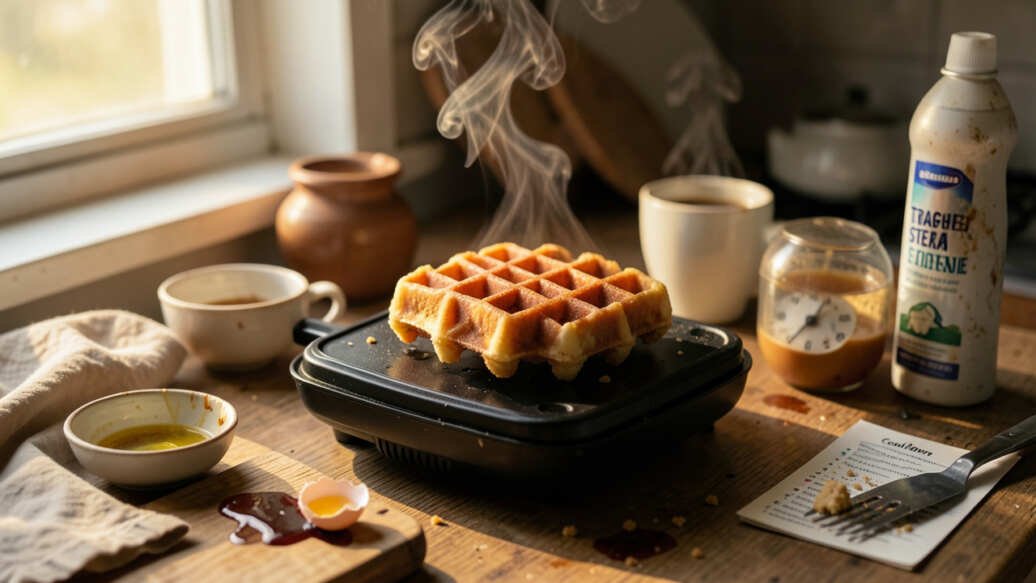
Final Thoughts
Sticking waffles are frustrating, but the reasons are usually simple. You now know the 6 Reasons Your Waffles Stick to the Maker. It often comes down to not enough heat, too much batter, or not enough grease.
Proper cleaning is also key to preventing burnt-on residue. By following these easy steps, you can make sure your waffles slide out perfectly every time. Enjoy your delicious, perfectly made waffles!

![8 Pizza Oven Safety Tips Most People Ignore[1]](https://creativehouseblog.com/wp-content/uploads/2026/04/8_Pizza_Oven_Safety_Tips_Most_People_Ignore1-768x448.jpg)
![6 Reasons Your Bread Maker Isn’T Working Properly[1]](https://creativehouseblog.com/wp-content/uploads/2026/04/6_Reasons_Your_Bread_Maker_IsnT_Working_Properly1-768x448.jpg)
![Monthly Home Maintenance Tasks Most Homeowners Skip[1]](https://creativehouseblog.com/wp-content/uploads/2026/05/Monthly_Home_Maintenance_Tasks_Most_Homeowners_Skip1-768x403.jpg)
![Air Fryer Size Guide for Families[1]](https://creativehouseblog.com/wp-content/uploads/2026/03/Air_Fryer_Size_Guide_for_Families1-768x448.jpg)
![How Air Fryers Circulate Air[1]](https://creativehouseblog.com/wp-content/uploads/2026/03/How_Air_Fryers_Circulate_Air1-768x448.jpg)
![Why Air Fryers Cook Food Faster Explained[1]](https://creativehouseblog.com/wp-content/uploads/2026/03/Why_Air_Fryers_Cook_Food_Faster_Explained1-768x448.jpg)