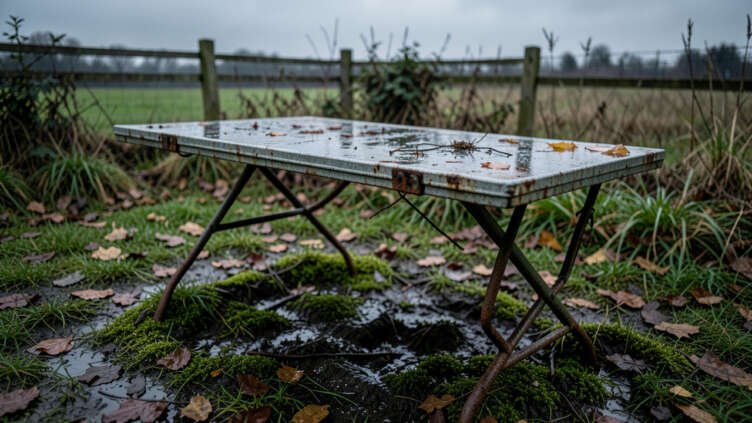
A coffee table wobbles on uneven ground because its four legs cannot all make stable contact with a non‑planar surface, forcing the frame to twist and concentrate stress on one leg. This instability, driven by geometry rather than loose hardware, creates cyclic rocking that progressively cracks glass tops, loosens fasteners, and fails metal joints. The key takeaway is that a wobble is not a cosmetic annoyance but a slow‑motion mechanical failure—ignoring it can lead to collapse and contributes to roughly 22,000 emergency room visits each year from unstable furniture.
A wobbly outdoor coffee table wobbles on uneven ground because the ground does not provide a single flat plane. Three legs form a tripod and always touch the ground. The fourth leg either floats or takes too much weight. This forces the table frame to twist.
Quick Verdict: In short, an outdoor coffee table wobbles on uneven ground because its legs cannot adapt to a sloping or irregular surface. This concentrates stress on one leg and twists the frame. Over time, this wobble cracks glass tops, loosens fasteners, and causes metal joints to fail. The core problem is geometric instability, not just loose hardware.
When you place a drink on the table, the weight shifts to the lowest leg. The frame rocks back and forth. This rocking motion creates cyclic stress on every joint. According to the, unstable furniture causes roughly 22,000 emergency room visits each year. Many of these incidents start with a simple wobble that gets worse over time.
Important: A wobble is not a minor annoyance. It is a mechanical failure happening in slow motion. The twisting frame puts uneven pressure on all four corners. This damages the table from the inside out.
The problem becomes worse with heavier items. A large planter or a stack of books increases the leverage on the frame. The table rocks harder. Joints that were tight become loose. Loose joints allow more movement. This cycle leads to fatigue in the material.
Key Takeaways
- A table wobbles because its legs cannot find a single flat plane, forcing the frame to twist under its own weight.
- Ignoring a wobble causes cyclic stress that cracks glass, strips screws, and bends metal frames over time.
- Tempered glass tops can break without warning when twisted, creating a serious safety hazard on patios and decks.
- Adjustable leveling glides or plastic shims offer the fastest and most reliable fix for uneven ground surfaces.
- Regular seasonal inspections of outdoor furniture hardware can extend the life of your table by years.
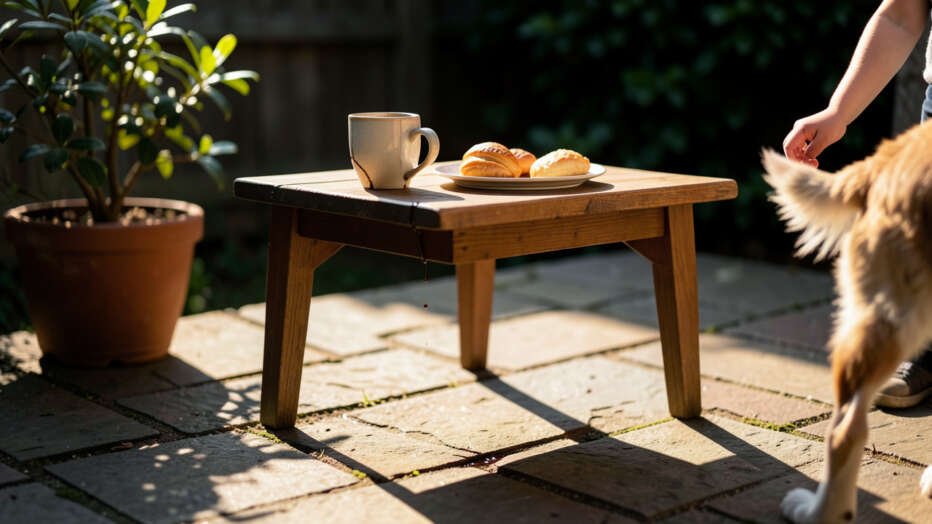
What Are the Hidden Risks of Ignoring a Wobbly Table?
Most people think a wobble is just a minor irritation. They put a coaster under one leg and forget about it. This approach masks a deeper problem. The risks are real and often surprising.
A, but it has a low tolerance for twisting. When the frame warps, the glass bends with it. Outdoor coffee table wobbles on uneven ground create a twisting force called torque. A study of tempered glass failure showed that a deflection of just 0.5 inches can cause sudden fracture under standard residential load.
Warning: Never use a wobbly table for a heavy aquarium, large planters, or hot grills. The cyclic loading can cause sudden collapse. Replace or fix the wobble before placing heavy items on the table.
Metal frames suffer from a phenomenon called cyclic fatigue. The outline how repeated stress weakens aluminum and steel. A frame that twists back and forth every day will develop micro-cracks. These cracks grow over weeks and months. A joint that held 200 pounds when new may break at 50 pounds after one season of wobbling.
Fasteners like screws and bolts do not handle side-to-side force well. They are designed to hold things together in a straight line. When the table rocks, the screws bend. The holes in the frame become oval-shaped. Once this happens, tightening the screws does not help. The hole is stripped, and the joint becomes permanently loose.
What Happens to Different Table Materials?
| Material | Wobble Risk | Failure Mode | Ease of Repair |
|---|---|---|---|
| Aluminum | Moderate | Cracking at weld joints | Difficult (needs welding) |
| Steel | Low | Bending of legs | Moderate (hammer or press) |
| Teak Wood | High | Splitting and joint loosening | Moderate (wood glue and clamps) |
| Wicker/Rattan | Very High | Frame collapse inside weave | Very Difficult |
Wood tables have a unique challenge. Teak and eucalyptus expand and contract with moisture. A table that is stable in summer may wobble in fall. When outdoor coffee table wobbles on uneven ground, the wood fibers compress on the short leg. Over time, this creates a permanent dent in the wood grain.
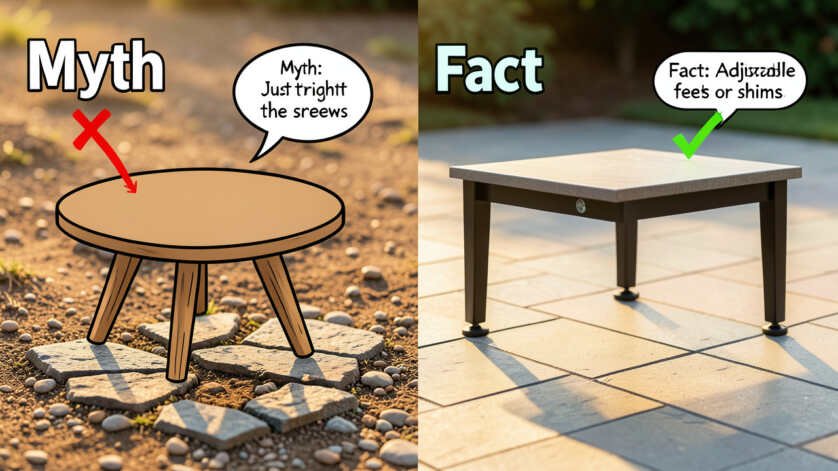
Common Myths vs. Facts About Wobbly Tables
Myth 1: Tightening the screws harder will fix the wobble.
Fact: Tightening screws on an uneven surface actually distorts the frame further. The screws pull the joints into a twisted shape. This creates internal stress that weakens the metal. The wobble may stop temporarily, but the frame is now weaker.
Myth 2: A heavy table does not wobble.
Fact: Weight does not solve geometry problems. A heavy table still rocks if the legs are not on the same plane. The extra weight makes the cyclic stress worse. Heavy tables cause more damage to the ground surface beneath them.
Myth 3: A wobble is just a cosmetic issue.
Fact: A wobble is a mechanical issue that leads to structural failure. The Joint Committee on Structural Safety notes that cyclic loading from rocking is one of the primary causes of joint fatigue in outdoor furniture. Ignoring it shortens the table lifespan by 40-50 percent.
How to Diagnose the Root Cause of the Wobble
Before you fix the wobble, you need to find its source. The problem is rarely obvious. Follow these steps to diagnose the issue correctly.
Tools You Will Need
- A 24-inch bubble level to check the ground and the table frame.
- A set of plastic shims or wedges for temporary testing.
- A tape measure to check leg lengths.
- A wrench or screwdriver set for tightening hardware.
Step-by-Step Diagnosis Process
- Place the table in its normal spot. Rock it diagonally from corner to corner. The diagonal that gives the most movement shows the short leg.
- Use the bubble level on the tabletop. If the bubble is off-center, the ground is not flat. Move the level to the ground surface to confirm.
- Measure each leg from the ground to the frame. A difference of 1/8 inch or more will cause a noticeable wobble in most standard tables.
- Check all bolts and screws. A loose bolt can feel exactly like a ground problem. Tighten everything to the manufacturer recommended torque spec.
- Inspect the frame for cracks. Run your hand along the underside of the rails. A hairline crack in aluminum can open up under load and close when the weight is removed.
Tip: Use a straightedge like a yardstick across the tabletop. A gap between the straightedge and the glass means the frame is already twisted. This is a sign of permanent damage to the structure.

How Does Uneven Ground Affect Different Outdoor Surfaces?
The type of ground under your table matters more than the table itself. Different surfaces create different types of wobble patterns.
| Surface Type | Wobble Cause | Best Fix |
|---|---|---|
| Concrete Patio | Settling or poor pouring | Adjustable glides on legs |
| Wood Deck | Warped or cupped boards | Move table to a different board or use shims |
| Pavers | Uneven sand base under stone | Lift and reset the paver or use a wide base plate |
| Grass or Gravel | Soft ground shifting under weight | Place a flat stone or patio tile under the table |
Concrete patios are rarely perfectly flat. The American Concrete Institute states that a standard patio slab can have a slope of 1/8 inch per foot for drainage. Over a 4-foot table, that is a 1/2-inch difference from one leg to the other. This is enough to cause a serious wobble.
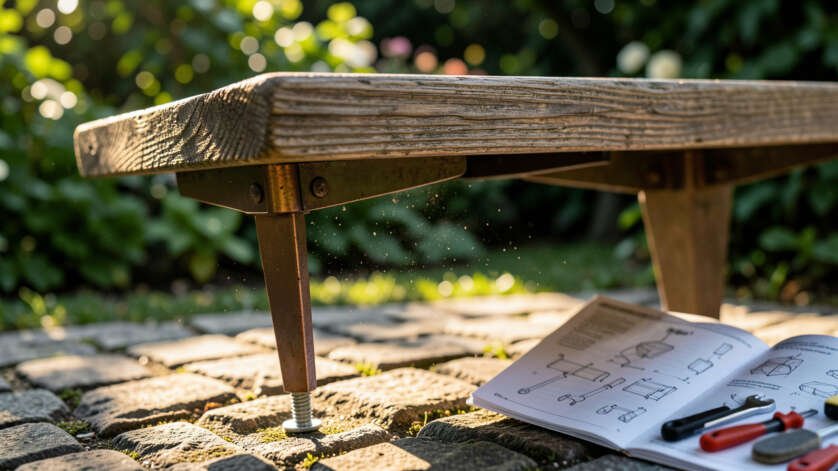
Step-by-Step Fixes for a Wobbly Outdoor Coffee Table
You have two main choices for fixing the wobble. You can fix the ground, or you can fix the table. Fixing the table is usually faster and cheaper.
Fix 1: Adjustable Leveling Glides
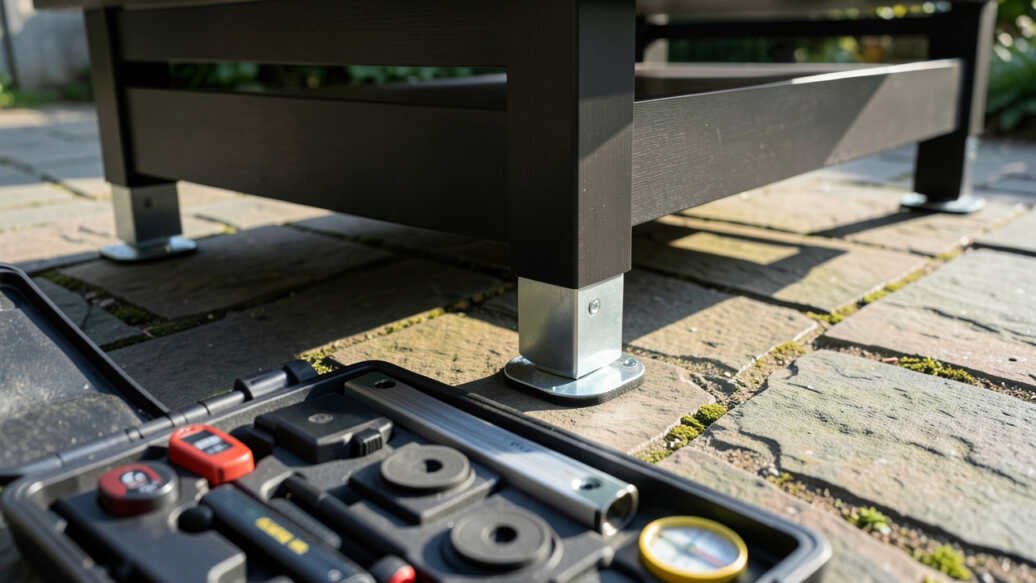
These are screw-in feet that replace the standard plastic cap on the bottom of each leg. You turn them like a bolt to raise or lower each corner. Leveling glides are the most effective long-term solution for outdoor coffee table wobbles on uneven ground.
- Remove the old plastic caps from the bottom of each leg.
- Screw in the leveling glide by hand. Most glides use a standard 1/4-inch or 5/16-inch thread.
- Place the table where you want it. Turn each glide until the table stops rocking.
- Use a bubble level to confirm the tabletop is flat.
- Tighten the lock nut on the glide to prevent it from vibrating loose over time.
Fix 2: Plastic Shims
Shims are thin wedges that slide under the short leg. They are a good temporary fix. Use high-density plastic shims for outdoor use. Wood shims rot and compress over time.
- Rock the table to find the short leg.
- Slide a shim under the short leg until the rocking stops.
- Tap the shim gently with a hammer to seat it firmly.
- Break off the excess shim material with pliers.
- Check the table with a level and add a second shim if needed.
Tip: Buy adjustable glides that have a rubber base. The rubber grips the ground and prevents the table from sliding. This is especially important on smooth concrete or tile patios.
Fix 3: Create a Level Foundation
If your entire patio is uneven, you can create a level zone for the table. Use a large outdoor rug with a thick pad underneath. The pad compresses to fill gaps in the ground. This method works best for minor ground variations of less than 1/4 inch.
When Is It Beyond Repair?
Not every wobbly table can be saved. Some damage is permanent. Here are the signs that your table needs to be replaced.
- Cracked glass top: A spiderweb crack in tempered glass means the frame has twisted too far. The glass is a safety hazard. Do not use it. Replace the entire table or the glass top.
- Oval-shaped screw holes: If the screws no longer hold tight in the frame, the joint is stripped. This cannot be fixed without drilling new holes or using larger screws.
- Bent metal frame: Aluminum and steel frames can be bent back, but the metal is now weakened. The bend creates a stress point that will crack over time.
- Rusted or corroded joints: Surface rust is cosmetic. Deep rust that flakes and pits the metal means the joint has lost its strength.
Warning: If the glass top has shifted in the frame, loosen all the bolts first. A twisted frame can shatter the glass when you try to straighten it. Relieve the pressure on the glass before making adjustments.
Pro Tips for Preventing Future Wobbles
Prevention is easier than repair. A few simple habits will keep your table stable for years.
- Check the tightness of all bolts and screws twice per year. Do this at the start of spring and the end of summer.
- Store the table indoors during winter. Freezing and thawing cycles can shift the ground under a covered patio.
- Use felt pads or rubber glides on the bottom of the legs. These protect the ground and reduce slipping.
- Avoid dragging the table across the patio. Dragging bends the legs and loosens the joints. Lift the table to move it.
- Place the table in the same spot every time. The ground settles under the legs. Moving the table resets this settling process.
Resources and Tools
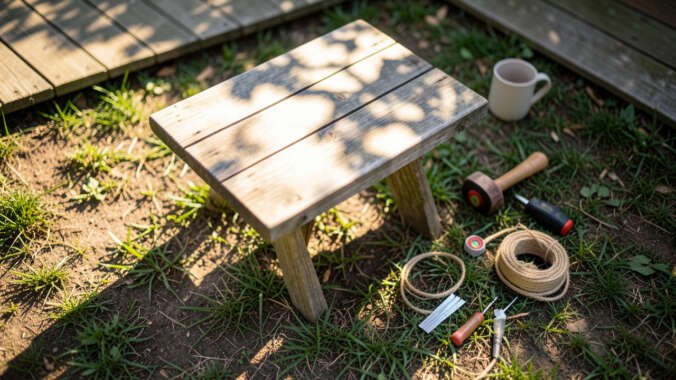
Adjustable Leveling Glides – Replace standard table feet with threaded glides for a permanent fix.
Plastic Patio Shims – Weatherproof shims for quick adjustments under any leg.
Torque Wrench Set – Ensure bolts are tightened to the correct specification.
Bubble Level (24 inch) – Essential tool for diagnosing ground and table flatness.
Frequently Asked Questions
Why does my table wobble even though the floor looks perfectly flat?
The human eye cannot detect a slope of less than 1/4 inch per foot. A concrete patio can be sloped for drainage without appearing tilted. Use a straightedge and a bubble level to find the high spot. The wobble comes from this invisible slope.
Can a thick outdoor rug really fix a wobbly table?
A thick rug can help with very small wobbles under 1/8 inch. The rug pad compresses to fill the gap. However, rugs compress further over time and the wobble returns. A rug is a comfort item, not a permanent structural fix for a wobbly table.
What type of leveling foot is best for aluminum tables?
Stainless steel leveling glides with a rubber base are best for aluminum frames. They resist corrosion and provide grip. Avoid bare metal glides on metal frames. They can cause galvanic corrosion between the two different metals over time.
Is it dangerous to keep using a wobbly glass table?
Yes, it is dangerous. A tempered glass top under torsional stress can shatter without warning. The CPSC reports that broken glass from furniture causes thousands of foot and leg injuries each year. Fix the wobble or replace the table before using it again.
How often should I check my outdoor furniture for wobbles?
Check your outdoor furniture at the start of each season. Spring and fall are the best times. Temperature changes and ground movement from freeze-thaw cycles affect the stability of the ground and the tightness of the hardware.
Final Thoughts
A wobbly outdoor coffee table is a signal that the ground or the frame is out of balance. Ignoring this signal leads to broken glass, stripped joints, and wasted money on repairs. Use adjustable leveling glides or plastic shims to restore stability quickly. Check your hardware twice a year to keep your outdoor space safe and functional.