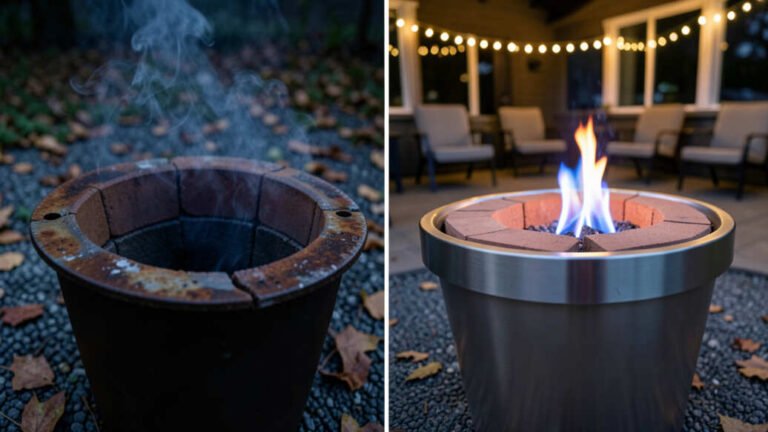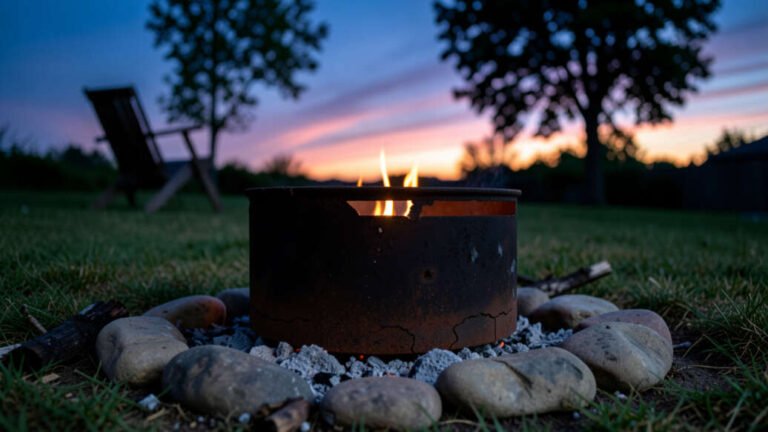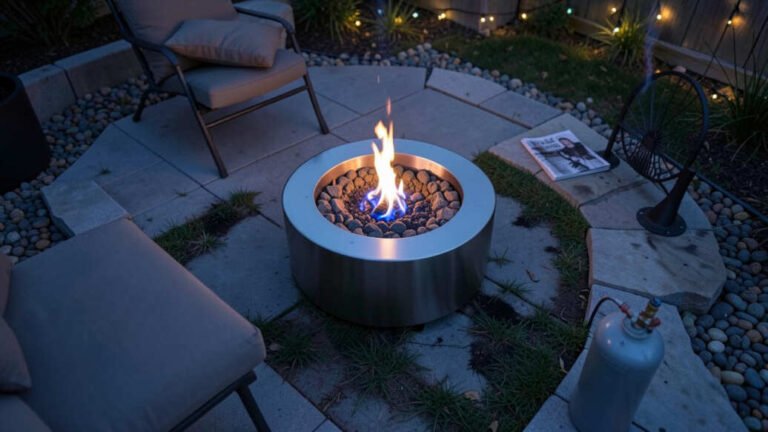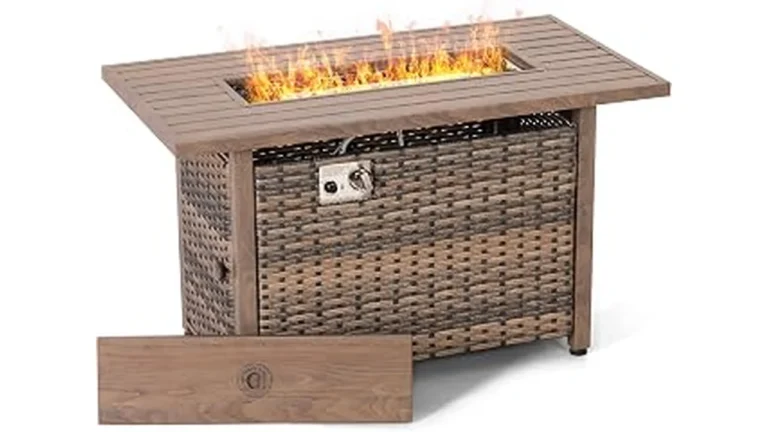
A propane fire pit is worth buying for a small patio because it provides instant, adjustable heat without smoke or ash, making it a clean and low-maintenance option. Tabletop models are ideal for patios under 100 square feet, and the average operating cost ranges from $2 to $5 per hour. The main trade-off is the recurring expense of propane and the need for safe tank storage, but the convenience and space-saving design often outweigh these downsides for small outdoor spaces.
A propane fire pit is a portable or built-in outdoor heating appliance that burns liquid propane gas to produce a flame. Unlike wood-burning units, these fire pits connect to a refillable propane tank, which allows you to control the flame height and heat output with a simple dial.
These units are popular for small patios because they do not require a natural gas line or a chimney. You can place a propane fire pit for a small patio on almost any flat, non-flammable surface. Many models are lightweight and designed to be stored easily when not in use.
Quick Verdict: In short, a propane fire pit is a strong choice for a small patio. It offers instant heat, adjustable flames, and zero smoke. You get the ambiance of a fire without worrying about ash cleanup or firewood storage. The main trade-off is the recurring cost of propane gas and the need to safely store the fuel tank.
Key Takeaways
- Propane fire pits produce no smoke or ash, making them cleaner than wood-burning alternatives.
- Tabletop models are the best option for patios under 100 square feet due to their small footprint.
- The cost to run a propane fire pit averages between $2 and $5 per hour, depending on your local fuel prices.
- Safety regulations require you to keep a propane fire pit at least 10 feet away from any combustible structure.
- Proper maintenance, like covering the unit and checking for gas leaks, helps the pit last for many seasons.
What Are the Main Advantages for a Small Patio?
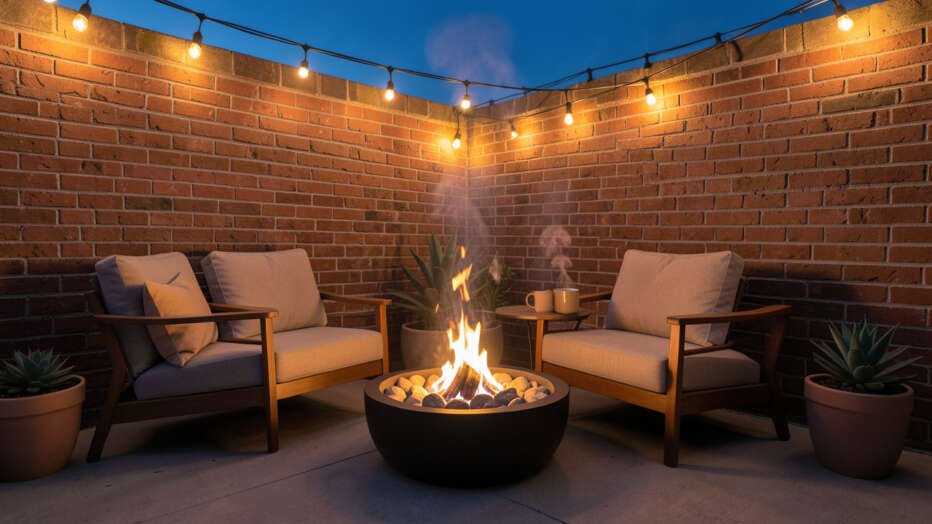
If you have a small outdoor space, every square foot matters. A propane fire pit gives you the warmth and look of a fire without taking up too much room.
Clean and Smoke-Free Operation
One of the biggest problems with wood fires on a small patio is smoke. It gets in your eyes, on your clothes, and can bother your neighbors. A propane fire pit burns clean. There is no smoke, sparks, or soot.
Important: According to the Hearth, Patio & Barbecue Association (HPBA), gas fire pits now account for over 60% of new outdoor heater purchases. Clean operation is the top reason buyers mention for choosing gas over wood.
Instant Flame and Easy Control
With a wood fire, you spend 20 to 30 minutes building, lighting, and waiting for a good flame. A propane fire pit gives you a flame with the push of a button or the twist of a knob. You can turn the heat up or down instantly. When you are done, you just turn it off.
Low Maintenance
Wood fires require constant feeding. You also need to clean out ash and soot after each use. A propane fire pit has no ash. You simply turn off the gas and cover the unit. This is a major time saver for casual users.
Space-Saving Designs
Manufacturers design many propane fire pits specifically for small patios. You can find tabletop models that sit on your existing table. There are also slim column units that take up less than 2 feet of floor space. Some models double as a side table or dining surface.
What Are the Downsides of Propane for Small Spaces?
While the benefits are strong, you should also understand the drawbacks before you buy.
Ongoing Fuel Cost
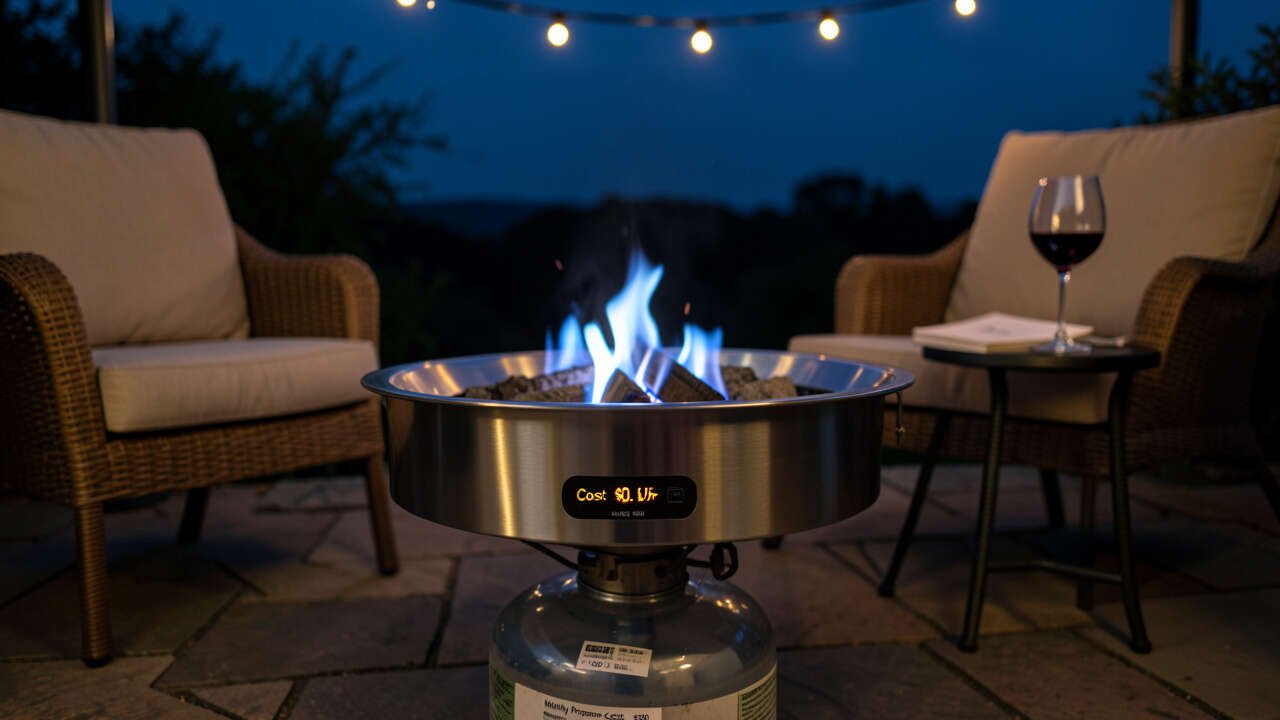
Propane is a consumable. A standard 20-pound propane tank holds about 4.6 gallons of gas. At full burn, most small patio fire pits will use a full tank in 8 to 12 hours. Depending on your local propane prices, this can cost between $2 and $5 per hour of operation.
Storage of the Propane Tank
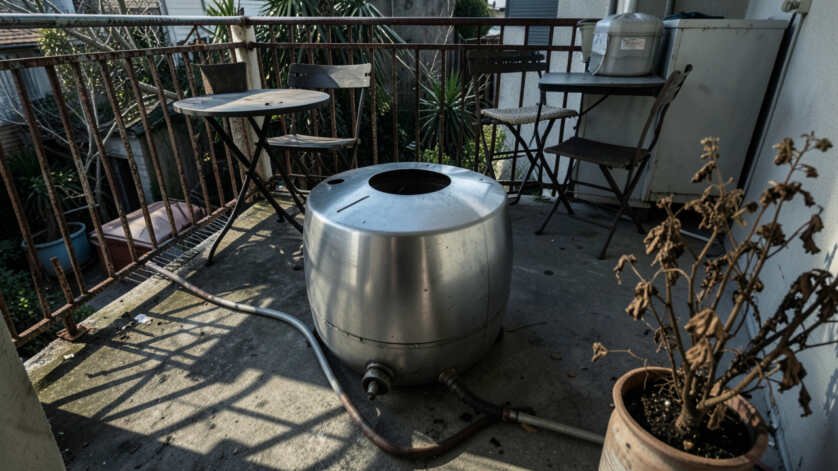
The propane tank itself can be an eyesore in a small space. You must store the tank outdoors and upright. You also need a way to hide or disguise the tank, such as a decorative cover or a skirt on the fire pit.
Heat Output Limitations
A propane fire pit outputs around 30,000 to 50,000 BTUs. This is enough to generate warmth for 1 to 4 people sitting close by. It does not produce the intense radiant heat of a large wood fire. On a very cold night, you may still feel chilly.
Warning: The U.S. Consumer Product Safety Commission reports that nearly 5,300 injuries related to fire pits are treated in emergency rooms each year. Never attempt to use a propane fire pit indoors or in a fully enclosed patio area, even if it feels cold. Carbon monoxide is a serious risk.
Less “Campfire” Atmosphere
Some people miss the crackling sounds and smell of burning wood. A propane flame is quiet and has a very clean smell. If you value the sensory experience of a campfire, a propane unit may feel less authentic to you.
How Much Does It Cost to Run a Propane Fire Pit?
Understanding the total cost helps you decide if this is the right choice for your budget.
| Expense Category | Estimated Cost | Notes |
|---|---|---|
| Fire Pit Unit | $80 – $500+ | Cost depends on size, materials (steel, stone), and brand. |
| Propane Tank (20 lb) | $40 – $60 (full) / $20 – $30 (refill) | The tank is a one-time purchase. Refills are cheaper than exchanges. |
| Runtime Per Tank | 8 – 12 hours (at high setting) | Lower settings can stretch runtime to 15+ hours per tank. |
| Hourly Operating Cost | $2.00 – $5.00 | Varies by local fuel prices and burn rate. |
| Accessories (Cover, Lava Rock) | $15 – $60 | A good cover extends the life of the unit. Lava rock helps distribute heat. |
How to Choose a Propane Fire Pit for a Small Patio
Selecting the right model means thinking about the size of your space and how you plan to use it. Follow these steps to make a smart choice.
- Measure your patio space. A good rule is to leave at least 3 feet of walking space around the fire pit. For a 100 sq ft patio, look for a pit with a body diameter of 24 inches or less.
- Decide on a tabletop vs. floor model. A tabletop pit (10-16 inches wide) sits on your existing outdoor table. A floor model (20-24 inches wide) stands on its own and often includes a built-in table surface.
- Check the BTU output. A small patio does not need a high BTU output. Look for a unit between 30,000 and 40,000 BTUs. This provides enough heat for 1-3 people without being overwhelming.
- Look for safety features. Choose a model with a flame failure device. This sensor shuts off the gas if the flame goes out. This is critical for small spaces where wind may be a factor.
- Consider the material. Powder-coated steel is lightweight and affordable. Stone or cast aluminum is heavier but more durable in harsh weather. Choose a material that fits your local climate.
Tip: If you have a very small patio (under 50 sq ft), look for a tabletop fire pit that uses a 1-pound disposable propane cylinder. These models are compact, highly portable, and do not require a bulky 20-pound tank.
Propane vs Wood-Burning Fire Pits for Small Patios
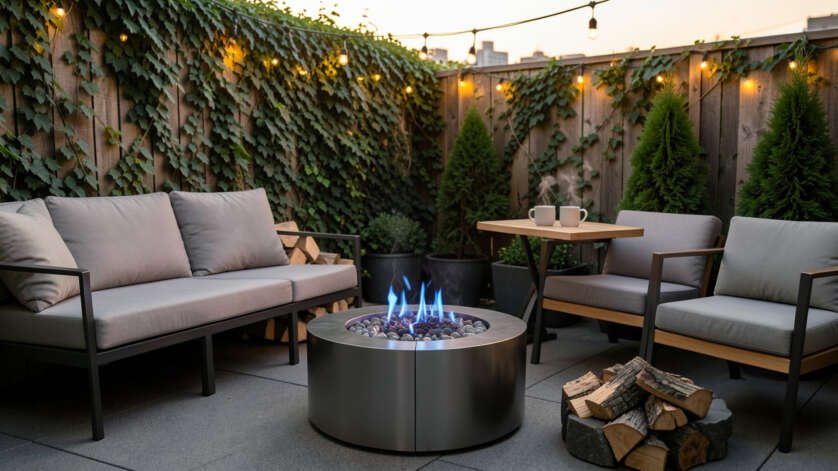
If you are still deciding between fuel types, this comparison table can help you see the difference clearly.
| Feature | Propane Fire Pit | Wood-Burning Fire Pit |
|---|---|---|
| Smoke and Ash | None. | Significant smoke and ash. |
| Startup Time | Instant. | 10-30 minutes to build. |
| Heat Control | Adjustable dial. | Hard to control. |
| Cleanup | None. | Ash and soot disposal. |
| Fuel Cost (per hour) | $2.00 – $5.00. | Free – $1.00 (if free wood). |
| Space Required | Very small. Tabletop models available. | Moderate to large. Requires wood storage. |
| Ambiance | Clean flame. Quiet. | Crackling sounds. Strong smell. |
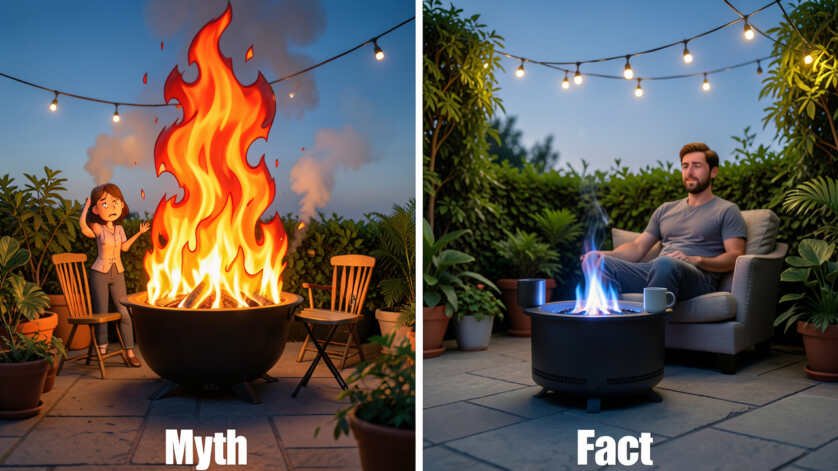
Common Myths vs Facts
There are several misconceptions about propane fire pits, especially when used in small spaces.
- Myth: Propane fire pits are dangerous for small patios because the gas tank might explode. Fact: Propane tanks have safety valves that release pressure if the temperature gets too high. As long as you keep the tank upright and away from the direct heat of the burner, the system is very safe.
- Myth: A propane fire pit does not produce enough heat to be worth the money. Fact: A standard 30,000 BTU propane fire pit provides enough heat to warm a 10-foot diameter circle of seating comfortably. It may not feel as intense as a large wood fire, but it is more than adequate for close seating.
- Myth: Propane fires smell bad and are toxic. Fact: A properly functioning propane fire pit produces only water vapor and carbon dioxide. The smell you associate with propane is an odorant (ethyl mercaptan) added for leak detection. This smell does not linger after the fire is out.
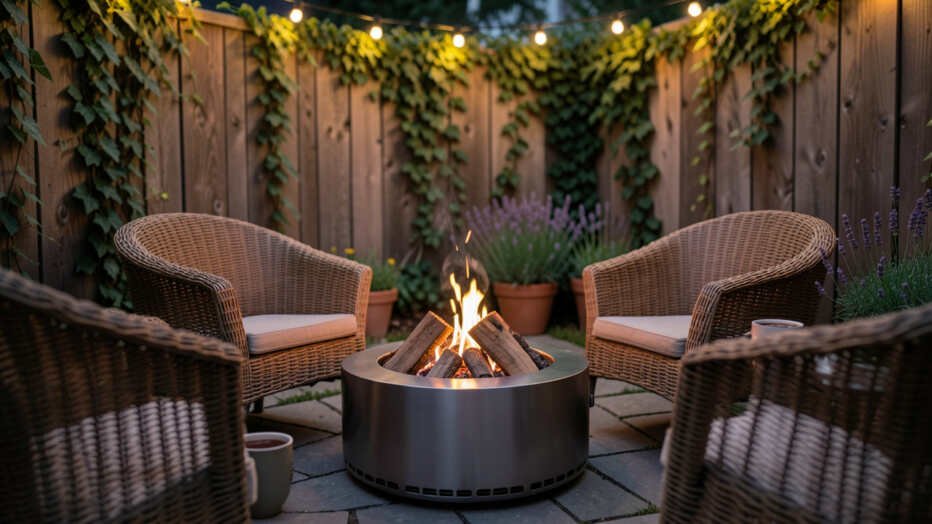
Pro Tips for Getting the Most Out of Your Fire Pit
Use these expert tips to stay safe and increase comfort on your small patio.
- Use a wind guard or screen. A small patio often sits in a corner or against a building, which can create swirling winds. A glass wind guard or a metal screen helps keep the flame steady and directs heat toward you.
- Buy a tank cover and a hose cover. Hiding the propane tank makes the space look much larger and more organized. A simple woven or wooden tank cover does the job perfectly.
- Keep an extra propane tank on hand. There is nothing worse than running out of gas on a cool evening. Buying a second 20-pound tank ensures you always have a backup ready to go.
- Test for gas leaks regularly. Apply a 50/50 mixture of dish soap and water to the hose connections. If you see bubbles forming when the gas is turned on, tighten the connection or replace the hose before you use the fire pit.
Tip: You can extend your propane tank runtime by 30-50% simply by running the fire pit on medium instead of high. Most people find the heat output on medium more comfortable for extended sitting anyway.
Frequently Asked Questions
Is it safe to use a propane fire pit on a small apartment balcony?
Check your local fire codes first. Many building codes prohibit propane tanks over 1 pound on apartment balconies. If you are allowed, keep the fire pit at least 10 feet from the building walls and never use it near sprinkler systems or flammable materials.
Does a propane fire pit need ventilation?
Yes, but not a chimney. You only need proper open-air ventilation. Never use a propane fire pit under a low roof, inside a tent, or inside a fully enclosed patio. The U.S. Consumer Product Safety Commission warns that oxygen depletion and carbon monoxide buildup are serious risks in enclosed spaces.
How long does a 20-pound propane tank last on a small fire pit?
A 20-pound tank typically lasts 8 to 12 hours on high. If you turn the fire pit down to a medium or low setting, the tank can last 15 to 20 hours. This means you could use the fire pit several times a week without refilling.
Can I use a natural gas line instead of propane?
Yes, but you need a natural gas conversion kit. This requires purchasing a specific burner and connecting it to your home’s gas line. This is a permanent installation that usually requires a professional plumber. It is more expensive upfront but eliminates the need to refill tanks.
Does a propane fire pit ruin a patio table?
It can, if you do not use a heat shield. Always place a tabletop fire pit on a non-flammable mat or a ceramic tile trivet. The heat from the base can damage wood or plastic table surfaces over time.
Final Thoughts
A propane fire pit brings warmth and style to a small patio without the mess of wood. It is a clean, safe, and convenient way to extend your outdoor season. By choosing the right size and following proper safety rules, you can create a comfortable outdoor living space that you will use for years to come.