
The air fryer fan is the core component that enables rapid hot air circulation, which is the fundamental principle behind this cooking technology. This powerful fan forces heated air to move quickly and evenly around the food, cooking it thoroughly while creating a crispy exterior similar to deep frying. Understanding this fan mechanism is key to optimizing cooking results, as it directly impacts heat distribution and the achievement of desired texture with minimal oil.
Key Takeaways
- Air fryers use hot air circulation to cook food.
- A powerful fan is the main component of this technology.
- The fan pushes hot air around the food to cook it evenly.
- This process creates a crispy texture similar to deep frying.
- Different air fryer models may have variations in fan design.
- Understanding the fan helps you get the best cooking results.
![Air Fryer Fan Technology Explained[1]](https://creativehouseblog.com/wp-content/uploads/2026/03/Air_Fryer_Fan_Technology_Explained1.jpg)
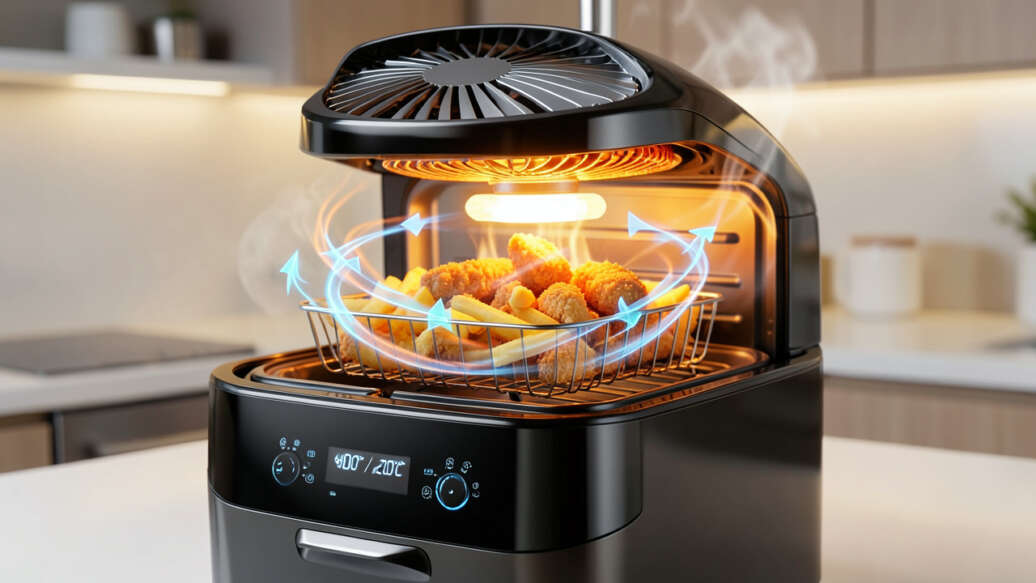
How Air Fryers Cook Food
Air fryers are amazing kitchen gadgets that make food crispy and delicious with much less oil.
They work by mimicking the effect of deep frying. Instead of submerging food in hot oil, air fryers use super hot air that moves around very quickly.
This rapid movement of hot air is the secret to getting that perfect crunch.
Think of it like a tiny convection oven, but much faster and more efficient for smaller portions.
The way this hot air circulates is what makes the magic happen. It’s all about even cooking and creating that satisfying texture we all love.
The Role of the Fan
The Heart of the Air Fryer
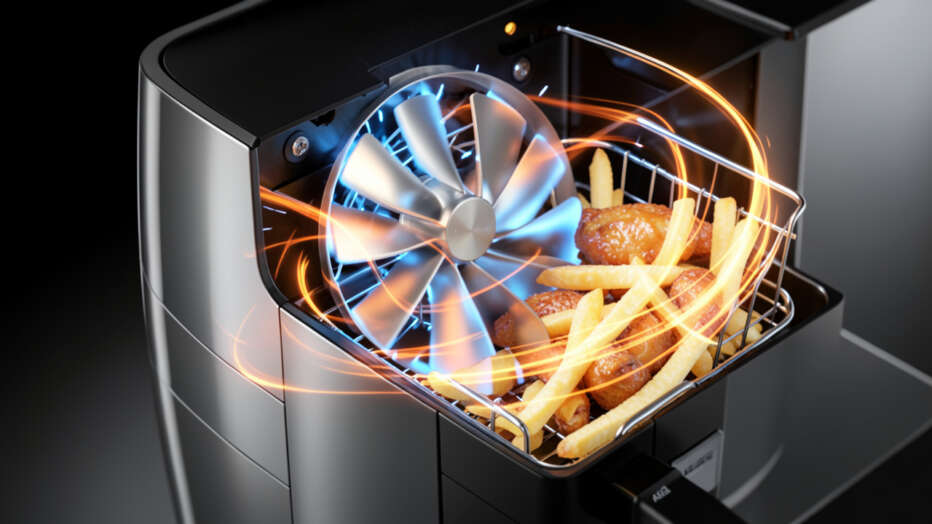
The most important part of an air fryer’s cooking system is its fan. This fan is not just any small fan; it’s designed to be powerful. Its main job is to create the rapid circulation of hot air.
Without this strong fan, the air fryer wouldn’t be able to cook food as effectively.
The fan is usually located at the top or back of the air fryer unit. It works together with the heating element, which heats the air up to very high temperatures. Once the air is hot, the fan kicks in and blows that hot air all around the cooking chamber.
How the Fan Moves Air
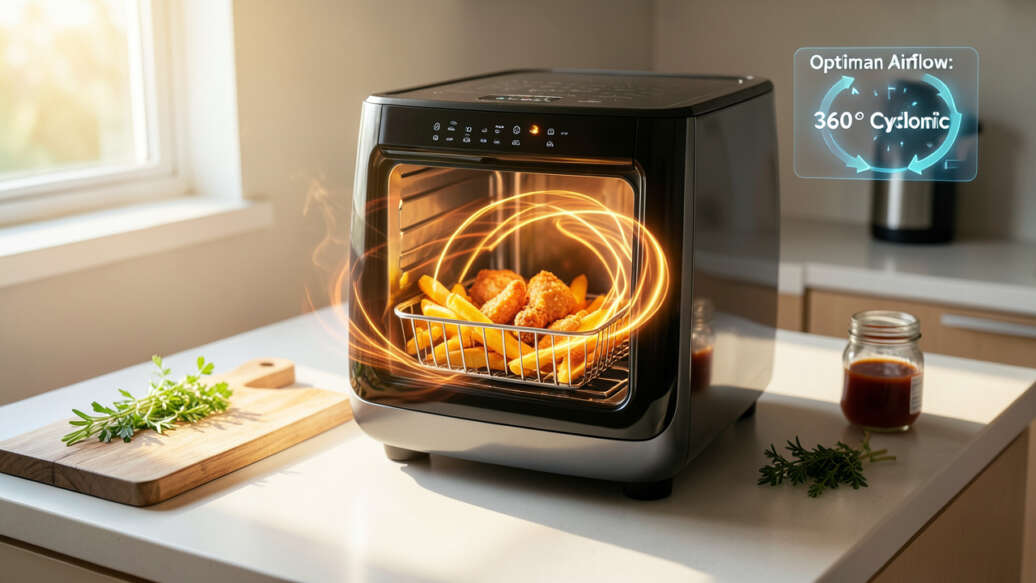
Imagine a miniature hurricane happening inside your air fryer. That’s essentially what the fan creates. It pulls air in, heats it up, and then forcefully blows it out in a circular motion.
This constant movement of hot air ensures that every side of your food gets exposed to the heat.
This consistent airflow is crucial for even cooking. It means you don’t have to keep flipping your food as much as you might in a traditional oven. The hot air swirls around the food, reaching all the nooks and crannies.
This helps to brown and crisp the food all over.
The Science of Hot Air Circulation
Convection Cooking Explained
Air fryers use a cooking method called convection. Convection cooking relies on the movement of hot air to transfer heat.
In a regular oven, there’s often a fan that helps with this, but in an air fryer, it’s the primary cooking mechanism.
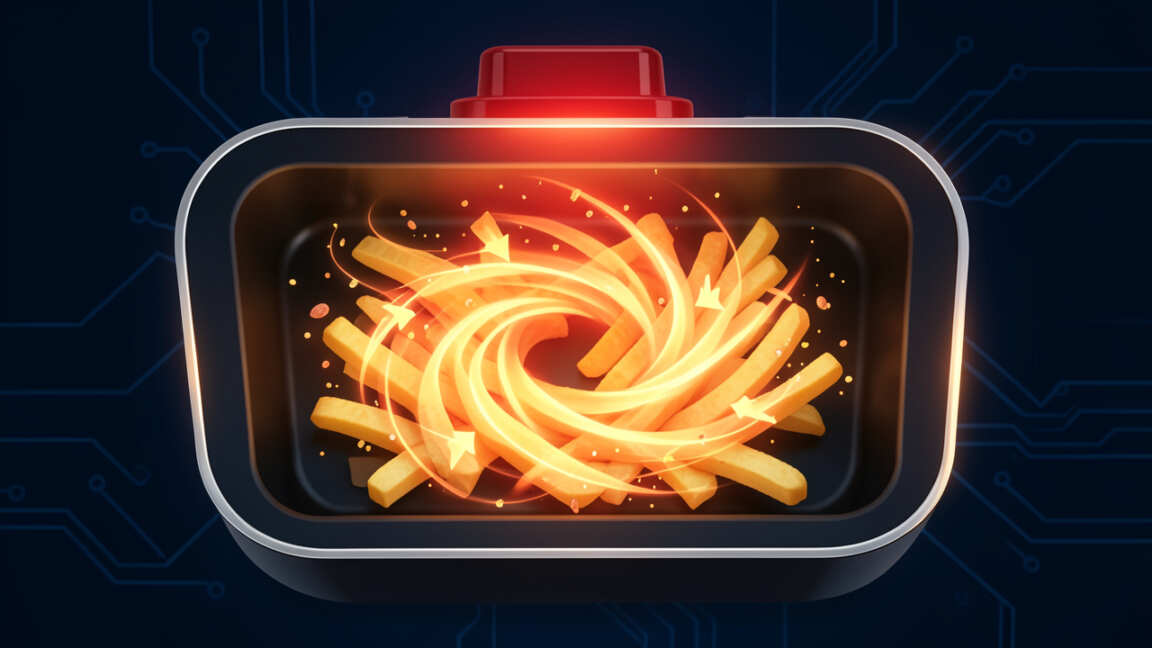
When the fan blows the hot air, it creates currents. These currents carry heat energy directly to the surface of the food.
As the air circulates, it constantly removes the cooler air that has been heated by the food, replacing it with more hot air.
This makes the cooking process very fast and efficient.
Creating Crispiness
The rapid circulation of hot air is what gives food its crispy texture. When hot air hits the surface of the food, it dries it out. This drying action, combined with the high heat, causes the Maillard reaction to occur.
This is the same chemical process that gives browned foods their delicious flavor and color.
Think about what happens when you bake fries in a regular oven versus an air fryer. In a regular oven, the air might move, but not with the same intensity.
The air fryer’s fan ensures that the hot air is constantly “basting” the food, creating a crispy exterior much like deep frying, but with far less oil.
Components of Air Fryer Fan Technology
The Fan Itself
The fan in an air fryer is typically a centrifugal fan, also known as a squirrel cage fan. These fans have many small blades arranged around a central hub. They are very good at moving a large volume of air at high speeds.
The material of the fan is usually durable plastic to withstand the high temperatures.
The speed of the fan is often adjustable in more advanced models. Higher fan speeds can lead to crispier results faster.
Lower fan speeds might be better for more delicate items that you don’t want to dry out too quickly.
The Heating Element
The heating element is another critical component that works hand-in-hand with the fan. It’s usually a coil located above the fan.
This element heats the air to the desired temperature, which can range from about 150°F to 400°F (65°C to 200°C).
The fan draws air in, passes it over the hot heating element, and then blows the superheated air into the cooking basket.
This continuous cycle ensures that the food is always surrounded by very hot air, promoting quick and even cooking.
The Cooking Basket and Chamber
The design of the cooking basket and the chamber also plays a role. Most air fryer baskets have perforations or a mesh design.
This allows the hot air to flow through and around the food easily, ensuring that all surfaces are exposed to the heat.
The chamber where the food sits is designed to contain the hot air and direct it efficiently. The shape and size of the chamber help the fan’s airflow to circulate effectively, preventing hot spots and promoting uniform cooking.
Different Types of Air Fryer Fans
Basic Single Fan Designs
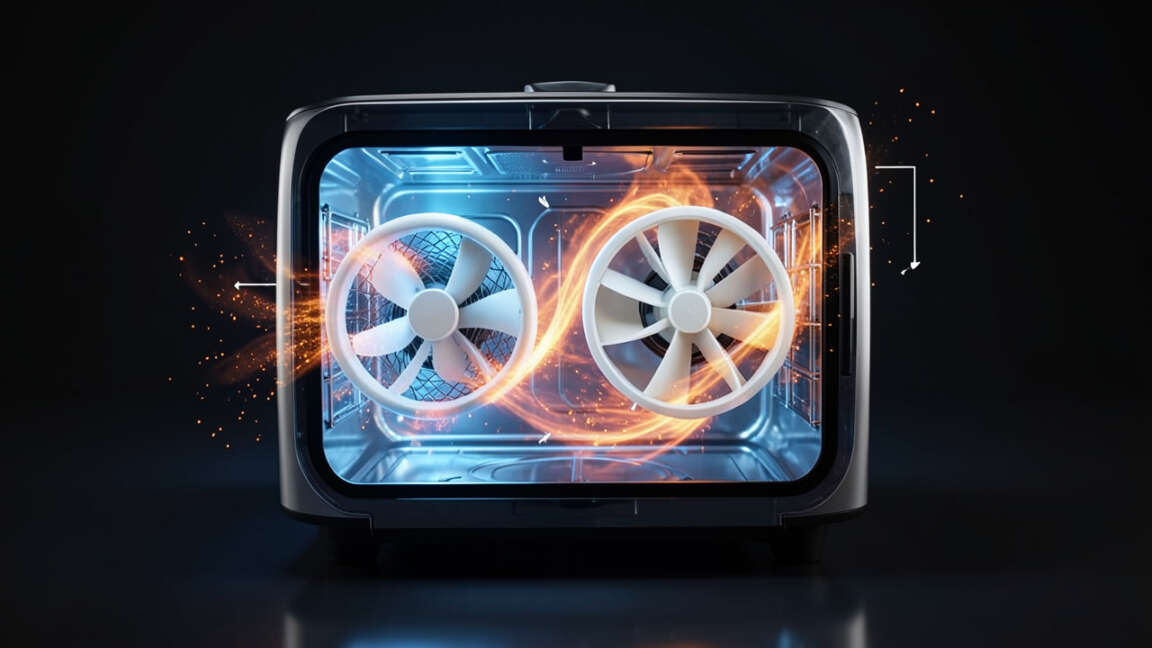
Many standard air fryers use a single, powerful fan located at the top. This fan draws air in from vents, heats it, and then pushes it down into the cooking basket.
This is the most common design and works very well for most everyday cooking tasks.
These single fan systems are efficient and effective at circulating hot air for most food items.
They are the workhorses that make air frying so popular for everything from fries to chicken wings.
Dual Fan Systems
Some higher-end or larger air fryers may feature dual fan systems. These systems can offer even more precise control over airflow and temperature.
They might use one fan to draw air in and another to push it out, or two fans working in tandem to create a more dynamic airflow pattern.
Dual fan systems can sometimes lead to even faster cooking times and more consistent crisping.
They are designed to optimize the convection process, ensuring that heat is distributed perfectly throughout the cooking chamber.
Variable Speed Fans
Advanced air fryers might have fans with variable speeds. This allows users to select different fan speeds depending on what they are cooking.
A lower speed might be ideal for delicate items like fish or baked goods, preventing them from drying out too quickly.
A higher speed is great for achieving maximum crispiness on foods like potatoes or fried chicken.
This feature adds a layer of control and versatility. It helps users achieve chef-quality results by fine-tuning the cooking environment for different recipes.
Tips for Using Your Air Fryer Effectively
Don’t Overcrowd the Basket
One of the most common mistakes people make with air fryers is putting too much food in the basket at once.
The fan needs space for the hot air to circulate freely around each piece of food. If the basket is too full, the air can’t reach everywhere, and your food will cook unevenly, likely resulting in soggy spots instead of crispy ones.
It’s better to cook in batches. This ensures that every piece of food gets proper exposure to the hot, circulating air.
You might take a little longer overall, but the results will be much better and worth the effort.
Shake or Flip Your Food
Even with the best fan technology, some foods benefit from a little help. For items like french fries, chicken nuggets, or vegetables, it’s a good idea to shake the basket halfway through the cooking time. For larger items like chicken breasts or fish fillets, you might want to flip them.
This manual intervention ensures that all sides of the food are exposed to the direct hot air flow. It’s a simple step that significantly improves the evenness of cooking and the overall crispiness of your meal.
Preheating is Often Helpful
Just like a traditional oven, preheating your air fryer can make a difference. When you preheat, the fan and heating element reach the desired temperature before you even put the food in.
This means your food starts cooking immediately at the right heat, leading to more consistent results and often quicker cooking times.
Most recipes will specify if preheating is necessary. It’s usually just a few minutes of letting the empty air fryer run before adding your ingredients. This step helps ensure the hot air circulation is optimal from the very start.
Maintaining Your Air Fryer
Cleaning the Fan and Heating Element
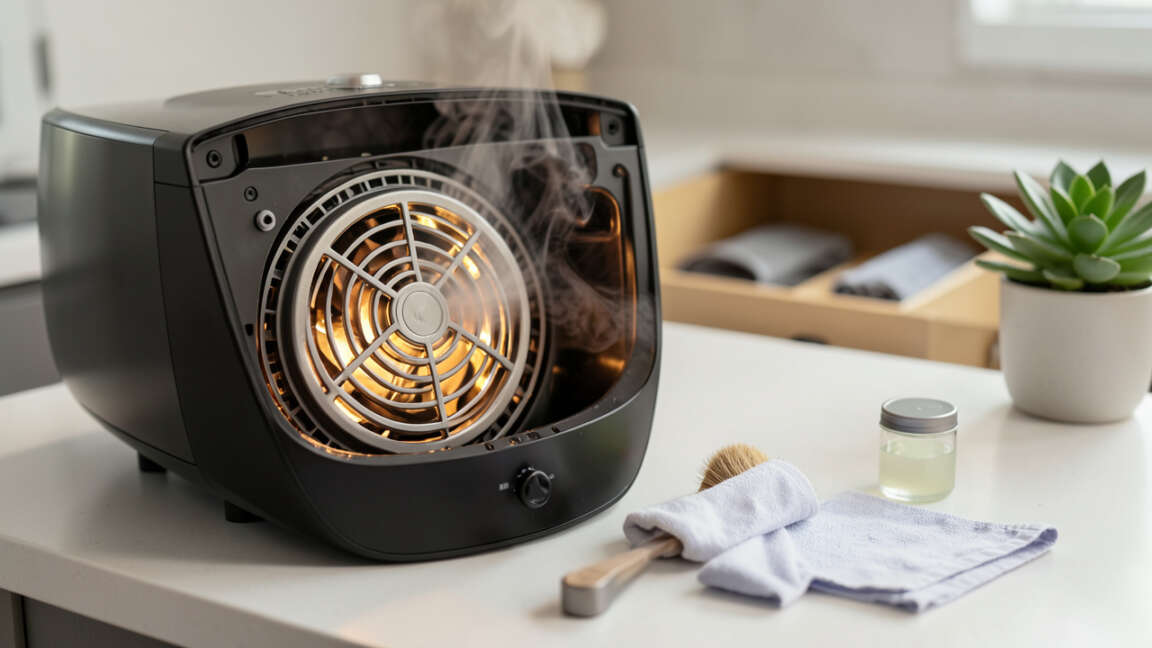
Regular cleaning is essential for keeping your air fryer working well. The fan and heating element can accumulate grease and food particles over time. Most air fryer manuals will advise on how to safely clean these parts.
Often, you’ll need to unplug the unit and let it cool completely. Then, you might be able to access the fan area with a soft brush or cloth to gently remove debris.
Keeping these parts clean ensures efficient airflow and prevents any unpleasant smells or smoke.
Washing the Basket and Tray
The cooking basket and any removable trays are usually dishwasher safe, or can be easily washed by hand with warm, soapy water.
Make sure to get rid of all food residue after each use. This prevents grease buildup and keeps your air fryer hygienic.
A clean basket ensures that the hot air can flow through the perforations without obstruction. This is vital for achieving those crispy results that air fryers are known for.
FAQ Of Air Fryer Fan Technology Explained
How does the fan make food crispy?
The fan circulates hot air very quickly around the food. This rapid movement dries out the surface of the food and causes browning, creating a crispy texture similar to deep frying.
Is an air fryer fan the same as a convection oven fan?
Yes, both air fryers and convection ovens use fans to circulate hot air for cooking. Air fryers are essentially compact, high-powered convection ovens designed for speed and crispiness.
Can I use my air fryer without the fan?
No, the fan is essential for the air fryer’s operation. Without the fan, the hot air would not circulate, and the appliance would not be able to cook food effectively.
How often should I clean the fan in my air fryer?
It’s best to clean the fan area as needed, usually after a few uses or when you notice visible buildup of grease or food particles. Always unplug the appliance and let it cool first.
Does the size of the fan matter?
Fan size and power can affect cooking performance. More powerful fans generally lead to faster and more even crisping, but design and airflow efficiency are also important factors.
Final Thoughts
The fan in your air fryer is the powerhouse behind its crispy results. It works by creating a tornado of hot air that cooks your food evenly and quickly.
Understanding this simple technology means you can use your air fryer with more confidence.
Don’t be afraid to experiment, and enjoy all the delicious, healthy meals you can make.

![What Cookware Works on Induction[1]](https://creativehouseblog.com/wp-content/uploads/2026/03/What_Cookware_Works_on_Induction1-768x448.jpg)
![How to Clean Gutters Safely Without Hiring Anyone[1]](https://creativehouseblog.com/wp-content/uploads/2026/05/How_to_Clean_Gutters_Safely_Without_Hiring_Anyone1-768x403.jpg)
![How Long Coffee Makers Last A Simple Guide[1]](https://creativehouseblog.com/wp-content/uploads/2026/03/How_Long_Coffee_Makers_Last_A_Simple_Guide1-768x448.jpg)
![How to Clean Air Filters So Your HVAC Runs Properly[1]](https://creativehouseblog.com/wp-content/uploads/2026/05/How_to_Clean_Air_Filters_So_Your_HVAC_Runs_Properly1-768x403.jpg)
![Air Fryer Power Consumption Guide Explained Simply[1]](https://creativehouseblog.com/wp-content/uploads/2026/03/Air_Fryer_Power_Consumption_Guide_Explained_Simply1-768x448.jpg)