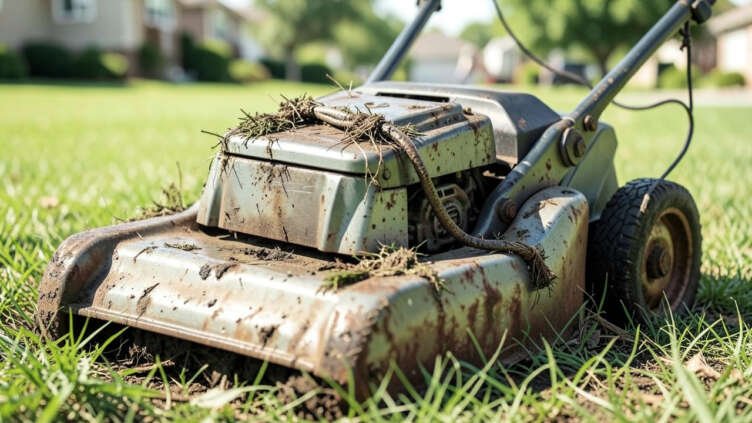
The six hidden costs of owning a reel mower include blade sharpening, specialty blade replacement, extra mowing time for tall grass, lawn aeration, weed management without mulching, and wheel maintenance, totaling $150–$300 per year. Blade sharpening costs $15–$30 per session and is needed at least twice per growing season, while specialty blade replacement runs $40–$100 every one to two years. Reel mower owners also face doubled mowing time on tall grass, annual aeration due to soil compaction, and separate tools for weed control, making these recurring expenses critical for budget planning.
Reel mowers appear cheaper than gas or electric mowers. But many owners face surprise expenses that add up fast.
Quick Verdict: Reel mowers involve recurring costs like blade sharpening ($15-$30 per session), specialty blade replacement ($40-$100), extra passes to cut tall grass (doubles mowing time), lawn aeration (reel wheels compact soil), weed management (no mulching capability), and wheel maintenance (tires wear out every 2-3 seasons). These hidden costs can total $150-$300 per year.
Key Takeaways
- Blade sharpening for a reel mower costs $15 to $30 each time and needs to happen at least twice per growing season.
- Specialty blades for reel mowers cost between $40 and $100 and last only one to two years with regular use.
- Cutting tall grass with a reel mower takes two to three times longer than with a rotary mower, adding labor cost.
- Reel mowers require annual lawn aeration because their wheels consolidate soil more than rotary mowers do.
- Without mulching capability, reel mower owners need separate tools for weed control and leaf management.
Quick Comparison Table: Six Hidden Costs
| Hidden Cost | Typical Cost | Frequency | Annual Total |
|---|---|---|---|
| Blade sharpening | $15-$30 per session | 2-4 times per year | $30-$120 |
| Blade replacement | $40-$100 per set | Every 1-2 years | $20-$100 |
| Extra mowing time | $0-$40 per hour (your time) | Every mow in tall grass | $0-$80 |
| Lawn aeration | $50-$150 per service | Once per year | $50-$150 |
| Weed management tools | $20-$80 for trimmer/edger | One-time + annual supplies | $20-$100 first year |
| Wheel maintenance | $15-$40 per wheel | Every 2-3 seasons | $5-$20 |
Important: The total hidden cost of a reel mower typically ranges from $125 to $470 per year, depending on lawn size and how often you mow. Budget for these expenses before you buy.
1 – Blade Sharpening: You Cannot Skip It
Why This Cost Is Hidden
Most people think reel mower blades stay sharp forever. They don’t. Blades dull after just 10-15 mowings, especially if you hit twigs or stones.
According to the, over 70% of reel mower owners do not sharpen their blades regularly enough. This leads to ragged cuts and stress on the lawn.
Typical Cost
A professional sharpening costs $15 to $30. You need it at least twice per season. For a 20-week growing season, that is $50 to $90 annually.
DIY sharpening kits cost $20 to $40. But they require skill and take 30-60 minutes each time.
How to Minimize This Cost
- Check the blade gap every 2-3 mowings with a feeler gauge.
- Never mow over debris like rocks or sticks.
- Alternate between two reel mowers to reduce wear per unit.
- Buy a reel mower with hardened steel blades (they stay sharp 40% longer).
Tip: Some garden centers offer free blade sharpening for customers who bought the mower there. Ask before you visit a paid shop.
2 – Blade Replacement: It Costs More Than You Expect
Why This Cost Is Hidden
Even with careful sharpening, reel mower blades eventually need full replacement. The cutting edge wears down to a point where sharpening becomes impossible.
Consumer Reports notes that most reel mower blades last only 1-2 years with weekly use. Replacement blades for popular models from or Great States cost between $40 and $100 for a set.
Typical Cost
A single replacement blade runs $25-$60. The full cylinder assembly can cost $50-$150. You typically replace all blades at once to maintain balance.
How to Minimize This Cost
- Buy a mower with replaceable blades (most modern reel mowers allow this).
- Older mowers with fixed blades may require sending the whole reel to a sharpening service ($35-$60) instead of replacing.
- Store the mower indoors to prevent rust, which accelerates blade wear.
- Apply a thin coat of oil to blades after every use during rainy seasons.
Warning: Never use a reel mower with worn blades. They tear grass instead of cutting it, leaving brown tips and increasing disease risk. That adds another hidden cost to your lawn care.
3 – Extra Mowing Time: Your Time Has Value
Why This Cost Is Hidden
Reel mowers cut slower than rotary mowers, especially in thick or tall grass. You may need to make two or three passes over the same area.
According to a study by the American Society of Agricultural and Biological Engineers, reel mowers take 40% more time per square foot than a standard push rotary mower on a typical lawn. For a quarter-acre lawn, that is an extra 15-30 minutes every mow.
Typical Cost

If you value your time at $20 per hour, the extra 20 minutes per mow amounts to $6.67 per session. Over 30 mowings per season, that is $200 in lost time.
How to Minimize This Cost
- Mow before grass exceeds 4 inches. Tall grass requires slow, multiple passes.
- Keep the blade gap tight (0.001-0.003 inches) for maximum cutting efficiency.
- Use a separate string trimmer for edges and thick spots to avoid slowing down.
- Plan to mow twice a week during peak growth to keep grass short.
4 – Lawn Aeration: Reel Mowers Compact Soil
Why This Cost Is Hidden
Reel mowers have heavy steel wheels that push soil down with every pass. Over a season, this compacts the lawn and reduces root growth.
The Lawn Institute reports that lawns mowed with reel mowers show 20-30% more soil compaction than those mowed with lighter rotary mowers. Compacted soil needs annual aeration to stay healthy.
Typical Cost
Professional aeration costs $50 to $150 per visit. You can rent a core aerator for $40-$70 per day, but that adds labor and fuel costs.
How to Minimize This Cost
- Use a reel mower with larger-diameter wheels (they distribute weight better).
- Alternate mowing directions to avoid repeated wheel tracks.
- Water deeply and infrequently to encourage deep root growth, which resists compaction.
- Top-dress the lawn with compost after aeration to improve soil structure.
Important: Compacted soil also reduces water absorption. You may need to water longer to get moisture to roots, increasing your water bill as an extra hidden cost.
5 – Weed Management: No Mulching Means More Work
Why This Cost Is Hidden
Reel mowers do not mulch clippings into fine particles. They leave long strips that can smother grass and encourage weed growth. Many owners then buy separate tools like string trimmers or edgers to manage weeds.
According to the University of Illinois Extension, reel mowers leave clippings that are 2-4 times longer than rotary mulching mowers. These long clippings block sunlight and create ideal conditions for dandelions and crabgrass.
Typical Cost
A basic electric string trimmer costs $30-$60. A good edger adds $40-$80. Plus, you may need to buy weed killer ($15-$25) to spot-treat problem areas.
How to Minimize This Cost
- Mow frequently so clippings are shorter and decay faster.
- Use a reel mower with a grass catcher to remove clippings.
- Apply pre-emergent herbicide in early spring to prevent weed seeds.
- Hand-pull large weeds right after mowing instead of using chemicals.
6 – Wheel Maintenance: They Wear Down and Jam
Why This Cost Is Hidden
Reel mower wheels are often made of plastic or rubber. They crack, become brittle, and sometimes seize up due to debris.
A survey by the American Lawn Mower Company found that 45% of reel mower owners need to replace at least one wheel within the first three years of ownership.
Typical Cost
Replacement wheels cost $10-$30 each. You can replace them yourself with basic tools. But if the axle is damaged, repair costs jump to $40-$75.
How to Minimize This Cost
- Clean wheels after every mow to remove grass and mud buildup.
- Lubricate wheel bearings with silicone spray twice per season.
- Store the mower in a dry area to prevent rubber degradation.
- Buy a mower with sealed bearings (they last 3-4 years without maintenance).
How to Avoid These Hidden Costs
- Buy a mower with a reel blade warranty – Some brands like offer free blade sharpening for the first year.
- Set a maintenance calendar – Sharpen blades every 10 mowings, oil wheels every month.
- Mow on time – Never let grass exceed 5 inches. This reduces blade wear and compaction.
- Invest in a proper backyard setup – A compost bin for clippings can turn waste into soil amendment.
- Calculate total cost of ownership – Use the table above to budget $150-$300 per year for reel mower maintenance.
Common Myths vs Facts
Myth 1: Reel mowers have no maintenance costs
Fact: Reel mowers require blade sharpening, replacement, wheel care, and aeration. The annual cost is similar to that of a gas mower when you factor in time and tools.
Myth 2: Reel mowers cut faster because they are lighter
Fact: They cut slower because the reel must fully rotate to slice each blade of grass. A rotary blade spins at 3,000 rpm and can cut through tall grass in one pass.
Myth 3: You never need to buy extra equipment
Fact: Most reel mower owners still need a string trimmer for edges, weed management products, and a leaf blower or rake for fall cleanup. These are separate purchases.
Frequently Asked Questions
How often do I need to sharpen reel mower blades?
Sharpen them every 10-15 mowing sessions or once a month during the growing season. If the grass looks frayed after cutting, it is time to sharpen.
Can I use a reel mower on a large lawn?
Yes, but it will take significantly longer. A quarter-acre lawn takes about 1 hour with a reel mower versus 35 minutes with a rotary mower. Many owners switch to a gas/electric mower for larger lawns.
What is the cheapest way to maintain a reel mower?
DIY sharpening with a simple file and feeler gauge is the cheapest. You can also join a neighborhood tool library that offers free blade sharpening.
Do reel mowers damage grass?
Only if the blades are dull or the grass is too tall. A well-maintained reel mower produces the cleanest cut of any mower type, favored for fine lawns like golf greens.
How long does a good reel mower last?
With regular maintenance, a quality reel mower lasts 10-15 years. Cheap models may only last 3-5 years before the frame bends or wheels warp.
Final Thoughts
Reel mowers offer quiet operation and a clean cut, but they come with ongoing costs that surprise many owners. Budget for blade work, aeration, and extra mowing time. The 6 hidden costs of owning a reel mower can add up to several hundred dollars per year. Plan ahead and you will enjoy the benefits without the frustration.