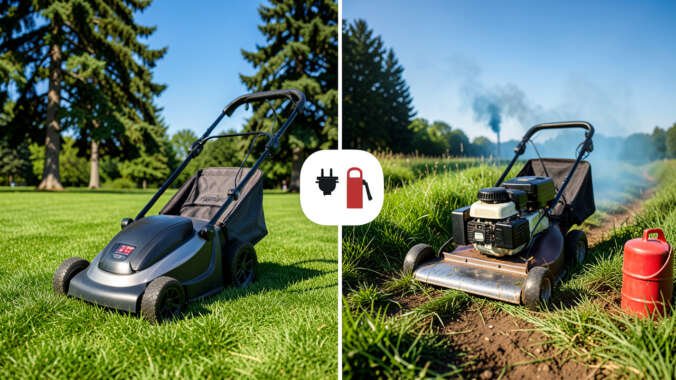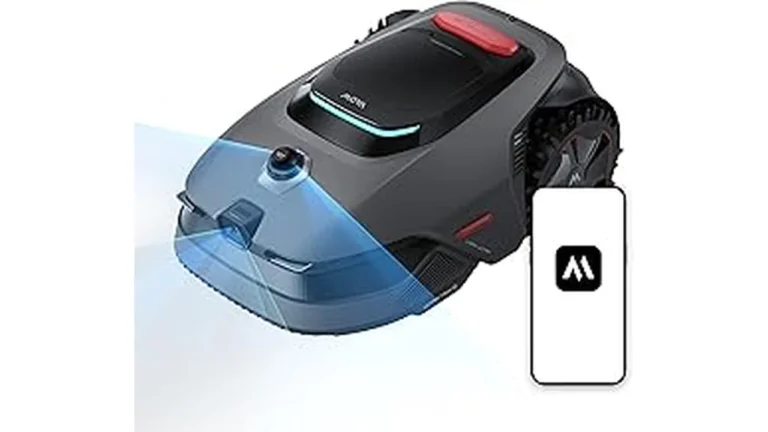
For a hilly yard, a modern high-torque electric mower is often the better choice for moderate slopes due to its lighter weight and instant torque that provides excellent climbing power without bogging down. For very long, steep, or thick-grass hills, a gas mower remains the more reliable option because it delivers consistent peak power over unlimited runtime, and its heavier build often improves wheel traction on challenging terrain. The key trade-off is that electric mowers are easier to push uphill, but battery range limits their suitability for large properties over one acre.
Mowing a hilly yard is harder than mowing a flat one. You need power, traction, and control to do the job safely.
Simply put, a modern high-torque electric mower is often the better choice for moderate hills because it is lighter and easier to control. For very long, steep, or thick-grass slopes, a gas mower remains the more reliable option due to its consistent power output and unlimited runtime.
This guide breaks down the performance of each type on sloping terrain. You will learn which mower wins on torque, traction, safety, and cost for your specific yard.
Key Takeaways
- Electric mowers deliver instant torque at zero RPM, which gives them excellent climbing power on moderate hills without bogging down.
- Gas mowers provide consistent peak power for long durations, making them ideal for large hilly properties over one acre in size.
- Weight is a double-edged sword: a lighter electric mower is easier to push uphill, but a heavier gas mower often provides better wheel traction on steep slopes.
- Battery range anxiety is the main drawback of electric mowers on large hilly properties, as thick grass on hills drains batteries faster than flat terrain.
- A self-propelled system with rear-wheel drive or all-wheel drive is a mandatory feature for any mower used on a slope, regardless of engine type.
Quick Comparison Table: Electric vs Gas Mowers for Hilly Yards
| Feature | Gas Mower | Electric Mower |
|---|---|---|
| Power / Torque | High peak torque at high RPM. Can lose power on steep inclines if engine tilts. | 100% torque from 0 RPM. Excellent low-end grunt for climbing. Consistent power regardless of tilt. |
| Traction | Heavier weight provides good tire grip. Larger wheels available for rough terrain. | Lighter weight can reduce grip on steep slopes. Many models offer high-traction tires for compensation. |
| Runtime | Unlimited with refueling. A full tank lasts 45-90 minutes depending on conditions. | 30-75 minutes per charge. Steep hills drain the battery faster. Swapping batteries is needed for large yards. |
| Weight | 80-120 lbs. Heavier to push but more stable in theory. | 50-80 lbs. Much easier to maneuver and push uphill. Less risk of turf damage. |
| Maintenance | High. Requires oil changes, spark plugs, air filters, and fuel stabilization. | Low. No oil, no fuel, no carburetor issues. Sharpening blades is the main task. |
| Initial Cost | $300 – $1,200 for a quality self-propelled model. | $400 – $1,000 for a premium self-propelled model with a large battery. |
Gas Mower Overview for Hilly Yards
Gas mowers have been the standard for decades. They use an internal combustion engine to spin the blade and drive the wheels. On a hill, that engine provides steady power as long as it gets fuel and air.
How Does a Gas Mower Perform on a Hill?
A gas mower relies on the engine to maintain blade speed. Most gas engines produce peak horsepower at around 3,000 RPM. On a steep slope, the engine tilts, and the carburetor can struggle to keep the fuel mixture correct.
Warning: Mowing up a steep hill with a gas mower can lead to oil starvation. If the engine is tilted beyond 20 degrees, the oil pump may not pick up oil, causing catastrophic engine failure.
Gas mowers are heavier, usually weighing between 80 and 120 pounds. This extra weight has a benefit. It presses the wheels into the turf, giving you better traction on grassy slopes. The downside is that pushing that weight uphill tires you out fast.
Advantages of Gas Mowers on Hills
- Unlimited runtime: You can mow the largest hills without stopping. A full gas tank lasts 45 minutes to over an hour, and refueling takes seconds.
- Proven traction: The heavy weight of a gas mower helps the drive wheels grip the turf. You get fewer instances of wheel spin on loose or wet grass.
- Higher peak power: Gas engines can produce more total horsepower than most residential electric mowers. This helps when the grass is tall or damp.
- Wider tire options: Many gas mowers come with larger rear tires. These provide better ground clearance and roll over bumpy hills more smoothly.
Disadvantages of Gas Mowers on Hills
- Harder to push uphill: The extra weight that helps with traction also makes the mower harder to push and turn on a slope.
- Engine stalling: On very steep angles, the engine can stall due to fuel pickup issues or carburetor flooding.
- Higher maintenance: You must change oil, replace spark plugs, and clean the carburetor. Neglecting maintenance leads to poor starting on hills.
- Noise and fumes: Gas mowers are loud. You typically wear hearing protection and inhale exhaust fumes while mowing.
Electric Mower Overview for Hilly Yards
Cordless electric mowers have improved rapidly. They use a brushless motor powered by lithium-ion batteries. These mowers produce instant torque, which is the force that turns the wheels and blades.
How Does an Electric Mower Perform on a Hill?
Electric mowers deliver maximum torque from the moment you pull the bail bar. Unlike a gas engine, which needs to rev up, an electric motor is at full power instantly. This makes it excellent for starting on a slope.
Most modern electric mowers use a brushless motor. According to, electric mowers now match gas mowers on cut quality and power for most residential lawns. The main limitation is battery runtime.
Tip: If you have a hilly yard, choose an electric mower with at least 7.5 Ah (amp-hours) of battery capacity. A larger battery gives you the reserve power needed to maintain blade speed on the steepest parts of your lawn.
Advantages of Electric Mowers on Hills
- Instant torque: You get full power to the wheels and blade at all times. The mower does not bog down when you hit a thick patch of grass on a slope.
- Lighter weight: An electric mower weighs 50 to 80 pounds. You can push it uphill with less effort. This reduces strain on your arms and back.
- No maintenance: You never change oil, replace a spark plug, or winterize the fuel system. This is a major benefit for busy homeowners.
- Quieter operation: Electric mowers are significantly quieter than gas models. You can mow early in the morning without disturbing neighbors.
- Cleaner air: There are no exhaust fumes. You do not breathe in carbon monoxide or other pollutants while mowing.
Disadvantages of Electric Mowers on Hills
- Limited runtime: The battery typically lasts 30 to 60 minutes on a single charge. Mowing a large hilly lawn may require a second battery or a mid-session recharge.
- Less traction: Because the mower is lighter, the wheels can spin on wet grass or loose soil. You may need to adjust your mowing pattern.
- Battery degradation: Batteries lose capacity over time. After 3 to 5 years, you may get less runtime, which exacerbates the range issue on hills.
- Higher upfront cost for power: A high-torque electric mower with a large battery costs more than a basic gas mower.
Head-to-Head Comparison for Hilly Conditions
Power and Torque
Torque is the twisting force that cuts grass and drives the wheels. A gas engine produces peak torque at high RPM. An electric motor produces peak torque at zero RPM.
This means an electric mower will pull itself uphill from a standstill better than a gas mower. The gas mower needs to be at a higher RPM to produce its maximum pulling power. According to industry specs, a premium gas mower like the Honda HRX217 produces about 6.3 Nm of torque. A high-end electric mower like the EGO Power+ produces around 5.7 Nm. The difference is small, but the electric motor delivers its power instantly.
Traction
Traction depends on two things: the weight of the mower and the type of wheels. A gas mower typically wins on weight. Heavier weight pushes the tires into the turf, providing grip.
However, electric mowers are catching up. Brands like and Greenworks now offer mowers with aggressive tread patterns and larger wheels specifically designed for slopes. If traction is your main concern, look for a model with rear-wheel drive (RWD) or all-wheel drive (AWD).
Important: For any mower on a hill, rear-wheel drive is superior to front-wheel drive. RWD pushes the mower up the slope. Front-wheel drive tends to pull the front end sideways, making the mower hard to steer on a hill.
Duration and Runtime
This is the biggest weakness of electric mowers on hills. Mowing thick, damp grass on an incline uses more battery power than mowing a flat, dry lawn. You can easily lose 20-30% of your expected runtime on a hilly yard.
Gas mowers do not have this issue. You fill the tank, and you mow until the grass is done. If you have a yard larger than half an acre with steep sections, a gas mower is the more practical choice for most people.
Safety on Steep Slopes
Safety is a major concern when mowing a hill. According to the, over 80,000 people are treated for lawn mower injuries each year. Slips and falls on hills account for a significant number of these.
A lighter electric mower is less likely to cause serious injury if it rolls. You can control it more easily. A heavy gas mower can be dangerous if you lose your footing, as it can pull you downhill or roll over your foot.
What Type of Mower is Best for Steep Slopes?
The answer depends on the degree of your slope. The recommends a maximum slope of 15 degrees for riding mowers. For walk-behind mowers, the limit is often higher, but your physical ability matters.
Here is a simple breakdown based on slope steepness:
- Gentle slope (under 10 degrees): Either type works well. An electric mower is usually more convenient due to lower maintenance and noise.
- Moderate slope (10 to 20 degrees): A high-torque electric mower with RWD is a good choice. It is lighter and provides instant torque. Use a gas mower if the hill is very long (over an acre).
- Steep slope (over 20 degrees): A gas mower with large wheels and a powerful engine is typically safer and more effective. Alternatively, consider a string trimmer or a dedicated slope-mowing robot.
Common Myths vs Facts
Myth 1: Electric mowers do not have enough power for hills.
Fact: Modern brushless electric motors produce torque comparable to gas engines. The instant torque delivery often makes them feel more powerful on hills. According to, their mower produces enough torque to mulch leaves and climb slopes that would stall many gas mowers.
Myth 2: Gas mowers are always better for hills.
Fact: Gas mowers have a runtime advantage, but they are harder to push uphill and require more maintenance. For a small to medium hilly lawn, a lightweight electric mower is often the better tool. The is an electric or gas better for a hilly yard question depends entirely on your specific lawn size and slope angle.
Myth 3: You can mow straight up and down any hill.
Fact: ANSI recommends mowing across the slope with a walk-behind mower, not up and down. Mowing sideways reduces the risk of the mower tipping over backward onto you. If your slope is too steep to mow sideways safely, switch to a string trimmer or an automated mower.
How to Choose for a Hilly Yard
To decide if an electric or gas mower is right for you, follow this checklist. It covers the key factors specific to hilly terrain.
Measure Your Slope
Use a smartphone level app to measure the angle of your steepest hill. If it is over 15 degrees, you need a mower with excellent traction and safety features.
Assess Your Yard Size
- Under 1/4 acre: Electric is the clear winner. Light weight and low maintenance make it ideal.
- 1/4 to 1/2 acre: Electric works well if you have a spare battery. Gas is still a strong option for reliability.
- Over 1/2 acre: Gas is usually better unless you invest in a very expensive electric mower with multiple batteries.
Check the Self-Propulsion System
Never buy a gas or electric mower for hills without self-propulsion. Look for these drive types in order of preference:
- All-wheel drive (AWD): Best traction on hills. Both front and rear wheels pull.
- Rear-wheel drive (RWD): Excellent for climbing. The weight transfers to the drive wheels.
- Front-wheel drive (FWD): Poor choice for hills. Wheels spin out easily.
Consider Your Physical Strength
If you are not very strong or have back problems, a lightweight electric mower is the safer choice. Pushing an 100-pound gas mower up a hill is genuinely difficult and increases the risk of injury.
Resources and Tools
Use these tools and resources to help you make the final decision for your yard.
- Consumer Reports Lawn Mower Ratings – Independent testing of torque, cut quality, and maneuverability on slopes.
- Angle Finder App (Clinometer) – Use your smartphone’s sensors to measure the angle of your hill.
- Turf Magazine Slope Guide – Professional guidelines for safe mowing angles on different terrains.
Frequently Asked Questions
Can an electric mower handle a steep hill?
Yes, a modern brushless electric mower can handle a moderate to steep hill up to about 20 degrees. The instant torque helps it climb without bogging down. The main challenge on steep hills is battery life, as the motor works harder and drains the battery faster.
What is the best mower for a yard with hills?
The best mower for a yard with hills is a self-propelled model with rear-wheel or all-wheel drive. For yards under half an acre, a high-torque electric mower is the top choice. For larger, steeper properties, a gas mower with an overhead valve engine and large rear tires offers the best performance.
How does torque affect mowing on a hill?
Torque is the force that spins the cutting blade and drives the wheels. On a hill, you need high torque to maintain blade speed when the grass is thick and to keep the mower moving forward against gravity. Electric mowers have the advantage of delivering maximum torque instantly, while gas mowers need to reach a higher RPM.
Are gas mowers dangerous on hills?
Gas mowers can be dangerous on hills because of their weight. If you slip, the heavy mower can pull you down the slope or roll over your feet. The risk of the engine tilting and stalling is also higher on steep angles. Proper technique and using a mower with high traction wheels reduce the risk.
What should I look for in a mower for a hilly yard?
Look for a mower with a powerful motor or engine, a self-propelled drive system (RWD or AWD is best), and large, high-traction wheels. For electric mowers, check the battery capacity and voltage. A higher voltage (56V or 80V) usually means better torque and runtime for hills.
Final Thoughts
A hilly yard demands more from a mower than a flat lawn. Modern electric mowers win on torque, weight, and ease of use for most residential slopes. Gas mowers still hold the advantage for larger properties where runtime is critical. Measure your slope, assess your yard size, and choose the mower that matches your physical ability and budget.