A plunge pool is wrong for your small patio if it blocks traffic flow, consumes more than half the patio’s square footage, or forces removal of essential furniture like seating or a grill. Local setback rules often require at least 4 feet of clearance around the pool, which can eliminate usable space and violate legal limits. Before purchasing, measure your usable patio area and verify local building codes to avoid a cramped, nonfunctional outdoor layout.
You installed a plunge pool to maximize your small patio, but it feels more like a mistake than a luxury. This guide helps you spot the warning signs before you lose more space.
Quick Verdict: A plunge pool is wrong for your small patio if it blocks traffic flow, exceeds half your patio’s square footage, creates legal clearance issues, or forces you to remove essential furniture. Measure your usable space and check local setback rules before buying.
Key Takeaways
- If your plunge pool takes up more than 50% of your patio’s total area, it will likely make the space unusable for seating or dining.
- Local building codes often require a minimum 4-foot clearance around the pool perimeter, which can consume additional patio square footage.
- You should measure the “clear path” from your door to the yard; if that path is narrower than 3 feet, the pool is blocking essential access.
- A plunge pool that forces you to remove your only outdoor table or grill is a sign the trade-off isn’t worth it.
- Professional installers recommend at least 5 feet of open space on one side of the pool for maintenance access and safety.
What Is a Plunge Pool?
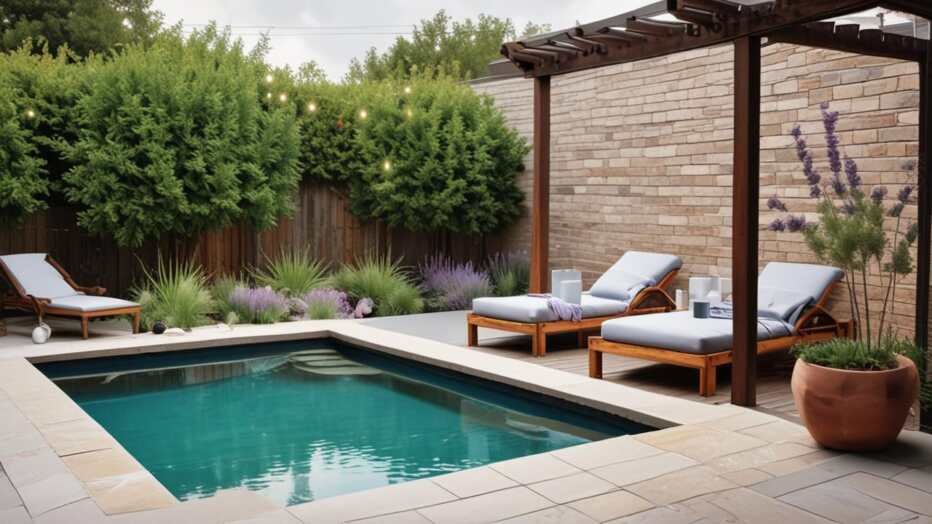
A plunge pool is a small, deep pool typically used for cooling off, soaking, or light exercise. Most plunge pools range from 6 to 12 feet long and 4 to 6 feet wide. Their compact size makes them popular for homeowners with limited yard space. However, “compact” is a relative term. A 7×5-foot plunge pool still covers 35 square feet – that’s about the size of a large dining table set.
According to, the average plunge pool costs between $5,000 and $15,000 to install. That is a serious investment. If it turns your patio into a hallway, you lose both money and outdoor living quality.
Important: Before you buy, measure your patio’s width and length. Subtract 6 feet from each dimension to account for clearance. The remaining area must still accommodate your essential patio items.
How to Measure Your Patio for a Plunge Pool
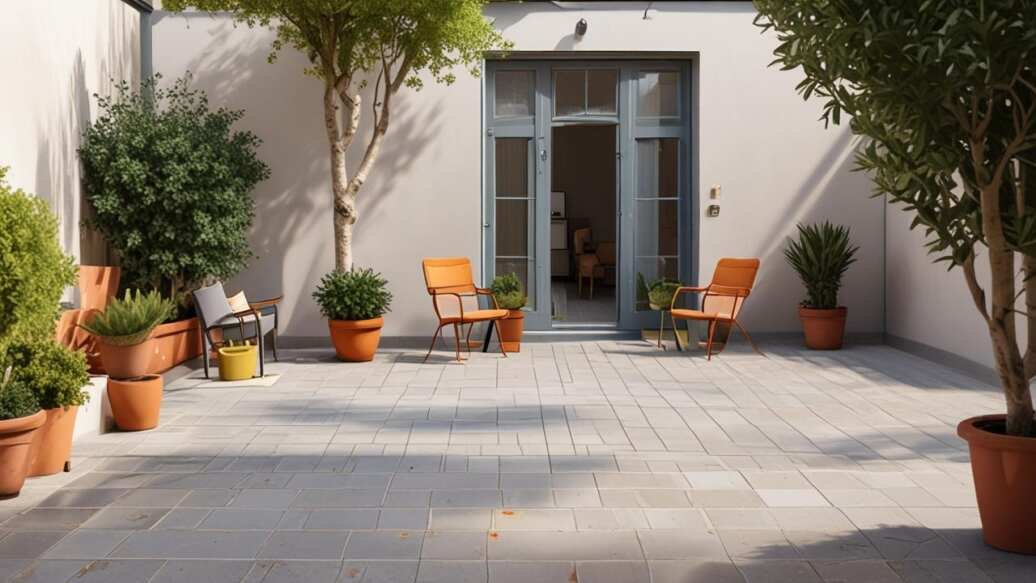
Start with the total square footage of your patio. If your patio is 12 by 10 feet, that’s 120 square feet. A typical plunge pool takes 35-50 square feet. That leaves 70-85 square feet for everything else. Sounds fine, right? Not so fast. You also need clearance zones.
Most municipalities require a 3- to 4-foot clearance from all pool sides to any structure, fence, or property line. That clearance zone is not usable space. Multiply the pool perimeter times the clearance distance. For a 7×5 pool with 4-foot clearance, you lose an additional 80 square feet. Suddenly your 120-square-foot patio has only 40 square feet left for tables, chairs, and plants.
| Patio Size | Plunge Pool Size | Clearance (4 ft) | Remaining Usable Space |
|---|---|---|---|
| 10×8 ft (80 sq ft) | 6×4 ft (24 sq ft) | 56 sq ft | 0 sq ft |
| 12×10 ft (120 sq ft) | 7×5 ft (35 sq ft) | 68 sq ft | 17 sq ft |
| 15×12 ft (180 sq ft) | 8×6 ft (48 sq ft) | 84 sq ft | 48 sq ft |
| 20×15 ft (300 sq ft) | 10×6 ft (60 sq ft) | 112 sq ft | 128 sq ft |
As the table shows, a 12×10 patio with a 7×5 pool leaves only 17 square feet of usable space. That fits a small bistro table and two chairs – nothing else. If you want space for a grill, lounge chairs, or a dining set, the plunge pool may be too big.
5 Signs Your Plunge Pool Is Wrong for Your Patio
1. You Can’t Walk Around It Comfortably
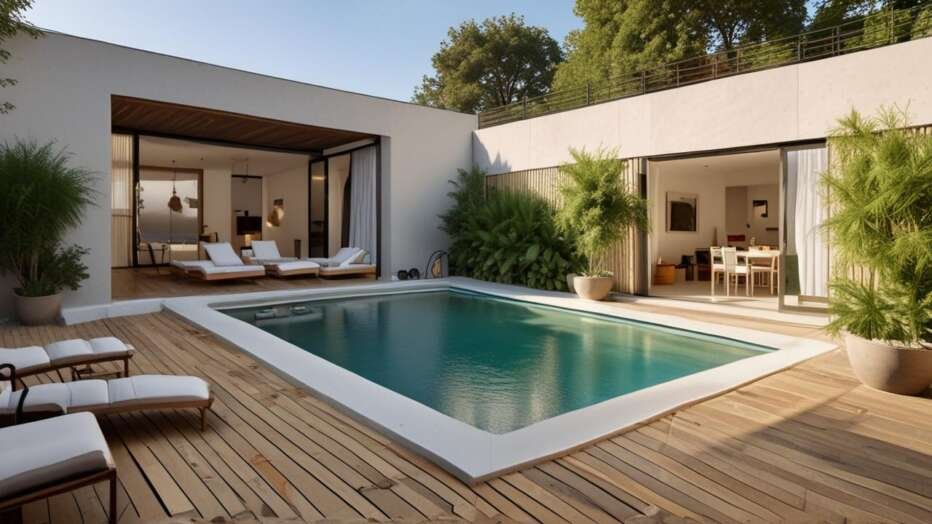
Stand at your patio door. Try to walk a straight line to the opposite side. If you have to squeeze between the pool and a wall, or step onto the grass, that is a red flag. You need a clear path at least 3 feet wide for everyday movement. According to the guidelines for accessible design, a 36-inch minimum clear width is standard for pathways.
Warning: If you cannot carry a tray of drinks past the pool without bumping it, the layout is too tight. This is a sign the pool dominates the patio.
2. You Lost Your Only Seating Area
Before the pool, you had a table and chairs for morning coffee or evening dinner. Now those items are gone or squeezed into a corner. A plunge pool should complement your outdoor living, not replace it. If you no longer eat outside because there is no room, the trade-off is not worth it.
3. The Pool Violates Local Setback Rules
Many cities require pools to be at least 4-5 feet from fences, walls, or property lines. Check your local building department. If your pool sits closer than that, you risk fines or forced removal. Even if you are “grandfathered,” reselling the home becomes harder. A survey found that non-conforming structures reduce property value by an average of 5-10%.
4. Maintenance Access Is a Nightmare
Plunge pools need regular cleaning, filter changes, and chemical balancing. If your pool is wedged into a corner, you cannot reach the skimmer or pump. Professionals need at least 3 feet of open space on one side for service. If that space is missing, maintenance becomes more expensive because technicians must work in cramped conditions.
- Skimmer access: at least 2 feet of open water space.
- Pump and filter: require 3 feet of clearance for servicing.
- Cover removal: you need room to pull back a safety cover.
- Winterizing: need space for a cover pump and air pillows.
5. You Feel Claustrophobic Every Time You Step Out
This is subjective but important. If your patio now feels like a narrow hallway with a hole in the middle, that is a clear sign. Your outdoor space should feel open and inviting. A plunge pool that makes you feel boxed in is not right for your home.
What to Do If You Already Have the Wrong Plunge Pool
If you already installed the pool and regret it, you have options. You can sell it and remove it. A used plunge pool in good shape can recoup 30-50% of its cost on sites like Craigslist or Facebook Marketplace. You can also consider shrinking it – some manufacturers allow you to reduce the size of a fiberglass pool by cutting and re-gelcoating (though this voids the warranty).
Another option is to redesign the patio around the pool. Add a cantilevered deck that extends over part of the patio to create more floor space. Use foldable furniture that stows away when not in use. Install a small sink or mini-fridge on a wall to keep the poolside functional. But if the pool still cramps your lifestyle, removal is often the best long-term solution.
Tip: Before buying a plunge pool, test the layout with cardboard cutouts. Tape a 7×5 rectangle on your patio and live with it for a week. See if you still have room for a chair and a table.
What Your Plunge Pool Should Feel Like (the Opposite of Wrong)
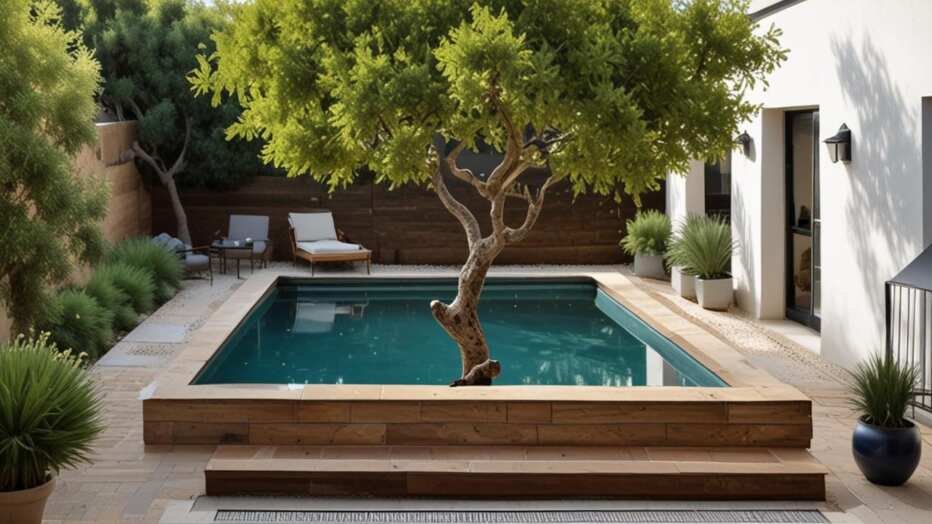
A correctly sized plunge pool on a small patio leaves you with at least 60% of the original patio area open. You should still be able to fit a small dining set (2-4 chairs and a table). There should be a clear walkway from the door to the yard. The pool should feel like an accent, not the main event.
If you are torn between sizes, choose the smaller plunge pool. A 6×4 pool still gives you enough space to cool off. The extra patio space is more valuable than an extra foot of pool length.
Common Myths vs Facts
Myth 1: A plunge pool always adds value to a small home.
Fact: A study by the Appraisal Institute found that pools add value only in warm climates and when they fit the lot. A poorly placed plunge pool can actually decrease property value by reducing usable outdoor space.
Myth 2: You can ignore clearance rules if your patio is private.
Fact: Building codes are enforced by your local municipality, not your neighbors. An inspector can require you to remove a non-compliant pool even on your own property. According to the, residential pools must follow local zoning ordinances.
Myth 3: A smaller plunge pool always works on a small patio.
Fact: Even a 6×4 pool consumes 24 square feet plus clearance zones. On a 10×8 patio (80 sq ft), that leaves almost no room for anything else. The pool itself might be small, but its spatial footprint is not.
Frequently Asked Questions
How much clearance do I need around a plunge pool?
Most local codes require a minimum of 3-4 feet of clear space on all sides. This allows for safe walking, maintenance access, and prevents damage to structures. Check with your city’s building department for exact requirements.
Can I put a plunge pool on a concrete patio?
Yes, but only if the concrete slab is thick enough (usually 4 inches minimum) and reinforced. The pool’s weight (about 1,500-2,500 gallons of water) plus people can crack thin slabs. Consult a structural engineer.
What is the smallest plunge pool that still feels usable?
A 6×4 foot plunge pool is the minimum size that allows one or two people to sit and soak. Anything smaller becomes a bathtub and does not offer enough depth (typically 4-5 feet deep is needed for full immersion).
How do I measure my patio for a plunge pool?
Measure the length and width of your patio. Subtract 8 feet from each dimension (4 feet clearance per side). The remaining rectangle must fit the pool. Also measure door clearances for delivery – a 7-foot pool needs a 7-foot wide gate or door.
Is a swim spa a better option for a small patio?
Swim spas are larger (often 12-16 feet long) and require even more space. They also need heavy electrical wiring. For a small patio, a plunge pool is usually more compact. But if you want to swim in place, consider a swim spa only if your patio is at least 16×10 feet.
Resources and Tools
- Patio Size Calculator – Use this tool to visualize pool placement on your patio.
- Local Building Code Lookup – Find your city’s pool setback requirements.
- Pool Sizing Guide – Compare plunge pool dimensions from top manufacturers.
- Folding Furniture Ideas – Maximize patio space with collapsible tables and chairs.
Final Thoughts
A plunge pool can work on a small patio if you measure carefully and respect clearance rules. The key signs it is wrong are cramped walkways, lost seating, and code violations. If you already have the wrong pool, consider redesigning the space or selling the unit. Always test the layout with cardboard before making a purchase.