Above-ground pool failures almost always stem from seven root causes: poor water chemistry balance, ineffective filtration, hidden leaks, algae blooms, equipment malfunctions, environmental factors, and maintenance gaps. Unbalanced water chemistry alone causes about 80% of clarity problems, and a clogged filter can reduce circulation by half, making chemical treatments ineffective. Addressing each of these root causes in turn prevents the ongoing issues and keeps the pool clean and safe throughout the season.
Your above-ground pool keeps turning green, losing water, or looking cloudy. This guide breaks down the seven real reasons pools fail and what to do about each one.
Quick Verdict: Most above-ground pool failures come from seven root causes: poor water balance, improper filtration, leaking liners, algae blooms, equipment malfunctions, environmental issues, and maintenance gaps. Fix these one at a time and your pool will stay clear and safe all season.
Key Takeaways
- Unbalanced water chemistry causes 80% of clarity and safety problems in above-ground pools.
- A dirty filter reduces water circulation by up to 50%, making it impossible to keep water clear.
- Small leaks in the liner or fittings waste gallons daily and stress the pump system.
- Algae blooms often result from low chlorine levels combined with high phosphates and warm water.
- Regular skimming and brushing prevent most issues that lead to costly chemical fixes.
1 – Poor Water Chemistry Balance
Water chemistry is the foundation of pool health. According to the, over 70% of pool problems start with unbalanced water. If your pH, alkalinity, or sanitizer levels are off, nothing else matters.
Signs of Imbalanced Water
- Cloudy or milky water that won’t clear after shocking.
- Eye irritation or strong chlorine smell.
- Rust spots on the ladder or metal frame.
- Green or yellow tint that persists.
What to Check First
Test your water at least twice a week. Use a reliable test kit or strips. The ideal pH range is 7.4 to 7.6. Total alkalinity should be 80 to 120 ppm. Free chlorine for a standard pool stays between 1.0 and 3.0 ppm.
Important: Never add acid and chlorine at the same time. Wait at least 4 hours between adding chemicals. Mixing them creates dangerous gases.
Many pool owners overshoot with shock treatments. Too much shock can destroy the filter media and cause staining. Instead, raise chlorine gradually over several days.
The notes that improper water balance leads to recreational water illnesses. Keep your water tested and you avoid both health risks and equipment damage.
2 – Ineffective Filtration and Circulation
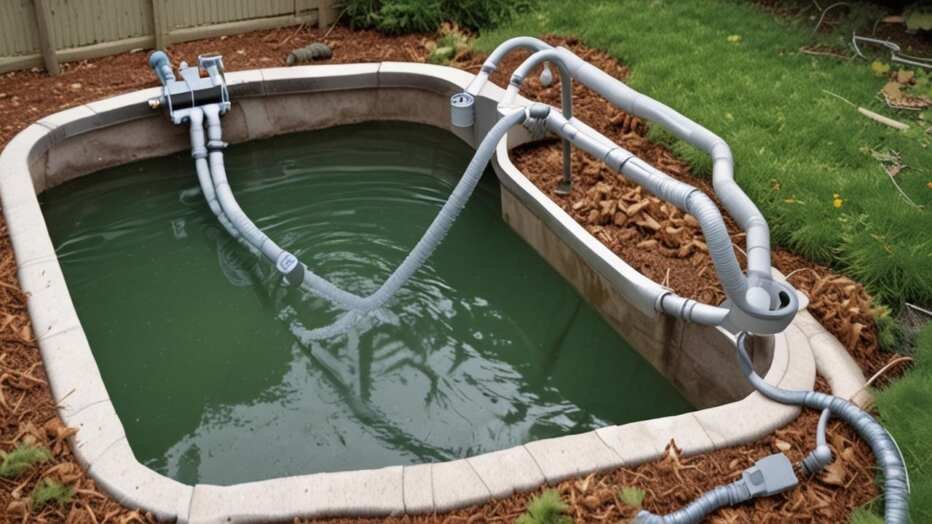
A filter that runs too few hours or uses the wrong media lets debris settle. According to the, a typical above-ground pool needs 8 to 12 hours of pump run time daily. Running less than 6 hours gives algae a chance to grow.
Common Filter Problems
- The pump runs fewer than 8 hours a day.
- The filter cartridge is old or clogged.
- Debris piles up around the skimmer intake.
- The return jet is pointed down instead of across the surface.
How to Fix Circulation
- Run the pump for at least 8 hours in summer, split into two 4-hour cycles.
- Clean the filter weekly during heavy use. Replace cartridges every season.
- Point the return jet toward the surface to create a circular flow that pushes debris toward the skimmer.
- Brush the walls and floor once a week to free trapped particles.
Tip: Use a timer to automate pump cycles. This ensures consistent run time even if you forget.
A dirty filter reduces water turnover significantly. Replace sand in sand filters every 3 to 5 years. For cartridge filters, buy a second cartridge to swap while cleaning the other.
3 – Hidden Leaks and Fitting Issues
Leaks waste water and force the pump to work harder. They also let contaminants enter the pool. A small pinhole in the liner can lose 2 to 5 gallons per day. Over a week, that adds up to serious water waste.
Where Leaks Hide
- Around the skimmer and return fittings.
- At the liner seam or where the liner meets the track.
- At the pump connections and hoses.
- At the winter cover grommets or tie-downs.
How to Find a Leak
- Mark the water level on the wall. Check again in 24 hours without using the pool.
- If water drops more than 1/4 inch per day, suspect a leak.
- Check the ground around the pool for wet spots.
- Use a leak detection dye near fittings.
Above-ground pool keeps failing often because of a slow leak that goes unnoticed. Repair small leaks with a vinyl patch kit or replace the gasket on the skimmer. For larger holes, consider a full liner replacement.
4 – Persistent Algae Blooms
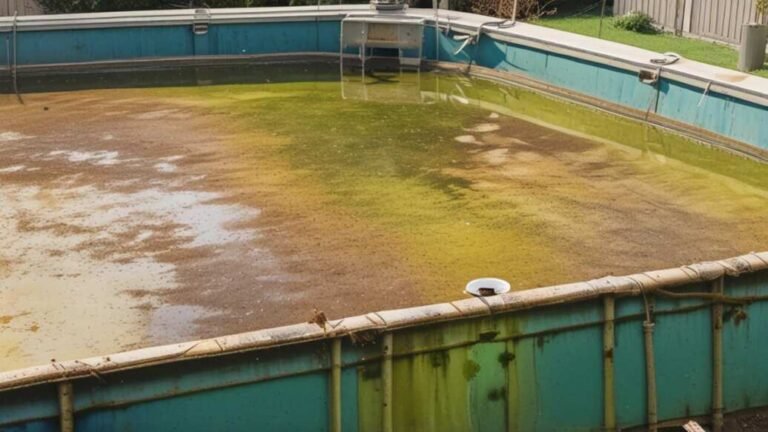
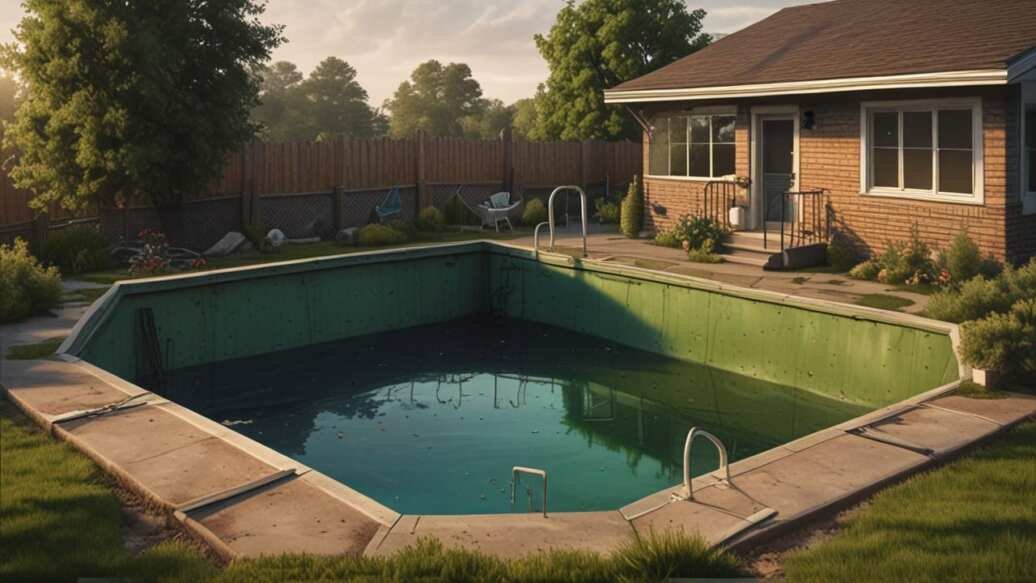
Algae are the most common visible problem. According to the, 60% of pool owners deal with algae at least once a season. Warm water, low chlorine, and high phosphates create perfect growth conditions.
Types of Algae
- Green algae – floats freely, makes water look like pea soup.
- Mustard algae – yellow-brown, clings to walls and floor.
- Black algae – dark spots with roots that embed in the liner.
Why Your Treatment Fails
- You are not brushing the algae off surfaces before shocking.
- Your chlorine level is too low to kill spores.
- Your filter is running too few hours to catch dead algae.
- You have high phosphate levels that feed new growth.
Warning: Do not swim in a pool with visible algae. Algae can harbor bacteria and cause skin infections or respiratory issues.
To kill green algae, brush the walls and floor, then add a shock that contains at least 60% available chlorine. Run the filter 24 hours until the water clears. For mustard algae, use a yellow-specific algaecide after shocking.
Prevent algae by maintaining free chlorine at the high end of the recommended range during hot weather. Use a phosphate remover monthly if your tap water has high phosphates.
5 – Equipment Malfunctions
Pumps, filters, and heaters fail over time. A pump that runs but doesn’t move water is a common culprit. According to, a leading pool equipment manufacturer, pump problems cause 30% of service calls.
Common Equipment Issues
- The pump impeller is clogged with debris.
- The pump basket lid has a crack that lets air in.
- The filter pressure gauge reads 8-10 psi above normal.
- The pump motor capacitor has failed.
Quick Diagnostic Steps
- Check the pressure gauge. If it’s 10 psi or more above clean filter pressure, backwash or clean the filter.
- Lift the pump basket lid. Make sure the basket isn’t full and the lid seal is tight.
- Listen for strange noises. A grinding sound indicates a failing bearing.
- Feel the pump housing. If it’s hot to the touch, the pump may be air-locked or the impeller is stuck.
Important: Always turn off power at the breaker before working on pool equipment. Never stick fingers into the pump housing while the power is on.
Replace worn gaskets and O-rings each season. A small air leak at the pump suction side causes water flow loss and can damage the motor. Use Teflon tape on threaded connections.
If your above-ground pool keeps failing despite good chemistry and filtration, check the equipment first. A failing pump motor can waste electricity and never turn the water over properly.
6 – Environmental Factors Beyond Your Control
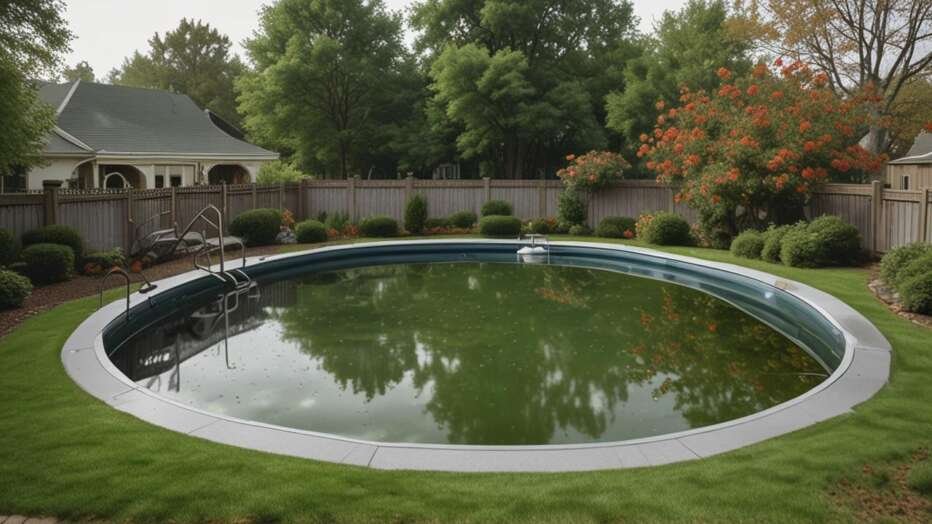
Your pool doesn’t exist in a vacuum. Leaves, pollen, rain, and runoff affect water chemistry. According to the, a heavy rain can dilute pool chemicals and increase pH.
Environmental Threats
- Tree debris adds organic matter that consumes chlorine.
- Pollen and grass clippings feed algae.
- Heavy rain dilutes chemicals and lowers alkalinity.
- Fertilizer runoff introduces phosphates and nitrates.
How to Combat Environmental Issues
- Install a pool cover when the pool isn’t in use for long periods.
- Trim overhanging branches to reduce leaf drop.
- Skim the pool daily to remove falling debris.
- Test water after heavy rain and adjust chemicals.
- Keep the pool deck clean so runoff doesn’t wash dirt into the pool.
Phosphates from fertilizer can be a persistent problem. Use a phosphate remover once a week if you live near lawns or gardens. Monitor your calcium hardness if you have hard water, as scale can form on the liner.
7 – Inconsistent Maintenance Routine
The number one cause of pool failure is inconsistent care. According to a survey by, 45% of pool owners who reported problems admitted they skipped weekly maintenance more than twice a month. Skipping just one week can lead to problems that take days to fix.
Signs of Neglect
- pH bounces wildly between tests.
- Debris accumulates on the bottom.
- Waterline ring builds up.
- Filter pressure rises faster than normal.
What a Good Routine Looks Like
- Daily – Skim surface, check skimmer basket, run pump 8-12 hours.
- Weekly – Test water, add chemicals, brush walls, vacuum floor, clean filter.
- Monthly
- Seasonal – Replace filter cartridge, lubricate O-rings, cover pool before winter.
Tip: Create a checklist and post it near the pool. Use a phone reminder for weekly tasks. Consistency beats emergency fixes every time.
Set a specific day for weekly maintenance, like every Saturday morning. Stick to it even if the water looks clear. Most failures start when the water looks fine.
Quick Comparison Table of Common Fixes
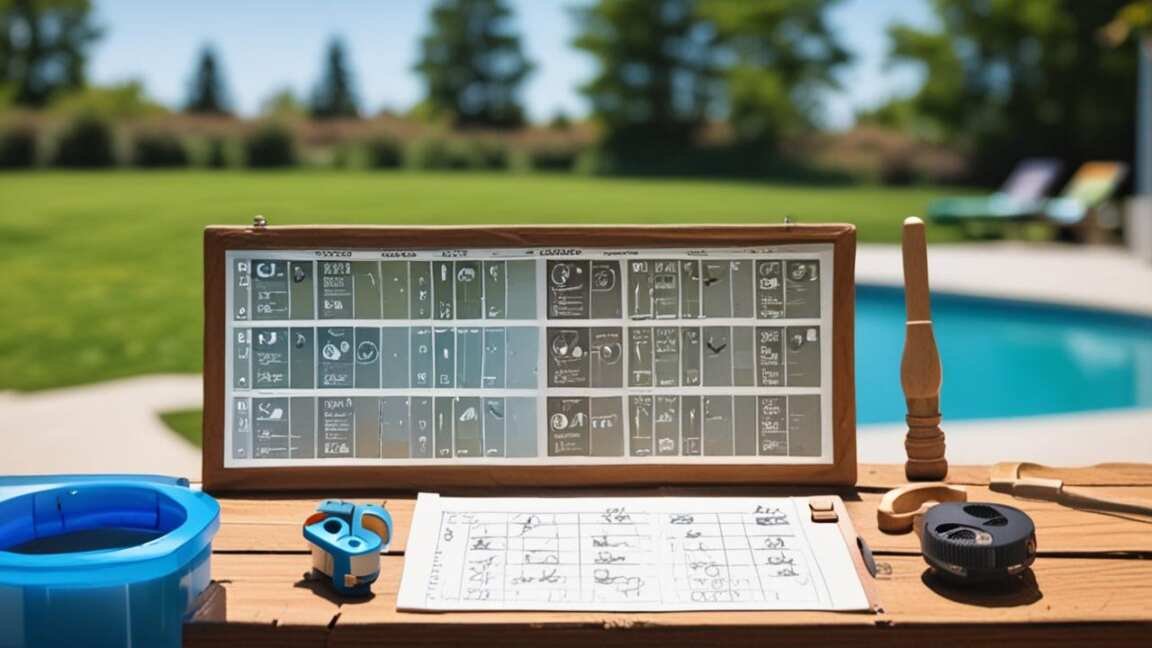
| Issue | Most Likely Cause | Quick Fix | Cost Estimate |
|---|---|---|---|
| Cloudy water | pH high or filter dirty | Adjust pH, backwash filter | $5-15 for chemicals |
| Green water | Algae bloom from low chlorine | Shock pool, brush, run filter 24hrs | $10-30 for shock |
| Water level dropping | Liner leak or fitting leak | Patch liner, tighten fittings | $5-50 for patch kit |
| Pump losing prime | Air leak or low water level | Tighten lid, fill water | Free |
| Strong chlorine smell | Chloramines from body waste | Shock to break chloramines | $10-20 for shock |
Common Myths vs Facts About Above-Ground Pools
Myth 1: You can just add more chlorine to fix any problem.
Fact: Adding chlorine when pH is high or when phosphates are present does little to clear the water. Without balanced chemistry, chlorine becomes ineffective. Test first, then treat.
Myth 2: Above-ground pools don’t need as much maintenance as in-ground pools.
Fact: Small bodies of water are actually more sensitive to chemistry changes. The same gallon of chlorine covers less water, so imbalances happen faster. Consistent maintenance is equally critical.
Myth 3: If the water looks clear, it’s safe to swim.
Fact: Clear water can still have harmful bacteria or high chloramines. Always test before swimming. The CDC recommends a free chlorine level of 1.0-3.0 ppm and pH of 7.2-7.8 for safe swimming.
Frequently Asked Questions
Why does my above-ground pool keep turning green even after shocking?
You likely have phosphates or mustards algae that are resistant to standard shock. Test for phosphates and use a phosphate remover. For mustard algae, use a yellow algae algaecide after brushing the walls.
How often should I change the water in my above-ground pool?
Change the water every 2 to 3 years, or sooner if it develops a persistent chemical imbalance that shocks can’t fix. High total dissolved solids (TDS) over 1500 ppm indicate it’s time for fresh water.
Can too much chlorine damage my pool liner?
Yes. Free chlorine above 10 ppm can degrade vinyl liners, causing brittleness and cracking. Keep chlorine between 1 and 3 ppm for normal use. Never shock when the liner is exposed to direct sunlight.
Why does my pump keep losing prime?
Common causes: a loose lid, a crack in the pump basket, a water level below the skimmer, or a clogged impeller. Check each one in order. Also make sure the water level is at least halfway up the skimmer opening.
Is it safe to swim with a patch on the liner?
Yes, as long as the patch is fully cured and watertight. Most vinyl patches cure in 12 to 24 hours. After that, the patch is safe and durable for the season. Avoid rough play near the patch.
Resources and Tools
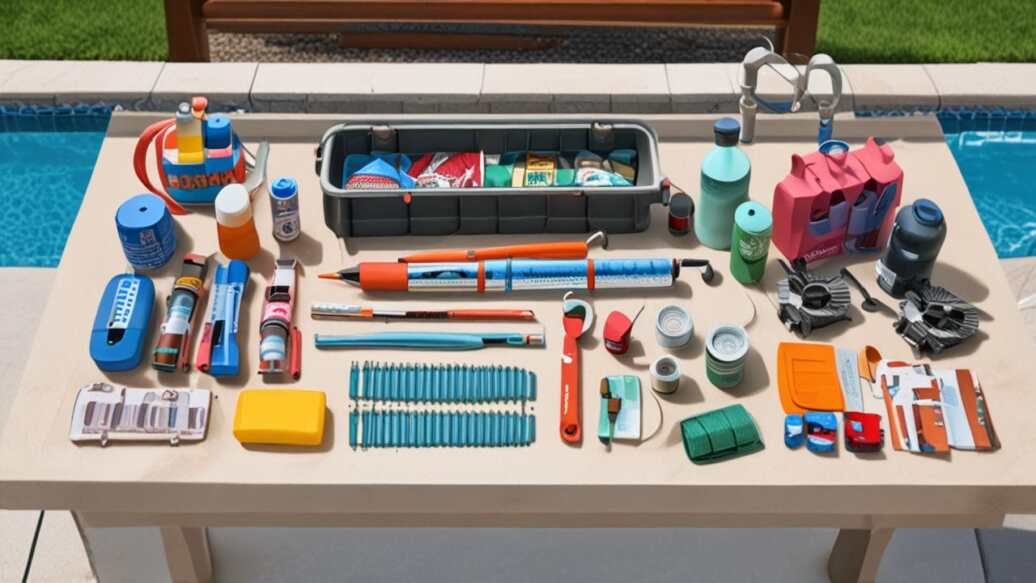
Here are trusted tools and references to help you keep your pool in top shape.
- Taylor Technologies K-2005 Test Kit – Professional-grade test kit for accurate chemical readings.
- PoolMath App – Free app to log test results and calculate chemical adjustments.
- Pentair Pool Filters – Manufacturer of reliable filter systems and pump parts.
- CDC Healthy Swimming – Official guidelines for safe water quality and illness prevention.
- Pool & Hot Tub Council – Industry association with best practices and safety standards.
Final Thoughts
Above-ground pool problems almost always trace back to one of these seven causes. Check water chemistry first, then filtration, then leaks and equipment. Keep a consistent weekly routine and your pool will stay clear and enjoyable all season. The resources here give you everything you need to fix any issue.