Patio furniture fades in the sun because ultraviolet rays trigger photodegradation, breaking the chemical bonds in dyes, pigments, and polymers. The key to preventing this is choosing materials like solution-dyed acrylic or powder-coated metals, which resist UV damage far better than standard polyester or untreated plastics. For immediate protection, use physical barriers such as furniture covers, umbrellas, and UV-blocking sprays to extend the life and color of your set.
You spent good money on a patio furniture set. A few months later, it looks dull and washed out. This guide explains exactly why your patio furniture set keeps making you fades in sun and how to stop it.
Quick Verdict: Simply put, the sun’s ultraviolet (UV) rays break down the chemical bonds in the dyes, pigments, and polymers used in outdoor furniture. This process, called photodegradation, causes colors to fade and materials to become brittle. Solution-dyed acrylic and powder-coated metals resist this process much better than standard polyester or untreated plastics.
- Sun fading is caused by photodegradation, where UV rays break down pigment and polymer bonds at the molecular level.
- Material type is the most critical factor in fade resistance, with solution-dyed acrylic and HDPE resin offering the best protection.
- Darker colors absorb more UV energy and heat, causing them to fade noticeably faster than lighter colors.
- Physical barriers like furniture covers, umbrellas, and UV-protectant sprays are the most effective ways to slow down fading.
- Fading is often a sign of deeper structural material degradation, not just a cosmetic issue.
The main culprit is ultraviolet (UV) radiation. The sun emits UV rays that hit your furniture and transfer energy. These rays have enough power to break the chemical bonds in dyes and polymer chains. This process is called photodegradation. According to, UV radiation accounts for roughly 10% of total solar output. Despite being a small fraction, it causes the most significant material damage.
Heat and humidity speed up these chemical reactions. This means furniture in hot, sunny climates fades faster than in cooler, shaded areas. The quality of the material is the biggest factor in how fast your patio furniture set fades. High-end outdoor fabrics use solution-dyed acrylic fibers. Standard fabrics are piece-dyed, where the color just coats the surface. Once the surface layer degrades, the color washes out quickly.
How Does UV Radiation Affect Different Materials?
UV light is split into UVA, UVB, and UVC rays. UVA and UVB reach the earth’s surface. UVA penetrates deeply and causes long-term color shifting. UVB is more intense and attacks the surface of materials directly. Combined, they break down the molecular structure of your furniture. A study from the shows that UV exposure can reduce the tensile strength of common outdoor plastics by up to 50% over 5 years. This means fading is a clear sign of deeper structural damage.
Different materials react to UV exposure in unique ways. Some materials have natural UV resistance built into their chemical structure. Others rely entirely on surface coatings or additives. The table below breaks down how common materials hold up against the sun.
| Material | UV Resistance | Average Lifespan | Best Use |
|---|---|---|---|
| Solution-Dyed Acrylic | Excellent | 5-10 years | Cushions, Umbrellas |
| HDPE Resin Wicker | Very Good | 10-15 years | Full Seating Sets |
| Powder-Coated Aluminum | Very Good | 10-20 years | Frames, Dining Tables |
| Teak (with sealant) | Good | 15-25 years | Benches, Dining Sets |
| Polyester Fabric | Poor | 1-3 years | Budget Cushions |
| PVC / Low-End Resin | Poor | 1-2 years | Low-End Wicker |
Important: The material table above shows average lifespans under direct, uncovered sunlight. Using furniture covers or placing the set in a shaded area can double these lifespan estimates.
Why Do Some Colors Fade Faster Than Others?
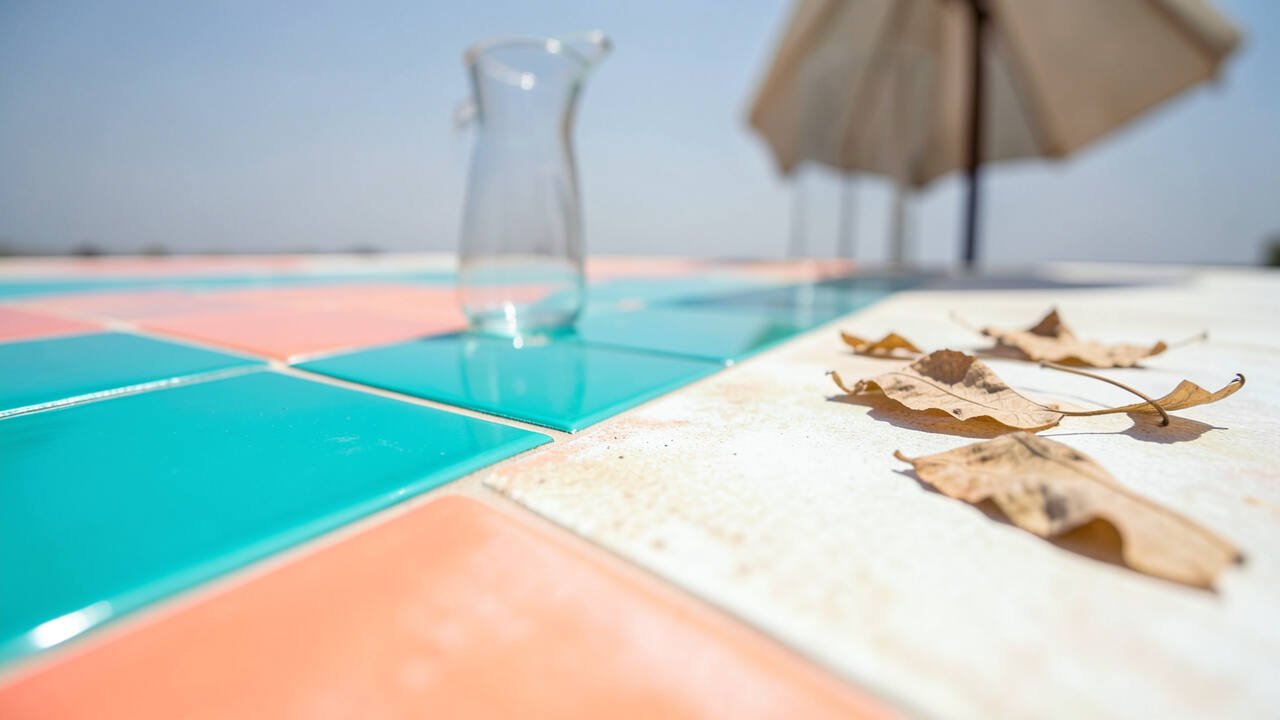
Color plays a massive role in how quickly a patio furniture set fades. Darker colors absorb more light across the entire spectrum. This includes UV light and visible light. More absorption means more energy is transferred to the material. This accelerates the chemical breakdown of the pigments. Research from the highlights that darker colors absorb more UV light. They heat up more and this speeds up chemical breakdown compared to lighter colors.
A bright red cushion will likely fade faster than a beige one. This is purely physics and chemistry. If you live in a very sunny area, choose light colors to extend the life of your furniture.
The Role of Pigment Quality
Not all pigments are created equal. Premium brands use lightfast pigments. These are tested to resist fading for thousands of hours of UV exposure. Budget brands use cheaper dyes that break down much faster. When you buy cheap furniture, you are paying for low-grade colorants. This is why the same color looks completely different after just one season.
What Are the Best Ways to Prevent Patio Furniture Fading?
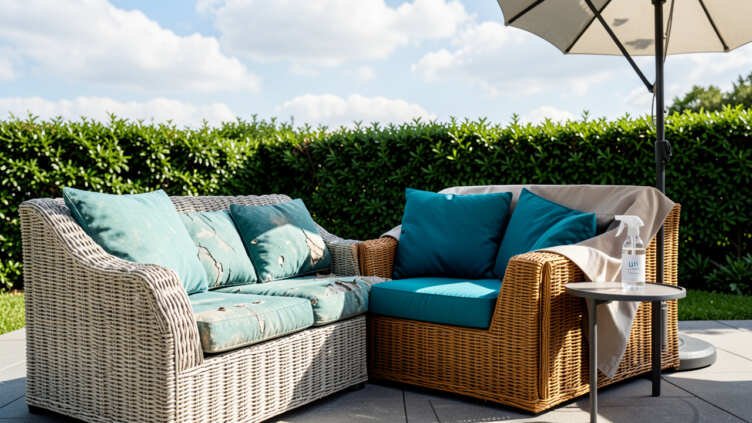
You cannot stop the sun from shining. But you can take specific steps to slow down fading dramatically. The best approach is a combination of smart buying and active protection.
Use Protective Coatings and Sealants
For wood furniture, a spar urethane or marine-grade varnish blocks UV rays effectively. These coatings contain UV absorbers that prevent rays from reaching the wood. For metal, a fresh coat of rust-preventative paint with UV inhibitors works well. For fabrics, you can buy UV protection sprays. These are not permanent. You must reapply them every few months. A study from NIST reports that a UV-protective coating can extend the life of an outdoor polymer by 2 to 3 times.
Smart Placement and Shading
Place your furniture under a pergola, umbrella, or awning. This is the single most effective way to reduce UV exposure. Even a simple shade sail can block 90% of UV rays. North-facing areas get the least direct sun. If you cannot move the furniture, use a large umbrella during peak sun hours. This keeps the surface temperature lower, which also slows down chemical reactions.
Invest in High-Quality Furniture Covers
Furniture covers are your best line of defense during off-hours. Choose covers made from UV-stabilized fabric. They block direct sunlight and prevent heat buildup. Make sure the covers fit snugly so wind does not rub the fabric against the furniture surface. finds that high-end resin wicker can last 10 to 15 years when covered. Low-end polyethylene wicker may fade and crack in just 2 to 3 seasons without covers.
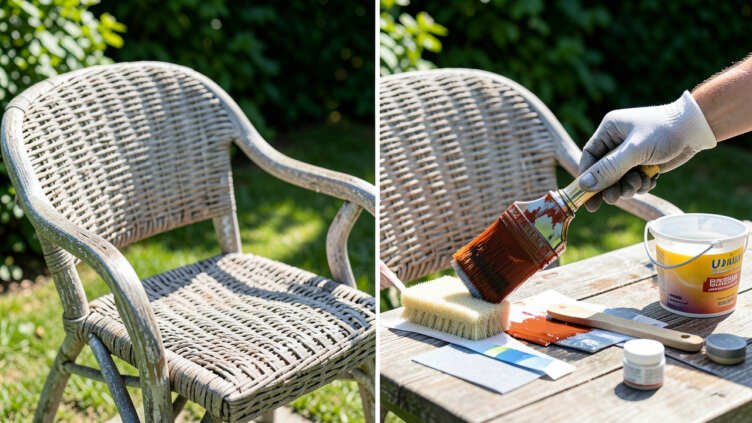
What Is the Step-by-Step Process to Restore Faded Furniture?
If your patio furniture set has already faded, you can restore it. Do not throw it away yet. Follow these steps to bring it back to life.
- Clean the surface thoroughly. Use a mild detergent and water. Remove all dirt, pollen, and mildew. Let it dry completely.
- Sand or strip the old finish. For wood, sand down to bare wood. For metal, use a wire brush to remove loose powder coating or rust.
- Apply a UV-protective primer. This creates a base that blocks UV rays from penetrating the new top layer.
- Paint or stain with a UV-resistant color. Use exterior-grade paint or stain. For fabrics, use a specialized outdoor fabric spray paint.
- Seal the surface with a UV topcoat. For wood and metal, apply a clear UV-blocking sealant. This adds years to the restoration.
Warning: Spray painting cushions or seats can make them stiff. Test a small hidden area first. If the fabric feels hard, consider buying new replacement cushions instead.
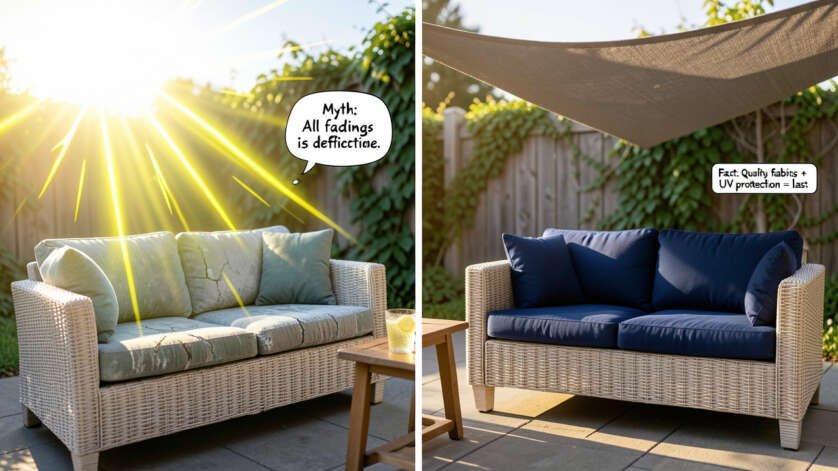
Common Myths vs Facts About Patio Furniture Fading
There is a lot of bad advice about patio furniture fading. Let us clear up the most common misunderstandings.
- Myth: “All-weather wicker is indestructible.” Fact: High-quality HDPE resin wicker is durable. Low-quality PVC wicker degrades and fades quickly in the sun. The term “all-weather” does not mean “UV-proof.”
- Myth: “Metal furniture never fades.” Fact: Powder coating on aluminum fades over time. You may see “chalking,” which is a white powder forming on the surface. This is the coating breaking down.
- Myth: “A clear coat protects wood forever.” Fact: Clear coats can fail faster than pigmented stains. Pigments block UV rays. Clear coats let UV rays pass through to the wood.
Frequently Asked Questions
Why does my expensive patio furniture keep fading if it is “all-weather”?
“All-weather” means it resists rain, snow, and mildew. It does not mean “UV-proof.” UV rays still attack the pigments and polymers unless the material is specifically stabilized with UV inhibitors. Always check for a “UV-stabilized” label.
Can I reverse fading once it has started?
You cannot reverse fading. You can restore the color with paint, stain, or fabric dye. After restoring, apply a UV protectant to prevent further fading. The material underneath is still weakened by UV exposure.
What color patio furniture resists fading the best?
Light colors like white, beige, and light gray. They reflect light instead of absorbing it. Dark colors absorb more UV energy and heat up faster. This leads to faster pigment breakdown.
Is resin wicker the best choice for sun resistance?
High-quality HDPE resin wicker is excellent. It includes UV stabilizers in the plastic itself. Low-quality PVC or polypropylene wicker does not. It will become brittle and fade within two years.
Does warranty cover sun fading?
Some premium brands offer a 5-year fade warranty on specific fabrics and frames. Check the fine print. Standard furniture usually excludes “normal wear and tear” from the sun. A warranty is a good sign of quality materials.
Resources and Tools
- ASTM International – Standard test methods for UV resistance in outdoor materials.
- National Institute of Standards and Technology (NIST) – Research data on polymer degradation from UV exposure.
- Consumer Reports – Independent reviews and durability ratings for patio furniture sets.
- University of Florida IFAS Extension – Research on color absorption and material heat buildup.
Final Thoughts
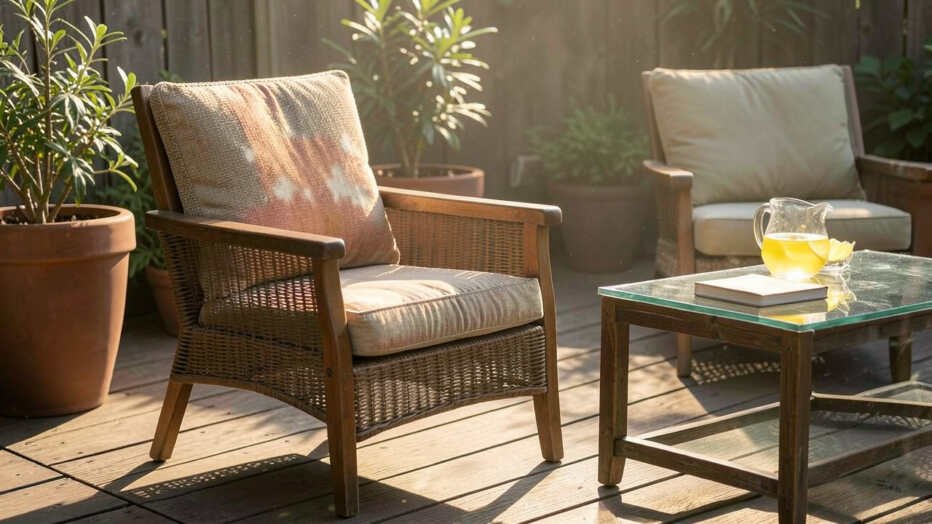
Sun fading is an unavoidable process of photodegradation. The best defense is a combination of smart material choices and physical protection. Choose solution-dyed acrylic fabrics and powder-coated aluminum frames for your next patio furniture set. Use covers and shade to block UV rays. Your patio furniture will stay vibrant for years with the right materials and care.