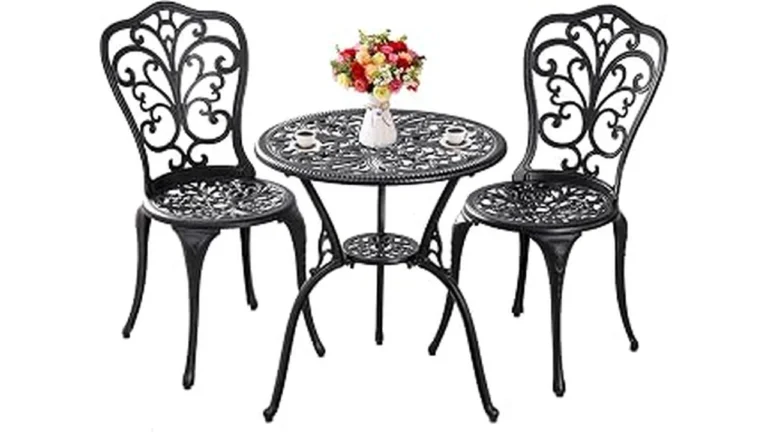
When your teak patio set fades in the sun, the primary change is a surface-level color shift from golden-brown to silver-gray caused by UV exposure, but the wood’s structural integrity remains intact due to its high natural oil content. However, if left unmaintained, fading can lead to shallow surface cracks, mold growth, and a rough texture that may require sanding to restore. Owners can either allow the silver patina to develop naturally or use teak cleaners and sealers to restore the original color, preserving both appearance and longevity.
Your new outdoor furniture arrived with a warm golden-brown glow. This guide explains what actually goes wrong when your teak patio set fades in sun and what you can do about it.
Quick Verdict: In short, when your teak patio set fades in the sun, the main change is color loss – from rich golden-brown to a silver-gray patina. This is a natural surface reaction to UV rays that does not ruin the wood’s strength. However, without care, fading can lead to surface cracks, mold, and loss of natural oils over time.
Key Takeaways
- Teak fading is a surface-level reaction to UV exposure that changes the wood’s color from golden-brown to silver-gray but does not affect structural integrity.
- The natural oils inside teak (45-55% of the wood’s composition) protect it from rot and decay even as the surface color changes.
- Without regular maintenance, faded teak can develop shallow surface cracks, mold growth, and a rough texture that may require sanding to restore.
- You can choose to let teak weather naturally or restore its original color with teak cleaners, brighteners, and sealers.
- Fading alone is not a sign of damage – it is a natural aging process that millions of teak owners experience every year.
What Goes Wrong with the Wood Structure?
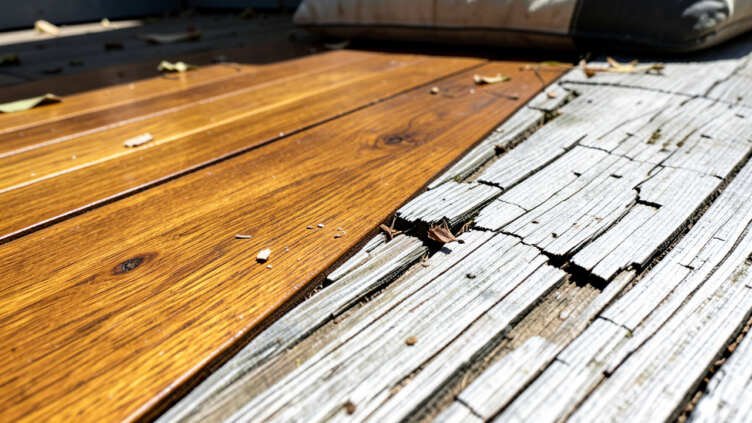
Teak contains high levels of natural oils and rubber. According to the, UV radiation breaks down lignin – the natural glue that holds wood cells together. This happens on the surface only, not deep inside the wood.
The structural core of your teak furniture remains strong. The notes that teak’s natural oil content makes it one of the most weather-resistant hardwoods available. The Janka hardness rating of teak is 1,000 to 1,155 pounds-force, which means it resists dents and wear far better than most other outdoor woods.
Important: Surface fading does not make teak weaker. The wood’s core density and oil content remain unchanged for decades. You would need to sand away more than 1/8 inch of wood to reach structurally affected material.
What Actually Changes at the Surface Level
- Lignin breaks down – UV rays attack the lignin that binds wood fibers together on the outermost surface layer.
- Oils oxidize – The natural oils in the top 1-2 millimeters react with oxygen and sunlight, turning from yellow to clear.
- Color pigments fade – The compounds that give teak its rich brown color break down chemically when exposed to UV light.
- Surface texture roughens – As lignin degrades, the exposed wood fibers become slightly raised, creating a more textured feel.
All four of these changes are surface-level. The wood below 2 millimeters stays exactly as it was when the furniture was new.
What Goes Wrong with the Appearance?
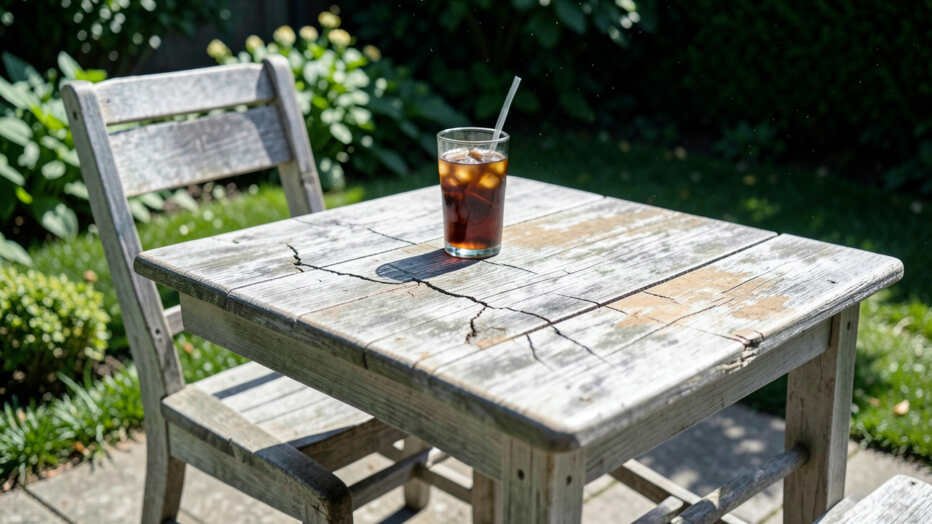
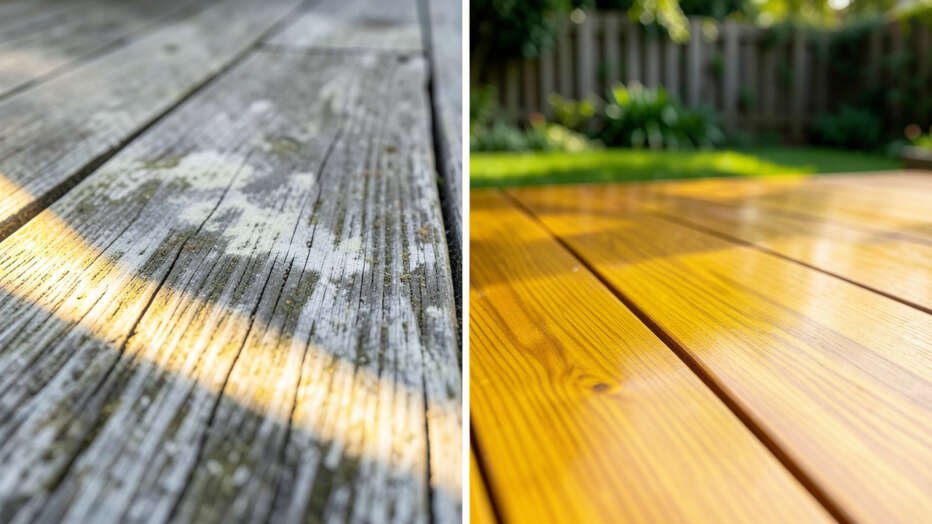
The most obvious change is color. Your teak set shifts from a warm golden-brown to a pale silver-gray. This process usually starts within 2 to 4 weeks of outdoor exposure. Within 6 to 12 months, the color becomes fully silver-gray and then remains stable.
The reports that teak is one of the few hardwoods that weathers to an even, attractive silver tone rather than a patchy gray. This is because of the high oil content that distributes weathering evenly across the surface.
Does Fading Look Bad?
That depends on your taste. Many people prefer the natural silver-gray look. It gives furniture a mature, coastal aesthetic. Others want to keep the original golden color. Neither choice is wrong.
Problems with appearance happen when fading is uneven. Common causes include:
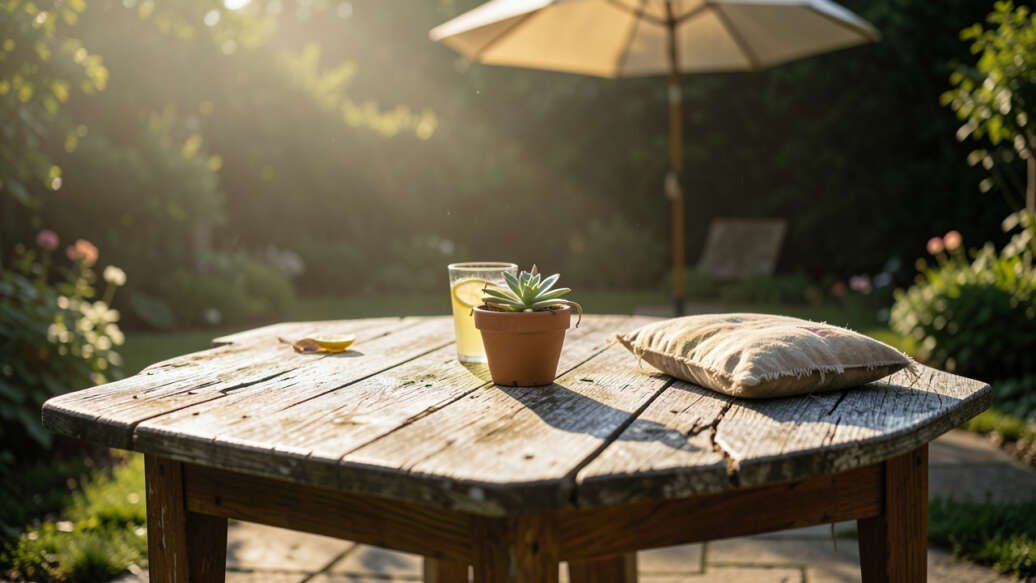
- Plant pots or decorations left on the table block UV rays in only those spots.
- Cushions or towels left on seats create dark patches under them.
- Water pooling on flat surfaces can cause darker water stains within the faded area.
- Mold or mildew can grow in shaded, damp areas and create dark spots on the silver surface.
These uneven patterns are what most people consider “wrong” when teak fades. The fix is usually simple – sanding, cleaning, or using a teak brightener to even out the color.
How to Tell if Fading Has Caused Real Damage
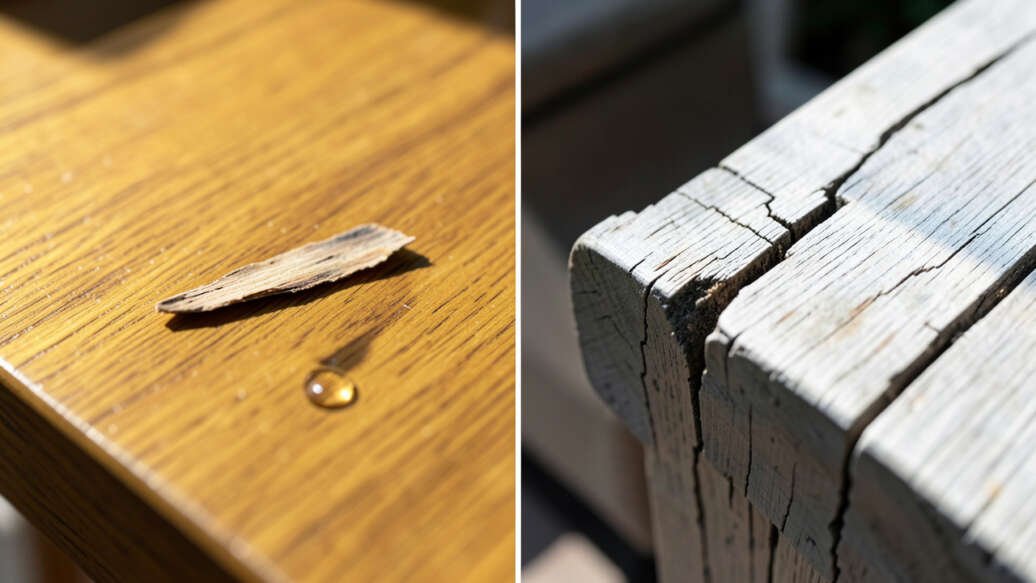
Fading itself is cosmetic. But a few real problems can develop if you ignore your furniture for years. Use this table to check what is actually wrong versus what is normal.
| Condition | Normal or Problem | What to Do |
|---|---|---|
| Even silver-gray color | Normal | Leave it or restore with cleaner |
| Surface cracks less than 1/16 inch deep | Normal with aging | Sand lightly and apply teak oil |
| Dark spots or patches | Problem – mold or water stain | Clean with teak mildew cleaner |
| Deep cracks wider than 1/8 inch | Problem – structural drying | Apply teak oil and monitor |
| Rough, splintery surface | Problem – severe weathering | Sand thoroughly and seal |
| Loose joints or wobbling | Problem – hardware failure | Tighten bolts or reglue joints |
Warning: If you see deep cracks wider than 1/4 inch, check the furniture frame. The wood may be drying out too fast. Move the set to partial shade and apply a teak protector immediately.
How to Prevent or Reverse Teak Fading
You have two clear choices. You can let the teak weather naturally into silver-gray. Or you can restore and maintain the golden color. Each path requires different care.
Option 1: Let It Silver Naturally
This is the easiest approach. You do almost nothing except clean the furniture once or twice a year. The silver patina is stable and does not need sealers or oils.
- Clean once in spring – Use a soft brush and mild soap to remove dirt and pollen.
- Remove mold spots – Use a teak-safe mildew cleaner if you see dark patches.
- Rinse thoroughly – Soap residue can cause uneven color if left on the wood.
- No sealers needed – The silver-gray surface is self-protecting.
Option 2: Restore the Golden Color
If you prefer the original look, you need to remove the weathered surface layer. This reveals fresh wood underneath. Then you protect it with a sealer or oil.
- Clean the surface – Apply a teak cleaner with a soft brush to remove dirt and mold.
- Use a brightener – Teak brightener (oxalic acid based) restores the golden tone after cleaning.
- Sand lightly – Use 120-grit sandpaper to remove the top weathered layer if needed.
- Apply teak oil or sealer – Choose a UV-protective sealer to slow future fading.
- Reapply annually – Most sealers need one coat per year to maintain the color.
Tip: Test any cleaner or brightener on a small hidden area first. Different teak grades react differently. Always follow the product instructions exactly.
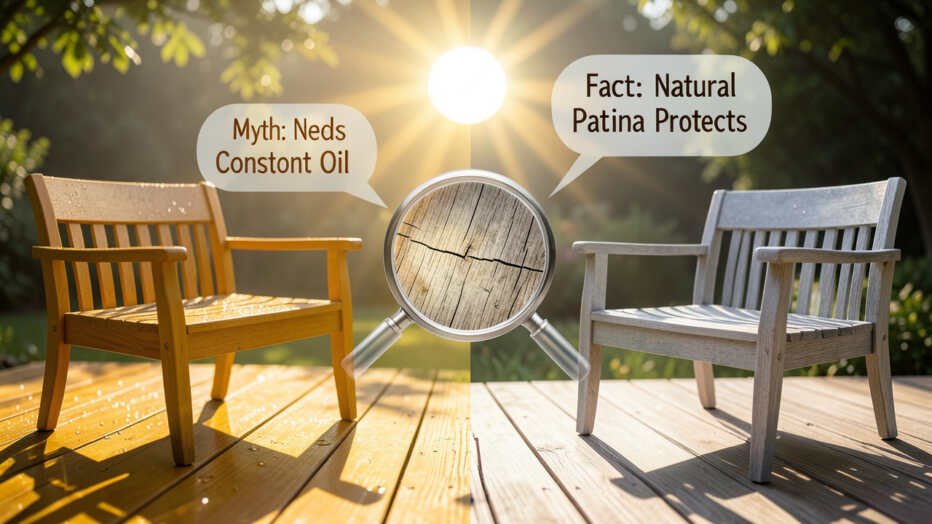
Common Myths vs Facts About Teak Fading
Teak has been used for outdoor furniture for over 100 years. Yet many myths still confuse owners. Here are the three most common ones.
Myth 1: Fading Means the Wood Is Rotting
Fact: Fading is a surface reaction to UV light. It has nothing to do with rot. Rot requires moisture and fungus. The states that teak’s natural oils make it resistant to rot and decay even when the surface is fully silvered. Check for soft or spongy wood if you suspect rot. Color alone is not a sign of damage.
Myth 2: You Must Seal Teak Immediately to Protect It
Fact: Teak does not need sealing to last. It is naturally durable. Many teak owners never seal their furniture and it lasts 20 to 30 years. Sealing is only for people who want to keep the golden color. If you prefer silver-gray, skip the sealer entirely.
Myth 3: Faded Teak Cannot Be Restored
Fact: You can restore faded teak to near-original color. A teak brightener with oxalic acid removes the gray layer. Light sanding with 120-grit paper exposes fresh wood underneath. Then you apply teak oil to bring back the warm tone. Thousands of homeowners do this every year.
Frequently Asked Questions
Does fading make my teak furniture weaker?
No. Fading only affects the top 1-2 millimeters of the wood surface. The structural core remains strong. According to the, teak maintains its strength for decades even when fully weathered. You can safely sit on faded teak chairs without worry.
How long does it take for teak to fade?
Teak starts fading within 2 to 4 weeks of outdoor exposure. The color loss is most noticeable in the first 3 to 6 months. After 12 months, the wood reaches a stable silver-gray tone that does not change much further. The process is slower in shaded areas and faster in full sun.
Can I stop teak from fading completely?
No product can stop UV fading 100 percent. UV-protective sealers slow the process but do not prevent it. You will need to reapply sealer every 6 to 12 months to maintain the golden color. The only way to avoid fading is to keep the furniture indoors or under a covered patio.
What is the best product to restore faded teak?
The most effective approach is a two-step process. First use a teak cleaner (like Star Brite or Messem’s) to remove dirt and mildew. Then apply a teak brightener to restore the golden tone. For ongoing color, follow with a UV-protective teak sealer. Always test any product on a small area first.
Should I sand my faded teak furniture?
Only if the surface feels rough or splintery. Light sanding with 120-grit paper removes the weathered layer and exposes fresh wood. This is the fastest way to get back to the golden color. After sanding, apply teak oil or sealer to protect the new surface. Do not sand more than necessary – teak is thin on some furniture pieces.
Final Thoughts
Your teak patio set fades in sun due to natural UV exposure that changes the surface color but not the wood’s strength. You can accept the silver-gray patina or restore the golden tone with simple cleaning and sealing. The choice depends on your style preference, not on any structural need. Either way, your teak furniture will last for many years with basic care.