
The immediate signs a hot water tank requires attention include unusual noises like banging or popping, visible rust or water leaks around the base, and a noticeable drop in hot water temperature or supply. A unit exceeding its expected lifespan of about 10 to 15 years is also a primary indicator, alongside discolored or foul-smelling water suggesting internal corrosion or sediment buildup. Addressing these specific symptoms promptly through checks like resetting the thermostat or flushing the tank can prevent major system failure and costly water damage.
Figuring out when your hot water tank needs a look is something many folks find a bit tricky, especially if they’re new to home care.
You want to keep your showers warm and your dishes clean, but how do you know if something’s up with the tank itself? Don’t worry!
This guide will make it super simple. We’ll walk through the common signals in easy steps so you can spot the Signs Your Hot Water Tank Needs Attention Right Away before a small problem becomes a big one. Let’s get started and make sure your hot water keeps flowing!
Key Takeaways
- You can tell your hot water tank needs checking by looking for strange noises.
- Rust or leaks around the tank are clear indicators of trouble.
- A sudden drop in hot water or water that’s not hot enough signals an issue.
- The age of your hot water tank is a key factor in predicting problems.
- Water discoloration can mean your tank is corroding inside.
- We’ll cover simple checks and what to do next.
![Signs Your Hot Water Tank Needs Attention Right Away[1]](https://creativehouseblog.com/wp-content/uploads/2026/05/Signs_Your_Hot_Water_Tank_Needs_Attention_Right_Away1.jpg)
Common Signs Your Hot Water Tank Needs Attention
Your hot water tank works hard to give you the comfort you expect at home. Like any appliance, it can develop issues over time.
Recognizing these problems early can save you from cold showers, water damage, and expensive repairs.
This section focuses on the most common and easily spotted signs that suggest your water heater needs a closer look. We’ll break down what each sign means and why it’s important not to ignore it.
Unusual Noises from Your Tank
Strange sounds coming from your water heater are often the first clue that something isn’t right.
These noises aren’t just annoying; they can point to specific internal problems that need to be addressed. Understanding these sounds can help you pinpoint the issue.
- Popping or Rumbling Sounds: These noises typically happen when sediment builds up at the bottom of your tank. This sediment, often a mix of minerals and rust, heats up and causes small explosions as water turns to steam underneath it. It’s a bit like gravel boiling in a pot. Over time, this can lead to the tank’s inner lining deteriorating and can reduce the heater’s efficiency.
- Hissing Sounds: A hissing noise can indicate a leak, often a small one, where water is escaping. It could be from a faulty valve or a crack in the tank itself. Even a small leak can cause significant water damage to your home if left unchecked, and it wastes water and energy.
- Screeching or Whining Sounds: These high-pitched noises might mean that water is struggling to get through a blockage or that the heating elements are having trouble. Sometimes, it can also point to issues with the water pressure or the pump if you have a well system.
The lifespan of a hot water tank varies, but most last between 10 to 15 years. Ignoring strange noises can shorten this lifespan significantly and lead to premature failure.
For instance, sediment buildup can cause the tank to overheat and weaken its structure, increasing the risk of a burst tank.
Early detection of these sounds allows for simple fixes like flushing the tank or replacing a faulty part, preventing more costly damages down the line.
Visible Leaks and Rust
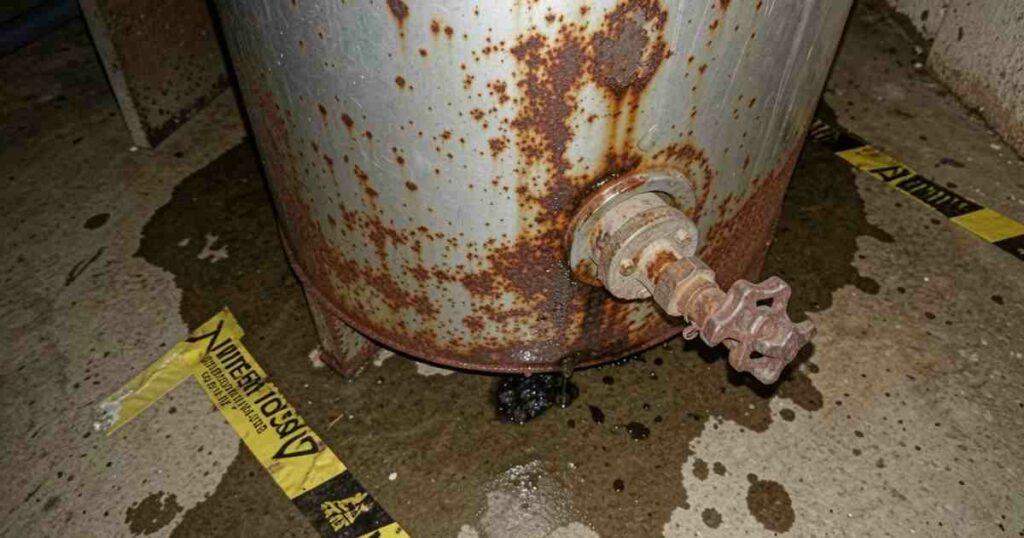
The appearance of leaks or rust on or around your hot water tank is a very clear signal that it’s time for an inspection.
These visual cues often mean that corrosion is occurring, which can compromise the integrity of the tank and lead to serious problems.
- Water Around the Base: If you notice puddles or damp spots on the floor surrounding your water heater, it’s a sign of a leak. The leak could be coming from the tank itself, the pipes connected to it, or the pressure relief valve. Addressing leaks promptly is crucial to prevent water damage, mold growth, and structural issues in your home.
- Rusty Spots on the Tank Exterior: The presence of rust on the outside of your tank, especially near seams or fittings, suggests that the protective coating is damaged and the metal is starting to corrode. This corrosion can eventually weaken the tank walls, leading to a leak or even a rupture.
- Corrosion on Pipes and Valves: Examine the inlet and outlet pipes, as well as the temperature and pressure (T&P) relief valve. If you see rust or signs of leakage on these components, they may need to be replaced. A faulty T&P valve, for example, is a safety hazard.
A study by the National Association of Home Builders found that water damage from plumbing issues is one of the most common and costly home repairs.
Leaks from hot water tanks can cause extensive damage to floors, walls, and even ceilings. A small drip from a rusty valve might seem minor, but it can escalate quickly.
Imagine a leak that worsens overnight, leading to thousands of dollars in repair costs for water-damaged drywall and flooring. Regular visual checks can catch these issues when they are minor and inexpensive to fix.
Inconsistent Water Temperature
One of the most obvious functions of your hot water tank is to provide hot water. When this function falters, it’s a direct sign that something is wrong. Inconsistent temperatures can range from lukewarm water to a complete lack of hot water.
- Lukewarm Water: If your water is only getting lukewarm, even when the thermostat is set to a higher temperature, it could be due to a few reasons. For electric water heaters, one or both heating elements might have failed. For gas water heaters, the thermostat might be faulty or the burner might not be igniting properly. Sediment buildup can also insulate the heating elements, reducing their effectiveness.
- Sudden Cold Showers: This often happens when the tank is running out of hot water much faster than usual, or if it’s not reheating water effectively. It could mean the dip tube, which directs cold water to the bottom of the tank, has broken. If it breaks, cold water mixes with hot water at the top, leading to a rapid depletion of hot water. Alternatively, a faulty thermostat could be preventing the water from heating up to the set temperature.
- Water Too Hot: While less common, water that is excessively hot can also be a problem. This is usually due to a malfunctioning thermostat. This can be a safety concern, increasing the risk of scalding, especially for children and the elderly.
The U.S. Department of Energy recommends setting your water heater thermostat to 120°F (49°C) to balance energy efficiency and safety. If you’re experiencing inconsistent temperatures, it’s important to investigate why.
For example, a home that previously had sufficient hot water for everyone might now find themselves running out mid-shower.
This change in performance is a clear indicator that the tank’s heating mechanism or its ability to store hot water is compromised.
Age of the Water Heater
The age of your hot water tank is a significant factor in predicting potential problems. Like all appliances, water heaters have a finite lifespan, and as they get older, the likelihood of breakdowns increases.
- Typical Lifespan: Most conventional tank-style water heaters are designed to last between 10 to 15 years. However, this can vary based on the quality of the unit, installation, maintenance, and the hardness of your water.
- Increased Risk of Failure: As a water heater approaches or exceeds its expected lifespan, its components are more likely to fail. The tank itself can corrode from the inside, leading to leaks. The heating elements (in electric models) or the burner assembly (in gas models) can wear out. Valves and thermostats can also become less reliable.
- Signs of Aging: Besides the general increase in breakdown likelihood, older tanks might show signs like more frequent noises, minor leaks, or a decrease in heating efficiency. If your tank is over 10 years old and you start noticing any of these issues, it’s wise to start thinking about replacement.
Consider this scenario: A family’s 14-year-old water heater has been making some odd noises for a few months.
They’ve also noticed the hot water doesn’t last as long as it used to. Even though there isn’t a major leak yet, the age of the unit combined with these symptoms strongly suggests an impending failure.
Replacing it proactively could prevent a sudden, inconvenient, and potentially messy breakdown during a busy morning or on a cold weekend.
Discolored or Smelly Water
The quality of the water coming from your tap can also indicate issues with your hot water tank. If the water appears discolored or has an unusual smell, your tank might be the culprit.
- Rusty or Reddish Water: This is a common sign that the inside of your tank is rusting. The rust particles are being mixed with the hot water and sent to your faucets. If the water is only discolored when hot, and clear when cold, the hot water tank is almost certainly the source. This also means the tank’s protective lining is likely compromised.
- Brown or Yellowish Water: Similar to rusty water, this can indicate corrosion within the tank or the hot water pipes. It could also be caused by mineral deposits or sediment accumulating inside the tank.
- Foul Odor (Rotten Egg Smell): A sulfurous or rotten egg smell in your hot water is often caused by bacteria growing inside the tank. These bacteria thrive in warm water and can produce hydrogen sulfide gas. While usually not harmful, the smell is unpleasant. This can happen if the anode rod (a sacrificial rod designed to corrode instead of the tank) has deteriorated and the water is becoming too acidic for the bacteria to survive.
The anode rod is a critical component that protects the tank from corrosion. It’s made of magnesium, aluminum, or zinc and corrodes over time, drawing corrosive elements away from the tank’s steel lining. When it’s depleted, the tank itself starts to corrode.
Some statistics show that regular anode rod replacement can extend the life of a water heater by up to 50%.
If you notice smelly water, it’s a sign the anode rod needs checking or replacement. Failing to address this can lead to significant internal damage to the tank itself.
Troubleshooting Common Issues
Once you’ve identified potential signs that your hot water tank needs attention, the next step is to understand some common troubleshooting methods.
These steps are designed to be simple and can help you confirm the problem or even resolve minor issues yourself. Remember to always prioritize safety, especially when dealing with water heaters.

Checking and Resetting the Thermostat
The thermostat controls the temperature of the water in your tank. If your water isn’t hot enough or is too hot, the thermostat is a prime suspect. It’s usually located behind an access panel on the side of the tank.
- Locating the Thermostat: Most electric water heaters have two thermostats, one for each heating element. Gas water heaters have a single control unit with a temperature dial. Always turn off the power (at the breaker box for electric) or the gas supply (at the valve for gas) before accessing these components.
- Adjusting the Temperature: If the water is not hot enough, you might be able to increase the thermostat setting. Be cautious not to set it too high, as this can be a scalding hazard. The recommended setting is typically 120°F (49°C).
- Resetting a Tripped Breaker (Electric): For electric heaters, if both heating elements fail, a high-temperature cutoff might have tripped. After turning off the power, remove the access panel and look for a red reset button near the upper thermostat. Press it firmly. If it trips again shortly after, there might be a more significant issue with the heating element or thermostat.
A faulty thermostat can lead to inconsistent heating or a complete lack of hot water. For example, if the upper thermostat on an electric heater fails, you might still get some hot water from the lower element, but it will deplete very quickly and won’t reach full temperature.
Resetting it might provide a temporary fix, but if it continues to trip, replacement is necessary.
Draining Sediment from the Tank
Sediment buildup is a common problem that can cause strange noises, reduce efficiency, and shorten the life of your water heater. Draining the tank, also known as flushing, can help remove this buildup.
- Turn off the Power or Gas: For electric heaters, switch off the power at the breaker box. For gas heaters, turn the gas control knob to the “Pilot” or “Off” position.
- Connect a Hose to the Drain Valve: Locate the drain valve at the bottom of the tank and attach a garden hose. Run the other end of the hose to a floor drain, outside, or a large bucket.
- Open the Hot Water Faucet: Open a hot water faucet somewhere in your house to let air into the tank and help the water drain.
- Open the Drain Valve: Slowly open the drain valve on the water heater. Let the water drain until it runs clear. You may need to periodically close the drain valve, stir up sediment at the bottom with a stick, and then reopen it to fully flush the tank.
- Close the Valve and Refill: Once the water is clear, close the drain valve. Turn on the cold water supply to the tank and let it fill completely. Before turning the power or gas back on, ensure the tank is full by opening a hot water faucet until a steady stream of water flows out, indicating all air has been purged.
Flushing your water heater at least once a year can significantly improve its performance and longevity.
For instance, a homeowner who rarely flushed their tank noticed loud rumbling noises. After draining the tank, they were surprised to find several inches of sludge and mineral deposits at the bottom.
Following the flush, the noises stopped, and their hot water heated up much faster, saving energy and preventing further damage to the heating elements.
Inspecting the Anode Rod
The anode rod is designed to corrode so that the tank lining doesn’t. When it’s worn out, the tank starts to rust from the inside. Inspecting and replacing it is a key maintenance task.
- Location and Purpose: The anode rod is typically screwed into the top of the water heater, often behind a cover plate. It’s a metal rod (usually magnesium, aluminum, or zinc) that is more reactive than the steel of the tank. It sacrifices itself to protect the tank from corrosion.
- Signs of Wear: A worn-out anode rod will be significantly depleted, thin, or even entirely gone. You might also notice the water has a rotten egg smell, as mentioned earlier, which can be a sign that the rod is no longer protecting the tank and bacteria are growing.
- Replacement Process: Replacing the anode rod usually involves shutting off the water supply and draining some water from the tank. You then unscrew the old rod (this can sometimes be difficult due to corrosion) and screw in a new one.
Data from water heater manufacturers suggests that inspecting the anode rod every 1-3 years and replacing it when it’s about 75% depleted can significantly extend the life of the tank, potentially adding years to its service life.
A homeowner who replaced their anode rod on a 7-year-old tank found it was mostly gone. The interior of the tank showed some minor pitting.
They replaced the rod, and the water stopped having a slight metallic taste it had developed.
Testing the Pressure Relief Valve
The temperature and pressure (T&P) relief valve is a crucial safety device that releases excess pressure or temperature from the tank to prevent an explosion. It needs to be in good working order.
- How to Test It: Locate the T&P valve, which usually has a small lever. Place a bucket or hose under the discharge pipe connected to the valve. Gently lift the lever for a few seconds. Hot water should flow out. Let the lever snap back into place. If water continues to dribble or leak after you release the lever, or if no water comes out when you lift it, the valve may be faulty and needs replacement.
- Safety First: Be extremely cautious as the water released can be very hot and could cause burns. Ensure the discharge pipe is properly directed away from people, pets, and any areas where hot water could cause damage.
- Why it’s Important: A stuck-open valve will continuously release hot water, wasting energy and water. A valve that fails to open when needed can lead to a dangerous buildup of pressure and heat within the tank, potentially causing a catastrophic failure of the tank.
The T&P valve is designed to open at around 150 PSI or 210°F. If your valve is leaking continuously, it indicates a potential issue with your home’s water pressure or the thermostat on the water heater.
Regularly testing this valve ensures it will function correctly in an emergency, a critical safety measure recommended by all plumbing professionals.
When to Call a Professional
While some troubleshooting can be done by homeowners, there are certain situations where it’s best to call a qualified plumber.
Trying to fix complex issues without the right knowledge or tools can be dangerous and may lead to further damage.

Major Leaks or Water Damage
If you discover a significant leak or signs of extensive water damage, it’s time to call in the experts immediately.
This is not a DIY situation, as prompt and professional intervention is needed to prevent further damage to your home.
- Significant Puddles or Flowing Water: If you see large amounts of water pooling around the tank, or if water is actively flowing from a crack or seam, this indicates a serious breach. The water heater likely needs to be shut off immediately (at the main water valve for the house and the power/gas supply to the heater), and a plumber needs to assess the damage and the unit.
- Damage to Surrounding Areas: If the leak has already affected floors, walls, or cabinets, a plumber can help identify the source and may be able to recommend or coordinate with other tradespeople for repairs. Water damage can lead to mold growth and structural problems if not addressed quickly and thoroughly.
- Tank Rupture Signs: In extreme cases, a water heater might show signs of imminent rupture, such as severe bulging of the tank or extensive cracking. This is a critical emergency situation.
A burst water heater can release hundreds of gallons of hot water in a very short time, causing thousands of dollars in damage.
For example, a customer reported waking up to find their basement partially flooded. Their 12-year-old water heater had developed a crack near the bottom, and the tank had been slowly leaking overnight.
The resulting water damage required drying out the basement, replacing sections of drywall, and addressing potential mold issues.
A professional plumber was able to quickly identify the failed tank and replace it, preventing further issues.
Gas or Carbon Monoxide Concerns
For gas water heaters, any suspicion of a gas leak or the presence of carbon monoxide is a serious safety hazard and requires immediate professional attention. Never attempt to handle gas leaks yourself.
- Smell of Natural Gas: If you smell rotten eggs (the odorant added to natural gas) near your gas water heater, turn off the gas supply immediately if it is safe to do so, and evacuate everyone from the home. Call your gas company or 911 from a safe location away from your house. Do not use any electronics, light switches, or create any sparks.
- Carbon Monoxide Detector Alarms: If your carbon monoxide detector goes off, and especially if it’s linked to a gas appliance like your water heater, treat it as an emergency. Ensure everyone evacuates the house and call emergency services. Carbon monoxide is a colorless, odorless gas that can be deadly.
- Pilot Light Issues: If the pilot light on a gas water heater frequently goes out, or if you notice soot or black marks around the burner assembly, it could indicate improper combustion, which can lead to carbon monoxide production.
According to the Consumer Product Safety Commission, faulty gas appliances, including water heaters, are a leading cause of accidental carbon monoxide poisoning in homes.
For instance, a homeowner noticed their gas water heater pilot light flickering erratically. They decided to ignore it, but a few days later, their carbon monoxide detector sounded.
Thankfully, they evacuated and called for help. An inspection revealed a faulty gas control valve that was not allowing for proper combustion, producing dangerous levels of carbon monoxide.
Complex Internal Component Failures
Some problems require specialized knowledge and tools to diagnose and repair. Attempting these yourself could lead to further damage or safety risks.
- Internal Tank Corrosion: If you suspect the inner lining of your tank is severely corroded, leading to leaks or rusty water, replacement of the entire tank is often the most cost-effective and safest solution. A plumber can properly assess the extent of the corrosion.
- Faulty Heating Elements (Electric): While you can sometimes test heating elements, diagnosing intermittent failures or complex electrical issues within the water heater’s system is best left to professionals. They have the proper tools and expertise to safely diagnose and replace these components.
- Thermostat or Gas Control Malfunctions: If resetting or adjusting the thermostat doesn’t solve temperature issues, or if the gas control valve on a gas water heater is malfunctioning, it’s a job for a licensed plumber or gas technician. These components can be tricky to work with, and incorrect installation can lead to safety hazards.
Consider a situation where a homeowner noticed their electric water heater was only providing tepid water.
They tried resetting the thermostat, but it didn’t help. Upon calling a plumber, it was discovered that the lower heating element had failed, and there was also some mineral buildup on the upper element.
The plumber
Preventative Maintenance Tips
Regular maintenance can help extend the life of your hot water tank and prevent many common problems. These simple steps can save you time, money, and inconvenience in the long run.
Annual Flushing and Draining
As discussed earlier, flushing your tank annually is crucial for removing sediment. This process not only prevents noise but also protects the heating elements and the tank lining from premature wear and tear.
- Importance of Sediment Removal: Sediment at the bottom of the tank acts as an insulator, making the water heater work harder and longer to heat the water. This wastes energy and puts extra strain on the heating elements. It can also accelerate corrosion.
- How Often: It’s recommended to perform this maintenance at least once a year. If you have very hard water, you might consider doing it every six months.
- Benefits: Regular flushing leads to more consistent hot water temperatures, quieter operation, increased energy efficiency, and a longer lifespan for your water heater.
A homeowner who started flushing their tank annually reported a noticeable difference in their energy bills within the first year.
They also found that their hot water seemed to last longer, meaning they didn’t run out of hot water as quickly during busy mornings.
Checking the Anode Rod
Inspect the anode rod every one to three years and replace it if it’s significantly depleted. This is one of the most effective ways to prevent internal tank corrosion.
- Sacrificial Protection: Remember, the anode rod is designed to corrode, protecting the steel tank. Its health is directly tied to the longevity of your water heater.
- DIY vs. Professional: While inspecting and replacing the anode rod can be a DIY task for those comfortable with basic plumbing, it can sometimes be challenging to remove a corroded rod. If you’re unsure, a plumber can handle it efficiently.
- Extending Tank Life: A proactive anode rod replacement can add many years to the life of your water heater, potentially saving you the cost of an early replacement.
Replacing a worn anode rod is a relatively inexpensive maintenance task that pays significant dividends. It’s a small investment to protect a much larger appliance.
Testing the T&P Valve
Test your temperature and pressure relief valve at least once a year to ensure it’s working correctly. This simple test could prevent a dangerous situation.
- Safety Function: This valve is your primary safety mechanism against excessive pressure and temperature. Its proper function is non-negotiable.
- Regular Checkups: A quick test by lifting the lever and observing water flow is sufficient for annual checks. If you notice any issues, have it professionally inspected or replaced immediately.
- Peace of Mind: Knowing that your safety valve is functional provides essential peace of mind regarding the safe operation of your water heater.
Think of the T&P valve as the safety airbag for your water heater. You hope you never need it, but you absolutely need it to work when it’s called upon.
Insulating Older Tanks and Pipes
For older tanks, adding an insulation blanket can reduce heat loss, making your water heater more energy-efficient.
Insulating the hot water pipes also helps maintain water temperature as it travels through your home.
- Reducing Standby Heat Loss: Water heaters lose heat even when not in use. Insulation helps minimize this standby heat loss, meaning your heater doesn’t have to work as hard to keep the water hot.
- Energy Savings: This translates directly into lower energy bills, especially for electric water heaters.
- Pipe Insulation: Insulating the first few feet of hot and cold water pipes connected to the tank further reduces heat loss and helps ensure water is delivered at the desired temperature.
According to ENERGY STAR, insulating an older water heater tank can save you between 4% and 9% on your water heating bills. For a typical household, this can amount to significant savings over the year.
Frequently Asked Questions Of Signs Your Hot Water Tank Needs Attention Right Away
Question: How often should I flush my hot water tank
Answer: It is generally recommended to flush your hot water tank at least once a year to remove sediment. If you have very hard water, you might consider doing it every six months.
Question: What does it mean if my hot water smells like rotten eggs
Answer: A rotten egg smell in your hot water usually indicates the presence of bacteria in the tank, often due to a depleted anode rod that is no longer protecting the tank from corrosion.
Question: Can I fix a leaky hot water tank myself
Answer: Minor leaks from valves or fittings might be repairable with some DIY skills, but leaks from the tank itself usually mean the tank needs to be replaced. Major leaks are best handled by a professional plumber.
Question: How do I know if my heating element has failed
Answer: If your electric water heater is only providing lukewarm water or no hot water at all, and the thermostat seems fine, it’s likely that one or both heating elements have failed. A plumber can test and replace them.
Question: Is it safe to ignore the popping noises from my water heater
Answer: No, it is not safe to ignore popping or rumbling noises. These sounds are usually caused by sediment buildup at the bottom of the tank, which can reduce efficiency and damage the tank over time.
Wrap Up
Watching for signs like strange noises, leaks, rust, and inconsistent water temperature can help you catch problems early.
Age is also a big clue. Simple checks and maintenance, like flushing the tank and inspecting the anode rod, can keep your water heater running well.
Don’t hesitate to call a professional if you see major leaks, suspect gas issues, or face complex internal failures. Taking action ensures you always have reliable hot water.

![Manual Versus Automatic Espresso Machines[1]](https://creativehouseblog.com/wp-content/uploads/2026/03/Manual_Versus_Automatic_Espresso_Machines1-768x448.jpg)
![7 Waffle Maker Mistakes That Ruin Texture[1]](https://creativehouseblog.com/wp-content/uploads/2026/04/7_Waffle_Maker_Mistakes_That_Ruin_Texture1-768x448.jpg)
![What Is a Blender Used For in the Kitchen[1]](https://creativehouseblog.com/wp-content/uploads/2026/03/What_Is_a_Blender_Used_For_in_the_Kitchen1-768x448.jpg)
![How Much Electricity Does an Air Fryer Use[1]](https://creativehouseblog.com/wp-content/uploads/2026/03/How_Much_Electricity_Does_an_Air_Fryer_Use1-768x448.jpg)
![How Slow Cooking Works Explained Simply[1]](https://creativehouseblog.com/wp-content/uploads/2026/03/How_Slow_Cooking_Works_Explained_Simply1-768x448.jpg)
![How to Reglaze a Window Pane Without Professional Help[1]](https://creativehouseblog.com/wp-content/uploads/2026/05/How_to_Reglaze_a_Window_Pane_Without_Professional_Help1-768x403.jpg)