
To test and reset a tripped circuit breaker, first identify the breaker in the "off" or middle position within your electrical panel. Ensure all connected appliances are turned off, then firmly switch the breaker to the "off" position before moving it to "on" to restore power safely. Persistent trips indicate a problem like a short circuit or overloaded circuit, requiring a licensed electrician for diagnosis and repair.
Sometimes, the power in your home just goes out in one spot, like a single room or outlet. This usually means a circuit breaker has tripped.
It’s a common thing that happens, and it can seem a little tricky for folks who haven’t done it before.
But don’t worry! We’ll walk you through exactly How to Test and Reset a Tripped Circuit Breaker Safely, step by step. You’ll see it’s much simpler than you might think.
Key Takeaways
- You will learn to identify a tripped circuit breaker.
- You will understand the basic function of a circuit breaker.
- You will discover the safe way to reset a tripped breaker.
- You will know when to call a professional for help.
- You will learn common reasons why breakers trip.
![How to Test and Reset a Tripped Circuit Breaker Safely[1]](https://creativehouseblog.com/wp-content/uploads/2026/05/How_to_Test_and_Reset_a_Tripped_Circuit_Breaker_Safely1.jpg)
Understanding Circuit Breakers
Circuit breakers are like the guardians of your home’s electrical system. They are safety devices designed to protect your wiring from damage caused by too much electricity flowing through it.
Think of them as tiny switches that automatically shut off the power to a specific part of your house if something goes wrong.
This prevents overheating, which can lead to fires. They are a vital part of any home’s safety features.
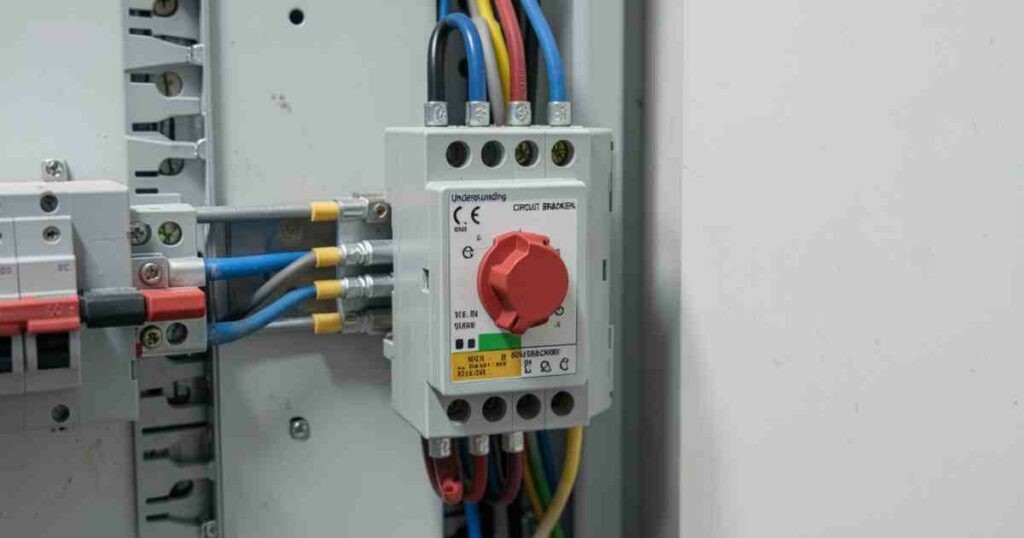
What Is a Circuit Breaker
A circuit breaker is a switch that automatically interrupts the electric circuit to protect electrical devices from damage caused by overcurrent or short circuit.
Overcurrent can result from an overload or a short circuit. When a circuit breaker trips, it means it has done its job.
It has shut off the flow of electricity to prevent a dangerous situation. You can usually find circuit breakers in a metal box, often called a breaker box or electrical panel, located in a basement, garage, or utility closet.
Each breaker in the panel controls electricity to a different part of your house. For example, one breaker might power your kitchen outlets, while another powers your bedroom lights. When a breaker trips,
it typically moves to a middle or “off” position, or sometimes stays in the “on” position but the switch feels loose.
It’s important to know which breaker controls which area to troubleshoot effectively.
Why Do Circuit Breakers Trip
Circuit breakers trip for a few main reasons. The most common is an overload. This happens when you have too many appliances or devices plugged into one circuit, drawing more electricity than it's designed to handle.
For example, running a toaster, microwave, and coffee maker all at once on the same circuit can easily cause an overload.
Another reason is a short circuit. This is a more serious issue where electricity takes an unintended path, often due to damaged wiring or a faulty appliance.
A short circuit causes a sudden, massive surge of electricity that trips the breaker instantly to prevent damage.
Sometimes, a faulty appliance itself can cause a breaker to trip, even if it’s the only thing on that circuit.
The average home experiences an average of 2 to 3 circuit breaker trips per year. Many of these are due to simple overloads that can be easily resolved. However, frequent tripping can indicate a more significant problem.
Common Causes of Overloads
- Using too many high-power appliances on one circuit simultaneously.
- Faulty or old wiring that cannot handle the expected electrical load.
- Overuse of extension cords, which can sometimes cause resistance and heat.
When an overload occurs, the breaker detects the excess current and interrupts the flow to prevent the wires from overheating.
Imagine a pipe with too much water trying to rush through it; the pipe could burst. A circuit breaker prevents the “pipe” (your wires) from bursting.
Identifying a Short Circuit
- A breaker trips immediately upon plugging in an appliance.
- You notice a burning smell coming from an outlet or switch.
- Sparks are visible when an appliance is turned on.
Short circuits are dangerous because they can generate a lot of heat very quickly. The circuit breaker is your primary defense against the potential fire hazard that a short circuit presents. If you suspect a short circuit, it is crucial to address it promptly.
How to Test and Reset a Tripped Circuit Breaker Safely
Now let’s get to the main event: how to safely test and reset that pesky tripped breaker. It’s a straightforward process, but safety is the absolute top priority. We’ll guide you through each step so you can get your power back on with confidence.
This knowledge is incredibly useful for any homeowner.
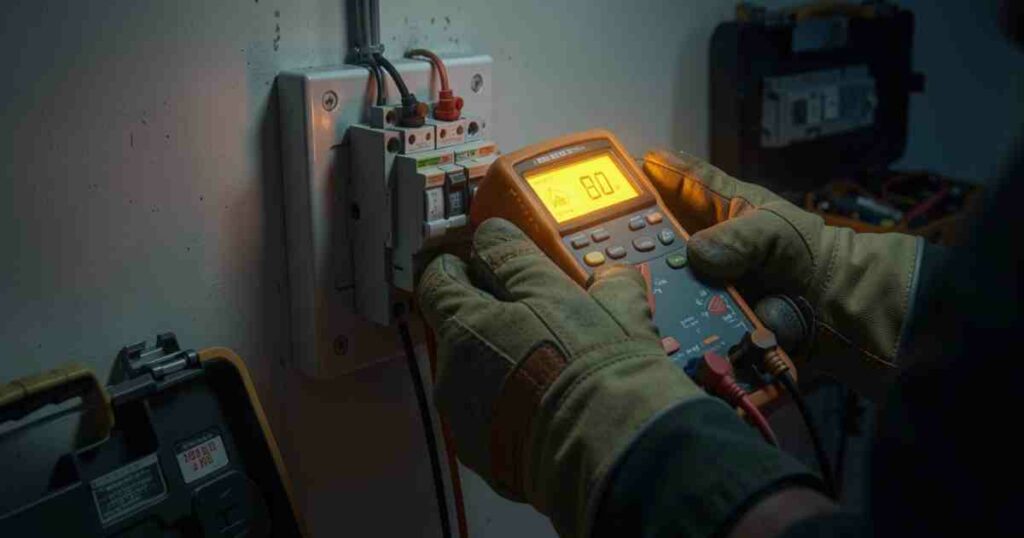
Step-by-Step Guide to Resetting a Breaker
First, you need to locate your home’s electrical panel, often called the breaker box. This is usually a metal cabinet found in a basement, garage, or a closet. Once you find it, open the door.
Inside, you’ll see rows of switches, each labeled to indicate what part of your house it controls.
Look for a switch that is not in the “on” position. Tripped breakers often sit in the middle position, between “on” and “off,” or sometimes they look like they’re in the “on” position but feel loose. If you can’t tell visually, gently try moving each switch.
The tripped breaker will feel different; it might be slightly out or stuck.
To reset the breaker, you need to push it firmly to the “off” position first. You will feel it click. This is a critical step.
After pushing it to “off,” then push it firmly back to the “on” position. You should hear another click, and power should be restored to that circuit.
- Locate your electrical panel (breaker box).
- Open the panel door.
- Identify the tripped breaker switch (often in a middle or loose position).
- Firmly push the switch all the way to the “off” position.
- Firmly push the switch all the way to the “on” position.
- Test if power has been restored to the affected area.
Safety Precautions to Remember
Safety is paramount when dealing with electricity. Before you even touch the breaker box, make sure your hands are completely dry. Water conducts electricity, so it’s essential to avoid any contact with moisture.
If you see any signs of damage to the breaker box itself, such as scorch marks, smoke, or frayed wires, do not attempt to reset the breaker.
In such cases, it’s best to immediately call a qualified electrician. Your safety is more important than restoring power quickly.
Also, if the breaker trips again immediately after you reset it, this indicates a persistent problem. Do not keep trying to reset it. This is your signal to call a professional.
Repeatedly resetting a faulty breaker can cause further damage and is a fire hazard.
When to Call an Electrician
- The breaker trips immediately after being reset.
- You notice burning smells or see sparks coming from the breaker box.
- The breaker box appears damaged or has scorch marks.
- You are uncomfortable or unsure about any step in the process.
An electrician has the tools and expertise to diagnose and fix the root cause of recurring breaker trips.
This could be anything from faulty wiring to an overloaded circuit that needs to be better managed. They can ensure your home’s electrical system is safe and up to code.
Troubleshooting Recurring Breaker Trips
Sometimes, a circuit breaker trips and then trips again as soon as you reset it. This signals that the problem isn’t a one-off event, but something more persistent.
Figuring out why this keeps happening is key to ensuring your home’s electrical safety and preventing future power outages.
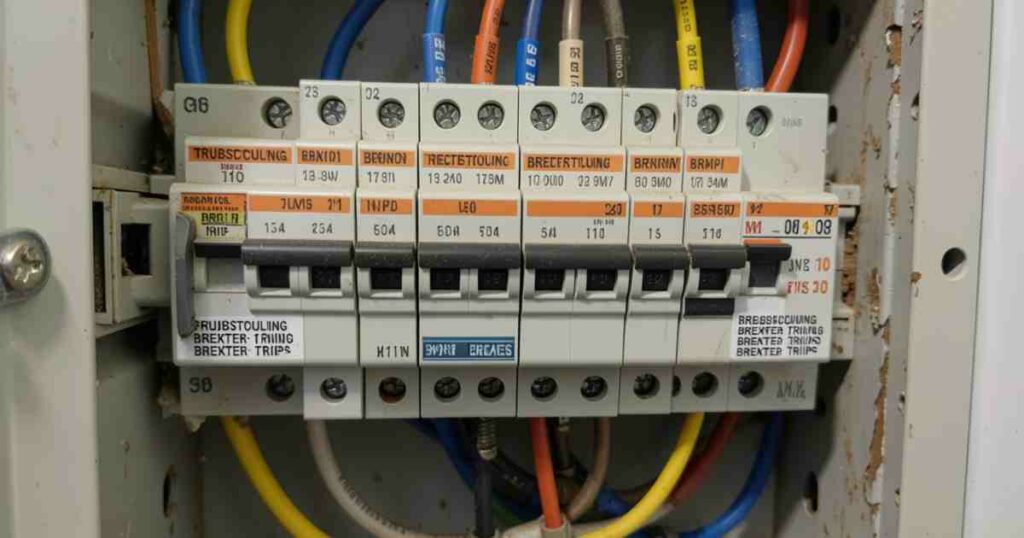
Identifying the Culprit Appliance or Device
The first step in troubleshooting recurring trips is to identify which appliance or device is causing the overload or short circuit.
If you know which circuit breaker tripped, go to that specific circuit. Unplug everything connected to that circuit—all outlets, lamps, and appliances.
Once everything is unplugged, try resetting the breaker. If it stays on, you’ve confirmed that one of the items you unplugged was the cause. Now, plug your devices back in, one at a time, waiting a few moments between each one.
When the breaker trips again, the last device you plugged in is the culprit.
Understanding Circuit Load Management
Sometimes, a circuit trips simply because it’s trying to handle more than it’s designed to. This is called circuit load.
Each circuit in your home has a maximum wattage it can safely support, usually indicated by the amperage of the breaker (e.g., 15 amps or 20 amps).
To manage circuit load better, try to distribute your power usage. Don’t run multiple high-energy appliances on the same circuit at the same time.
If you frequently trip a particular breaker, consider if you can move some devices to outlets controlled by a different breaker.
Sometimes, a simple rearrangement of appliance usage can solve the problem.
When to Consider a Dedicated Circuit
- If specific appliances that draw a lot of power (like a refrigerator, a large freezer, or a powerful air conditioner) keep tripping their shared breaker.
- If you’re adding a new, high-demand appliance to your home, such as a new electric stove or a hot tub.
- If your electrical panel is old and struggling to handle the modern electrical demands of your household.
A dedicated circuit means that one specific appliance has its own breaker and wiring. This prevents it from competing for power with other devices, significantly reducing the chance of tripping. Installing a dedicated circuit is a job for a qualified electrician.
Frequently Asked Questions Of How to Test and Reset a Tripped Circuit Breaker Safely
Question: What should I do if my circuit breaker keeps tripping?
Answer: If your circuit breaker trips immediately after you reset it, or if it trips repeatedly, do not keep resetting it. This indicates a more serious problem. You should unplug all devices on that circuit and then call a qualified electrician to diagnose and fix the issue.
Question: Can I reset a circuit breaker that looks fine but the power is still out?
Answer: If the breaker doesn’t appear to be in the middle or off position, but the power is still out for that circuit, it might still be tripped internally. Try firmly pushing it to the off position first, then back to the on position. If that doesn’t work, there might be another issue, and it’s best to consult an electrician.
Question: How do I know which circuit breaker controls which room?
Answer: Most electrical panels have labels next to each breaker indicating which area or appliance it controls (e.g., “Kitchen Outlets,” “Living Room Lights,” “Bedroom 1”). If your panel isn’t labeled, you can test them by turning them off one by one and seeing which lights or outlets lose power.
Question: Is it safe to touch a circuit breaker?
Answer: Yes, it is generally safe to touch a circuit breaker switch if your hands are dry and there are no visible signs of damage to the electrical panel. Always ensure the area is dry and you are not standing in water.
Question: How often should I test my circuit breakers?
Answer: While not strictly required, it’s a good practice to test your circuit breakers annually. This helps ensure they are functioning correctly and are not stuck. You can do this by flipping each breaker to the off position and then back to the on position.
Conclusion
You now have the knowledge to safely test and reset a tripped circuit breaker. By following these simple steps, you can restore power to your home and understand the common reasons why breakers trip. Remember, safety first.
If a breaker keeps tripping or you see any damage, always call an electrician.

![9 Daily Uses Of Electric Kettles Beyond Tea[1]](https://creativehouseblog.com/wp-content/uploads/2026/04/9_Daily_Uses_Of_Electric_Kettles_Beyond_Tea1-768x448.jpg)
![How to Inspect Your Roof Safely From Ground[1]](https://creativehouseblog.com/wp-content/uploads/2026/05/How_to_Inspect_Your_Roof_Safely_From_Ground1-768x403.jpg)
![10 Creative Foods You Can Make In A Sandwich Maker[1]](https://creativehouseblog.com/wp-content/uploads/2026/04/10_Creative_Foods_You_Can_Make_In_A_Sandwich_Maker1-768x448.jpg)
![7 Signs Your Home Wiring Is Outdated and Unsafe[1]](https://creativehouseblog.com/wp-content/uploads/2026/05/7_Signs_Your_Home_Wiring_Is_Outdated_and_Unsafe1-768x403.jpg)
![How to Use a Pressure Cooker Safely[1]](https://creativehouseblog.com/wp-content/uploads/2026/03/How_to_Use_a_Pressure_Cooker_Safely1-768x448.jpg)
![How Often Should You Clean Your Gutters and Why[1]](https://creativehouseblog.com/wp-content/uploads/2026/05/How_Often_Should_You_Clean_Your_Gutters_and_Why1-768x403.jpg)