
To clean gutters safely without hiring anyone, follow a methodical process that prioritizes personal safety above all else. Begin by securing a stable ladder and wearing protective gloves and goggles to handle debris and prevent injury. Clear leaves and sediment from the gutters by hand or with a scoop, then flush the downspouts with a hose to ensure unobstructed water flow.
Cleaning your gutters can seem like a big job, especially if you’ve never done it before. You might worry about falling from a ladder or not knowing what tools to use.
Many people find it hard to know where to start when it comes to keeping their homes in good shape without paying someone else.
This guide is here to make things simple. We’ll walk you through every step so you can learn How to Clean Gutters Safely Without Hiring Anyone with confidence. Get ready for easy-to-follow instructions that will help you get this important chore done right.
Key Takeaways
- You will learn the essential safety precautions to take before starting.
- Discover the tools and materials needed for effective gutter cleaning.
- Understand the step-by-step process for removing debris from your gutters.
- Learn how to clear downspouts and check for proper water flow.
- Gain tips on how to maintain your gutters for better long-term performance.
![How to Clean Gutters Safely Without Hiring Anyone[1]](https://creativehouseblog.com/wp-content/uploads/2026/05/How_to_Clean_Gutters_Safely_Without_Hiring_Anyone1.jpg)
How to Clean Gutters Safely Without Hiring Anyone
Keeping your home’s gutters clear is a vital part of maintenance that prevents water damage.
When gutters are clogged with leaves, dirt, and other debris, water can overflow. This can lead to problems like damaged foundations, flooded basements, and erosion around your house.
For many homeowners, the idea of climbing a ladder and working at heights can be a bit scary, making them hesitate to tackle this job themselves.
This section focuses on preparing you for the task by highlighting the most critical safety measures to keep in mind. Safety is the top priority when you are cleaning gutters on your own.

Prioritizing Safety Before You Start
Before you even think about touching a ladder or scooping out leaves, it is important to set up a safe workspace.
This means checking the weather to make sure it’s not windy, rainy, or icy. A stable ladder is absolutely essential.
Always inspect your ladder for any damage before use. Make sure it’s on level ground and locked open securely. It’s a good idea to have someone with you, even if they just hold the ladder.
They can also hand you tools or call for help if needed. Wearing the right gear makes a big difference too.
- Wear appropriate safety gear.
This includes sturdy, non-slip shoes that give you good grip on the ladder and on the ground. Long sleeves and pants will protect your skin from scratches and any irritants in the debris. Safety glasses are a must to protect your eyes from falling dirt and leaves.Thick work gloves will prevent cuts and keep your hands clean and comfortable as you handle wet, possibly sharp, debris.
- Use a stable and secure ladder.
The type of ladder you use matters. An extension ladder is often best for reaching higher gutters, but it needs to be properly extended and angled. A step ladder can work for shorter sections if it’s sturdy and has a broad base.Never stand on the top rungs of any ladder. Make sure all the ladder’s feet are firmly planted on solid ground. If the ground is soft, you might need to place a sturdy board under the ladder feet to prevent sinking.
- Have a spotter for assistance.
A spotter is someone who stays on the ground while you are on the ladder. Their main job is to watch the ladder and ensure it stays stable. They can also call for help if you have a problem.Having a second person also makes it easier to pass tools up and down, reducing the need for you to lean too far or carry heavy items while balancing. This person can also alert you to any potential hazards you might not see from your position.
Gathering Your Tools and Supplies
Having the right tools makes the job much easier and safer. You don't need fancy equipment. Most of what you need can be found around your home or purchased at a local hardware store.
Having everything ready before you start means fewer trips up and down the ladder and less time spent searching for a missing item. This preparation is key to an efficient and safe gutter cleaning session.
Essential Tools for Gutter Cleaning
- Sturdy ladder.
As mentioned, a reliable ladder is your most important tool. Choose one that is tall enough to reach your gutters comfortably without overextending. An aluminum or fiberglass extension ladder is often recommended for its durability and safety features.Ensure it is rated for your weight plus any tools you might carry.
- Work gloves.
Protect your hands from sharp debris, rough edges, and potential irritants. Look for heavy-duty gloves that offer good grip
. - Safety glasses.
These are vital for protecting your eyes from falling debris. Choose a pair that fits well and offers a clear view.
- Gutter scoop or small trowel.
These tools are designed to fit into gutters and easily scoop out leaves and muck. Some have long handles for a bit more reach, while others are small enough to hold comfortably.
- Bucket or sturdy trash bag.
You’ll need something to put the debris in as you remove it. A 5-gallon bucket is ideal, as it can be hung from the ladder with a hook, keeping it within easy reach. A heavy-duty trash bag can also work.
- Garden hose with spray nozzle.
A hose is useful for rinsing out the gutters and downspouts after you have removed the bulk of the debris.
Optional but Helpful Items
- Tarp or plastic sheeting.
Lay this on the ground below your work area to catch any falling debris. This makes cleanup much faster and protects your landscaping.
- Leaf blower (used carefully).
For dry leaves, a leaf blower can sometimes help clear out larger debris before you scoop. However, be cautious not to blow debris onto yourself or into windows.
- Wire brush or stiff broom.
These can be used to scrub away stubborn grime or moss from the inside of the gutters.
The Step-by-Step Process of Cleaning Gutters
Once you have safety measures in place and your tools ready, you can begin the actual cleaning.
This process involves systematically removing debris from your gutters and ensuring water can flow freely.
We will break this down into easy steps that cover clearing the gutters and then checking the downspouts.
Following these steps carefully will help you achieve a thorough clean.
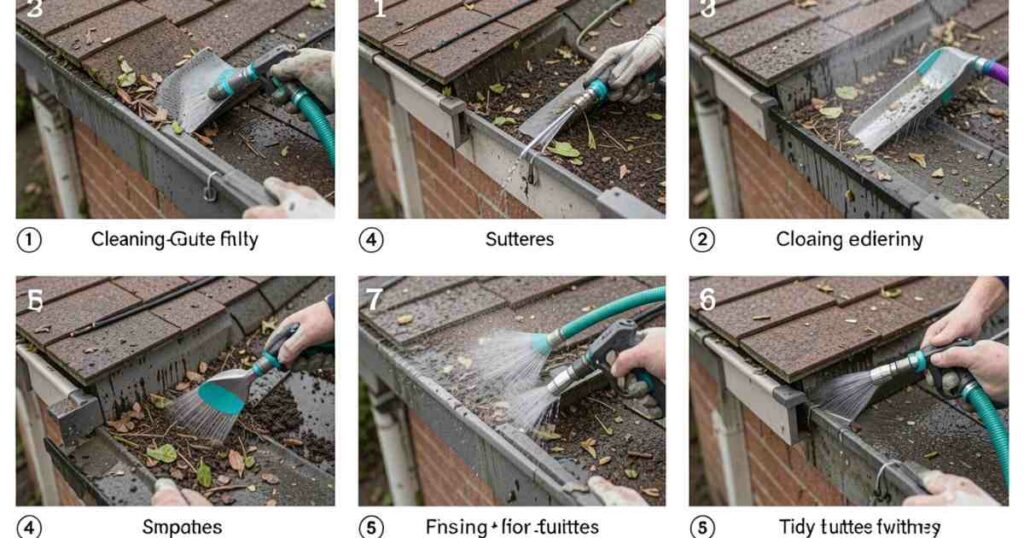
Clearing Debris from the Gutters
This is the core of the job. You’ll work your way around your house, section by section. The goal is to remove all the leaves, twigs, mud, and any other material that has accumulated.
It’s important to do this carefully to avoid damaging the gutters or your roof.
- Position your ladder.
Place the ladder on firm, level ground. Ensure it’s at a safe angle, typically a 4:1 ratio (for every four feet of height, the base should be one foot away from the wall).
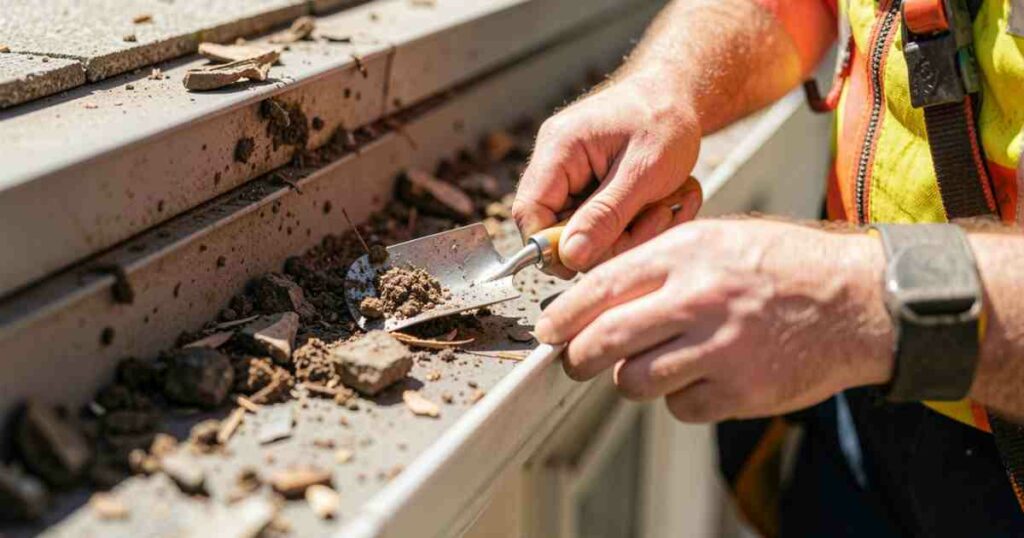
- Start scooping debris.
Use your gutter scoop or trowel to begin removing the loose debris. Work in small sections, starting near a downspout if possible. Place the collected debris into your bucket or trash bag.
- Move the ladder as needed.
After cleaning a section of gutter, carefully reposition the ladder to the next area. Avoid overreaching. It’s better to move the ladder more often for safety.
- Rinse the gutters.
Once most of the debris is removed, use your garden hose to spray down the gutters. This will wash away any remaining small particles and help you see where water is flowing.
Checking and Clearing Downspouts
Gutters are only effective if the water can drain away properly. Downspouts are the vertical pipes that carry water from the gutters to the ground. Clogs in downspouts are common and can cause water to back up into your gutters.
- Observe water flow from the hose.
As you rinse the gutters, watch to see if water is flowing freely out of the downspout openings. If the water backs up or overflows near the downspout, there is likely a clog.
- Use the hose to flush the downspout.
Try directing the water hose directly into the top of the downspout. Sometimes, the water pressure is enough to push a minor clog through.
- Use a plumber’s snake or wire.
If the hose doesn’t work, you may need to use a plumber’s snake or a stiff wire to dislodge the clog. Gently feed the snake or wire into the downspout from the top or bottom. Twist and push to break up the blockage.
- Check the bottom opening.
Make sure the exit of the downspout at ground level is clear. Debris can accumulate here and block the flow.
How to Clean Gutters Safely Without Hiring Anyone Maintaining Them
Once your gutters are clean, you want them to stay that way for as long as possible. Regular maintenance and a few preventative measures can significantly extend the time between cleanings and prevent future problems.
This section provides tips and tricks to keep your gutters in good working order, reducing the need for frequent deep cleans and avoiding costly repairs.
Preventative Measures and Tips
Taking a few simple steps can make a big difference in how your gutters perform and how often you need to clean them.
These methods focus on reducing the amount of debris that enters your gutters in the first place and ensuring that any debris that does get in can flow through easily.
Frequency of Gutter Cleaning
How often you need to clean your gutters depends on your surroundings. If you have many large trees near your house, you might need to clean them more often than someone with few trees.
- Two times a year is typical.
For most homes, cleaning your gutters at least twice a year is recommended. The best times are typically in late spring after trees have finished shedding their blossoms and seed pods, and in late fall after the leaves have dropped from deciduous trees. This ensures they are clear before the heavy rains of spring and the potential for ice dams in winter.
- More frequent cleaning may be needed.
If you live in an area with a lot of pine trees, you might find that pine needles accumulate quickly and require more frequent attention, perhaps three or four times a year. Also, if you notice water backing up or overflowing after even light rain, it’s a clear sign that your gutters need cleaning sooner rather than later. Pay attention to your home’s signals.
Common Gutter Problems and Solutions
Even with regular cleaning, gutters can develop issues. Understanding these common problems and their solutions can help you maintain your gutter system effectively and prevent minor issues from becoming major repairs. This knowledge empowers you to keep your home protected from water damage.
Dealing with Sagging Gutters
Gutters can start to sag over time due to the weight of debris, water, or ice, or from loose fasteners. Sagging gutters don’t drain properly, leading to standing water and potential overflow.
- Tighten fasteners.
First, check the hangers and brackets that attach the gutters to your home. They may have loosened over time. Use a screwdriver or drill to tighten any loose screws.Ensure the hangers are spaced appropriately to support the gutter’s weight.
- Add or adjust hangers.
If the sag is significant, you may need to add extra hangers. Spacing them about every 3 feet is usually recommended. For minor sags, adjusting the angle of existing hangers might be enough.
- Consider professional assessment.
If the sagging is severe or the fascia board (the board to which the gutters are attached) is damaged, it might be time to consult a professional. They can assess the structural integrity and make necessary repairs or replacements.
Addressing Leaks and Drips
Leaks can occur at seams where gutter sections join or at holes created by rust or damage. A small drip can quickly turn into a stream if not addressed.
- Seal seams.
For leaks at seams, use a high-quality gutter sealant. Clean the area thoroughly, ensuring it’s dry. Apply the sealant generously along the inside of the seam and smooth it out.Allow it to cure completely according to the product’s instructions.
- Repair small holes.
Small holes can often be repaired with gutter sealant and a piece of metal flashing or waterproof tape designed for gutters. For larger holes or significant rust damage, you may need to replace the damaged section of the gutter.
- Check end caps.
End caps are another common spot for leaks. Ensure they are properly sealed to the gutter body. Reapply sealant if necessary.
Preventing Ice Dams
In colder climates, ice dams can form in gutters when snow melts and then refreezes. This can cause water to back up under your roof shingles, leading to serious water damage.
- Ensure proper insulation and ventilation.
Ice dams are often caused by heat escaping from your home into the attic, which then warms the roof and melts snow. Ensuring your attic is well-insulated and properly ventilated can help keep the roof surface cold and prevent melting.
- Keep gutters clear.
As mentioned, clear gutters allow meltwater to drain away. This is crucial for preventing ice buildup.
- Consider heat cables.
For persistent ice dam problems, heated cables installed along the roofline and in the gutters can help melt ice and allow water to flow freely. While this is an added cost, it can prevent much more expensive water damage repairs.
Frequently Asked Questions Of How to Clean Gutters Safely Without Hiring Anyone
Question: How often should I clean my gutters
Answer: For most homes, cleaning gutters twice a year is recommended, typically in late spring and late fall. If you have many trees nearby, you might need to clean them more often.
Question: What safety gear is essential for cleaning gutters
Answer: Essential safety gear includes sturdy, non-slip shoes, long sleeves and pants, safety glasses, and thick work gloves to protect yourself.
Question: Can I use a leaf blower to clean my gutters
Answer: A leaf blower can help with dry leaves, but it should be used carefully. It is often best used before manual scooping and not as the sole cleaning method.
Question: What if my downspout is clogged
Answer: Try flushing it with a hose. If that doesn’t work, use a plumber’s snake or a stiff wire to break up the clog.
Question: How can I prevent debris from getting into my gutters
Answer: Installing gutter guards and trimming overhanging tree branches are effective ways to reduce the amount of debris entering your gutters.
Summary
Learning how to clean gutters safely without hiring anyone is a practical skill that saves money and protects your home.
By focusing on safety, gathering the right tools, and following a clear step-by-step process, you can effectively remove debris.
Regular maintenance and preventative measures like gutter guards and trimming branches will keep your gutters working well for years to come.
You can do this job yourself and keep your home in great shape.

![10 Ways To Automate Your Kitchen[1]](https://creativehouseblog.com/wp-content/uploads/2026/04/10_Ways_To_Automate_Your_Kitchen1-768x448.jpg)
![10 Tips To Get Perfect Crispy Pizza At Home[1]](https://creativehouseblog.com/wp-content/uploads/2026/04/10_Tips_To_Get_Perfect_Crispy_Pizza_At_Home1-768x448.jpg)
![How to Use a Food Processor Safely[1]](https://creativehouseblog.com/wp-content/uploads/2026/03/How_to_Use_a_Food_Processor_Safely1-768x448.jpg)
![10 Healthy Meals You Can Make Using Steam Cooking[1]](https://creativehouseblog.com/wp-content/uploads/2026/04/10_Healthy_Meals_You_Can_Make_Using_Steam_Cooking1-768x448.jpg)
![How Air Fryer Heating Elements Work[1]](https://creativehouseblog.com/wp-content/uploads/2026/03/How_Air_Fryer_Heating_Elements_Work1-768x448.jpg)
![10 Easy Meals You Can Make With Sous Vide[1]](https://creativehouseblog.com/wp-content/uploads/2026/04/10_Easy_Meals_You_Can_Make_With_Sous_Vide1-768x448.jpg)