
Performing autumn gutter cleaning prevents water damage by removing accumulated leaves and debris that cause blockages. Key steps include manually removing debris, clearing downspout openings, and flushing gutters to ensure proper water flow. Inspecting gutters for damage or leaks during this process helps maintain the system's integrity and protects your home's foundation and exterior throughout the wet season.
Cleaning your gutters in the fall might seem like a big job, especially if you’re new to it. Leaves, twigs, and other debris can quickly build up, causing a mess and potential problems for your home. But don’t worry, it’s much simpler than you think!
This guide will walk you through everything you need to know for a smooth and effective Autumn Gutter Cleaning Guide to Prevent Blockage and Damage.
We’ll show you the easy steps to keep your gutters clear and your home safe all season long.
Key Takeaways
- You will learn why fall is the best time to clean your gutters.
- This guide will show you the tools you need for gutter cleaning.
- We will explain how to safely remove debris from your gutters.
- You will discover how to check your gutters for damage and leaks.
- This post will cover how to flush out your gutters for clear water flow.
- Learn about protecting your home from water damage by keeping gutters clean.
![Autumn Gutter Cleaning Guide Prevents Damage[1]](https://creativehouseblog.com/wp-content/uploads/2026/05/Autumn_Gutter_Cleaning_Guide_Prevents_Damage1.jpg)
Why Autumn Gutter Cleaning Is Important
Prepare for Autumn Gutter Cleaning
Getting ready for your gutter cleaning task is key to making the job go smoothly and safely. Before you even think about climbing a ladder, you need to gather the right tools.
Having everything you need within reach will save you time and prevent unnecessary trips up and down.
It also helps ensure you have the proper safety gear to protect yourself from falls or debris.

Essential Tools for Gutter Cleaning
You’ll want a sturdy ladder, one that’s tall enough to comfortably reach your gutters without overextending. Make sure it’s placed on firm, level ground. A good pair of work gloves is a must.
They protect your hands from sharp objects, rough surfaces, and gross gunk. Safety glasses are also vital. They keep leaves, dirt, and whatever else is lurking in your gutters out of your eyes.
A trowel or a specialized gutter scoop is perfect for scooping out debris. Some people prefer a small shovel.
A bucket or a tarp spread out below the work area can catch the debris you remove, making cleanup easier.
A garden hose with a spray nozzle will be useful for flushing the gutters later. Don’t forget a way to dispose of the collected leaves and muck.
Safety First When Cleaning Gutters
Safety should always be your top priority when tackling this task. Never try to clean your gutters alone if you’re not comfortable. If you have any doubts about your ability to do this safely, it’s best to hire a professional.
Always make sure your ladder is stable and secure before climbing. Avoid leaning too far to one side; move the ladder instead.
Wear non-slip shoes to ensure good footing. Be aware of your surroundings, looking out for power lines or other hazards.
If you’re working at a significant height, consider using a safety harness, though for most residential gutters, a well-placed ladder is sufficient.
Taking these simple precautions will help prevent accidents and ensure a successful cleaning session.
Performing Your Autumn Gutter Cleaning Guide to Prevent Blockage and Damage
Once you have your tools ready and safety measures in place, it’s time to get to work on the actual cleaning. This part involves physically removing the gunk that has accumulated over the months.
Doing this thoroughly will ensure water can flow freely away from your home’s foundation, which is the main goal of any Autumn Gutter Cleaning Guide to Prevent Blockage and Damage.
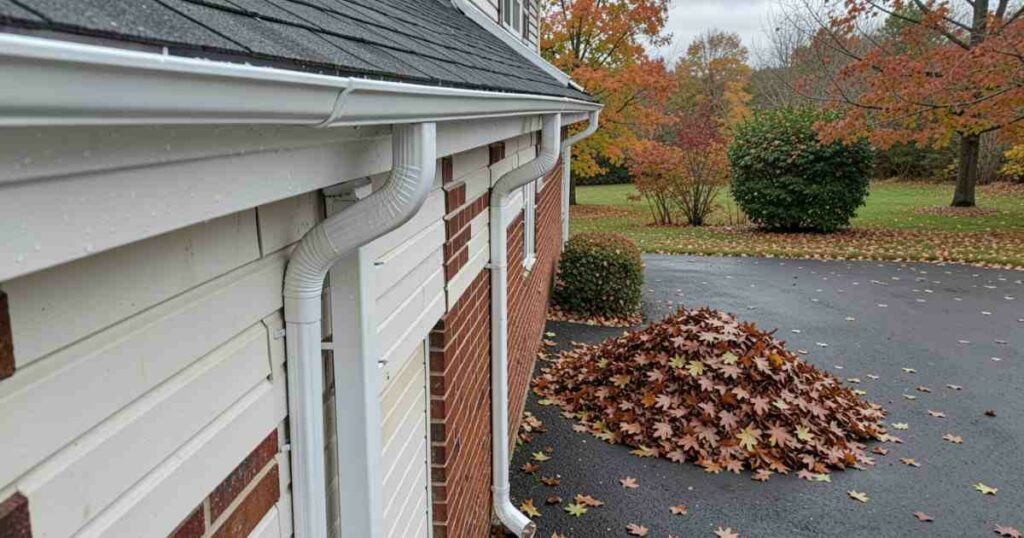
Removing Debris from Gutters
Start at one end of the gutter and begin scooping out the leaves, twigs, mud, and any other debris.
Place the removed material into your bucket or onto the tarp below. Work in sections, moving your ladder as needed.
Be thorough and try to get as much of the gunk out as possible. Pay attention to downspout openings, as these are common areas where clogs start.
If you find larger obstructions, like a bird’s nest or a significant pile of wet leaves, remove them carefully.
Sometimes, the debris can become very compacted, especially after rain. You might need to break it up a bit with your scoop or trowel before removing it.
Don’t rush this process; taking your time will lead to a cleaner gutter.
Clearing Downspout Openings
The openings to your downspouts are critical points. Debris that makes it this far can easily cause a blockage that stops water from draining altogether. After removing the bulk of the material from the main gutter trough, focus your attention here.
Use your scoop or trowel to clear any leaves or muck that are packed into the downspout entrance.
Sometimes, debris can get lodged further down the downspout. If you suspect a clog, you can try using a hose to blast water into the opening. If the water doesn’t flow freely, the clog is likely further down.
You may need to use a plumber’s snake or a stiff wire to dislodge it. Ensure the water can flow freely through the downspout and away from your house.
Flushing the Gutters
After you’ve removed all the solid debris, it’s time to flush out the gutters with water. Connect your garden hose and turn on the water. Start at the end furthest from the downspout.
Let the water flow and observe how it moves. You should see a steady stream of water going down the downspout.
Watch for any areas where water is pooling or not draining properly. These spots might indicate low spots in the gutter or a remaining minor clog. If you see leaks from seams or holes, note these for repair.
Flushing helps to wash away any remaining fine silt or dirt and confirms that the gutters are clear and functional.
Inspecting Your Gutters for Damage
Cleaning is also an excellent time to check your gutters for any signs of wear and tear. Water damage is a serious issue, and keeping your gutters in good shape is the first line of defense.
While you’re up there, take a close look at the material of your gutters, their attachments, and how they’re sloped.
This inspection is a crucial part of a comprehensive Autumn Gutter Cleaning Guide to Prevent Blockage and Damage.
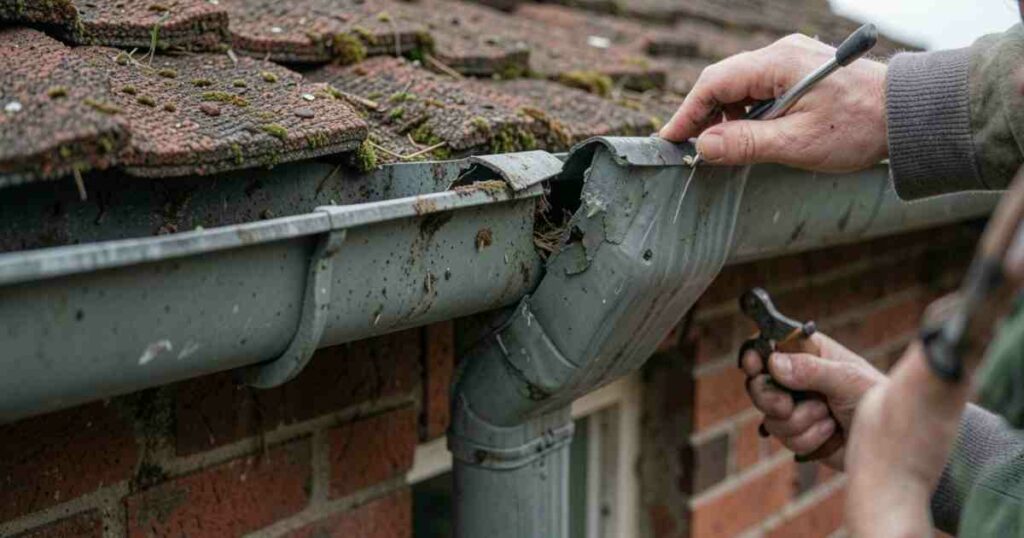
Checking Gutter Material and Condition
Most gutters are made from aluminum, steel, vinyl, or sometimes copper. Examine them for any signs of rust, particularly on metal gutters. Look for dents, cracks, or warping, especially in vinyl gutters.
Small holes or splits can lead to water leaks that damage your siding or fascia.
Loose seams are also a common problem. If you see any separation between sections of the gutter, this is a prime spot for leaks. Check the end caps and the joints where downspouts attach.
Any damage to the gutter material itself should be addressed promptly. Ignoring these issues can lead to bigger problems down the road.
Assessing Gutter Slope and Drainage
Gutters need to be sloped slightly towards the downspouts to allow water to drain effectively.
If you notice water pooling in certain areas even after flushing, the slope might be incorrect. The ideal slope is usually about 1/4 inch per 10 feet of gutter.
You can visually check the slope by looking along the length of the gutter. If it appears level or slopes away from the downspout, it needs adjustment.
Sometimes, sagging gutters indicate loose fasteners or a problem with the fascia board they are attached to.
Proper slope is essential for preventing standing water, which can freeze in winter and cause damage.
Looking for Loose Fasteners and Supports
Gutters are held in place by fasteners and hangers. Over time, these can loosen due to weather, expansion and contraction, or the weight of debris. Check all the brackets and screws that hold the gutters to your house.
If any feel loose, tighten them.
If the wood or material behind the fasteners is soft or rotten, this indicates a more significant problem that needs immediate attention.
Damaged fascia boards can compromise the entire gutter system. Ensure all supports are secure to prevent the gutters from pulling away from the house.
This is particularly important before winter weather sets in.
Preventing Future Blockages and Damage
Once your gutters are clean and inspected, you can take steps to make future cleanings easier and prevent problems before they start.
Thinking ahead can save you a lot of work and protect your home. This final part of our Autumn Gutter Cleaning Guide to Prevent Blockage and Damage offers some great tips.
Gutter Guards and Screens
Gutter guards, also known as gutter screens or covers, are installed over your gutters to block larger debris like leaves and twigs from entering.
They come in various styles, from simple mesh screens to solid covers with specialized openings.
While they are not a substitute for occasional cleaning (as small debris and dirt can still accumulate), they significantly reduce the amount of material that gets into your gutters.
Using gutter guards can make your annual cleaning much quicker and less labor-intensive. They are a popular option for homeowners who want to minimize maintenance.
The effectiveness can vary based on the type of debris in your area and the specific product installed.
Regularly check them to ensure they are not clogged themselves and that water is flowing freely underneath.
Regular Maintenance Schedule
Establishing a regular maintenance schedule is perhaps the most effective way to prevent gutter issues.
While autumn is a crucial time for a thorough cleaning, don't forget about other seasons. A quick check and clearing in late spring can remove any debris that accumulated during the winter and early spring rains.
Think of it this way: small issues caught early are easy to fix. Letting debris build up leads to bigger problems like clogs, overflows, and even structural damage to your roofline or foundation. A simple routine can save you from costly repairs.
Many homeowners find it helpful to set a calendar reminder for their gutter checks.
Understanding Water Flow Patterns
Pay attention to how water behaves around your home. After a rainstorm, where does the water tend to collect? Are your downspouts directing water far enough away from your foundation?
Properly directed water is essential for preventing basement flooding and soil erosion around your home’s base.
Consider installing downspout extensions if your downspouts empty too close to your house.
These extensions can be simple tubes or more elaborate systems that carry water several feet away.
Ensuring a clear path for water to move away from your property is a vital part of home maintenance and complements your gutter cleaning efforts.
Frequently Asked Questions Of Autumn Gutter Cleaning Guide Prevents Damage
Question: How often should I clean my gutters?
Answer: You should clean your gutters at least twice a year. The most important time is in the fall after most leaves have fallen. A second cleaning in late spring can also be beneficial.
If you have many trees near your home, you might need to clean them more often.
Question: What if my gutters are too high to reach?
Answer: Safety is very important. If your gutters are too high or you are not comfortable working on a ladder, it is best to hire a professional gutter cleaning service. They have the right equipment and experience to do the job safely.
Question: How can I tell if my gutters are clogged?
Answer: Signs of clogged gutters include water overflowing from the top, water pooling near your home’s foundation, visible debris in the gutters, and downspouts that don’t seem to be draining. You might also notice sagging gutters or water stains on your siding.
Question: Do gutter guards really work?
Answer: Gutter guards can be very helpful in reducing the amount of debris that enters your gutters, making cleaning easier. However, they do not eliminate the need for cleaning entirely, as small debris and dirt can still accumulate. They are a good investment for many homeowners.
Question: Can cleaning gutters help prevent ice dams in winter?
Answer: Yes, clean gutters help prevent ice dams. When gutters are clogged, water can back up and freeze, creating ice dams. Ensuring your gutters are clear allows water to drain away properly, reducing the risk of ice dam formation and the damage they can cause.
Wrap Up
Following this Autumn Gutter Cleaning Guide to Prevent Blockage and Damage helps protect your home.
Clear gutters allow water to flow away from your foundation. Regular cleaning and inspection are simple steps that make a big difference.
Keep your gutters clear to avoid costly repairs and keep your home safe and dry all year long.

![6 Ways To Reduce Energy Use In Cooling Appliances[1]](https://creativehouseblog.com/wp-content/uploads/2026/04/6_Ways_To_Reduce_Energy_Use_In_Cooling_Appliances1-768x448.jpg)
![Best Foods to Cook in an Air Fryer[1]](https://creativehouseblog.com/wp-content/uploads/2026/03/Best_Foods_to_Cook_in_an_Air_Fryer1-768x448.jpg)
![6 Reasons Your Sous Vide Results Are Not Perfect[1]](https://creativehouseblog.com/wp-content/uploads/2026/04/6_Reasons_Your_Sous_Vide_Results_Are_Not_Perfect1-768x448.jpg)
![8 Ways To Clean A Panini Press Without Damaging It[1]](https://creativehouseblog.com/wp-content/uploads/2026/04/8_Ways_To_Clean_A_Panini_Press_Without_Damaging_It1-768x448.jpg)
![Simple Ways to Boost Heating Efficiency Now[1]](https://creativehouseblog.com/wp-content/uploads/2026/05/Simple_Ways_to_Boost_Heating_Efficiency_Now1-768x403.jpg)
![Rice Cooker Versus Instant Pot[1]](https://creativehouseblog.com/wp-content/uploads/2026/03/Rice_Cooker_Versus_Instant_Pot1-768x448.jpg)