
Ten foods you can easily dehydrate at home include apples, bananas, berries, tomatoes, zucchini, and carrots, along with other common fruits and vegetables. The primary benefit of dehydration is creating shelf-stable, lightweight foods with concentrated flavors and a significantly extended shelf life. Successful dehydration requires basic preparation and temperature control using a standard dehydrator or oven.
Thinking about dehydrating food at home can seem a little tricky at first, especially if you’re new to it. You might wonder what’s easy to dry and what’s not. But don’t worry!
It’s simpler than you think. We’ll walk you through it step-by-step. Get ready to learn about 10 Foods You Can Dehydrate at Home and how to do it with ease.
Key Takeaways
- You can easily dehydrate many common fruits and vegetables.
- Meat and herbs are also great candidates for home dehydration.
- Proper preparation is key to successful dehydration for each food type.
- Dehydrated foods offer long shelf life and concentrated flavors.
- Using a dehydrator or oven requires basic temperature and time management.
- You will discover simple methods for dehydrating 10 popular foods.
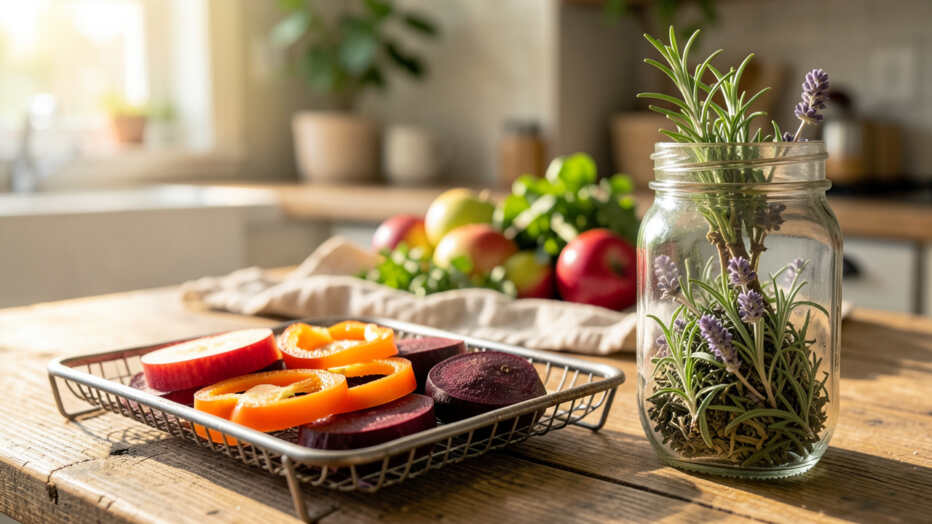
What is Food Dehydration?
Food dehydration is a way to remove water from food. This process helps food last much longer. Less water means fewer germs can grow.
It’s a great way to save food and reduce waste. You can also concentrate the natural flavors of food.
Why Dehydrate Food?
There are many good reasons to dehydrate food. It makes food last a long time without a refrigerator. Dehydrated food is lightweight and takes up less space.
This makes it perfect for snacks, camping, or emergency kits. You can also save money by buying in bulk and drying it yourself. Plus, it’s a healthy way to enjoy fruits and vegetables year-round.
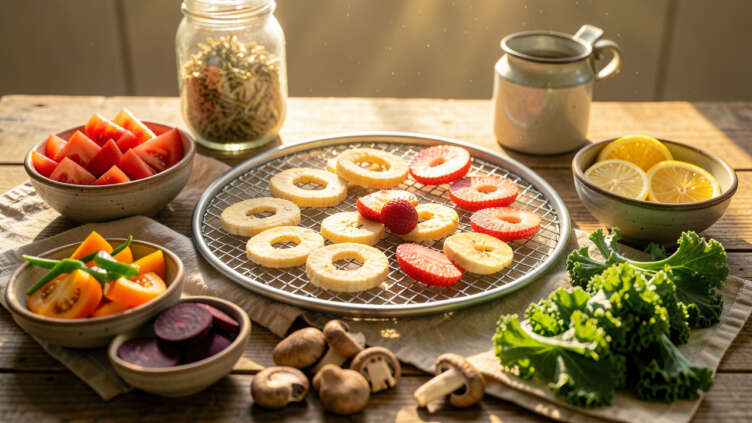
10 Foods You Can Dehydrate at Home
1. Apples
Apples are one of the easiest fruits to dehydrate. They are naturally sweet and become like chewy candy when dried. You can use any type of apple, but firmer ones work best.
Wash and core your apples. Slice them thinly, about 1/4 inch thick. You can peel them if you like, but it’s not necessary.
Arrange the apple slices on your dehydrator trays or baking sheets. Make sure they don’t overlap too much. This helps them dry evenly.
If you want, you can sprinkle them with cinnamon before drying for extra flavor. The drying time will vary, but typically takes 6-12 hours.
2. Bananas
Dehydrated bananas are a sweet and satisfying snack. They turn soft and chewy, almost like banana chips but without the frying. Peel ripe bananas and slice them about 1/4 inch thick.
You can use a ruler to keep them all the same thickness.
Place the banana slices on your dehydrator trays in a single layer. They can be a little sticky, so leaving some space between them is good. Some people like to dip their banana slices in lemon juice before drying to prevent browning and add a little tang.
Bananas usually take 8-12 hours to dehydrate.
3. Berries (Strawberries, Blueberries, Raspberries)
All kinds of berries are great for dehydration. They become intensely flavorful and concentrated. For strawberries, hull them and slice them if they are large.
Blueberries can be dried whole. Raspberries are delicate, so handle them with care.
Spread the berries on your dehydrator trays. Smaller berries like blueberries can be a bit harder to dry evenly. Some people like to lightly mash raspberries before drying.
Berries typically take 8-16 hours to dry, depending on their size and moisture content.
4. Tomatoes
Dehydrated tomatoes are a kitchen staple for many. They are perfect for adding to sauces, salads, or pasta dishes. Sun-dried tomatoes are popular, but you can easily make them at home.
Use ripe, firm tomatoes. Slice them about 1/4 to 1/2 inch thick.
You can also halve cherry tomatoes. Remove as much of the watery pulp and seeds as you can. Arrange them on dehydrator trays.
It’s a good idea to lightly salt them before drying. This helps draw out moisture and adds flavor. Tomatoes can take 10-20 hours to dry completely.
5. Zucchini and Other Squash
Believe it or not, you can dehydrate zucchini and other summer squash. They become firm and chewy, perfect for adding to soups or stews. Wash the zucchini and slice it into rounds or half-moons, about 1/4 inch thick.
You don’t need to peel them.
Arrange the slices on your dehydrator trays. Make sure they are in a single layer. Zucchini is mostly water, so it can take a while to dry.
Plan for 8-15 hours. They should be leathery but not brittle when done.
6. Carrots
Dehydrated carrots are a fantastic way to preserve this healthy root vegetable. They are great for snacking or adding to trail mixes and vegetable blends. Wash and peel the carrots.
Slice them into thin rounds or strips, about 1/8 to 1/4 inch thick.
If you slice them thinly, they will dry faster. Place the carrot slices on your dehydrator trays in a single layer. Carrots typically take 8-12 hours to dry.
They should be tough and pliable, not brittle.
7. Bell Peppers
Colorful bell peppers make a vibrant and tasty dehydrated food. They are wonderful for rehydrating and adding to stir-fries or fajitas. Wash the peppers and remove the seeds and membranes.
Slice them into strips or chunks. The size doesn’t matter too much as long as they are relatively uniform.
Spread the pepper pieces on your dehydrator trays. They don’t need much special preparation. Bell peppers will take about 6-10 hours to dehydrate.
They should be leathery and flexible when fully dried.
8. Mushrooms
Dehydrating mushrooms intensifies their earthy flavor. They are perfect for adding to sauces, soups, and gravies. Use fresh, firm mushrooms.
Clean them with a brush or a damp cloth. Slice them about 1/4 inch thick. You can also dry smaller mushrooms whole.
Arrange the mushroom slices on dehydrator trays. They can shrink quite a bit, so don’t worry if they seem spread out. Mushrooms usually take 4-8 hours to dry.
They should be crisp or leathery.
9. Herbs (Parsley, Basil, Mint)
Drying your own herbs is very rewarding. Fresh herbs can be expensive, and dried herbs are easy to store and use. You can dry most common herbs.
Wash the herbs and gently pat them dry. If they have thick stems, you can remove the leaves from the stems.
Lay the herbs in a single layer on dehydrator trays or screens. You can also tie small bunches and hang them in a warm, dry place, but a dehydrator is faster. Herbs dry quickly, often in 1-4 hours.
They should be brittle and crumble easily when done.
10. Beef Jerky
Making your own beef jerky is a popular dehydrating project. It requires a bit more preparation but is well worth it. Use lean cuts of beef, such as round steak or flank steak.
Partially freeze the meat for about 1-2 hours. This makes it much easier to slice thinly.
Slice the meat very thinly, about 1/8 to 1/4 inch thick, against the grain. You can marinate the meat slices in your favorite jerky marinade for several hours or overnight. Drain the marinade and pat the slices dry.
Arrange them on dehydrator trays, making sure they don’t touch. Beef jerky takes a long time to dehydrate, typically 6-12 hours or more, depending on thickness and dehydrator temperature. It should be dry and leathery, but still pliable.
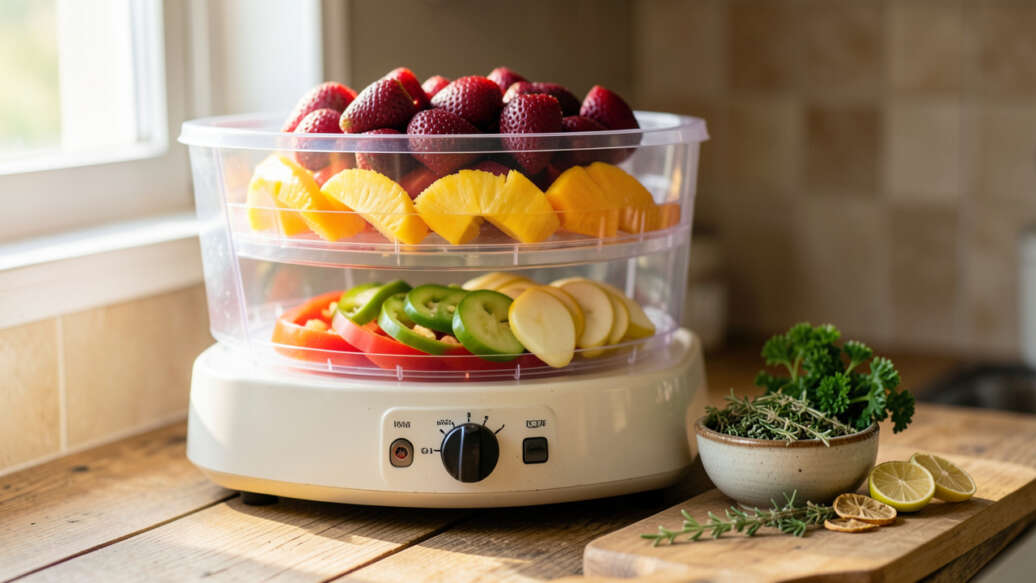
How to Dehydrate
Dehydrating food at home is straightforward. You really only need two main things: a way to remove moisture and a way to keep the temperature low and steady. The most common tools are a food dehydrator or your oven.
Using a Food Dehydrator
Food dehydrators are designed for this purpose. They have trays that allow air to circulate around the food. They also have a heat source and a fan to keep the air moving.
This consistent airflow is what helps dry the food efficiently.
Here’s a basic guide:
- Prepare your food: Wash, peel, slice, or cut as needed for the specific food.
- Arrange on trays: Place food in a single layer on dehydrator trays. Don’t let pieces overlap.
- Set the temperature: Follow the recommended temperature for the type of food you are drying. Fruits and vegetables usually do well between 125-140 degrees Fahrenheit (52-60 degrees Celsius). Meats need a slightly higher temperature for safety.
- Dry until done: This can take several hours. Rotate trays if your dehydrator doesn’t have an even heat distribution.
- Check for dryness: Food is done when it feels leathery and pliable (for fruits/veg) or dry and brittle (for herbs).
Using Your Oven
If you don’t have a dehydrator, your oven can work too. You’ll need to set it to its lowest temperature. Many ovens go down to around 150-170 degrees Fahrenheit (65-77 degrees Celsius).
You might need to prop the oven door open slightly with a wooden spoon. This allows moisture to escape and prevents the oven from getting too hot.
The process is similar to using a dehydrator:
- Prepare your food: As described above.
- Arrange on trays: Use oven-safe racks or baking sheets lined with parchment paper. Ensure air can circulate.
- Set the lowest temperature: Prop the oven door open a little.
- Dry until done: This can take longer than with a dehydrator because oven heat can be less consistent.
- Check for dryness: Monitor the food regularly.
Storing Dehydrated Foods
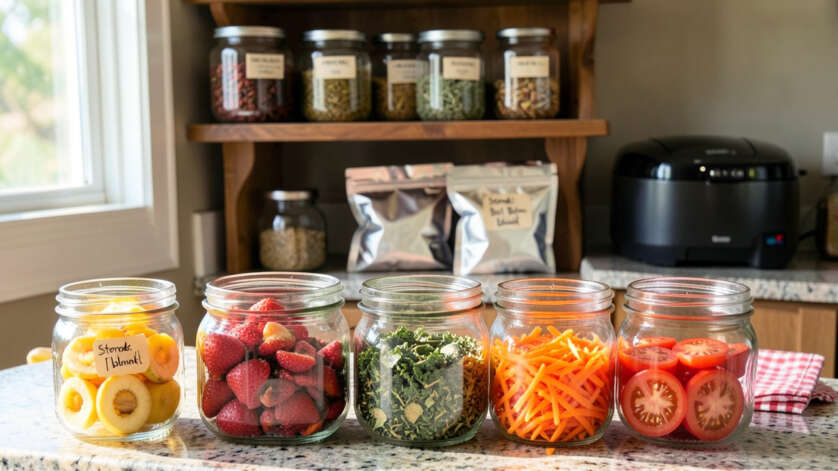
Proper storage is key to keeping your dehydrated foods fresh. Once your food is completely dry, let it cool down. Then, store it in airtight containers.
Glass jars with tight-fitting lids are excellent. You can also use vacuum-sealed bags or good quality zip-top bags.
Keep the containers in a cool, dark, and dry place. A pantry or cupboard works well. If stored correctly, most dehydrated fruits and vegetables can last for several months, even up to a year.
Herbs are best used within 6-12 months. Beef jerky can last several months when stored properly.
Frequently Asked Questions
Question: What is the best temperature to dehydrate fruits?
Answer: For most fruits, a temperature between 130-140 degrees Fahrenheit (54-60 degrees Celsius) is ideal. This temperature helps dry the fruit while preserving its nutrients and flavor.
Question: Can I dehydrate leafy greens like spinach or kale?
Answer: Yes, you can dehydrate leafy greens. Wash them, pat them dry, and spread them in a single layer on your dehydrator trays. They dry very quickly, often in just a few hours.
They will become crispy.
Question: How do I know when dehydrated food is done?
Answer: Fruits and vegetables should feel leathery and pliable, with no moisture. Herbs should be brittle and crumble easily. Meat for jerky should be dry and leathery, but still bendable without breaking.
Question: Do I need to pre-treat fruits before dehydrating?
Answer: Some fruits benefit from a pre-treatment to prevent browning and improve drying. A common method is to dip them in a solution of lemon juice and water for a few minutes. This is optional but recommended for apples, bananas, and pears.
Question: How long does it take to dehydrate vegetables?
Answer: The time varies greatly depending on the vegetable and how it’s cut. Thinly sliced carrots might take 8-12 hours, while thicker zucchini could take 10-15 hours. Peppers often dry in 6-10 hours.
Final Thoughts
You can see that dehydrating 10 Foods You Can Dehydrate at Home is quite achievable. From sweet apples and bananas to savory tomatoes and mushrooms, many foods are perfect for drying. You’ve learned about using a dehydrator or your oven, and how to store your dried goods.
With these simple methods, you can enjoy delicious, long-lasting food. Start with what you love to eat and enjoy the process of preserving your own food!

![How to Inspect Your Home for Winter Damage[1]](https://creativehouseblog.com/wp-content/uploads/2026/05/How_to_Inspect_Your_Home_for_Winter_Damage1-768x403.jpg)
![9 Easy Breakfast Ideas Using A Panini Press[1]](https://creativehouseblog.com/wp-content/uploads/2026/04/9_Easy_Breakfast_Ideas_Using_A_Panini_Press1-768x448.jpg)
![What New Homeowners Should Fix First 30 Days[1]](https://creativehouseblog.com/wp-content/uploads/2026/05/What_New_Homeowners_Should_Fix_First_30_Days1-1-768x403.jpg)
![10 Easy Recipes You Can Make In A Bread Maker[1]](https://creativehouseblog.com/wp-content/uploads/2026/04/10_Easy_Recipes_You_Can_Make_In_A_Bread_Maker1-768x448.jpg)
![8 Tips To Organise Your Mini Fridge Efficiently[1]](https://creativehouseblog.com/wp-content/uploads/2026/04/8_Tips_To_Organise_Your_Mini_Fridge_Efficiently1-768x448.jpg)
![Air Fryer Noise Levels Explained Clearly[1]](https://creativehouseblog.com/wp-content/uploads/2026/03/Air_Fryer_Noise_Levels_Explained_Clearly1-768x448.jpg)