
The seven meat grinder mistakes to avoid involve improper meat preparation, incorrect equipment use, and poor technique, which can ruin your grind. Common errors include using meat that is too warm, failing to trim tough connective tissue, and selecting the wrong grinding plate size. To achieve a professional-quality grind, you must chill your meat thoroughly, remove all sinew and silver skin, and match your plate to the desired texture, while also feeding the meat steadily and cleaning the grinder components properly after each use.
Getting started with a meat grinder can feel a bit tricky. You might worry about making a mess or not getting the grind just right. Lots of folks run into a few snags when they’re new to it.
But don’t you worry! We’re going to walk through exactly what to watch out for so you can avoid those common problems. Think of this as your simple guide to grinding meat like a pro, step by step.
We’ll cover the 7 Meat Grinder Mistakes to Avoid so your next batch turns out perfectly.
Key Takeaways
- You’ll learn how to properly prepare your meat for grinding.
- Discover why meat temperature is super important for a good grind.
- Understand the role of the right grinding plate and how to choose it.
- Find out the best way to feed meat into the grinder without jams.
- Learn how to clean your meat grinder effectively to keep it working well.
- Avoid common errors that lead to mushy or uneven ground meat.
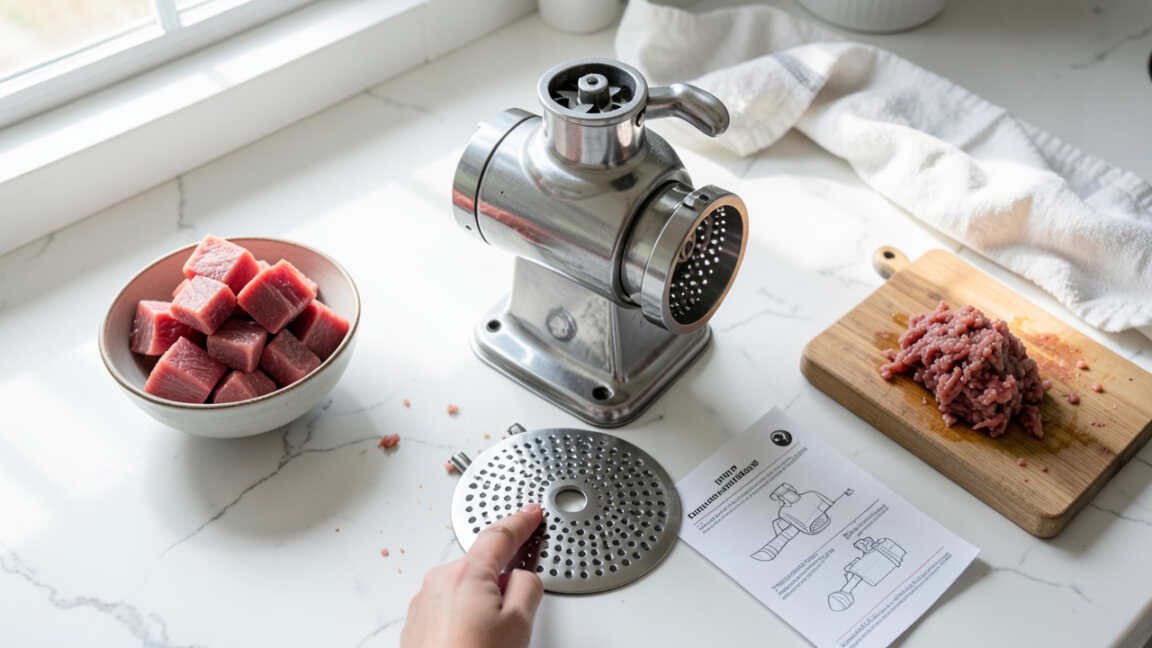
Why Meat Grinders Can Be Tricky for Newbies
Using a meat grinder for the first time can seem a bit intimidating. You want that perfect ground beef for burgers or sausages, but sometimes you end up with something less than ideal. This is often because of a few small things that can go wrong.
These issues aren’t about the grinder being bad; they’re usually about knowing a few key tips. We’ll break down the 7 Meat Grinder Mistakes to Avoid so you can get great results every time.
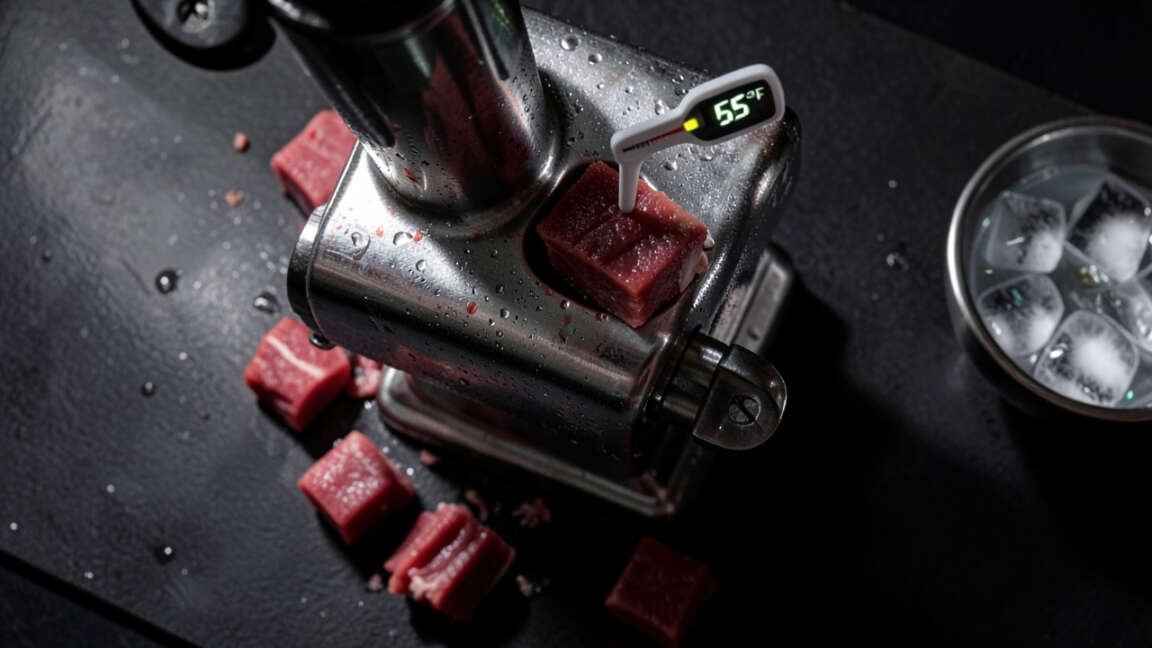
Mistake 1: Using Meat That’s Too Warm
The Importance of Cold Meat
One of the biggest oopsies beginners make is using meat that’s too warm. When meat is warm, the fat starts to melt. This melted fat doesn’t grind well.
Instead, it gums up the grinder. It can make your meat mushy and packed together. This leads to a poor texture in your finished product.
For a clean grind and good texture, your meat needs to be very cold. It should be almost frozen, but not quite solid. Think of it like ice cream – it needs to be firm but still able to be scooped.
Putting your meat in the freezer for about 30-60 minutes before grinding is a great way to get it to this perfect, cold state.
How to Get Meat Perfectly Cold
First, cut your meat into cubes that fit easily into your grinder’s hopper. This makes it easier to handle and freeze evenly. Then, spread these cubes out on a baking sheet lined with parchment paper.
This stops them from freezing into one big block. Place the sheet in the freezer. Check it after about 30 minutes.
The meat should feel firm to the touch, and the edges might start to look a little frosty.
Mistake 2: Not Trimming Tough Connective Tissue
What is Connective Tissue?
Meat has different parts. Some parts are soft muscle. Other parts are tougher.
These tougher parts are called connective tissues. Think of the silvery, stringy bits you sometimes find in steak or roasts. These bits are really hard for a meat grinder to cut through cleanly.
Why It Causes Problems
When these tough bits go into the grinder, they don’t get cut. Instead, they get stretched and smeared. This can wrap around the grinder’s blade and screw.
It slows everything down. It can also cause the grinder to jam up. This leads to a less consistent grind and can even damage your grinder over time.
How to Trim Properly
Before you grind, take a good look at your meat. Use a sharp knife to cut away any large pieces of sinew, gristle, or silver skin. You don’t need to get every tiny bit, but remove the obvious, thick pieces.
This makes a huge difference. Your grinder will thank you, and your ground meat will be much smoother.
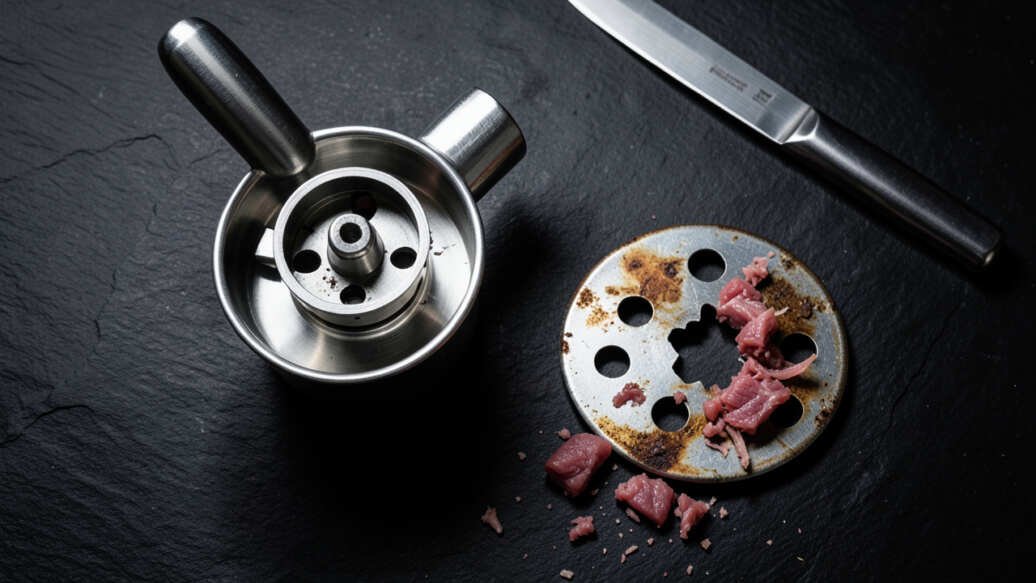
Mistake 3: Using the Wrong Grinding Plate
What Are Grinding Plates?
Meat grinders come with different plates. These plates have holes of various sizes. The size of the holes determines how fine or coarse your ground meat will be.
A plate with small holes makes fine-ground meat. A plate with large holes makes coarse-ground meat.
Matching the Plate to Your Needs
Using the wrong plate is a common mistake. If you want burgers, you might want a medium grind. If you’re making sausage, you might prefer a coarser grind.
Using a very fine plate for a coarse grind can lead to overworking the meat. It can make the texture mushy. Conversely, using a coarse plate when you want fine ground meat won’t give you the result you expect.
Choosing the Right Plate
Always think about what you’re making. For most ground beef dishes, a medium grind is good. This is often a plate with 3/16-inch or 1/4-inch holes.
For sausages or a more rustic texture, a coarse plate (like 3/8-inch holes) works well. Many grinders come with a couple of plates. Experiment to find what you like best for different recipes.
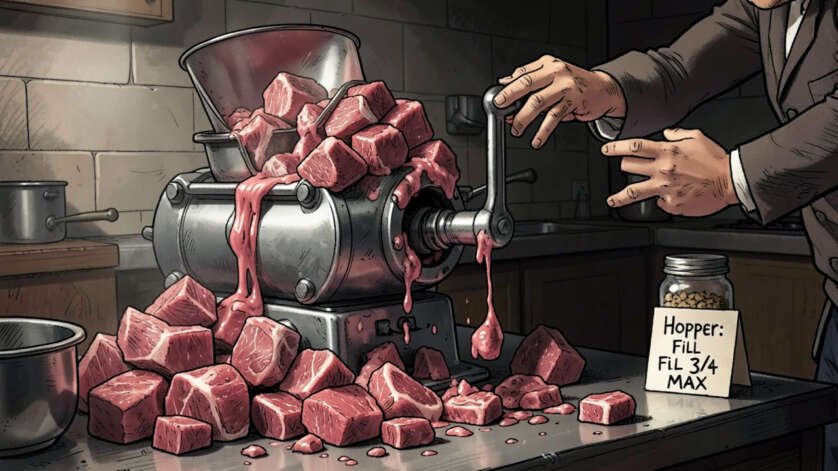
Mistake 4: Overfilling the Grinder Hopper
The Hopper’s Job
The hopper is the part where you put the meat. It’s shaped like a funnel. Its job is to guide the meat towards the grinder’s screw.
This screw pushes the meat through the plate and out the other side.
Why Too Much is Bad
Putting too much meat into the hopper at once is a mistake. The grinder needs space to work. When the hopper is packed full, the meat can’t move freely.
The screw can’t push it efficiently. This can cause the motor to strain. It might also lead to jams.
How to Feed the Grinder Correctly
Feed the grinder in stages. Put a reasonable amount of cold meat into the hopper. Let the grinder do its job.
Once most of that meat is through, you can add a little more. Don’t force the meat down. Let the grinder pull it in naturally.
If you have a lot of meat to grind, just do it in several batches. This keeps the motor cool and ensures a consistent grind.
Mistake 5: Not Cutting Meat into Manageable Pieces
The Importance of Size
Before you start grinding, you need to cut your meat. Cutting it into smaller, uniform pieces is really important. These pieces should be small enough to fit comfortably into the grinder’s hopper opening.
They should also be small enough for the auger (the screw) to grab and move easily.
Problems with Large Chunks
Trying to grind large roasts or big slabs of meat is a recipe for trouble. The grinder’s auger might not be able to grip these large pieces. They can get stuck.
This puts a lot of stress on the grinder’s motor and gears. It can lead to jams, and sometimes, even damage the grinder. You’ll also get a very uneven grind.
Best Practice for Cutting Meat
Cut your meat into cubes about 1 inch to 1.5 inches in size. Make sure these cubes are roughly the same size. This helps the meat feed into the grinder smoothly.
It ensures that the auger can process each piece efficiently. This results in a consistent grind from start to finish.
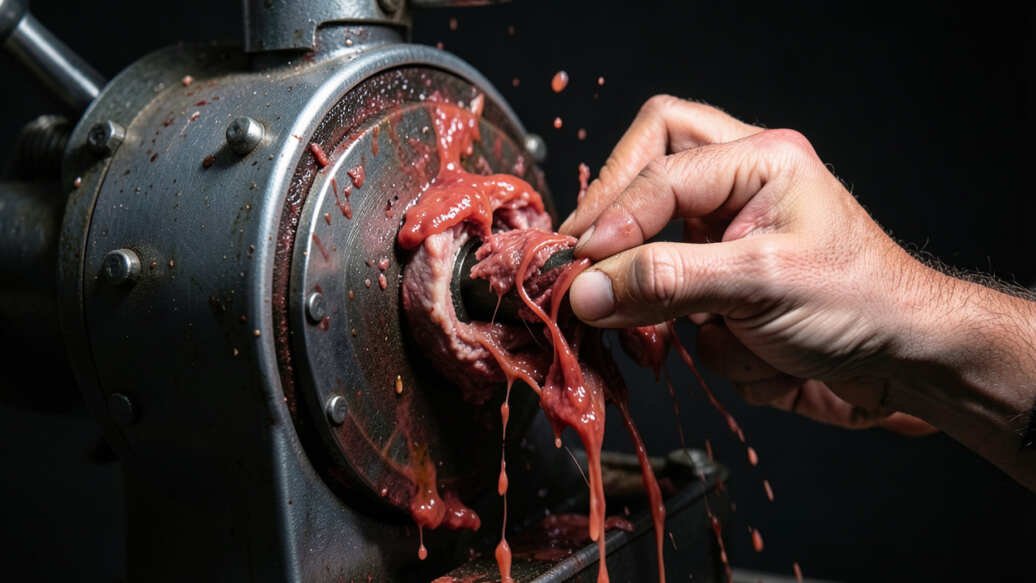
Mistake 6: Forcing the Meat Through
The Grinder’s Natural Pace
Meat grinders are designed to work at a certain pace. They have a motor that turns the auger. The auger pushes the meat through the cutting plate.
The best results come when you let the grinder work at its own speed. It’s not a race.
The Dangers of Forcing
When you try to force meat through, you’re asking for problems. This can mean using the tamper (the pusher tool) too hard. Or it could mean trying to cram more meat into the hopper when it’s already full.
Forcing the meat can overwhelm the motor. It can cause it to overheat. It’s also a common way to get a jam.
Letting the Grinder Do Its Work
Be patient. Use the tamper gently to guide the meat down, but don’t jam it in. If the grinder starts to slow down or feel like it’s struggling, stop adding meat.
Let it finish grinding what’s already inside. If it jams, follow the instructions for clearing jams. A little patience will save you a lot of frustration and keep your grinder in good shape.
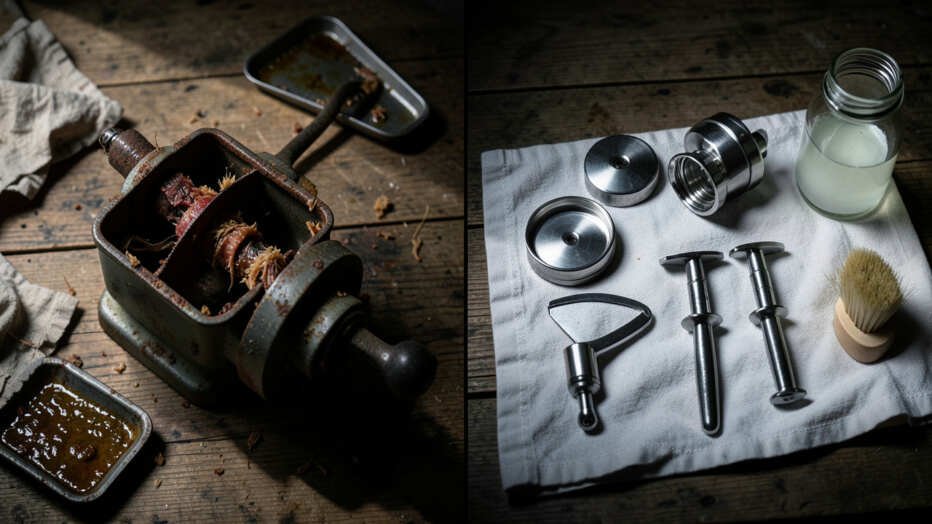
Mistake 7: Improper Cleaning and Storage
Why Cleaning is Key
After you’re done grinding, cleaning is super important. If you don’t clean your grinder properly, meat bits can get left behind. These bits can go bad.
They can grow bacteria. This is not good for food safety. It can also make your grinder smell unpleasant.
The Right Way to Clean
Always clean your grinder right after using it. Disassemble all the parts that touch the meat. This includes the grinding head, the auger, the blade, the plate, and the hopper.
Wash these parts with warm, soapy water. You can use a brush to get into all the nooks and crannies. Rinse them thoroughly.
Make sure to dry all the parts completely. This prevents rust.
Storing Your Grinder
Once everything is dry, reassemble the grinder. Or, store the parts separately. Some people lightly oil the metal parts with food-grade mineral oil.
This helps protect them from rust, especially if you won’t be using the grinder for a while. Store it in a clean, dry place. Proper care will make your meat grinder last for many years.
Frequently Asked Questions
Question: What kind of meat is best for grinding?
Answer: Meats with a good amount of fat, like beef chuck or pork shoulder, are great for grinding. Fat adds flavor and keeps the ground meat moist. Aim for about 20-30% fat content for best results.
Question: Can I grind poultry with a meat grinder?
Answer: Yes, you can grind poultry like chicken or turkey. It’s best to remove the skin and grind it while very cold, almost frozen, for a good texture. You might want to add some fat, like chicken skin or a little oil, as poultry is leaner.
Question: How do I unjam my meat grinder?
Answer: If your grinder jams, stop the motor immediately. Disassemble the grinding head. Remove any meat that is stuck.
Clean the blade and plate. Reassemble and try again, making sure the meat is cold and cut into smaller pieces.
Question: Should I grind meat twice for a finer texture?
Answer: Grinding meat twice can create a finer texture, but it can also lead to a mushy consistency if the meat is too warm or overworked. For most uses, a single grind with the right plate is sufficient. If you do grind twice, chill the meat thoroughly between grinds.
Question: How long does ground meat last in the refrigerator?
Answer: Freshly ground meat should be used within 1-2 days when stored in the refrigerator. It’s best to store it in an airtight container to prevent contamination and keep it fresh.
Final Thoughts
You’ve learned the 7 Meat Grinder Mistakes to Avoid. We covered keeping meat cold, trimming tough bits, picking the right plate, not overfilling, cutting meat small, letting the grinder work, and cleaning it well. Following these simple steps will help you make delicious ground meat every time.
You’re ready to grind with confidence! Enjoy your homemade burgers, sausages, and more.

![What to Do When Your Heating System Breaks in Winter[1]](https://creativehouseblog.com/wp-content/uploads/2026/05/What_to_Do_When_Your_Heating_System_Breaks_in_Winter1-768x403.jpg)
![10 Surprising Uses Of An Egg Cooker[1]](https://creativehouseblog.com/wp-content/uploads/2026/04/10_Surprising_Uses_Of_An_Egg_Cooker1-768x448.jpg)
![9 Features You Didn’T Know Smart Appliances Have[1]](https://creativehouseblog.com/wp-content/uploads/2026/04/9_Features_You_DidnT_Know_Smart_Appliances_Have1-768x448.jpg)
![What Can You Make With A Stand Mixer[1]](https://creativehouseblog.com/wp-content/uploads/2026/03/What_Can_You_Make_With_A_Stand_Mixer1-768x448.jpg)
![How to Service Your HVAC System Before Each Season[1]](https://creativehouseblog.com/wp-content/uploads/2026/05/How_to_Service_Your_HVAC_System_Before_Each_Season1-768x403.jpg)
![What Is a Blender Used For in the Kitchen[1]](https://creativehouseblog.com/wp-content/uploads/2026/03/What_Is_a_Blender_Used_For_in_the_Kitchen1-768x448.jpg)