
Crepes often tear or stick due to six main reasons: batter that is too thick or thin, pan temperature that is either too high or too low, inadequate pan greasing, improper batter spreading, swirling that is not even, and flipping before the crepe is fully set. Correcting these involves preparing a smooth, pourable batter, heating the pan to a sweet spot where water droplets sizzle and evaporate quickly, and lightly greasing with a paper towel dipped in oil. Mastering these techniques results in perfect crepes that are thin, flexible, and non-stick, making them easy to handle and enjoyable to eat.
Making crepes can seem tricky at first, and many people wonder about 6 Reasons Your Crepes Tear or Stick. It’s a common problem, but don’t worry! We’ll show you simple steps to fix this.
This guide will help you make perfect crepes every time, so you can enjoy them without frustration. Let’s get started!
Key Takeaways
- You’ll learn why crepes often tear or stick to the pan.
- We will explain how to get the right batter consistency for smooth crepes.
- Discover the best cooking temperatures for your crepe pan.
- Understand how important it is to properly grease your pan.
- Learn the best way to flip your crepes without them breaking.
- You will find out how to store your crepe batter for the best results.
Why Crepes Can Be Tricky
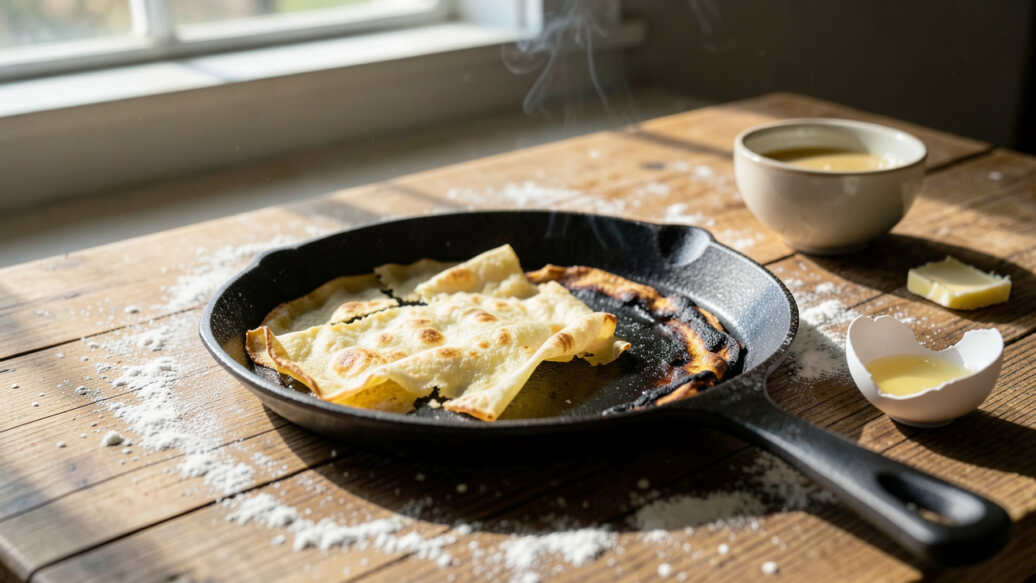
Crepes are thin pancakes that can be delicious. But sometimes, they don’t turn out right. They might stick to the pan, or they might tear when you try to flip them.
This can be discouraging, especially if you are new to making them. The batter can be too thick or too thin. The pan might be too hot or not hot enough.
Greasing the pan just right is also important. Even how you spread the batter matters. We will look at 6 Reasons Your Crepes Tear or Stick so you can avoid these problems.
Batter Consistency is Key
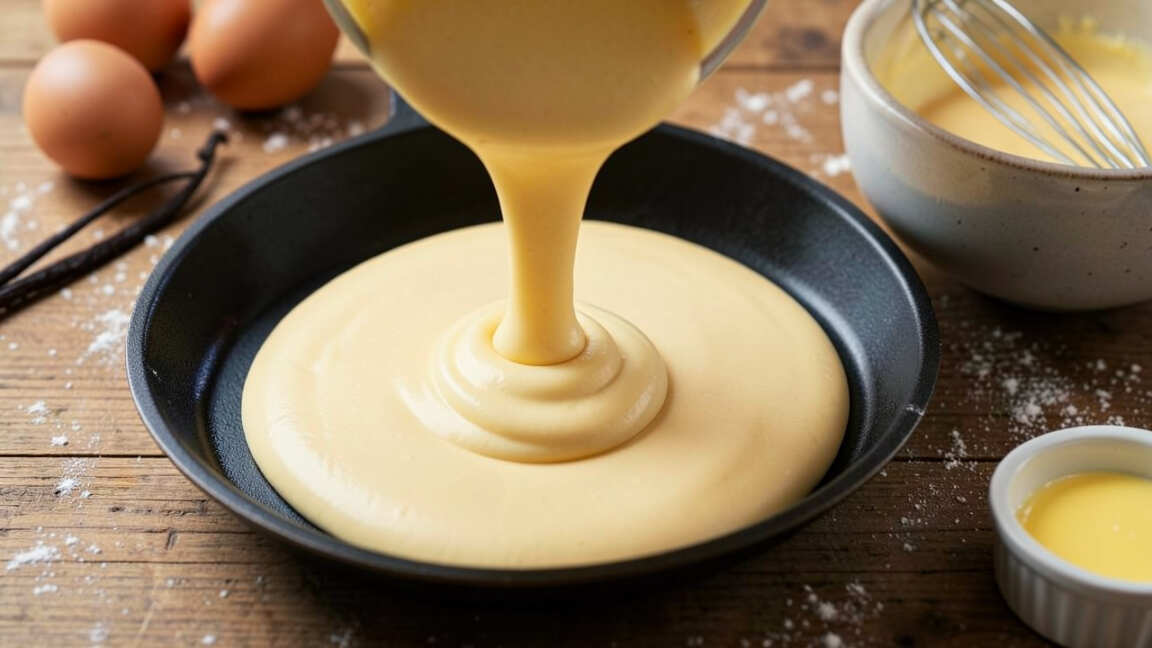
The batter for crepes is different from pancake batter. It needs to be quite thin, almost like heavy cream. If your batter is too thick, your crepes will be tough and harder to spread thinly in the pan.
They might also be more likely to tear. If it’s too thin, they can be fragile and hard to handle.
Making the Batter Right
When you mix your crepe batter, start with the liquid ingredients. Then, gradually add the dry ingredients. Don’t overmix.
A few small lumps are okay. Overmixing can make the gluten in the flour develop too much, leading to tougher crepes.
If your batter seems too thick, add a little more milk or water, a tablespoon at a time, until it reaches the right thin consistency.
If it seems too thin, add a tablespoon of flour at a time. Mix it in well. It is better to add too much liquid than too little at first, as you can always thin it out.
Pan Temperature Matters
Cooking your crepes at the correct temperature is very important. If the pan is too hot, the outside will cook too quickly before the inside is set. This makes them easy to break.
If the pan is not hot enough, the crepe might stick to the pan and cook unevenly.
Finding the Sweet Spot
You want your pan to be medium-hot. A good way to test this is to flick a little water onto the surface. If the water sizzles and evaporates quickly, the pan is ready.
If it just sits there, it’s not hot enough. If it evaporates instantly and sparks, it’s too hot.
Preheat your pan for a few minutes before you start cooking. This ensures it’s evenly heated.
You might need to adjust the heat as you go. If your crepes are browning too fast, turn the heat down a little. If they are taking too long and not browning, turn it up slightly.
Proper Pan Greasing
Even with a good non-stick pan, you still need to grease it. This is one of the most common reasons why crepes stick. But you don’t want too much grease, either.
Too much oil or butter can make the crepes greasy and unevenly cooked.
The Best Way to Grease
Use a small amount of butter or oil. You can melt butter and brush it onto the pan with a pastry brush. Or, you can use a paper towel to spread a thin layer of oil or melted butter.
Make sure to grease the pan for each crepe. It only takes a second and makes a big difference.
Some people find that spraying the pan with a light cooking spray works well, too. The key is a very thin, even layer.

Spreading the Batter
How you spread the batter in the pan is another key step. You need to create a thin, even layer across the entire bottom of the pan.
Swirling Technique
Once you pour the batter into the hot, greased pan, immediately tilt and swirl the pan in a circular motion. This spreads the batter thinly all around. Do this quickly before the batter starts to set.
The goal is to get a nice, thin circle. If you don’t spread it thinly enough, the crepe will be thick and gummy. If you spread it too unevenly, parts of it might burn while other parts are still raw.
Don’t add too much batter. For a typical 8-10 inch pan, about 1/4 cup of batter is usually enough. You will learn to judge this by feel.

The Flip: A Delicate Move
Flipping a crepe can be intimidating. The fear of tearing it often makes people hesitant, leading to other mistakes. A successful flip requires confidence and the right technique.
When and How to Flip
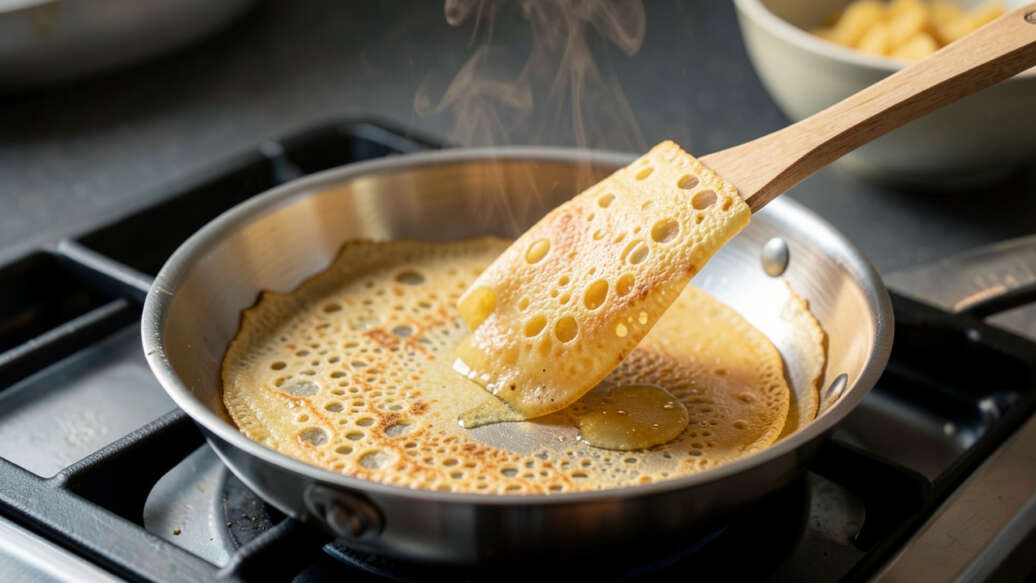
Wait until the edges of the crepe start to look dry and slightly lifted from the pan. You’ll also see small bubbles forming on the surface. The underside should be lightly golden brown.
Slide a thin spatula under the crepe, making sure it goes all the way across. Lift the crepe gently. Then, with a quick but controlled motion, flip it over.
If it feels stuck, don’t force it. Gently loosen the edges more with your spatula before trying again.
You can also use your fingers if you’re brave! Be careful, though. A quick wrist flick can help it flip smoothly.
Cooling and Resting
Sometimes, crepes tear or stick because they are handled too soon after cooking, or the batter has been sitting too long.
Batter Storage and Crepe Handling
If you make crepe batter ahead of time, let it rest in the refrigerator for at least 30 minutes. This allows the flour to absorb the liquid fully, making a smoother batter. Some people even let it rest overnight.
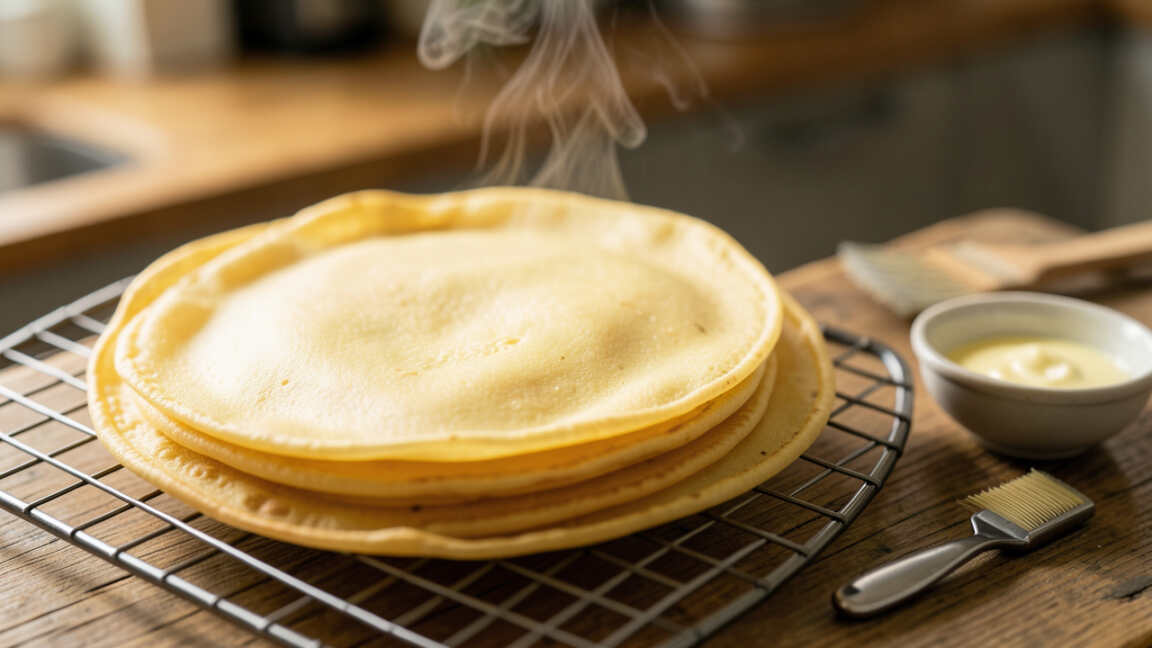
After cooking, let the crepes cool for just a moment before trying to separate or fill them. This helps them firm up slightly. If you’re stacking them, placing a piece of parchment paper between each one can prevent them from sticking together.
If your batter has been sitting for a very long time, it might break down slightly. Re-whisking it gently can sometimes help. If it’s still too watery, you might need to add a tiny bit of flour.
Frequently Asked Questions
Question: How do I know if my crepe batter is too thick?
Answer: If your batter is too thick, it will coat the back of a spoon heavily and won’t flow easily. It might also be hard to spread thinly in the pan. It should pour like heavy cream.
Question: Can I use oil instead of butter to grease the pan?
Answer: Yes, you can use oil. Use a light oil like vegetable or canola oil. Make sure to use only a thin layer, just like with butter.
Question: My crepes are sticking even with greasing. What else could it be?
Answer: It might be your pan temperature. If the pan isn’t hot enough, the crepes can stick before they cook enough to release. Ensure your pan is preheated to medium-hot.
Question: How many crepes can I make from one batch of batter?
Answer: This depends on the size of your pan and how thick you make them. A standard batch of crepe batter usually makes about 8-12 crepes for an 8-10 inch pan.
Question: What is the best way to get perfectly round crepes?
Answer: Practice the swirling motion! Pour the batter into the center of the hot pan and immediately tilt and swirl the pan in a circular motion. Do this quickly and smoothly to get an even, thin layer.
Final Thoughts
Learning to make perfect crepes involves a few simple things. You need the right batter, a properly heated and greased pan, and a good swirling technique. Don’t worry if your first few aren’t perfect.
With a little practice, you’ll get the hang of it. Remember to adjust your heat and batter as you go. Soon, you’ll be making beautiful, delicious crepes every time.

![How to Clean Your Air Fryer the Easy Way[1]](https://creativehouseblog.com/wp-content/uploads/2026/03/How_to_Clean_Your_Air_Fryer_the_Easy_Way1-768x448.jpg)
![How Air Fryer Temperature Control Works Explained[1]](https://creativehouseblog.com/wp-content/uploads/2026/03/How_Air_Fryer_Temperature_Control_Works_Explained1-768x448.jpg)
![9 Coffee Drinks You Can Make With An Espresso Machine[1]](https://creativehouseblog.com/wp-content/uploads/2026/04/9_Coffee_Drinks_You_Can_Make_With_An_Espresso_Machine1-768x448.jpg)
![Do Air Fryers Need Preheating Explained[1]](https://creativehouseblog.com/wp-content/uploads/2026/03/Do_Air_Fryers_Need_Preheating_Explained1-768x448.jpg)
![What Is a Blender Used For in the Kitchen[1]](https://creativehouseblog.com/wp-content/uploads/2026/03/What_Is_a_Blender_Used_For_in_the_Kitchen1-768x448.jpg)
![6 Reasons Your Espresso Tastes Bitter[1]](https://creativehouseblog.com/wp-content/uploads/2026/04/6_Reasons_Your_Espresso_Tastes_Bitter1-768x448.jpg)