
Air fryer power consumption is measured in watts, a figure you can find on the appliance's label or manual to understand its peak electricity demand. Actual energy use depends on wattage, cooking time, and temperature settings, allowing you to calculate precise operating costs using a simple formula. This knowledge helps compare efficiency against other kitchen appliances and debunk common myths about their energy footprint.
Key Takeaways
- You will learn what wattage means for your air fryer.
- We will show you how to find your air fryer’s power usage.
- You can estimate the cost of running your air fryer.
- Tips to use your air fryer more energy-efficiently are covered.
- Common energy myths about air fryers are debunked.
Many people wonder about their air fryer’s electricity use. Figuring out how much power an air fryer uses can seem tricky at first. You want to know if it’s a big energy user or if it’s okay for your electricity bill.
This guide makes the Air Fryer Power Consumption Guide easy to grasp. We will break it down step-by-step so you can feel confident about your appliance. Let’s explore what makes your air fryer tick and how much energy it uses.
![Air Fryer Power Consumption Guide Explained Simply[1]](https://creativehouseblog.com/wp-content/uploads/2026/03/Air_Fryer_Power_Consumption_Guide_Explained_Simply1.jpg)
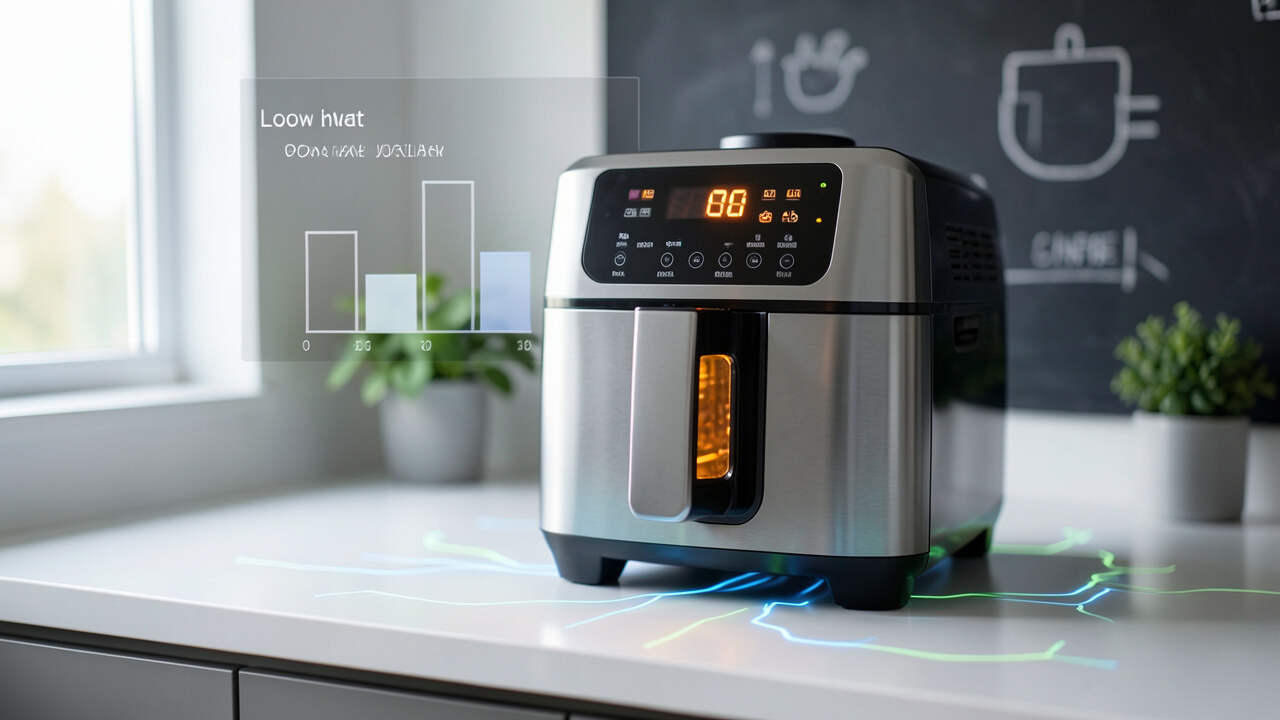
Understanding Air Fryer Power Consumption
What is Wattage
Wattage tells you how much electricity an appliance uses when it’s running. Think of it like a measurement of how much “oomph” the appliance needs. Air fryers use electricity to heat up the air inside and then circulate it very fast.
This process cooks your food. A higher wattage means the appliance can heat up faster and cook more powerfully. However, it also means it uses more electricity at any given moment it is switched on.
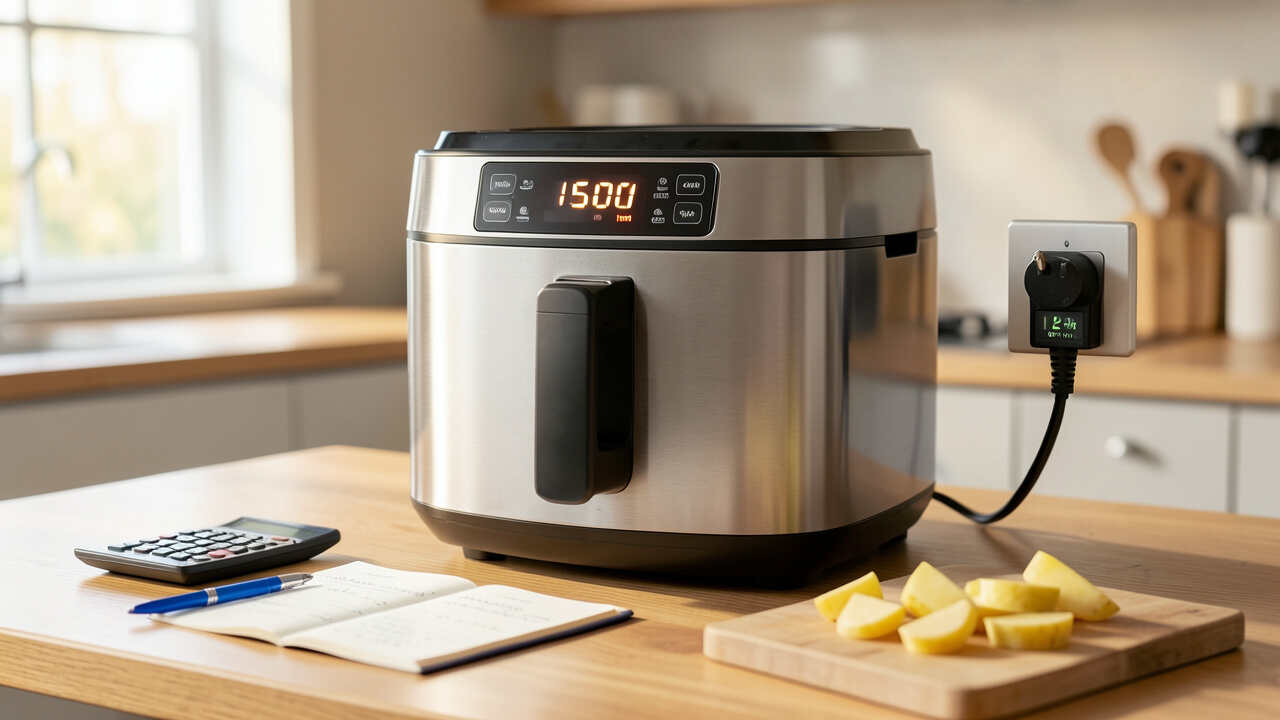
When you look at your air fryer’s packaging or its manual, you will see a wattage number. This is usually listed in watts (W) or kilowatts (kW). For example, an air fryer might be rated at 1500W.
This means when it’s actively heating and circulating air, it’s drawing 1500 watts of power from your wall outlet.
How to Find Your Air Fryer’s Wattage
Finding your air fryer’s wattage is usually straightforward. Most manufacturers list this information clearly. Here are the common places to look:
- The Appliance Itself: Check the label on the back or bottom of your air fryer. It often has a sticker with technical specifications, including wattage.
- The User Manual: Your air fryer came with a booklet. This manual almost always includes a section on specifications or technical details where you can find the wattage.
- The Original Packaging: If you still have the box your air fryer came in, the wattage is often printed on it.
- Manufacturer’s Website: You can usually find the product specifications on the brand’s official website by searching for your specific model number.
If you cannot find the wattage anywhere, you can estimate it. Most basket-style air fryers range from 1000W to 1800W. Oven-style air fryers might have a slightly higher maximum wattage.
Knowing this range helps you understand what to expect.
Calculating Actual Power Usage
Beyond the Wattage Rating
The wattage rating is the maximum power your air fryer can use. However, your air fryer doesn’t always use its full wattage. It cycles on and off to maintain the set temperature.
When the air fryer reaches the desired heat, the heating element turns off, but the fan may continue to run. Then, as the temperature drops, the heating element turns back on.
This cycling means the actual electricity consumed over time is less than if it ran at full wattage continuously.
The amount of time it spends heating up versus maintaining temperature depends on several factors:
- The target cooking temperature.
- How often you open the air fryer basket (this lets heat escape).
- The ambient room temperature.
- How full the air fryer basket is.
Using a Power Meter
For the most accurate measurement, you can use a plug-in power meter. These handy devices plug into your wall outlet, and then you plug your air fryer into the meter.
The meter will display the real-time wattage being used and often track the total energy consumed over a period.
Using a power meter is the best way to get a precise Air Fryer Power Consumption Guide for your specific usage.
You can run your air fryer for a typical cooking session and see exactly how many kilowatt-hours (kWh) it uses. Kilowatt-hours are what your electricity company uses to bill you.
Estimating Energy Consumption
If you don’t have a power meter, you can still estimate your air fryer’s energy use. You need to know:
- Wattage of your air fryer: (e.g., 1500W)
- Average time you use it per session: (e.g., 20 minutes)
- How often you use it per day/week: (e.g., 3 times a week)
- Your local electricity rate: (cents per kWh)
Here’s how to do the math:
- Convert wattage to kilowatts: Divide wattage by 1000. (1500W / 1000 = 1.5kW)
- Convert cooking time to hours: Divide minutes by 60. (20 minutes / 60 = 0.33 hours)
- Calculate energy used per session: Multiply kilowatts by hours. (1.5kW * 0.33 hours = 0.5 kWh per session)
- Calculate total energy per week: Multiply energy per session by how many times you use it per week. (0.5 kWh * 3 times/week = 1.5 kWh per week)
- Calculate cost per week: Multiply total kWh per week by your electricity rate (make sure your rate is in dollars per kWh, e.g., $0.15/kWh). (1.5 kWh * $0.15/kWh = $0.225 per week)
This estimation gives you a good idea of the energy cost. Remember, this is an estimate, and actual usage might vary slightly.
Air Fryer vs. Other Appliances
Comparing Energy Usage
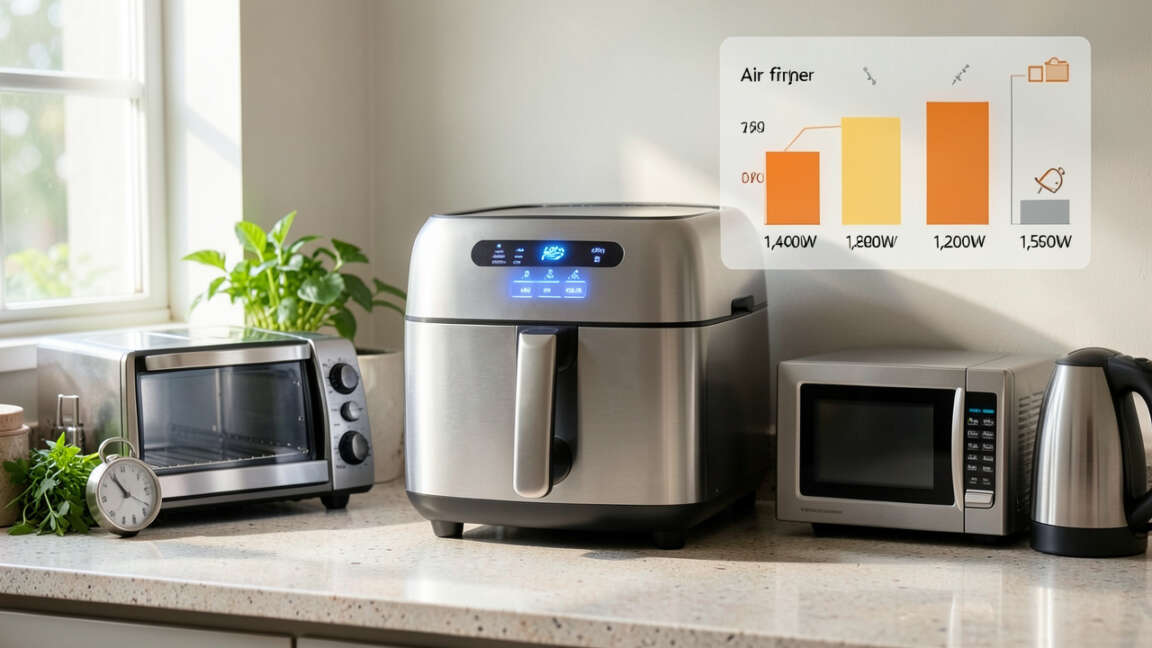
It’s helpful to see how an air fryer stacks up against other kitchen appliances. Generally, air fryers are more energy-efficient than many traditional cooking methods, especially ovens.
Here’s a general comparison:
| Appliance | Typical Wattage | Energy Use (per hour) |
|---|---|---|
| Air Fryer | 1000-1800W | 0.5 – 1.5 kWh |
| Convection Oven | 2000-5000W | 2.0 – 5.0 kWh |
| Toaster Oven | 800-1500W | 0.8 – 1.5 kWh |
| Microwave Oven | 700-1200W | 0.7 – 1.2 kWh |
| Full-Size Oven (Bake) | 2000-5000W | 2.0 – 5.0 kWh |
As you can see, an air fryer uses less power than a full-size oven or a convection oven for similar cooking tasks.
This is because air fryers are smaller and heat up much faster. They also cook food more quickly due to the intense circulation of hot air.
When an Air Fryer is More Efficient
Air fryers shine when you’re cooking small to medium portions. For reheating leftovers, cooking frozen snacks, or making small batches of roasted vegetables, an air fryer is almost always more energy-efficient than preheating a large oven. The quick preheat time and faster cooking cycles save energy.
However, if you’re cooking for a very large family or preparing multiple dishes simultaneously that require different temperatures, a conventional oven might be necessary.
In those cases, the energy use of the oven would be higher but might be more practical for the task.
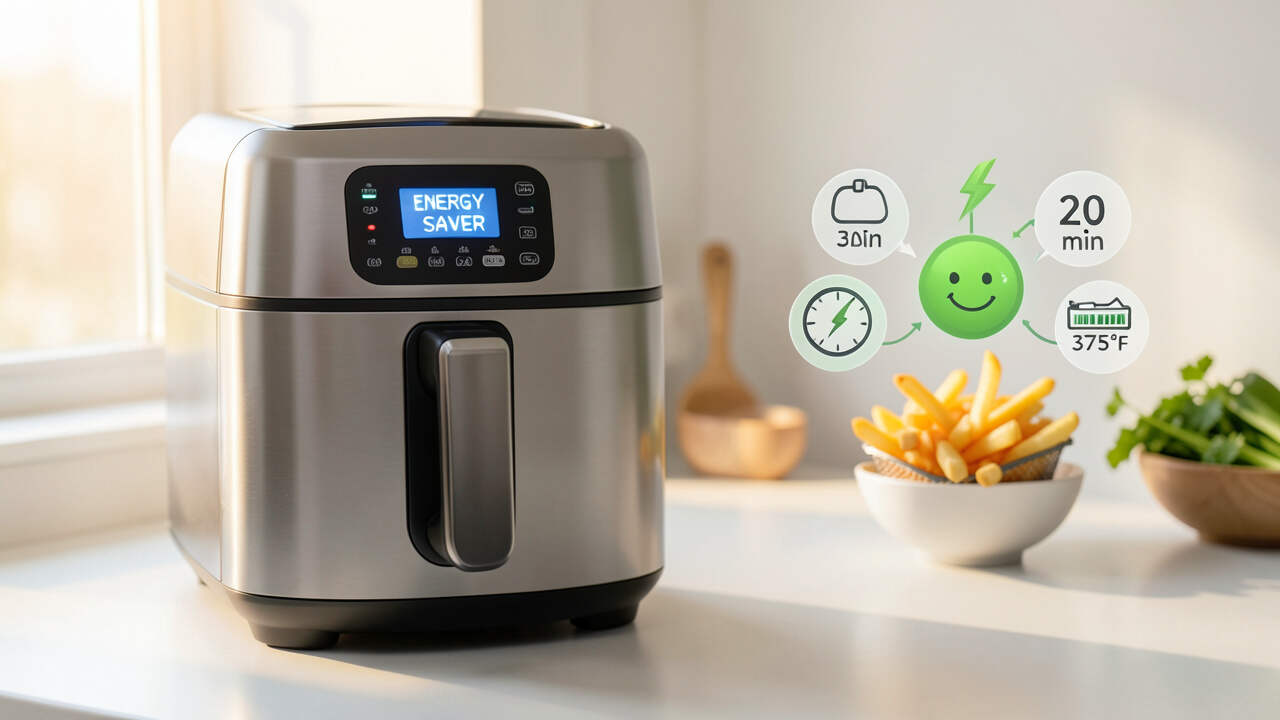
Tips for Energy-Efficient Air Frying
Preheating Wisely
Some recipes call for preheating your air fryer. This can help food cook more evenly and achieve a crispier texture. However, preheating uses energy.
If your recipe doesn’t strictly require it, you might be able to skip this step. Many air fryer meals cook perfectly well without a long preheat. If you do preheat, do it for the minimum time recommended, usually 3-5 minutes.
Don’t Overfill the Basket
Overfilling your air fryer basket is one of the most common mistakes. When you pack too much food in, the hot air cannot circulate properly. This leads to uneven cooking and can make your food take longer to cook.
When food takes longer, your air fryer runs for a longer period, using more electricity. Aim to cook in batches if necessary to ensure good air flow. This way, your food cooks faster and more efficiently.
Use the Right Temperature and Time
Follow recipe instructions for temperature and time carefully. Using too high a temperature or cooking for too long will not only burn your food but also waste energy.
Conversely, cooking at too low a temperature for too long will also increase energy consumption.
Getting the settings right the first time saves energy and ensures delicious results.
Clean Your Air Fryer Regularly
A clean air fryer works more efficiently. Food debris and grease can build up over time. This buildup can block air vents, leading to reduced performance and longer cooking times.
Make sure to clean the basket, tray, and interior of your air fryer after each use, or as recommended by the manufacturer. This helps maintain optimal airflow and heat distribution, saving energy in the long run.
Smaller Air Fryers Use Less Power
When choosing an air fryer, consider the size you need. A larger air fryer, even when cooking small portions, might use more energy than a smaller unit designed for fewer servings. If you typically cook for one or two people, a compact air fryer is likely more energy-efficient for your needs.
Common Air Fryer Power Consumption Myths
Myth: Air Fryers Use a Lot of Electricity
While air fryers do use electricity, they are generally more energy-efficient than traditional ovens for most common cooking tasks.
Their compact size and rapid heating capabilities mean they use less power overall than a large oven that needs to heat a much bigger space.
Myth: All Air Fryers Use the Same Amount of Power
This is not true. Air fryers vary significantly in wattage based on their size, features, and brand. A small, basic air fryer will use less power than a large, multi-function air fryer oven.
Myth: You Should Always Preheat Air Fryers
As mentioned earlier, preheating isn’t always necessary. While it can improve results for some foods, many air fryer meals cook just fine without it. Skipping preheating saves energy.
Myth: Air Fryers Are More Expensive to Run Than Microwaves
For many cooking tasks, this is false. Microwaves are very efficient for quickly heating liquids or reheating small items.
However, for cooking or crisping food, air fryers can be more energy-efficient because they cook faster and often at lower overall energy consumption for those specific tasks.
FAQ Of Air Fryer Power Consumption Guide Explained Simply
How much electricity does a typical air fryer use?
A typical air fryer uses between 1000 to 1800 watts when heating. Its actual energy consumption per cooking session is less because it cycles on and off.
Is an air fryer more expensive to run than an oven?
Generally, an air fryer is more energy-efficient and less expensive to run than a conventional oven for smaller portions and faster cooking tasks. It heats up quicker and cooks food faster.
How can I make my air fryer use less electricity?
Avoid overfilling the basket, don’t always preheat, clean it regularly, and use the correct temperature and time settings for your food. Cooking in batches for larger meals is also more efficient.
What does the wattage on my air fryer mean?
The wattage indicates the maximum amount of electricity the air fryer draws when its heating element is on. Higher wattage means it can heat up faster.
Can I use an extension cord with my air fryer?
It is generally best to plug your air fryer directly into a wall outlet. If you must use an extension cord, make sure it is heavy-duty and rated for the appliance’s wattage to avoid overheating or fire hazards.
Final Thoughts
Understanding your air fryer’s power usage doesn’t need to be complicated. You’ve learned that wattage is a key number, but actual consumption depends on how you use it.
By knowing your air fryer’s rating and using smart cooking habits, you can keep its energy use in check.
Making simple adjustments like not overfilling the basket and cleaning your appliance regularly helps a lot.
Now you have the tools to use your air fryer wisely and efficiently, saving energy and potentially some money on your electricity bill.

![How To Clean A Blender Fast And Easy[1]](https://creativehouseblog.com/wp-content/uploads/2026/03/How_To_Clean_A_Blender_Fast_And_Easy1-768x448.jpg)
![Air Fryer Safety Features Explained For Beginners[1]](https://creativehouseblog.com/wp-content/uploads/2026/03/Air_Fryer_Safety_Features_Explained_For_Beginners1-768x448.jpg)
![High Speed Versus Regular Blenders Explained[1]](https://creativehouseblog.com/wp-content/uploads/2026/03/High-Speed_Versus_Regular_Blenders_Explained1-768x448.jpg)
![How to Prepare Your Garden Yard for Winter[1]](https://creativehouseblog.com/wp-content/uploads/2026/05/How_to_Prepare_Your_Garden_Yard_for_Winter1-768x403.jpg)
![Stand Mixer Attachments And Their Uses Explained[1]](https://creativehouseblog.com/wp-content/uploads/2026/03/Stand_Mixer_Attachments_And_Their_Uses_Explained1-768x448.jpg)
![How to Reglaze a Window Pane Without Professional Help[1]](https://creativehouseblog.com/wp-content/uploads/2026/05/How_to_Reglaze_a_Window_Pane_Without_Professional_Help1-768x403.jpg)