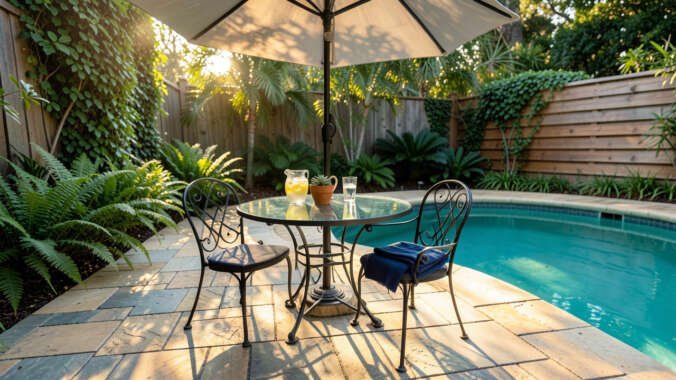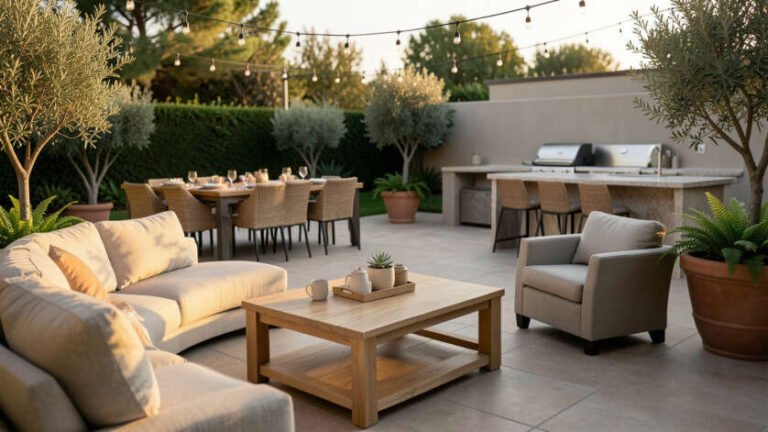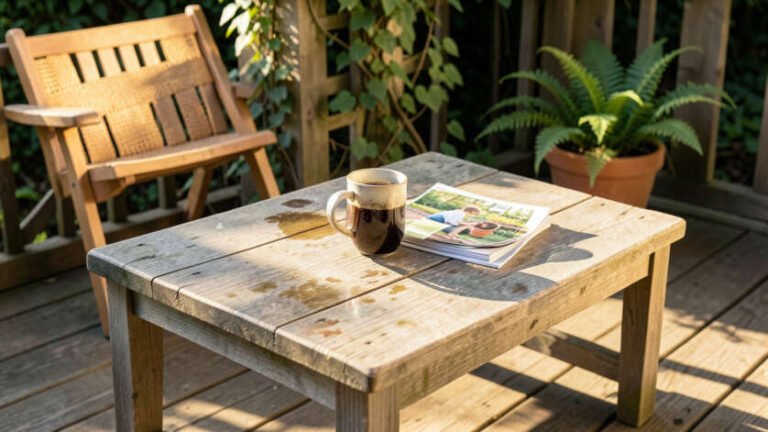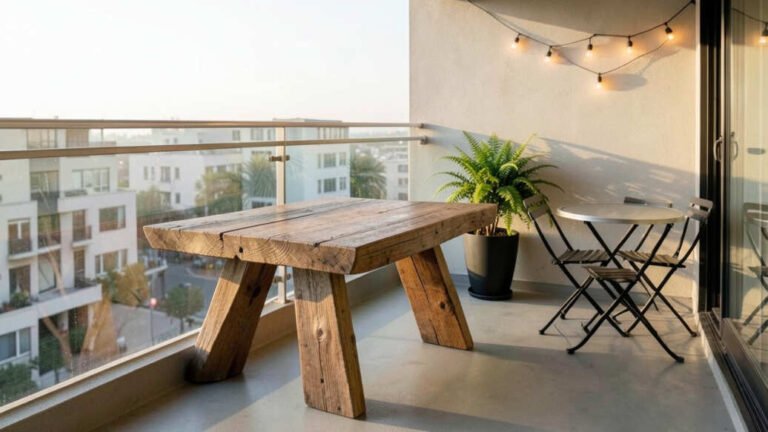
Before you buy a round patio table, check the material for weather resistance, the size for your space and seating needs, and the construction for stability. Aluminum and teak resist rust and decay effectively, while steel needs protective coating and wicker requires indoor storage. Measuring your patio and allowing chair clearance prevents overcrowding, and inspecting joinery and weight capacity ensures the table stays sturdy for years.
Buying a round patio table can turn your backyard into a social hub. But the wrong choice leads to rust, wobbling, or a table that doesn’t fit your space. This post covers the three most important checks every buyer should make.
In short, before buying a round patio table, check the material for weather resistance, the size for your space and seating needs, and the stability and construction quality. These three factors determine whether your table lasts years or fails within one season.
Key Takeaways
- Choosing the right material for your round patio table determines its resistance to rain, sun, and wind, and affects long‑term maintenance needs.
- Measuring your available space and accounting for seating clearance ensures the table fits comfortably without crowding the area.
- Inspecting the table’s stability, weight capacity, and joinery prevents wobbling and collapse, especially in windy conditions.
- Round tables typically seat 2-6 people, but diameter directly controls the number of chairs you can fit.
- Most homeowners overlook rust resistance on metal tables, leading to early failure within two to three years.
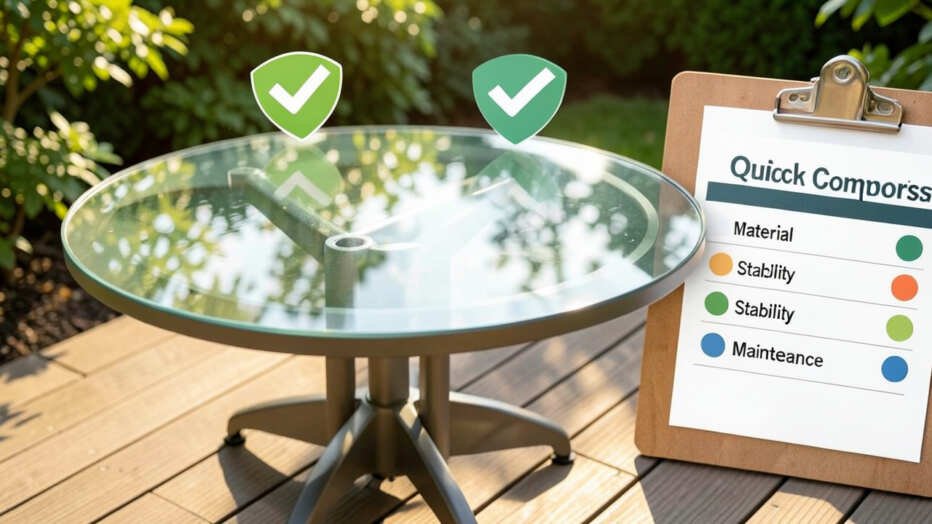
Quick Comparison Table
| Check | What to Look For | Common Mistakes | Impact if Ignored |
|---|---|---|---|
| Material | Aluminum, teak, wicker, steel – must match your climate | Buying steel without a weatherproof coating | Rust, fading, cracking within 2 years |
| Size & Space | Diameter, chair clearance, traffic flow | Not leaving enough room to push chairs back | Cramped seating, scratches on walls |
| Stability & Build | Frame thickness, cross‑bracing, level feet | Assuming all tables of same material are equally sturdy | Wobbling, collapse under weight |
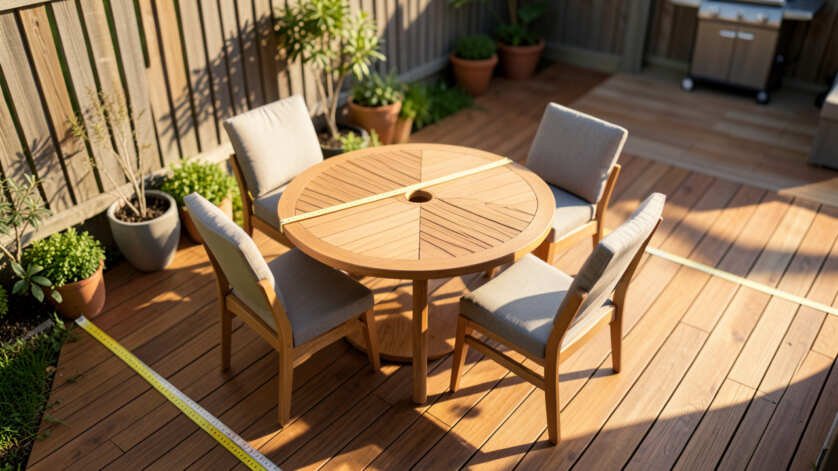
Tip: Use a tape measure and mark the floor with painter’s tape to visualize the table’s footprint before you buy. This prevents expensive sizing mistakes.
1. Check the Material for Weather Resistance
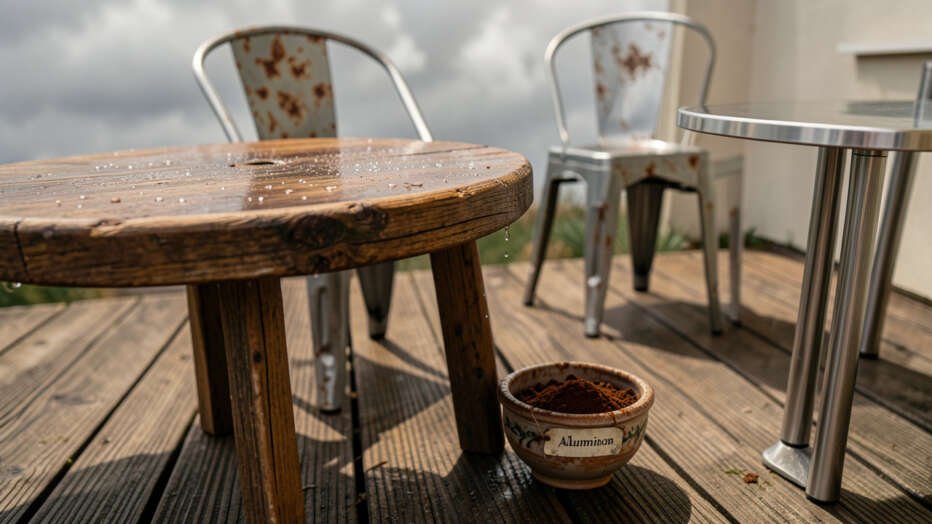
The material is the most critical factor. It decides how your table holds up under sun, rain, and snow. According to a survey, 67% of outdoor furniture purchases are driven by material durability. Here is what you need to know about the most common options.
Aluminum
Aluminum is lightweight and rust‑resistant. It works well in humid or coastal areas because it does not corrode. However, cheap aluminum tables may bend under heavy weight. Look for tables made with 2‑inch or thicker frames. Some brands like Hanamint offer commercial‑grade aluminum with powder coating for extra protection.
Teak
Teak wood is naturally oily and weather‑resistant. It can last 20‑30 years with proper care. The downside is cost – a good teak table often starts above $800. Also, teak develops a silver patina over time unless you seal it. Polywood offers a synthetic teak alternative that never warps or rots.
Steel
Steel is sturdy but prone to rust if the coating chips. Only buy steel tables with a warranty that covers rust, or opt for stainless steel. Avoid carbon steel unless you plan to store the table indoors during winter. Powder‑coated steel is a good middle ground – it resists scratches and weather better than bare metal.
Wicker / Rattan
Synthetic resin wicker is weather‑resistant and lightweight. It looks natural but can fade in intense sun. Most wicker tables use an aluminum frame underneath, so you get the look with good stability. According to, wicker tables with a UV‑treated finish last up to 10 years in direct sunlight.
Important: Always check the manufacturer’s care instructions. Some materials require yearly cleaning or sealing. If you cannot commit to maintenance, choose a low‑maintenance material like aluminum or synthetic wicker.
2. Check the Size for Your Space and Seating Needs
Round tables save space compared to rectangles, but you still need room to walk around and pull out chairs. A common rule: leave at least 36 inches of clearance from the edge of the table to any wall, fence, or other furniture. For a round table, the diameter determines seating capacity.
Standard Diameter vs. Seating
- 30‑36 inches: seats 2 people comfortably.
- 42‑48 inches: seats 4 people.
- 54‑60 inches: seats 6 people.
- 66‑72 inches: seats 8 people (needs a large patio).
Do not forget about chair width. Most patio chairs are 18‑22 inches wide. If you have armchairs, add 4‑6 inches per chair. Also, check the table’s apron – some round tables have a thick rim that reduces knee space.
Measuring Your Patio
Use the 36‑inch rule. Measure the length and width of your patio. Subtract 36 inches from each dimension. The result is the maximum diameter that will work. For example, a 10‑foot by 10‑foot deck can take a round table up to 48 inches in diameter. According to, 48‑inch round tables are the most popular size for standard patios.
Warning: Do not rely on “fits X chairs” descriptions without measuring. Many tables claim 4‑person capacity but leave no elbow room. Always test the setup with your actual chairs.
3. Check the Stability and Construction Quality
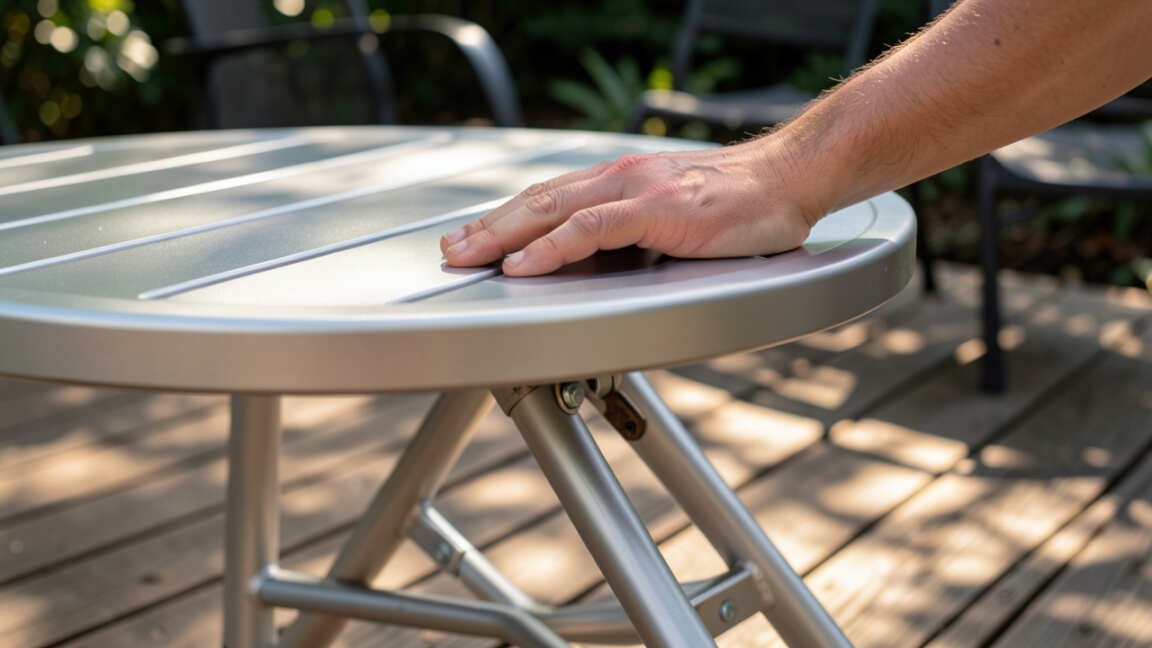
Stability is often overlooked until you push the table and it wobbles. A round table only has four or five legs, so each leg must be strong and well‑attached. Look for these details before buying.
Frame Thickness
Thicker metal frames mean less flex. For aluminum, aim for at least 1.5‑inch tubular walls. For steel, at least 1‑inch. Heavier tables are generally more stable, but weight alone is not enough – the table must have cross‑bracing or a central support ring.
Joints and Hardware
Welded joints are stronger than bolted ones. If the table uses bolts, check that they are stainless steel and that the holes line up perfectly. Loose bolts cause wobbling that gets worse over time. Some high‑end manufacturers like Tropitone use full welds and reinforced brackets on all joints.
Leveling Feet
Patios and decks are rarely perfectly level. Adjustable feet let you stabilize the table without shims. Look for a table with threaded plastic or rubber feet that you can twist up or down. If the table lacks this feature, you may need to add small shims yourself.
Weight Capacity
Check the maximum load rating. A standard table should hold at least 100 pounds evenly distributed. If you plan to put a heavy umbrella and outdoor dishes, look for 150‑pound capacity. According to standards for outdoor furniture, tables must withstand a load of 150 pounds without collapsing.
Tip: At the store, give the table a firm shake from the edge. If it rocks or moves, it is too unstable. Also tilt it slightly and release – a good table will return to level without wobbling.
Common Myths vs Facts About Round Patio Tables
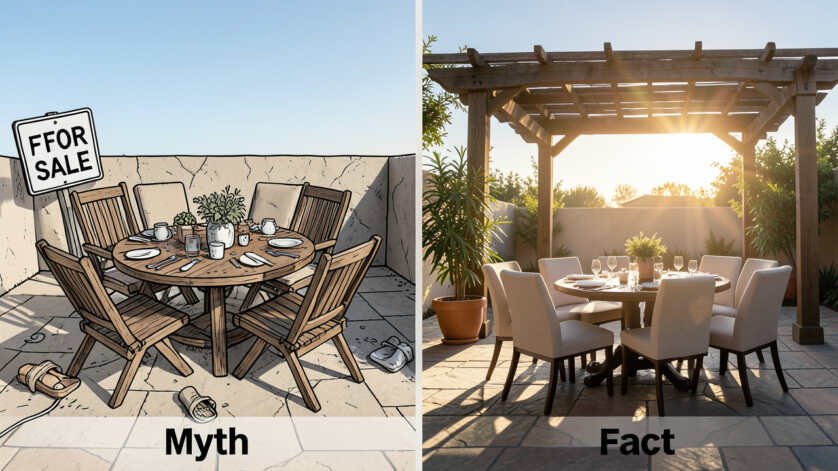
Myth: All round tables wobble because they have an odd number of legs.
Fact: Many round tables have either three, four, or five legs. With proper cross‑bracing and a level base, any leg count can be stable. The wobble comes from poor construction, not the leg number.
Myth: Metal tables are always better than wood.
Fact: Metal can rust and dent, while high‑quality teak or eucalyptus wood can last decades. The best material depends on your climate and maintenance preferences. According to the, both materials have similar satisfaction rates among buyers.
Myth: A 48‑inch round table seats four people easily.
Fact: 48 inches seats four only if you use slim chairs and keep place settings small. With standard dining chairs and plates, four adults will feel cramped. Many buyers regret not going up to 54 inches.
Important: Measure your own chairs and place settings at home. Bring a cardboard mockup to the store if possible. Seeing the actual size in your space removes guesswork.
Frequently Asked Questions
How big of a round patio table should I get for my space?
Measure your patio length and width. Subtract 36 inches from each dimension. The result is the maximum diameter. For a 10×10 foot patio, a 48‑inch table works well.
What material is best for a round patio table in a rainy climate?
Aluminum or resin wicker are best because they resist water and rust. Avoid steel unless it is stainless or thickly coated. Teak also works but requires oiling to prevent mildew in very wet areas.
Can a round patio table hold an umbrella?
Yes, many round tables have a center hole for a market umbrella. Check the hole diameter (typically 1.5‑2 inches) and that the table’s base can support the umbrella’s weight. Some tables need a separate umbrella stand inserted through the hole.
Should I buy a round table with a glass top?
Glass tops look modern but can chip, break, and show fingerprints. Tempered glass is safer and stronger, but not as durable as solid materials. Glass is best for covered patios where it won’t get direct hail or debris.
How do I clean and maintain a round patio table?
Most aluminum and wicker tables need only mild soap and water. Steel tables require annual inspection for rust spots. Teak should be cleaned with a mild cleaner and oiled every 1‑2 years. Always store cushions indoors when not in use.
Final Thoughts
Focus on material, size, and stability – these three checks prevent costly mistakes. Measure your space before you shop, and test the table’s build quality in person. A well‑chosen round patio table becomes the center of your outdoor gatherings for years.