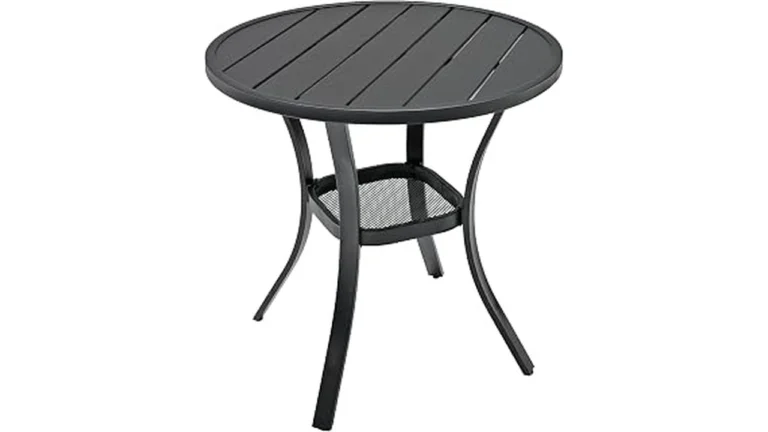
The worst places for a folding outdoor table are direct sunlight, damp ground, near heat sources, uneven surfaces, and unsecured windy areas, as these cause rapid warping, rust, mold, structural failure, or the table being tossed. Direct sunlight can make plastic tables brittle and warp within one season, damp ground leads to rust and mold even on weather-resistant models, and heat from grills can melt tabletops and weaken leg locks. To maximize its lifespan, store the table indoors or in a shaded, dry, level area, and always secure it in wind.
Your folding outdoor table can last for years or get ruined in weeks – it depends on where you put it. This article reveals the worst spots and how to avoid them.
Quick Verdict: Never leave a folding outdoor table in direct sunlight for long periods, on wet or muddy ground, near open flames or heat sources, on uneven surfaces, or in areas with high wind without securing it. These conditions cause warping, rust, fading, and structural failure. Store your table indoors or in a shaded, dry, level area to maximize its lifespan.
Key Takeaways
- Direct sunlight can make plastic folding tables brittle and warp them within a single summer season.
- Damp ground causes metal frames to rust and plastic surfaces to develop mold, even if the table is rated as weather-resistant.
- Heat from grills or fire pits can melt plastic tabletops and weaken the locking mechanisms on folding legs.
- Setting a folding table on uneven ground puts uneven stress on the legs, often leading to bent frames or collapsed tables.
- Wind speeds above 30 mph can lift an unsecured folding table and throw it across a yard, causing permanent damage.
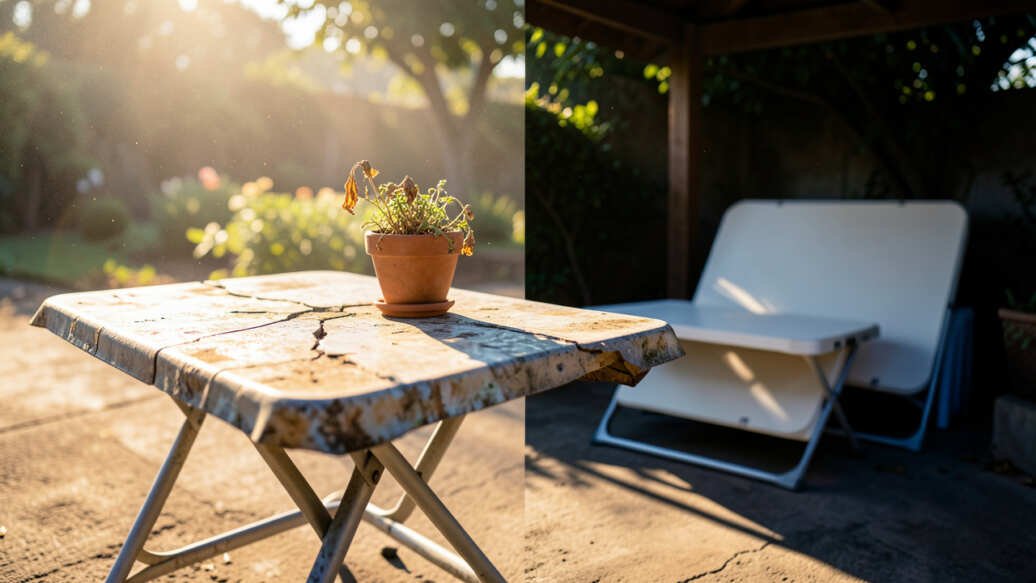
Direct Sunlight: The #1 Enemy of Folding Tables
Ultraviolet (UV) radiation from the sun is the most common cause of damage to folding outdoor tables. Plastic tabletops – especially those made from polyethylene or polypropylene – become brittle and discolored after prolonged exposure. Metal frames can also get hot enough to warp or weaken the protective coating.
According to a study published by the American Society for Testing and Materials (ASTM), UV exposure can reduce the tensile strength of polyethylene by up to 40% after 500 hours of direct sunlight. That equals about three months of afternoon sun in most climates.
Even tables labeled as “UV-resistant” are not immune. The resistance only delays the damage, not prevents it entirely.
Important: Always store your folding table inside a garage, shed, or under a fully covered patio when not in use. If you must leave it outside, use a heavy-duty waterproof cover that blocks UV rays.
Signs of UV damage include a chalky or powdery surface, fading colors, hairline cracks, and legs that no longer fold smoothly. Once cracks appear, the table is structurally compromised and should be replaced.
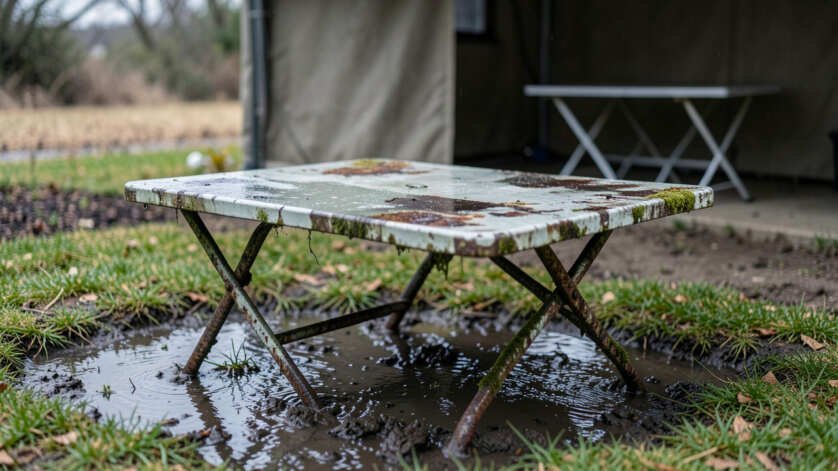
Avoid Damp Ground and Rain Accumulation
Moisture is equally destructive. Leaving a folding outdoor table on wet grass, mud, or standing water causes rust on steel frames and swelling or rot on wooden tabletops. Even plastic tables can develop mold and mildew on the underside where water pools.
A report from the Consumer Product Safety Commission (CPSC) notes that nearly 60% of folding table failures reported over a five-year period involved tables stored outdoors in damp conditions. The water weakened the leg locking mechanisms, causing the tables to collapse during use.
Wooden folding tables (typically made from cedar or pine) are especially vulnerable. The wood absorbs moisture, expands, and then splits as it dries out. This cycle makes the tabletop uneven and unsafe for holding food or heavy items.
Warning: Do not store a wet folding table folded up. Moisture trapped between the folded halves accelerates rust and mold growth. Always dry the table completely before folding and storing.
Heat Sources and Open Flames
Placing a folding table near a grill, fire pit, or outdoor heater is a common mistake. High heat can melt plastic tabletop surfaces, soften metal leg joints, and even cause a fire if the table is made from flammable materials.
Manufacturers like Lifetime and Coleman state in their product manuals to keep the table at least 10 feet (about 3 meters) from any heat source. The heat from a standard charcoal grill can reach over 500°F (260°C) at the table surface, which is far above the melting point of most plastic folding tables.
Aluminum tables are more heat-resistant than plastic ones, but the folding mechanisms – often made of steel – can expand and lock up. This makes folding the table difficult or impossible.
Tip: If you use a table near a grill, place a heat-resistant mat or a thick wooden cutting board between the table and any hot pans. This protects the surface and prevents warping.
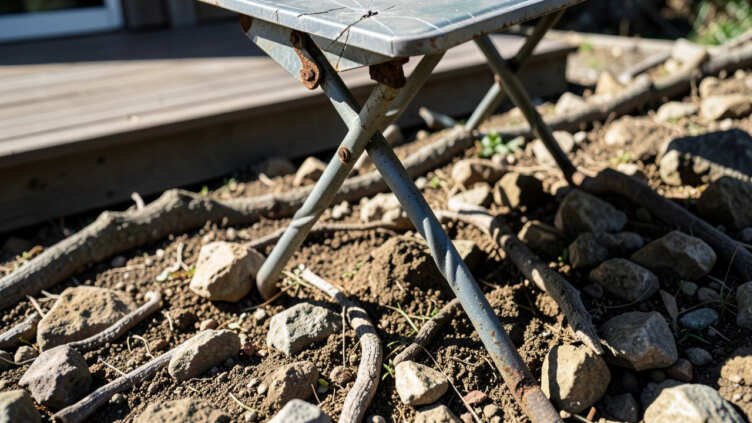
Uneven Surfaces Lead to Structural Stress
Setting up a folding outdoor table on uneven ground – such as a sloped lawn, gravel driveway, or bumpy dirt – puts uneven pressure on the legs. Over time, this can bend the leg hinges, crack the table frame, and make the table wobble dangerously.
The National Safety Council reports that improper set-up on uneven surfaces causes over 1,000 emergency room visits per year in the United States from folding table collapses. The table tilts, items slide off, and the legs buckle under the shifted weight.
Most folding tables have adjustable leg heights, but they are only designed for small variations – typically less than 1 inch (2.5 cm) of difference. For larger slopes, you need to level the ground or use leveling blocks underneath the feet.
Warning: Never sit or lean on a folding table placed on uneven ground. The sudden shift in weight can cause the table to flip over or collapse. Always check that all four feet are touching the ground firmly before loading anything.
Wind Can Toss a Lightweight Table
Folding outdoor tables are lightweight by design – typically 20 to 40 pounds (9 to 18 kg). This makes them easy to carry but also very vulnerable to wind. A strong gust can lift the table and toss it several feet, damaging legs, cracking the tabletop, or even leaving dents in cars or property.
According to the Outdoor Power Equipment Institute, wind speeds above 30 mph can easily lift a standard 6-foot folding table that is not weighted down. Many injuries occur when a table is blown into a person or pet during a sudden storm.
If you need to use a folding outdoor table on a breezy day, always weigh it down with sandbags, heavy objects, or table weights designed for outdoor use. Never leave an unsecured table set up overnight when wind forecasts are high.
Important: If wind is expected, fold the table and move it to a protected area. A leaned table acts like a sail and can cause more damage to nearby furniture or structures.
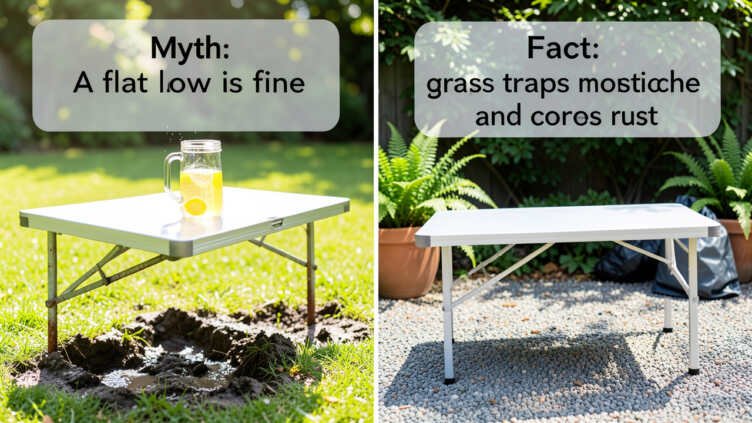
Common Myths vs Facts
- Myth: All folding tables are weatherproof and can stay outside indefinitely. Fact: Most folding tables are weather-resistant, not weatherproof. UV and moisture will still degrade them over time.
- Myth: A table stored in a garage or shed doesn’t need cleaning before storage. Fact: Dirt, food residue, and moisture trapped on the table attract pests and encourage mold, even indoors.
- Myth: You can fix a warped tabletop by placing heavy books on it. Fact: Warping from UV or moisture is permanent. The internal molecular structure has changed, and no amount of weight will reverse it.
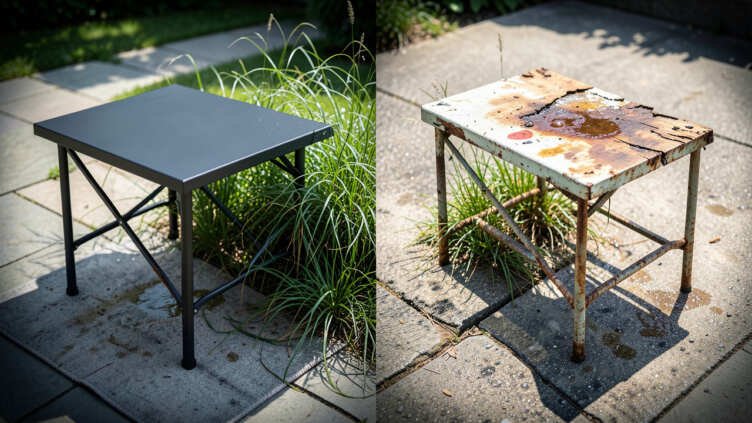
Quick Damage Comparison Table
| Condition | Damage to Plastic Table | Damage to Metal Table | Best Prevention |
|---|---|---|---|
| Direct sunlight | Brittle, crack, fade | Paint peeling, heat warp | Store in shade or use UV cover |
| Damp ground | Mold, mildew, warping | Rust, corrosion, jamming | Dry before storage; store indoors |
| Heat & flames | Melting, ignition risk | Locking mechanism seizing | Keep 10+ ft from heat sources |
| Uneven ground | Leg hinge cracking | Bent frame, collapse | Level ground or adjustable feet |
| Wind | Cracking from impact | Scratches, dented legs | Weigh down or store indoors |
Frequently Asked Questions
Can I leave my folding table outside in the rain?
No. Even weather-resistant tables should not be left in rain. Water seeps into leg joints and under rubber feet, causing rust and weakening the frame. Always bring the table inside when rain is expected.
Is it safe to use a folding table on a concrete patio?
Yes, concrete is a level, stable surface. However, direct sun on concrete can reflect heat and make the table surface even hotter. Place the table in a shaded part of the patio to avoid combined heat damage.
What is the best material for a long-lasting folding outdoor table?
Aluminum frames with high-density polyethylene (HDPE) tabletops offer the best balance of durability, weight, and weather resistance. Avoid all-steel tables unless they are fully powder-coated and galvanized.
How often should I clean my folding table to prevent damage?
Clean the table after each use with mild soap and water. Remove food crumbs and sticky residues that attract insects and moisture. Dry the table completely before folding or storing.
Can a warped tabletop be repaired?
No. Warping from UV or moisture is permanent structural damage. The tabletop will never lie flat again, making it unsafe for balancing dishes or heavy items. Replace the table as soon as you notice significant warping.
Pro Tips for Extending Your Table’s Life
- Apply a UV-protectant spray designed for outdoor plastics once a month during the summer to slow down fading and brittleness.
- Use a light lubricant (like silicone spray) on the leg locking mechanisms every season to prevent rust and ensure smooth folding.
- Store the table standing on its side or with legs fully folded, never leaning against a wall for long periods, to avoid stress on the hinge points.
- For tables with metal frames, check for scratches in the powder coating and touch them up with rust-resistant paint immediately.
- Always carry the table with two people when it is fully set up to avoid twisting the frame and causing hairline cracks.
Tip: If you must leave a folding table outside for more than a few hours, choose a spot under a tree or a patio umbrella. This simple move can reduce UV exposure by up to 80% and keep the table cooler.
Resources and Tools
- Lifetime Products – Manufacturer of durable folding tables with detailed care guides.
- Coleman – Offers lightweight folding tables with weather-resistant coatings.
- Goplus – Budget-friendly option with aluminum frames and HDPE tops.
- ASTM International – Standards for material durability and UV testing.
- Consumer Product Safety Commission – Safety reports and product recall information.
Final Thoughts
Knowing where you should never put a folding outdoor table if you want it to last is the key to getting years of use from it. Avoid direct sunlight, damp ground, heat sources, uneven surfaces, and strong winds. Store the table indoors when possible and clean it after every use. These simple habits will keep your table sturdy and safe for many seasons.