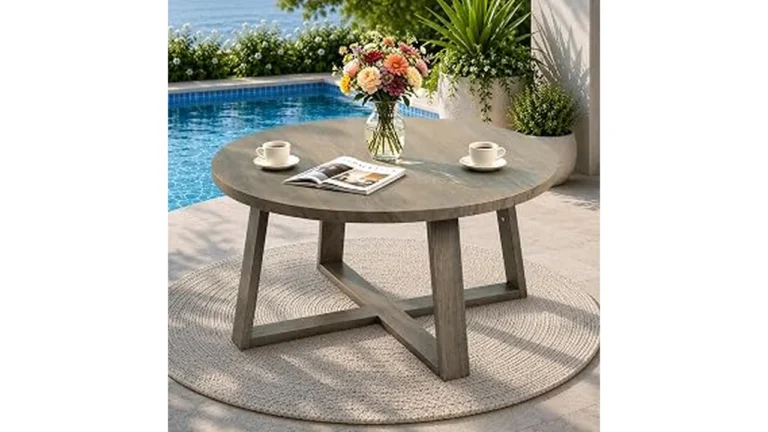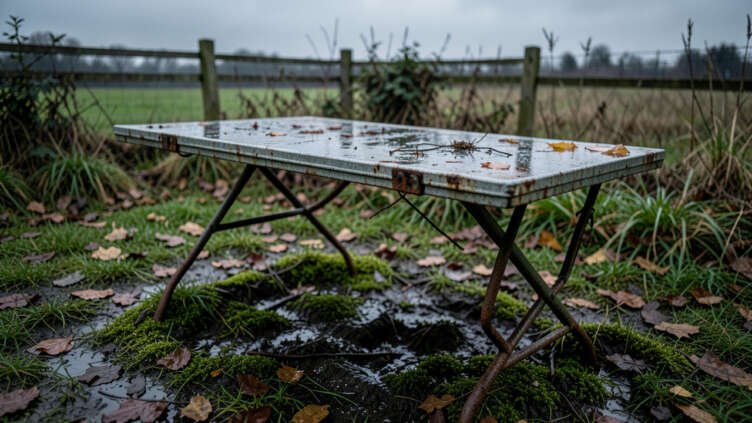
A coffee table is wrong for your pool deck if its material cannot withstand moisture, chlorine, and salt exposure, leading to rust, corrosion, or rot within one season. To assess your current table, inspect for rust, measure height and scale relative to seating, check stability on uneven surfaces, and evaluate whether sharp corners pose safety risks. Choosing a table made from marine-grade aluminum or solid teak ensures long-term durability and safety in a pool environment.
That coffee table next to your pool might be damaging your deck or ruining the overall look. Here is how to spot the signs and pick a better fit.
Quick Verdict: In short, a wrong coffee table for a pool deck is one that does not resist moisture, rusts easily, gets damaged by pool chemicals, or lacks proper drainage. If your table shows rust, has a material that rots, or looks out of scale, it is likely a poor match for your pool area.
Key Takeaways
- A coffee table made from materials like solid teak or marine-grade aluminum typically withstands pool environments better than painted steel or unsealed wicker.
- If your table shows rust, water stains, or fading after one season, it is likely the wrong material for high-moisture pool decks.
- A table that is too tall or too short for your seating creates an awkward and unusable layout around the pool.
- Pool chemicals like chlorine and salt can accelerate corrosion on metal tables and cause finishes to peel.
- Sharp corners on a coffee table pose a safety risk on a busy pool deck, especially with children around.
What to Look For in a Pool Deck Coffee Table
A pool deck is not the same as a regular patio. The environment is harsh. Water splashes constantly. Chlorine and salt get into the air. Sunlight reflects off the water and hits your furniture from every angle.
Your how to tell if your outdoor coffee table is wrong for your pool deck checklist starts with understanding what works. The right table resists water, stays stable on wet surfaces, and does not degrade under chemical exposure.
According to the American Society for Testing and Materials (ASTM), outdoor furniture must meet specific standards for corrosion resistance and UV stability to be considered durable for commercial use. Consumer goods that meet these standards usually carry labels indicating they are “marine-grade” or “all-weather.”
How to Assess Your Current Coffee Table
Walk up to your coffee table right now. Look at it closely. Use this step-by-step guide to decide if it belongs on your pool deck or in the trash.
1. Inspect the Material Composition
The material is the biggest factor. If your table is made from non-marine grade steel or untreated wood, it is likely wrong for the location.
Aluminum is a top choice because it does not rust. Powder-coated aluminum stands up well to pool chemicals and UV rays. Consumer Reports states that powder-coated aluminum is the most durable material for outdoor furniture, lasting up to 20 years with proper care.
- Teak: Grade A teak has natural oils that repel water. It can last decades outdoors. Lower grades of teak soak up moisture and crack.
- Wrought Iron: It is heavy and stable. But it rusts badly if the paint chips. You need to repaint it often near a pool.
- Wicker: Only all-weather resin wicker (HDPE/PVC) works. Natural wicker rots quickly in pool environments.
- Steel: Avoid it unless it is stainless steel grade 316. Regular steel rusts fast when exposed to chlorine.
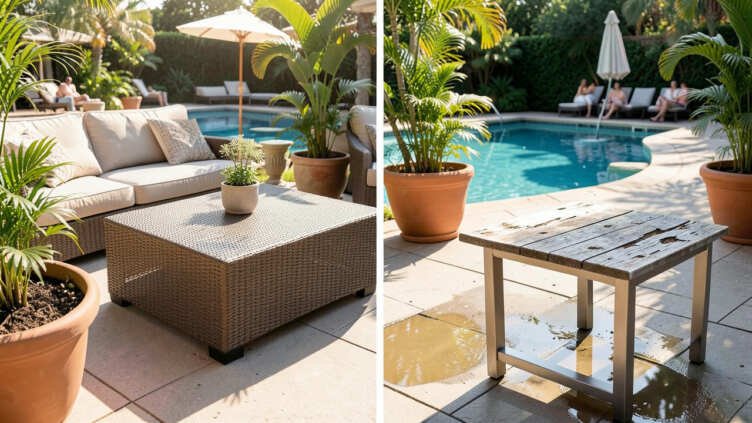
Warning: Avoid tables made from bare, non-marine-grade steel. These will almost certainly rust within one season if exposed to pool water and humidity.
2. Measure the Height and Scale
Scale matters more than you think. A coffee table that is too tall or too short ruins the flow of the space.
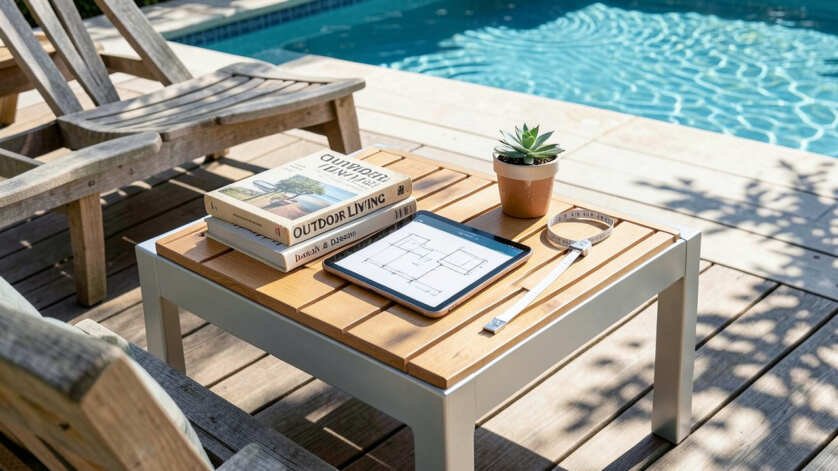
Standard coffee table height is 16 to 18 inches. Most pool lounge chairs sit low, around 10 to 12 inches from the ground. If your table is standard height, it might work. If it is bar height, it is definitely wrong.
Measure the distance from the seat of your chair to the top of the table. It should be roughly the same height. A gap of more than 4 inches feels awkward.
- Table too low? Drinks and snacks are out of reach.
- Table too high? It blocks the view and feels imposing.
- Table too wide? You cannot walk around it easily.
- Table too narrow? It looks puny next to large furniture.
3. Check for Rust and Corrosion
Rust is a dealbreaker. It stains your deck. It weakens the furniture. It looks terrible.
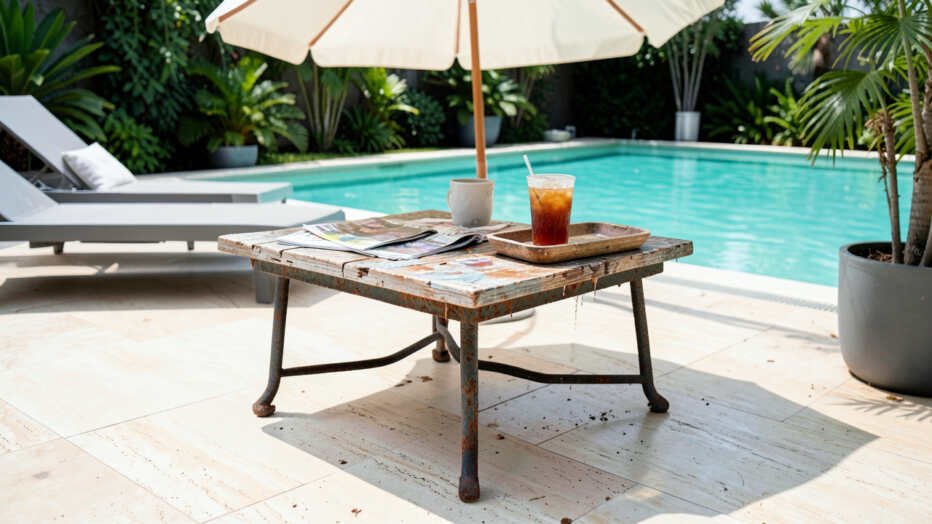
Look underneath the table. Check the legs and joints. If you see orange or brown spots, the protective coating is failing. Pool water accelerates this process.
Chlorine is an oxidizing agent. It speeds up rust on metal. Salt water pools are even worse. A report by the U.S. Consumer Product Safety Commission highlights that pool decks account for a significant number of slip-and-fall incidents, making furniture stability crucial. Rusting legs can become weak and collapse.
Tip: Choose a coffee table with a slatted top. It allows water to drain through instead of pooling on the surface. This reduces the chance of rust and water damage.
4. Evaluate the Stability
A wobbly table is a hazard on a pool deck. The ground is often uneven. People are walking around with wet feet. A bump can knock a heavy drink onto the deck.
Push the table from the side. Does it sway? Is it top-heavy? A good pool deck table should feel solid and planted.
Look at the feet. Do they have rubber caps or adjusters? Adjustable feet help stabilize the furniture on uneven surfaces.
- Weight is your friend here. Heavier tables are more stable.
- Look for tables with wide bases. Narrow bases tip over easily.
- Check the joints. Wobble often comes from loose screws or bad welds.
5. Think About Safety and Edges
Pool decks are wet. Kids run around. Adults slip. Sharp corners on a coffee table are dangerous.
A report by the U.S. Consumer Product Safety Commission highlights that furniture-related injuries are common around pools. Falls onto sharp corners cause cuts and bruises. Young children are at the highest risk.
Look at the edges of your table. Are they sharp? Do they have a square, 90-degree angle? If yes, it is likely the wrong table for a busy pool deck.
- Round or oval: Safest choice. No corners to hit.
- Bullnose edge: Rounded top edge. Better than square.
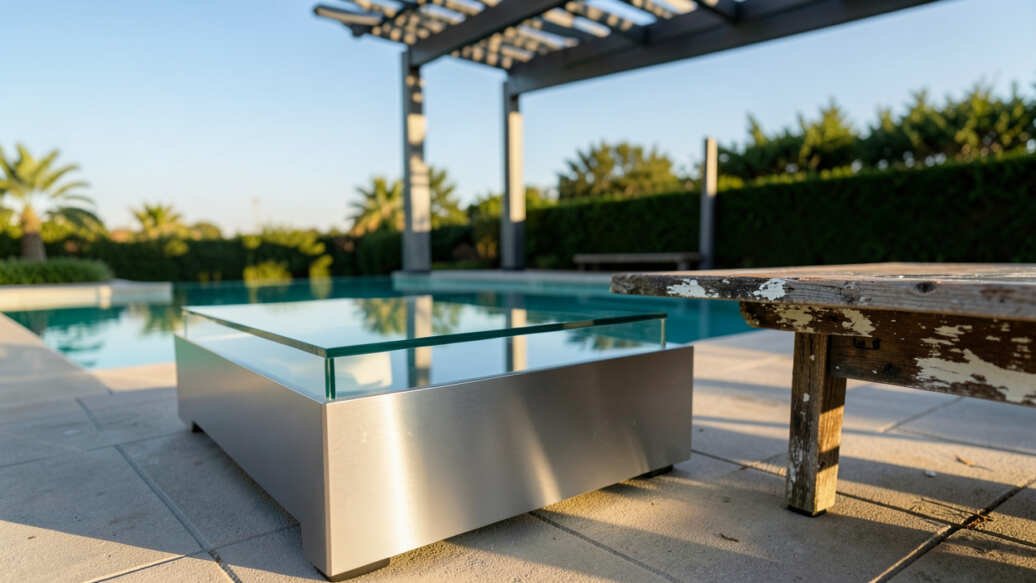
- Glass top: Tempered glass is safer than regular glass, but it can still shatter if hit at the right angle. Many experts recommend avoiding glass near pools.
6. Consider the Maintenance Required
How much work does your table need? If the answer is “a lot,” it is probably wrong for your pool deck.
Wood tables need oiling. Wrought iron needs painting. Wicker needs to be kept dry. A high-maintenance table becomes a burden near a pool.
Low-maintenance materials for pool decks include:
- Powder-coated aluminum
- HDPE (high-density polyethylene) lumber
- All-weather resin wicker
- Solid teak (naturally low maintenance, but it turns gray)
The teak industry reports that Grade A teak can last over 75 years outdoors with virtually no maintenance. Lower grades degrade quickly in wet conditions and require annual sealing.
Quick Comparison Table
| Material | Water Resistance | UV Resistance | Weight / Stability | Maintenance Level |
|---|---|---|---|---|
| Powder-Coated Aluminum | Excellent | Excellent | Light / Good | Very Low |
| Grade A Teak | Excellent | Good | Heavy / Excellent | Low |
| Wrought Iron | Poor (if paint chips) | Good | Heavy / Excellent | High |
| Resin Wicker (HDPE) | Very Good | Excellent | Medium / Good | Low |
| Stainless Steel (316) | Excellent | Good | Heavy / Excellent | Low |
Common Myths About Pool Deck Coffee Tables
Many people make assumptions about what works near a pool. These myths lead to bad purchasing decisions. Here are three common misconceptions.
Myth 1: Any Outdoor Furniture Works By the Pool
Fact: A pool deck is a unique environment. The combination of UV rays, pool chemicals (chlorine or salt), and constant moisture is more aggressive than a standard patio. Standard “outdoor” furniture is often tested for rain and sun, not for chlorinated water exposure.
Myth 2: Aluminum Tables Are Too Light and Will Blow Away
Fact: Marine-grade aluminum with proper ballast or design is stable and non-corrosive. Many high-end manufacturers like use heavy-gauge aluminum frames that are both strong and lightweight. You can add small weights or choose a wider base for extra stability.
Myth 3: Wicker Is the Best Choice for a Tropical Look
Fact: Only all-weather resin wicker (made from HDPE or PVC) holds up near a pool. Natural wicker rots, splinters, and grows mold in high-humidity environments. If your wicker table is not clearly labeled as “all-weather” or “resin wicker,” keep it away from the pool.
Why the Wrong Table Hurts Your Pool Deck
The wrong table does more than look bad. It causes real problems.
A rusting table leaves stains on your deck. These rust stains are hard to remove from concrete and stone. A rotting wooden table attracts insects and creates splinters that hurt bare feet.
A table that sheds material or fades quickly needs constant replacement. Buying cheap furniture for a pool deck often costs more in the long run because you replace it every year.
According to, outdoor furniture should be rated for “coastal” or “marine” use if it will be near water or salt air. This rating means it has passed specific corrosion and UV tests.
Pro Tips for Choosing the Right Coffee Table
If you decide to replace your current table, follow these pro tips. They will help you pick a table that works perfectly on your pool deck.
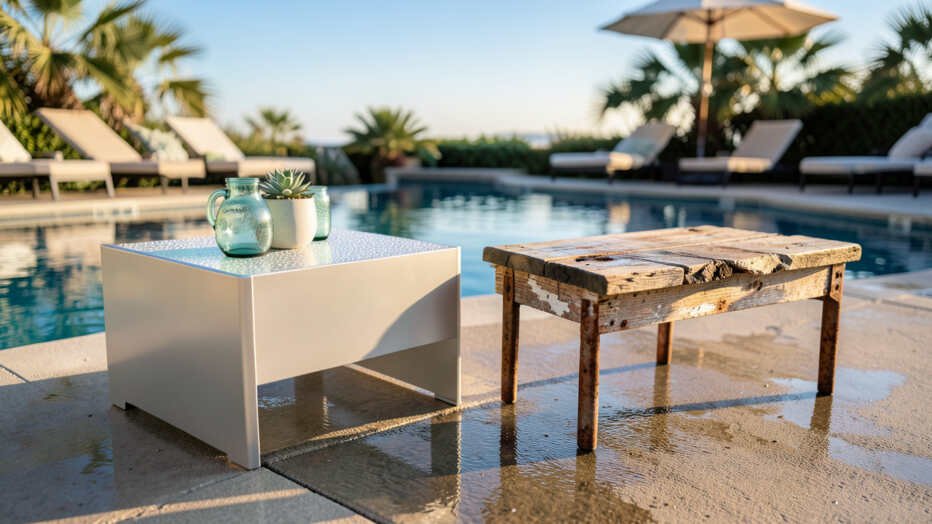
- Look for slatted tops. Solid tops hold water. Slatted tops let water drain through. This prevents puddles and reduces cleaning time.
- Choose rounded corners. Safety is a priority. Rounded or oval tables reduce the risk of injury from falls.
- Check the frame warranty. A good pool table comes with a 5 to 10 year warranty on the frame. This shows the manufacturer trusts its resistance to the elements.
- Buy from brands that specialize in marine environments. Companies like use HDPE lumber that is entirely waterproof and UV-resistant.
- Test the stability in the store. Shake the table. Jump on the base. It should feel rock solid.
- Consider a two-tier table. Some pool tables have a lower shelf for towels and a top surface for drinks. This extra storage is very useful near a pool.
What Are the Signs of a Good Pool Deck Table?
Flip the question around. Instead of just looking for what is wrong, know what is right.
- Material: Powder-coated aluminum, HDPE, or Grade A teak.
- Finish: Matte or textured finish hides water spots better than gloss.
- Drainage: Slatted or mesh top allows water to pass through.
- Stability: Wide base, heavy weight, no wobble.
- Safety: Rounded edges, no sharp corners.
- UV Resistance: Rated for continuous direct sunlight.
How Does Your Coffee Table Hold Up Against Pool Chemicals?
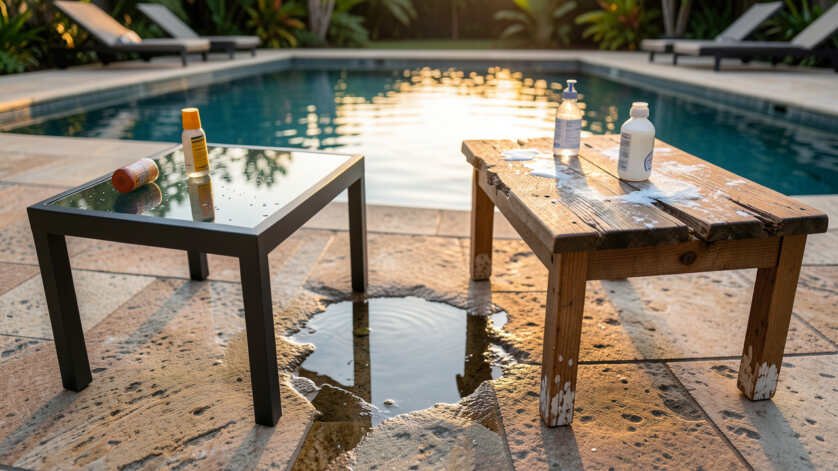
Pool chemicals create a harsh microclimate. Chlorine evaporates and settles on furniture. Salt residue from saltwater pools is equally damaging.
Stainless steel grade 316 is the standard for marine environments. It contains molybdenum, which helps it resist chlorides. Many cheap outdoor tables use grade 430 stainless steel, which rusts easily.
For aluminum, look for a “powder-coated” or “anodized” finish. These finishes create a barrier between the metal and the chemicals. If the coating chips, the aluminum underneath can pit and oxidize.
For wood, only dense hardwoods with high oil content survive. Teak and ipe are the standard choices. They naturally repel water and resist chemical damage.
Tip: Rinse your pool deck furniture with fresh water once a week. This simple step removes chlorine and salt residue before it can damage the finish.
What to Do If Your Table Is Wrong for the Pool Deck
You have identified the problem. Your table is wrong. Now what?
First, move it. If the table is still functional, move it to a covered patio or a low-moisture area. It might survive there.
Second, clean and seal it if possible. For metal tables, you can sand down rust spots and apply a marine-grade paint. For wood, you can sand it and apply a teak sealer. This buys you some time.
Third, recycle or donate it. Many communities have scrap metal recycling. Some charities accept gently used furniture.
Finally, replace it with something designed for the environment. Your pool deck deserves furniture that can handle the heat, water, and chemicals.
Resources and Tools
These brands and organizations provide high-quality solutions for pool deck furniture.
- Polywood – Specializes in HDPE lumber furniture that is completely waterproof and UV-resistant.
- Tropitone – A leading manufacturer of marine-grade aluminum outdoor furniture with extensive pool and coastal collections.
- ASTM International – Develops the standards for outdoor furniture corrosion and UV resistance.
- Consumer Reports – Publishes detailed reviews and buying guides for outdoor furniture durability.
Frequently Asked Questions
Can I use a wooden coffee table near the pool?
Yes, but only if it is made from a dense, oily hardwood like Grade A teak or ipe. Apply a marine-grade sealant annually for best results. Lower-grade woods will rot and warp quickly in the high-moisture pool environment.
How do I stop my metal coffee table from rusting?
You cannot stop rust once it starts without stripping the finish. Prevention is key. Choose powder-coated aluminum or stainless steel grade 316. Rinse the table with fresh water weekly to remove chlorine and salt residue.
What is the best shape for a pool deck coffee table?
Round or oval tables are the safest choices for a pool deck. They have no sharp corners to hit during a fall. They also allow for better traffic flow around the furniture.
Should my outdoor coffee table have a glass top?
It is not recommended for pool decks. Tempered glass is safer than regular glass, but it can still shatter under stress. Glass also gets very hot in direct sun and shows water spots constantly. Solid surfaces are a better choice.
How often should I replace my pool deck furniture?
High-quality materials like marine-grade aluminum and HDPE lumber can last 10 to 20 years or more. Lower-quality materials like painted steel or natural wicker often need replacement every 1 to 3 years. Look for frame warranties as a quality indicator.
Final Thoughts
Choosing the right coffee table for your pool deck comes down to material, size, and safety. Avoid tables that rust, rot, or require constant upkeep. A durable, well-proportioned table will enhance your pool area for years.