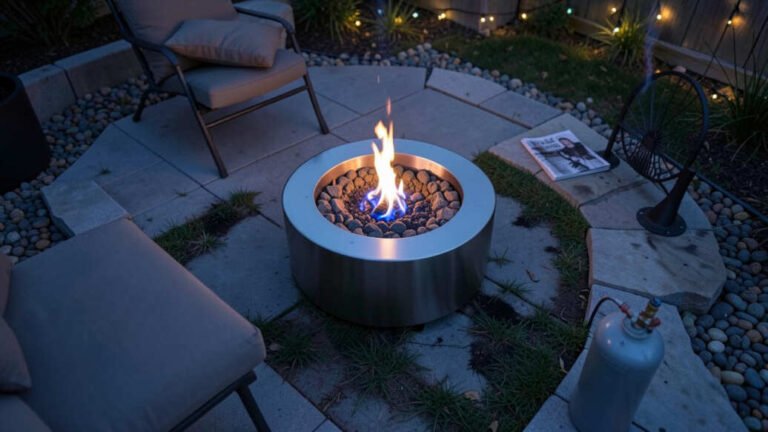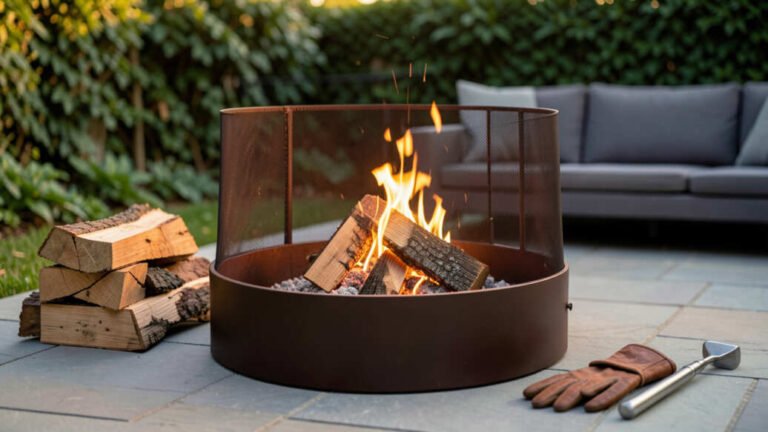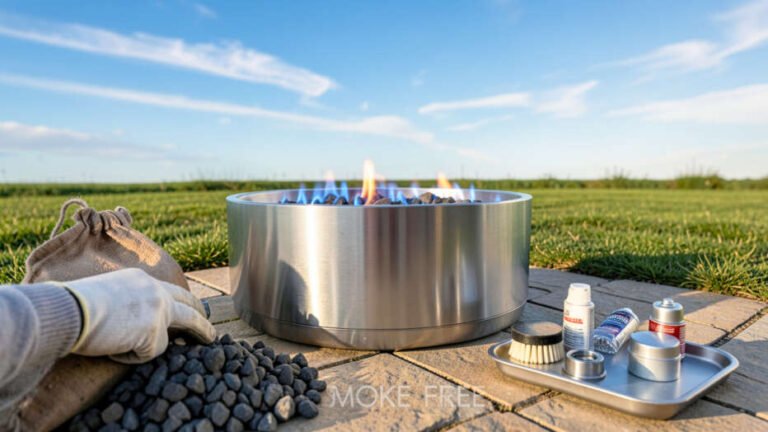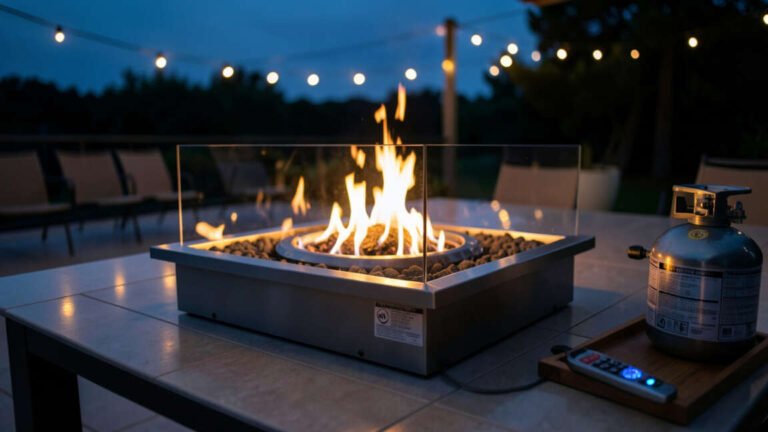
A fire pit typically lasts between 3 and 20 years before failing, with the exact lifespan determined by material, build quality, and maintenance. Steel fire pits generally hold up for 5 to 10 years, while copper and thick stainless steel models can last 15 to 20 years or more. Improper storage and neglect cause premature failure far more often than the original material quality.
A backyard fire pit is a significant investment in outdoor living. The answer to how long a fire pit actually lasts before it fails is rarely straightforward.
Quick Verdict: Simply put, a fire pit lasts anywhere from 3 to 20 years depending entirely on the material, build quality, and how well you maintain it. Steel fire pits with proper care typically last 5 to 10 years. Copper and thick stainless steel models can last 15 to 20 years or more. Stone and concrete fire pits can last indefinitely but often need component repairs.
Many factors push a fire pit toward early failure. Some are out of your control. Others depend on your daily habits. Let’s break down exactly what forces determine the longevity of your fire pit.
Key Takeaways
- A steel fire pit typically lasts 5 to 10 years before rust causes structural failure in the bowl or burn chamber.
- Copper and high-gauge stainless steel fire pits offer the longest lifespan among metal units, often exceeding 15 years.
- Improper storage is the leading cause of premature fire pit failure, not the quality of the original materials.
- Concrete and stone fire pits can last 20 years or more with proper sealing and care routines.
- Water pooling inside the fire pit bowl is the most common cause of rust-related failure in bottom-vented models.
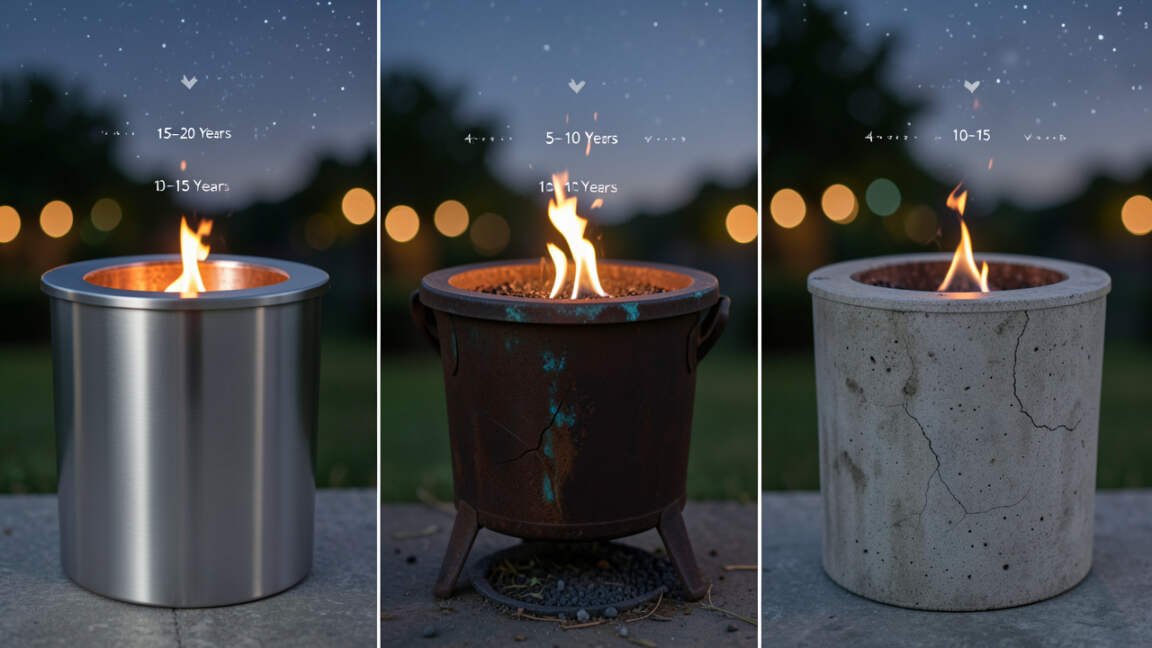
What Is the Average Lifespan by Material?
Your fire pit material is the single biggest factor in its total lifespan. Each material behaves differently under high heat and constant weather exposure. Choosing the right one at the start saves you money and frustration later.
Mild Steel Fire Pits
Mild steel is the most common material for backyard fire pits. It is cheap and easy to shape. According to the, steel remains the most popular material for fire pits, but it is also the most prone to rust without a protective coating. Most steel fire pits last 3 to 7 years before the bowl rusts through completely.
Warning: Many low-cost steel fire pits use a gauge thinner than 18 gauge. These can rust through in as little as 2 seasons if left uncovered outdoors. Inspect the bottom of the bowl every spring for pinhole rust spots.
Stainless Steel Fire Pits
Stainless steel resists rust much better than mild steel. The quality of the stainless matters a great deal. The American Iron and Steel Institute notes that 304-grade stainless steel offers excellent corrosion resistance for backyard use. 316-grade marine stainless steel lasts even longer. A high-quality stainless steel fire pit can last 10 to 20 years with basic care.
Cast Iron Fire Pits
Cast iron is thick and holds heat extremely well. But cast iron is brittle. It can crack if exposed to rapid temperature changes. Cast iron also rusts aggressively once the seasoning or paint wears off. Most cast iron fire pits last 5 to 10 years before cracking or rusting through the base.
Copper Fire Pits
Copper is one of the best materials for a long-lasting fire pit. Copper forms a protective green patina over time instead of rusting away. A well-built copper fire pit can last 15 to 20 years or more. The main failure point on copper fire pits is usually the welded seams or the steel hardware holding the legs together.
Concrete and Stone Fire Pits
Concrete and stone fire pits are extremely durable. The stone or concrete structure can last for decades. The internal metal firebox or burner ring is usually the part that fails first. The Hearth, Patio & Barbecue Association reports that the average lifespan of a concrete fire pit structure exceeds 20 years. You will likely need to replace the internal burn chamber every 5 to 10 years.
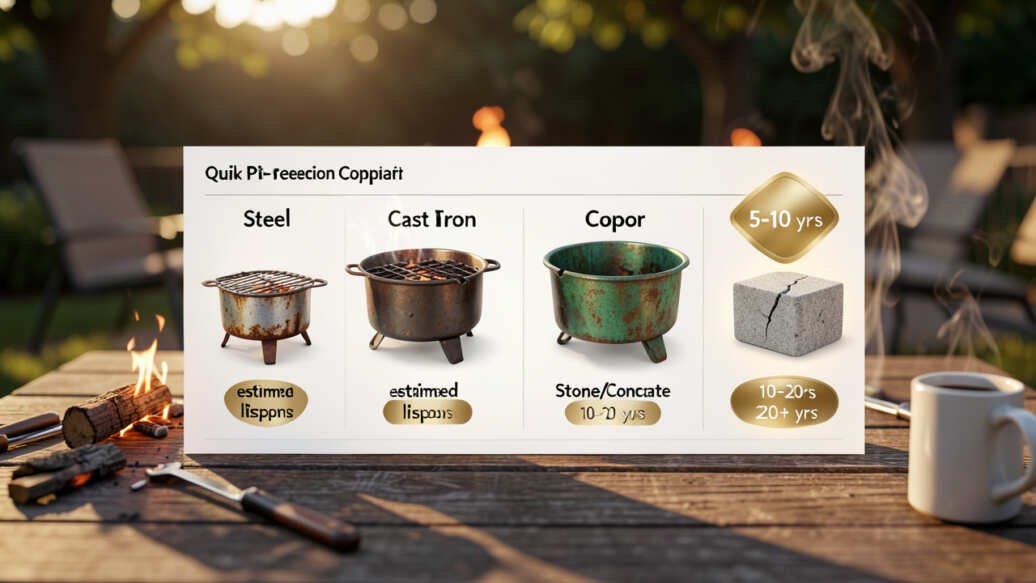
Quick Material Comparison Table
| Material | Average Lifespan | Primary Failure Mode | Maintenance Level |
|---|---|---|---|
| Mild Steel | 3 to 7 years | Rust and corrosion | High |
| Stainless Steel (304/316) | 10 to 20+ years | Weld failure / warping | Low |
| Cast Iron | 5 to 10 years | Cracking / rust | Medium |
| Copper | 15 to 20+ years | Seam failure | Low |
| Concrete / Stone | 10 to 20+ years | Cracking / firebox rust | Medium |
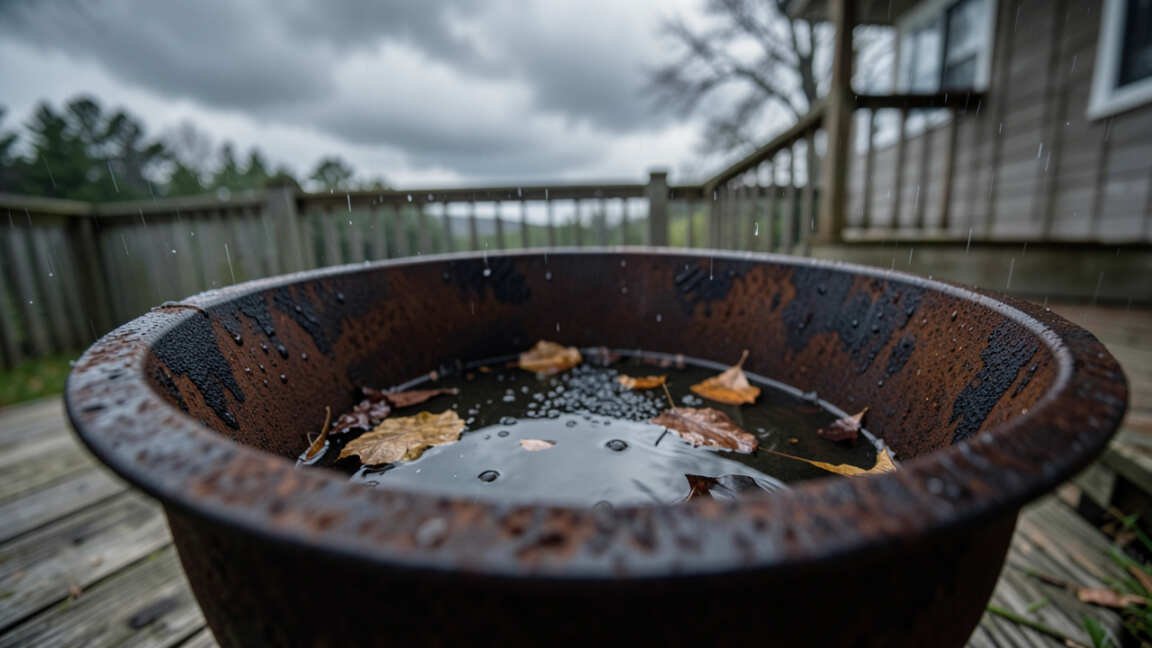
How Does Weather Affect Your Fire Pit’s Longevity?
Climate is the second biggest factor in fire pit failure. Weather affects materials in different ways. Understanding your local environment helps you choose the right type of fire pit.
Moisture and Humidity
Rust needs moisture to form. According to corrosion engineers, exposure to moisture accelerates metal degradation by up to 500% in coastal environments compared to arid climates. If you live near the ocean or in a high-humidity area, your steel fire pit will fail much faster. Stainless steel or copper are much better choices for wet climates.
Freeze-Thaw Cycles
Concrete and stone fire pits suffer in cold climates. Water seeps into small cracks in the concrete. When the water freezes, it expands and widens the cracks. This freeze-thaw cycle can destroy a concrete fire pit in just a few winters. The Portland Cement Association recommends sealing concrete fire pits annually in regions that experience hard freezes.
Direct Sun Exposure
UV rays from the sun damage paint and powder coatings on steel fire pits. Faded paint looks bad, but more importantly, it exposes the bare metal underneath. Once the coating fails, rust starts to form quickly. High-heat paint rated for barbecue grills holds up better than standard spray paint.
How to Extend the Life of Your Fire Pit
You can dramatically extend the life of your fire pit with some simple habits. These steps take very little time and can add years to the lifespan of your investment.
- Cover your fire pit every time you use it. Use a waterproof, UV-resistant cover. Make sure the cover fits snugly and does not trap moisture against the metal. This single habit does more to prevent rust than anything else you can do.
- Keep the ash and debris dry. Ash absorbs moisture from the air and holds it against the bowl. Wet ash accelerates rust 10 times faster than dry ash. Remove ash completely after every use and store it in a metal container.
- Clean the bowl with a wire brush. Remove loose rust and carbon buildup before it becomes a thick layer. For stainless steel, use a non-abrasive pad and stainless steel cleaner. For steel, use a stiff wire brush and touch up the paint with high-heat paint.
- Inspect the drain holes regularly. Many fire pits have small holes in the bottom for drainage. These holes are the first place rust starts. Keep them clear so water never pools in the bowl. Apply a small amount of high-temperature silicone around the holes to seal the edges.
- Store fire pits indoors during winter. If you live in a cold climate, move your fire pit into a shed or garage for the winter months. Storing it outside under a cover is better than nothing, but full winter storage is the best option for maximizing lifespan.
Common Signs Your Fire Pit Is About to Fail
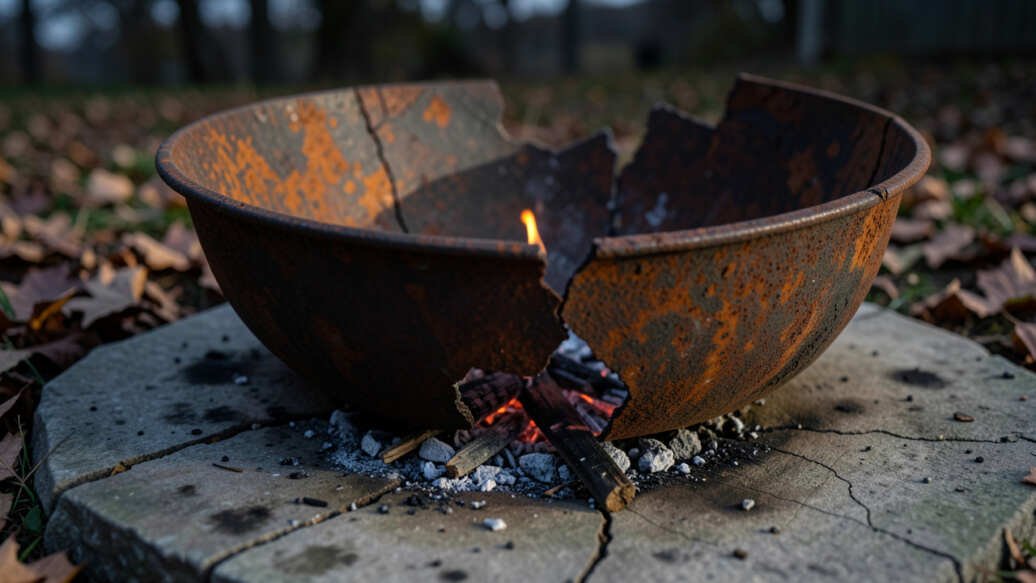
Fire pits rarely fail without warning. Learning to spot the early signs of failure can prevent dangerous accidents. Here are the most common warning signs that your fire pit actually lasts longer than its current condition suggests.
- Thin spots or holes in the bottom of the bowl. This is the most obvious sign of failure. If you see pinholes forming, the bowl will grow larger holes quickly. Replace the fire pit or the bowl insert before the next use.
- Large flakes of rust falling off. Surface rust is normal and can be cleaned. Red or brown flakes several inches wide mean the metal is structurally compromised. This usually happens in steel fire pits after 3 to 5 years of outdoor exposure.
- Cracks in the concrete or stone surround. Hairline cracks are cosmetic at first. Cracks wider than one-eighth of an inch can spread rapidly when water gets in and freezes. Repair these cracks immediately with the appropriate masonry sealant.
- Wobbly legs or unstable base. Rusted welds and corroded leg attachments make the fire pit unsafe. If the legs are rusted through, do not try to repair them. The heat from the fire weakens any repair attempt. Replace the entire unit for safety.
- Excessive smoke or poor airflow. This is a sign that the burn chamber or vent holes are blocked. Blocked vents cause incomplete burning and can create dangerous flare-ups. Clear the vents before every use.
Tip: If your steel fire pit bowl develops a small hole, you can often patch it once with a high-temperature metal patch kit. This gives you an extra season or two. However, patching is a temporary fix. Plan to replace the bowl or fire pit entirely.
Common Myths vs Facts About Fire Pit Lifespans
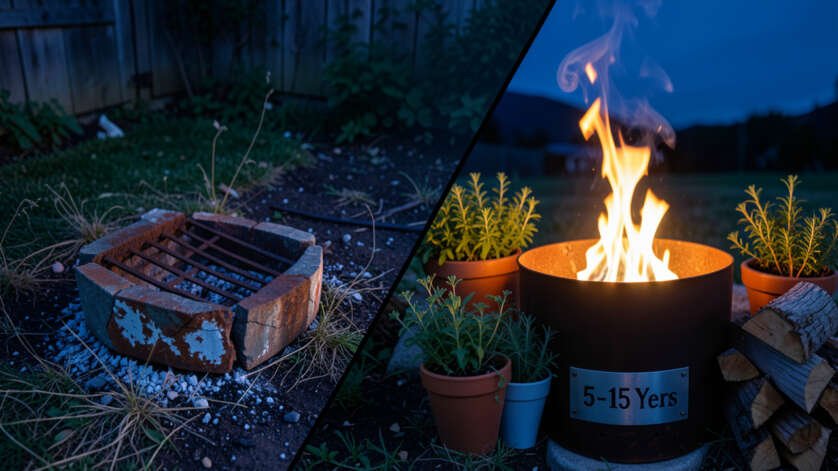
Many fire pit owners believe they will get decades of use no matter what. The reality is different. Let’s clear up the most common misunderstandings about how long a fire pit actually lasts before it fails.
- Myth: A higher price always means a longer lifespan. Fact: Expensive fire pits can fail just as fast as cheap ones if they are made from thin steel. Price often reflects design and brand, not the gauge of the metal. Always check the material gauge and warranty before buying.
- Myth: Rust means the fire pit is completely ruined. Fact: Surface rust can be removed with a wire brush and repainted with high-heat paint. This is true for most steel fire pits. Only deep pitting or holes in the metal mean the fire pit is beyond saving.
- Myth: A fire pit will last forever if you never move it. Fact: Stationary fire pits often fail faster because moisture gets trapped underneath them. Sitting directly on grass or dirt traps moisture against the bottom of the bowl. Elevate your fire pit on a stone or gravel base to allow airflow underneath.
Frequently Asked Questions
How long do cheap fire pits from big box stores last?
Cheap fire pits usually last 1 to 3 years. Most of these use thin 20 to 22-gauge steel and low-quality paint. The Hearth, Patio & Barbecue Association notes that lower-priced models often fail within the first two seasons due to rust.
Can a rusted fire pit be saved with repainting?
Yes, in most cases surface rust can be saved. Use a wire brush or angle grinder to remove all loose rust. Clean the surface with a solvent. Apply several coats of high-heat barbecue paint. This process can add 2 to 3 years to the life of a steel fire pit.
Do gas fire pits last longer than wood-burning fire pits?
Gas fire pits generally last longer than wood-burning models. Gas burns much cleaner and produces less corrosive moisture and acidic ash. The gas burner and ignition system may need replacement every 5 to 8 years, but the main structure often lasts much longer.
What is the best material for a long-lasting fire pit?
Copper and 316-grade marine stainless steel are the best materials for longevity. Both resist corrosion much better than regular steel or cast iron. Copper fire pits can last 20 years or more with minimal maintenance. Concrete structures also last decades but require periodic sealing.
How do I know when to replace my fire pit completely?
Replace a fire pit completely when the bowl has holes larger than a dime. Also replace it if the welds are broken, the legs are unstable, or the concrete structure has large cracks. Continuing to use a structurally failing fire pit is a significant fire safety hazard.
Resources and Tools
These organizations and resources provide authoritative information on fire pit safety, materials, and maintenance practices.
- Hearth, Patio & Barbecue Association (HPBA) – Industry trade association that publishes fire pit safety and usage guidelines.
- American Galvanizers Association – Technical resource on galvanization and corrosion protection for steel products.
- Portland Cement Association – Expert guidance on concrete curing, sealing, and freeze-thaw protection.
- National Fire Protection Association (NFPA) – Official safety standards for outdoor fire features and burn clearances.
Final Thoughts
The lifespan of a fire pit comes down to material choices and daily maintenance habits. Steel fire pits require the most care but offer the lowest entry price. Copper and stainless steel units demand less maintenance and provide the longest service life. No matter which material you choose, covering your fire pit and keeping it dry will always be the most effective way to delay failure and protect your investment.