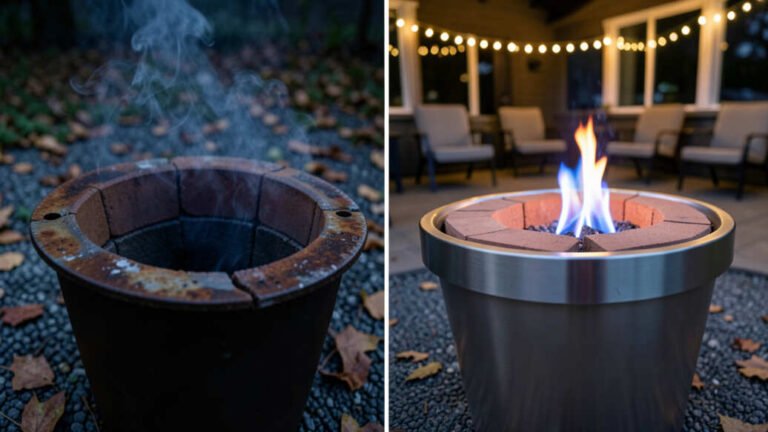
Excessive smoke from a propane fire pit is permanently stopped by correcting the air-to-fuel ratio through an air shutter adjustment, cleaning the burner ports and venturi tubes, and using only high-grade HD-5 propane. A properly adjusted air shutter eliminates nearly all soot by ensuring blue, efficient flames, while routine cleaning prevents buildup that worsens smoke over time. For a lasting fix, check the gas valve and regulator for debris or damage, and avoid low-quality propane that introduces impurities causing yellow, smoky flames.
A smoking propane fire pit is frustrating. You want a clean burn, not clouds of soot. This guide covers the real causes and shows you how to fix them for good.
Quick Verdict: Excessive smoke from a propane fire pit usually comes from too much fuel for the available oxygen, a dirty burner, or low-quality propane. To stop it permanently, adjust the air-to-fuel ratio, clean the burner regularly, and use only fresh, high-quality propane. A simple air shutter adjustment can eliminate nearly all smoke.
Key Takeaways
- Excessive smoke from a propane fire pit is almost always a combustion problem caused by too little oxygen or too much fuel.
- Adjusting the air shutter on the burner tube is the single most effective fix for a smoking fire pit.
- Regular cleaning of burner ports and venturi tubes prevents soot buildup that worsens smoke.
- Using high-grade propane (HD-5 grade) reduces impurities that cause yellow flames and smoke.
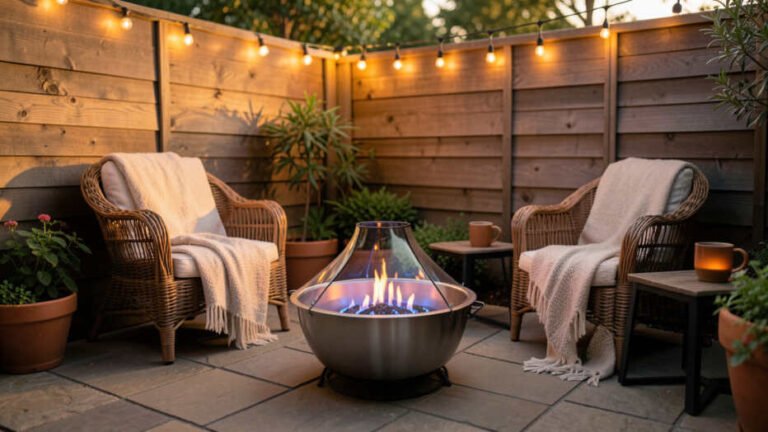
- A propane fire pit should burn with mostly blue flames; yellow tips are okay but thick yellow flames indicate a problem.
Before You Start: What You Need
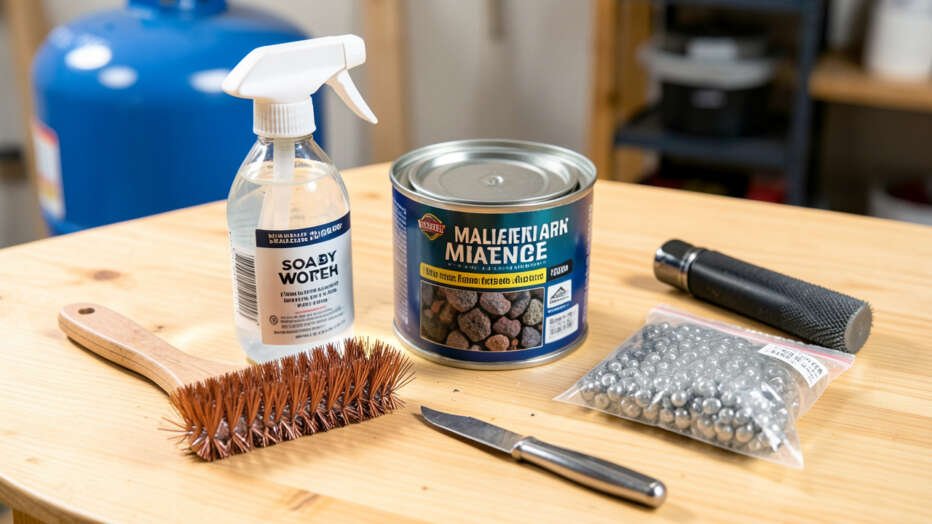
To stop a propane fire pit from smoking, you need a few basic tools and supplies. Gather these before you begin.
- A flathead screwdriver or a small Allen wrench for adjusting the air shutter
- A soft brush and a can of compressed air to clean burner ports
- A bucket of soapy water for leak-testing gas connections
- High-quality HD-5 grade propane (check with your supplier)
- Safety glasses and gloves for handling burner components
Warning: Always turn off the gas supply and let the burner cool completely before touching any part of the fire pit. Propane is highly flammable. Follow all manufacturer safety instructions.
Step-by-Step Process: Fix the Smoke Problem Permanently
Follow these steps in order. Most people stop the smoke at step two.
Step 1: Identify the Smoke Type
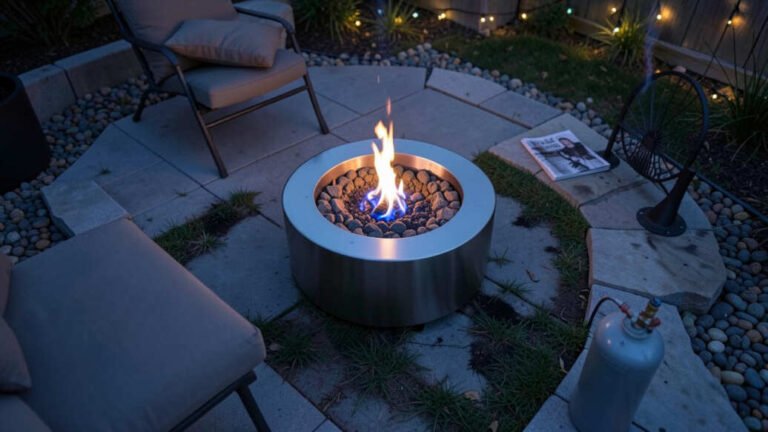
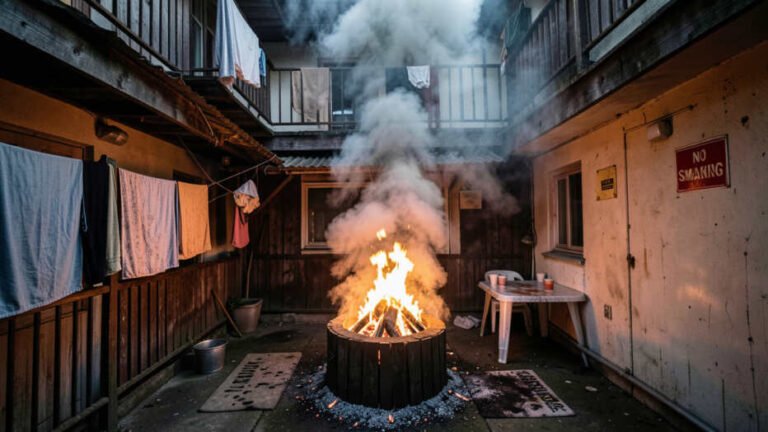
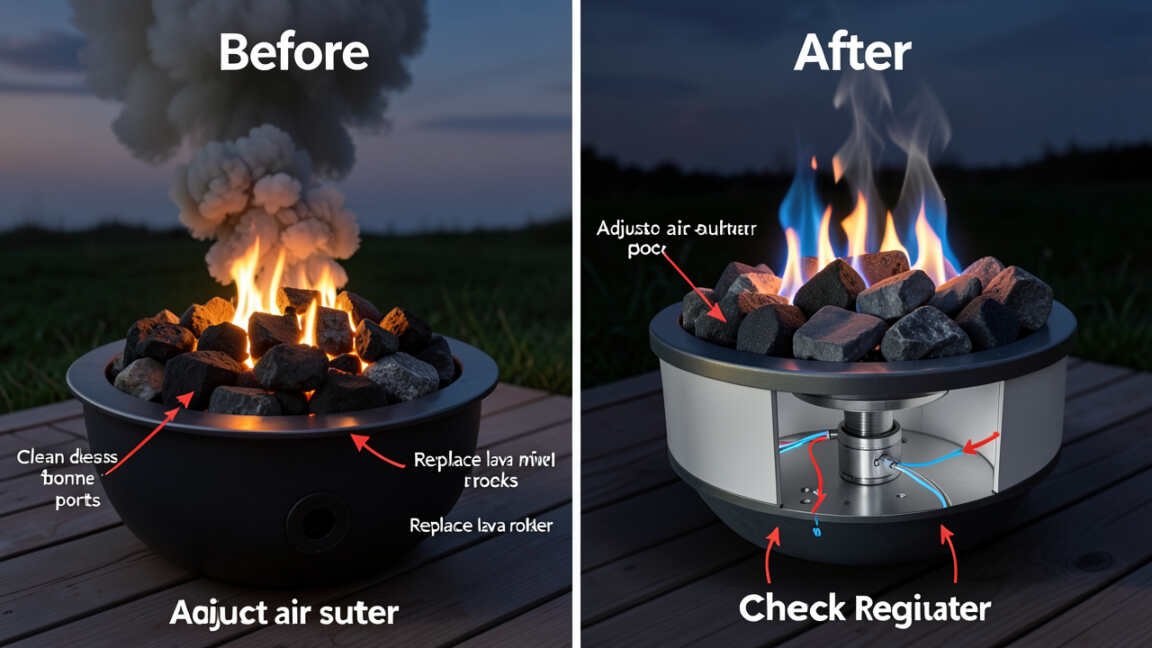
Look at the flame closely. A healthy propane fire pit burns with a blue flame that may have small yellow tips. Thick black smoke means incomplete combustion. Grayish smoke usually means dirt or debris on the burner.
Important: According to the, yellow flames and smoke in gas appliances often signal a shortage of oxygen. This is a safety concern as well as a nuisance.
Step 2: Adjust the Air Shutter
The air shutter controls the mix of oxygen and propane. Locate it on the burner tube, usually a sliding metal plate with a screw. Turn the gas on low and observe the flame. Loosen the screw and slide the shutter open a small amount. Tighten it and check the flame. Repeat until you see mostly blue flames with little to no smoke. Close the shutter if you see flames lifting off the burner.
According to the, about 70 percent of smoking propane fire pits are fixed by adjusting the air shutter alone. This simple step works for most models.
Tip: Adjust the shutter only in small increments — one-quarter turn or a 1/8-inch slide. Over-opening can cause burner flames to lift, creating a dangerous situation.
Step 3: Clean the Burner Ports
Over time, spider webs, dust, and grease clog the tiny holes where gas flows. These blockages create uneven flames that smoke. Use a soft brush or compressed air to clear all burner ports. For stubborn spots, use a toothpick (never a metal object that could enlarge the hole).
Step 4: Check and Replace the Propane Tank
Low-quality propane often contains more impurities. Use only HD-5 grade propane, which is the industry standard for clean burning. If your tank is old or rusty, swap it for a new one at your local exchange station.
Step 5: Inspect the Gas Valve and Regulator
A failing regulator or a clogged gas valve can send mixed amounts of fuel and cause smoking. Turn off the tank. Disconnect the regulator and inspect the orifice for debris. Reconnect and test for leaks with soapy water.
- Turn off all burner controls and the tank valve.
- Disconnect the regulator from the tank.
- Look inside the regulator opening for any debris. Use compressed air to clean it.
- Reattach the regulator tightly.
- Brush soapy water on all connections. Turn on the tank valve. Bubbles indicate a leak — tighten further or replace the part.
Common Mistakes to Avoid
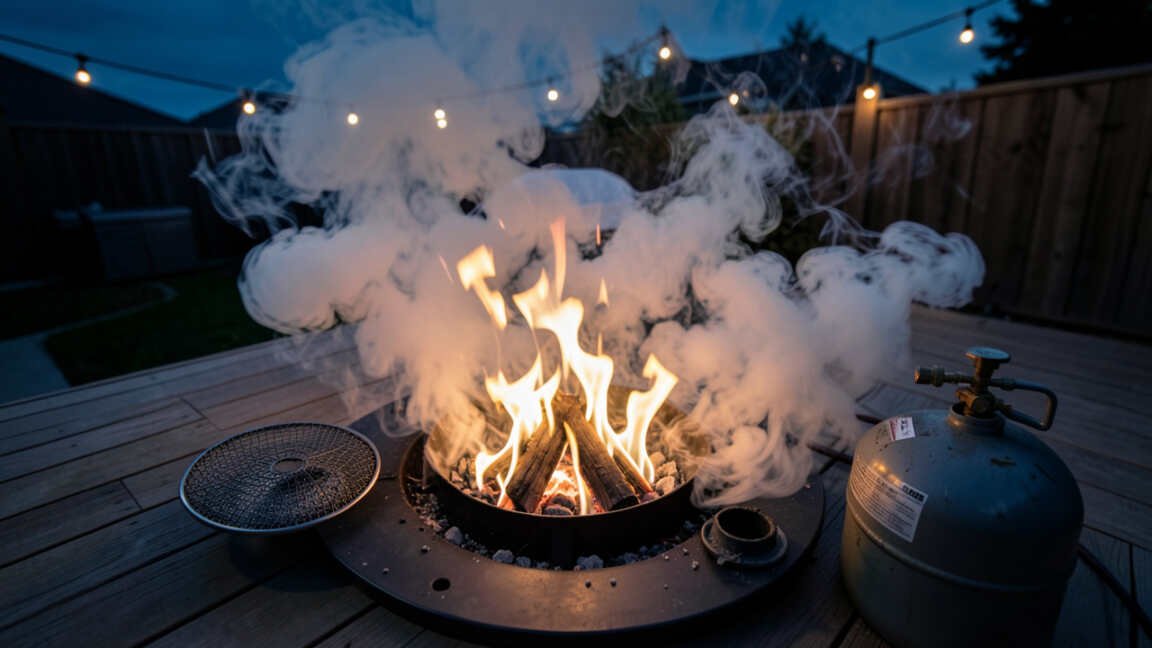
Many owners try quick fixes that don’t work or make things worse. Avoid these common errors.
| Mistake | Why It Fails | Correct Fix |
|---|---|---|
| Turning up the gas to burn off smoke | More gas means more unburned fuel — so more smoke | Adjust air shutter or clean burner |
| Covering the fire pit while still hot | Traps moisture, accelerates rust and blockage | Let it cool completely before covering |
| Using a propane fire pit in strong wind | Wind disrupts airflow, causing incomplete combustion | Use a wind guard or reposition the pit |
| Ignoring an old or nearly empty propane tank | Low pressure from a nearly empty tank creates poor combustion | Replace with a full tank of HD-5 propane |
Pro Tips for a Permanently Smokeless Fire Pit
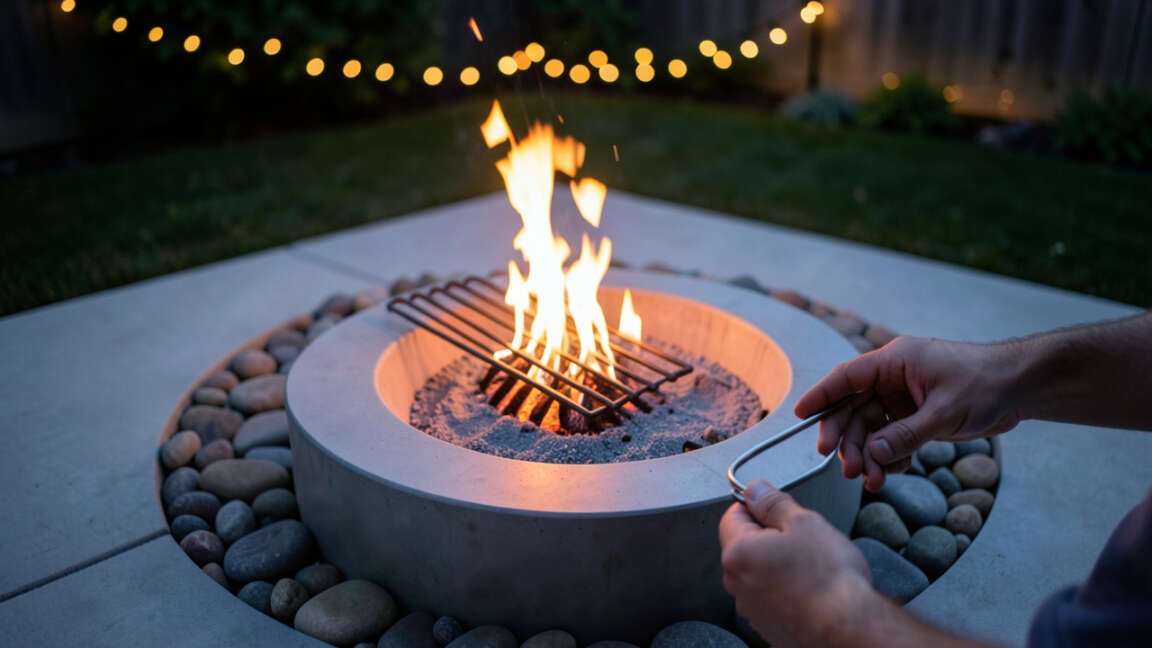
Beyond the basic fixes, these pro tips keep your fire pit burning clean for years.
- Install a quality HRV (heat recovery ventilator) or simply keep the fire pit in a semi-sheltered area to minimize wind effects on the flame.
- Use a fire pit lava rock or glass media that is rated for gas use. Some decorative media trap soot and worsen smoke.
- Clean the burner and venturi thoroughly at the start of each season. According to the, debris buildup is the leading cause of gas appliance issues.
- Consider upgrading to a fire pit with a built-in air mixer or adjustable airflow if your current model cannot be adequately tuned.
- Always store propane tanks upright and outdoors. Storing them in a garage or shed can introduce contaminants.
Tip: If you have a natural gas conversion kit, make sure it is properly matched to your fire pit. Using the wrong orifice size causes severe smoking. Always refer to the manufacturer’s specifications.
Common Myths vs Facts
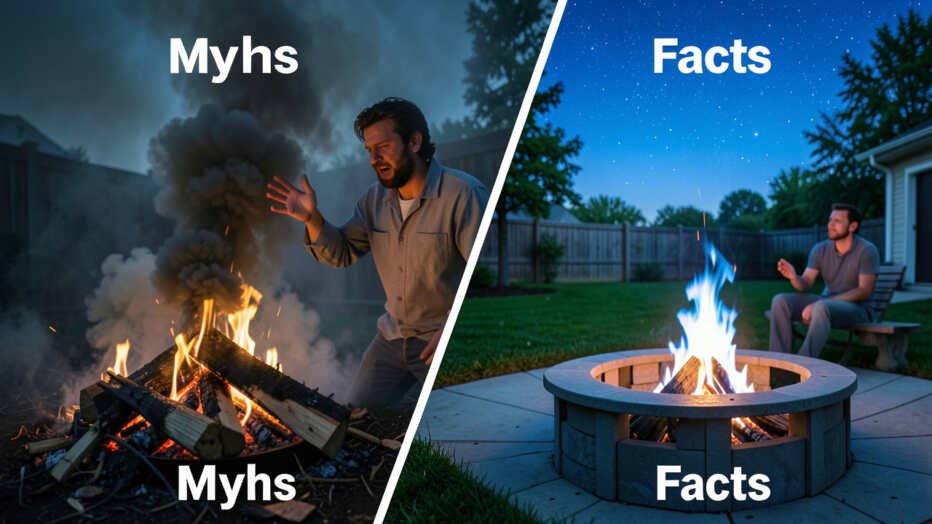
Several misunderstandings about propane fire pit smoke lead to wasted effort. Here are the facts.
Myth: All propane fire pits smoke when new
Fact: A brand-new propane fire pit should burn clean with mainly blue flames. If it smokes from day one, the air shutter may be set too closed from the factory. Adjust it as described above.
Myth: Adding more lava rock stops the smoke
Fact: Lava rock does not affect combustion. It only distributes heat. Stacking rock too high can actually block the flame ports, causing more smoke. Use only the amount recommended by the manufacturer.
Myth: High-quality propane never causes smoke
Fact: Even HD-5 propane can cause smoke if the air-to-fuel ratio is off. Quality fuel helps but doesn’t eliminate the need for proper burner adjustment and cleaning.
Important: The standard for gas fire pits (ANSI Z21.97) requires all units to burn without excessive smoking when installed and operated according to instructions. Persistent smoke usually means something is off with adjustment or maintenance.
Frequently Asked Questions
Why does my propane fire pit smoke more after it rains?
Moisture can enter the burner tube and air shutter, temporarily disrupting the flame. The smoke usually stops after the burner runs for 10-15 minutes and the system dries out. If it persists, check for standing water in the burner pan.
Can a propane fire pit smoke because of the wind?
Yes. Strong wind pushes the flame away from the burner, creating an uneven mix of air and fuel. This causes incomplete combustion and smoke. Use a wind guard or move the fire pit to a more sheltered location.
How often should I clean my propane fire pit burner?
At least once per season or after every 40-50 hours of use. Clean more frequently if you burn in a dusty or pollen-heavy environment. According to manufacturers, annual cleaning is the minimum for safe operation.
Will changing the propane tank brand stop the smoke?
Possibly. Different suppliers may have different propane quality. Switch to a tank labeled HD-5 grade from a major exchange brand. This change alone reduces impurities that cause smoke, but it does not fix a mechanical air-shutter problem.
Is it safe to use a propane fire pit that smokes heavily?
No. A smoking fire pit produces more carbon monoxide (CO) and soot. According to the, high CO levels can be dangerous in confined areas. Always address heavy smoking immediately and never operate the fire pit inside or in a partially enclosed space.
Final Thoughts
Stopping a propane fire pit from smoking comes down to three things: adjusting the air shutter, cleaning the burner, and using quality fuel. You don’t need to replace the entire unit. Most smoke problems are solved in under 30 minutes with simple tools. A properly adjusted fire pit gives you a clean, warm flame without the haze.