Using a patio lounger on a pool deck causes permanent scratches, cracks, and discoloration on the pool surface while the lounger itself rusts and fades from chlorine and moisture exposure. Standard patio loungers lack the corrosion-resistant hardware, UV-stabilized materials, and non-marking feet that pool-specific loungers require, leading to safety hazards such as sharp edges and increased slip risks. Pool deck warranties typically exclude damage from non-pool-rated furniture, so choosing loungers designed for wet environments is essential for safety and longevity.
Placing a standard patio lounger on a pool deck might seem harmless. But the wrong furniture can damage your pool surface, create safety hazards, and void your warranty. This guide explains exactly what happens and how to choose the right lounger for your pool area.
Quick Verdict: In short, using a patio lounger on a pool deck can cause permanent scratches, cracks, and discoloration on pool surfaces. It also increases slip risks and may lead to furniture rust or mold. Pool-specific loungers with UV-resistant materials and non-marking feet are the safe choice.
Key Takeaways
- Standard patio loungers often have metal frames that rust quickly in pool environments with chlorine and moisture.
- Plastic or aluminum loungers without UV protection can fade, crack, and leave sharp edges that cut swimmers.
- Non-stainless steel fasteners on patio furniture corrode and stain concrete or tile pool decks.
- Most pool deck warranties explicitly exclude damage caused by non-pool-rated furniture.
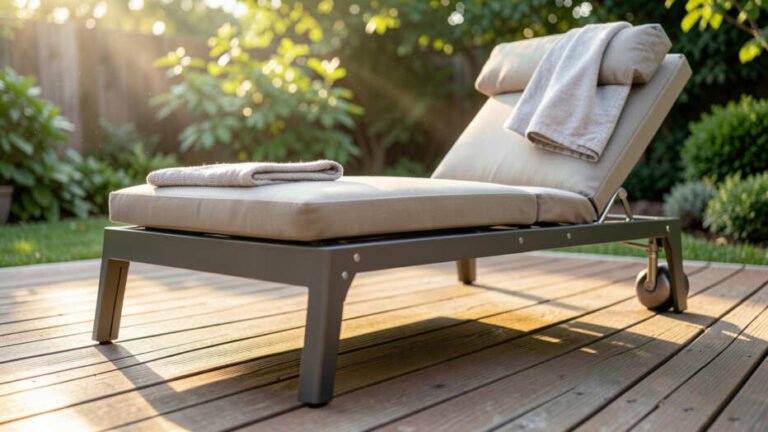
- Pool loungers designed for wet environments include drainage, slip-resistant feet, and rust-proof hardware.
What Is a Patio Lounger?
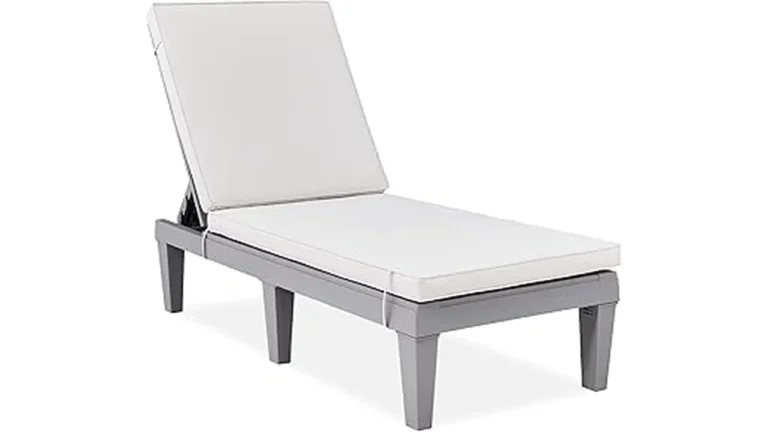
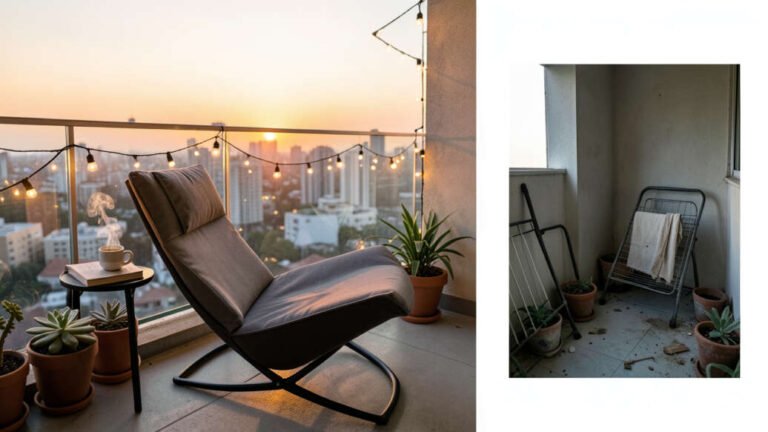
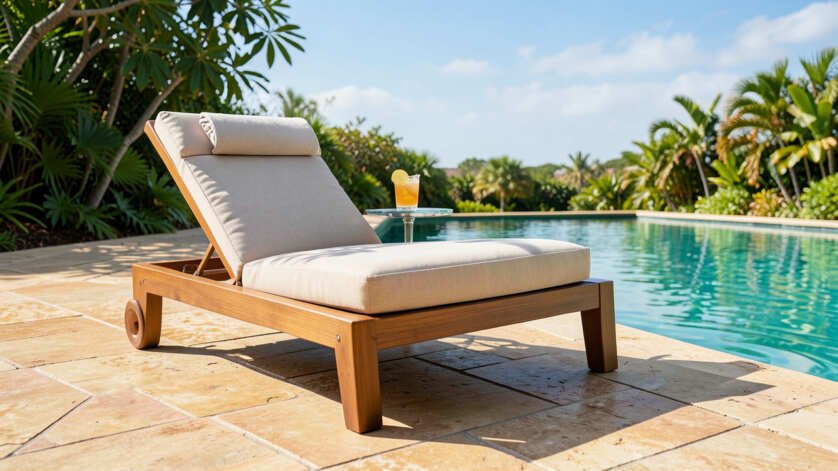
A patio lounger is a reclining chair built for outdoor use on patios, decks, and gardens. Most are made from aluminum, steel, wicker, or hardwoods like teak. They come with cushions for comfort. But these materials are not designed for constant exposure to chlorine, saltwater, and wet feet.
Pool decks are fundamentally different environments. They have high humidity, splashing water, chemical residues, and direct sun reflection off the water. The difference matters because standard patio furniture will degrade much faster near a pool.
What Happens to the Lounger Itself?
Using a patio lounger on a pool deck accelerates wear in three main ways:
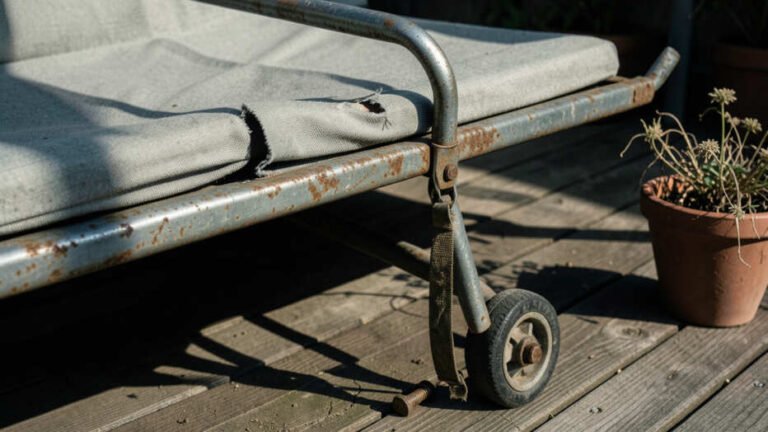
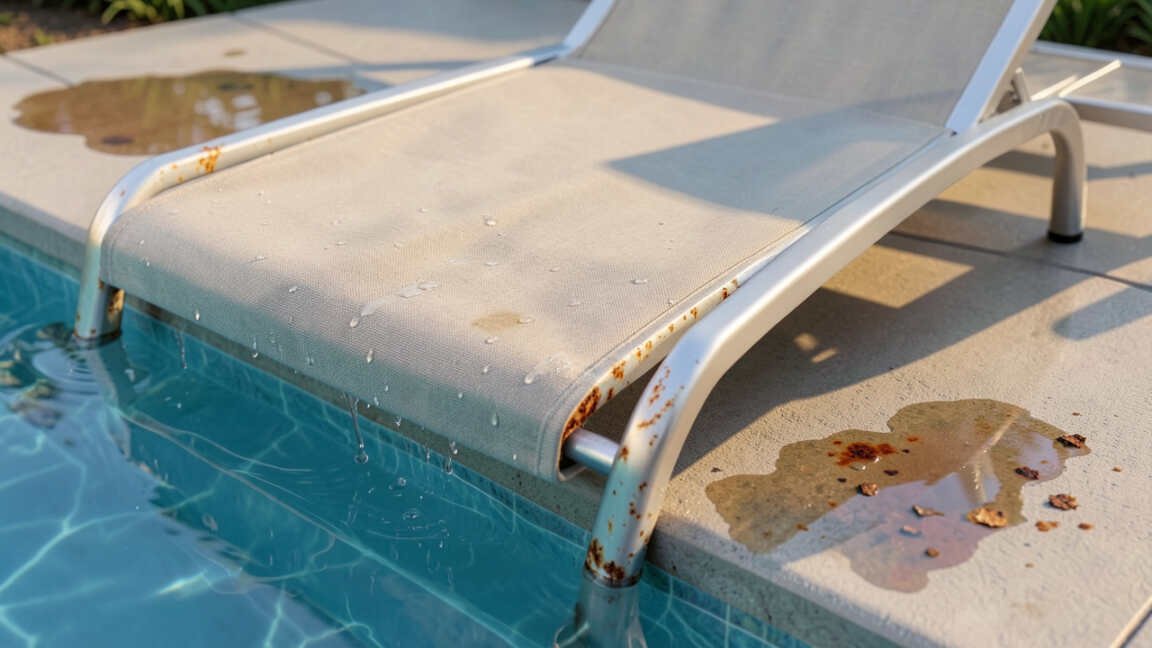
- Rust and corrosion – Steel frames and bolts start rusting within weeks in chlorinated environments. Even powder-coated steel can chip and oxidize.
- UV damage – Pool decks receive reflected UV rays from the water. Non-UV-stabilized plastics become brittle and crack. Fabrics fade and weaken.
- Mold and mildew – Cushions that trap moisture grow mold underneath. This causes odors and fabric rot.
Warning: Rusted screws and sharp cracks can cut bare feet. Pool loungers must be rated for wet locations to prevent injury.
According to the, over 18,000 pool-related furniture injuries are reported each year, many caused by broken or corroded chairs. Choosing the wrong lounger is a safety risk you can avoid.
What Happens to the Pool Deck?
The damage goes both ways. A patio lounger can ruin the pool deck surface in these ways:
- Scratches and scuffs – Plastic or metal feet grind against concrete, travertine, or tile. Dark marks appear quickly.
- Staining – Rust drips from metal frames leave permanent orange stains. Fabric dyes from cushions can bleed onto light stone.
- Cracking – Heavy loungers without protective feet can chip or crack thin tile or pavers, especially near the water edge where surface temperature changes.
Important: Many pool contractors recommend using only furniture with polyethylene or rubber glides that won’t scratch. Check your deck warranty – damage from improper furniture may not be covered.
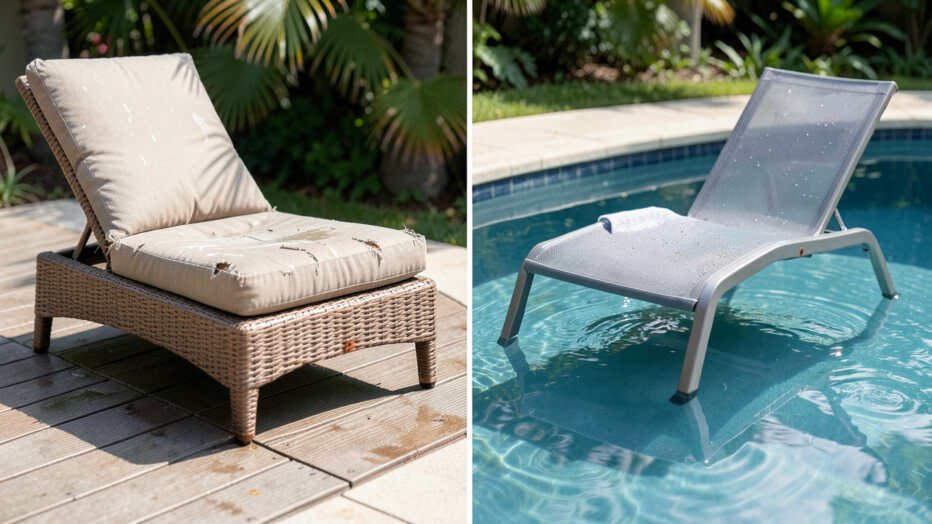
Comparison: Patio Lounger vs Pool Lounger
| Feature | Patio Lounger | Pool Lounger |
|---|---|---|
| Frame material | Steel, aluminum, wicker | Welded aluminum, marine-grade polymer |
| Rust resistance | Low (powder coat can chip) | High (marine-grade or stainless steel) |
| UV protection | Varies (often not UV-stabilized) | Yes (UV-inhibited resins) |
| Cushion drying | Slow (absorbs water) | Fast (quick-dry foam + mesh) |
| Feet/base | Plastic glides or metal caps | Non-marking rubber or polyethylene |
Pool loungers typically last 5-8 years when used daily in a pool environment. Patio loungers last 1-3 years in the same space, according to reports from the furniture durability standards.
Why Using the Wrong Lounger is a Safety Risk
Pool decks get wet. Slippery surfaces combined with unstable furniture create fall hazards. A patio lounger may tip over more easily if its legs are not designed for wet, uneven ground. Here are the main risks:
- Collapse – Rusted hinges break without warning, dropping a person onto concrete.
- Sharp edges – Cracked plastic leaves razor-sharp edges that cut skin.
- Splintering – Wood loungers exposed to moisture can splinter and cause infections.
- Mold allergies – Mildew from wet cushions triggers breathing problems.
Tip: If you already own a patio lounger, place it at least 6 feet from the pool edge, and store it under cover when not in use. This slows deterioration but does not eliminate the risks.
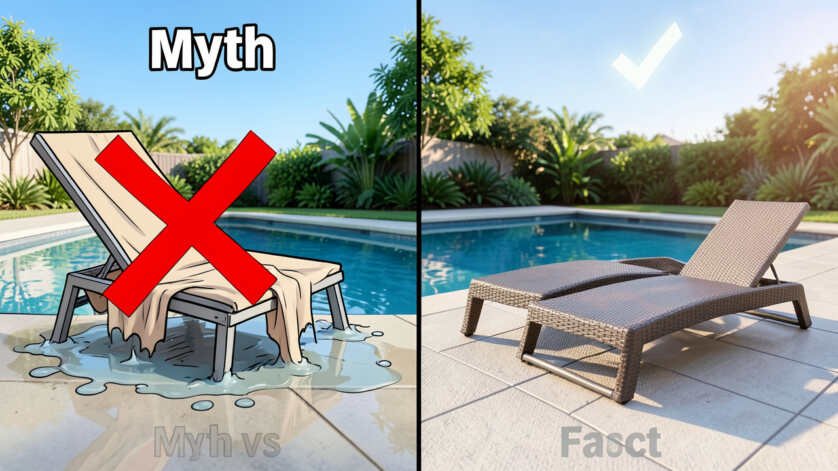
Common Myths vs Facts
Myth 1: All outdoor furniture is the same.
Fact: Patio furniture is tested for dry outdoor use. Pool furniture must pass tests for chlorine, salt, and UV exposure. The rates some furniture for “public pool environments” but standard patio chairs lack this rating.
Myth 2: You can fix rust with paint.
Fact: Rust under paint continues to spread. Once a metal frame is compromised, its strength is reduced. Painting only delays failure.
Myth 3: Heavy furniture is better near a pool.
Fact: Heavy loungers damage tile decks. Lightweight pool loungers with wide plastic bases actually stay put better and do less damage.
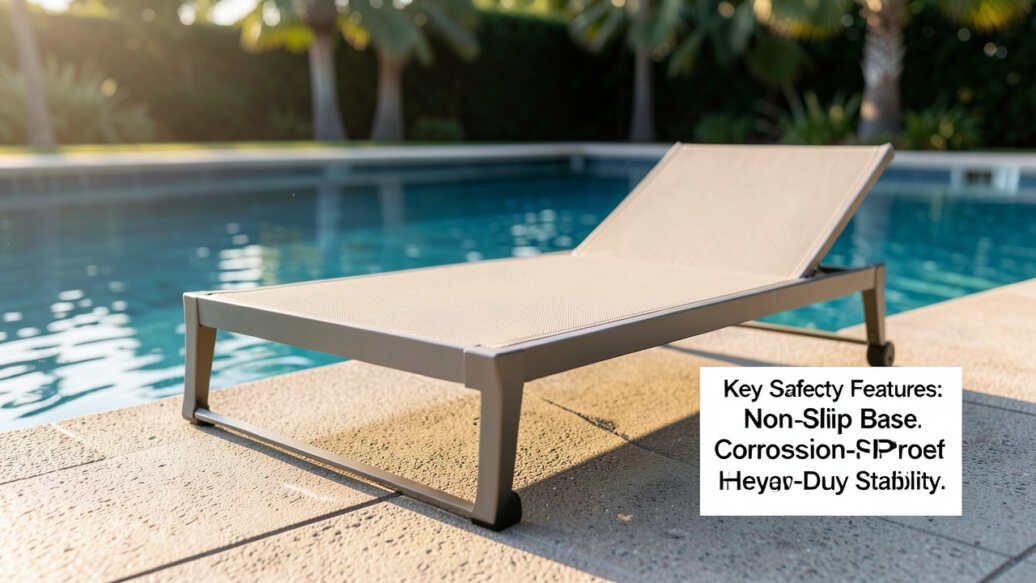
How to Choose a Safe Pool Deck Lounger
Follow these steps to pick the right furniture. Each step reduces the risk of damage and injury.
- Check the label – Look for “pool-safe” or “marine-grade” materials. Avoid anything with steel or iron.
- Feel the feet – They should be soft rubber or thick plastic, not bare metal. Flip the chair over and inspect.
- Test the cushion – Squeeze it. Quick-dry foam springs back fast. Traditional foam stays wet.
- Verify UV rating – The tag should say “UV stabilized” or “fade resistant”.
- Read reviews – Search for “pool use” in product feedback. Real owners report if rust forms.
Cost and Warranty Impact
Using an inappropriate patio lounger can void your pool deck warranty. Many manufacturers require “furniture with non-abrasive feet and no metal-to-surface contact.” Check your warranty document. Replacing damaged deck tiles costs between $8 and $25 per square foot. A single rust stain may require chemical treatment or grinding.
Pool loungers cost $100-$400. That is far less than even a minor deck repair. The reports that improper furniture accounts for 15% of deck repair claims. Choosing correctly saves money.
Resources and Tools
- Pool Furniture Buying Guide – Official tips from the Association of Pool & Spa Professionals.
- CPSC Safety Alerts – Recent recalls on pool furniture.
- ASTM F2057 Standard – Voluntary safety standard for outdoor furniture stability.
Frequently Asked Questions
Can I use a patio lounger if I cover it?
Covering helps reduce UV damage but does not stop corrosion from chlorine vapors and humidity. The feet still touch wet surfaces. A cover extends the life slightly but does not make a patio lounger safe for pool deck use.
What is the best material for pool deck loungers?
Marine-grade aluminum frames with UV-stabilized plastic slats or mesh are best. Quick-dry foam cushions in Sunbrella fabric offer the longest life. Avoid wood, steel, or iron.
How do I clean rust stains from my pool deck?
For concrete, use a rust remover containing oxalic acid. For tile, try a paste of baking soda and lemon juice. Always test in a hidden spot first. If the stain is deep, professional grinding may be needed.
Do pool loungers need special storage?
Yes. Store them in a covered area or use furniture covers. Even pool-rated furniture lasts longer when dried and shaded. Remove cushions and store them separately to prevent mildew.
Can I refinish a rusty patio lounger for pool use?
Refinishing removes surface rust but the hidden joints remain weak. Sandblasting and repainting may buy one season, but the rust returns. It is cheaper to buy a new pool-rated lounger.
Final Thoughts
Using a standard patio lounger on a pool deck leads to rust, stains, cracks, and safety hazards. The cost of replacing damaged deck surfaces or treating injuries far outweighs the price of proper pool furniture. Choose loungers built for wet, chlorinated environments and enjoy your pool without worry.