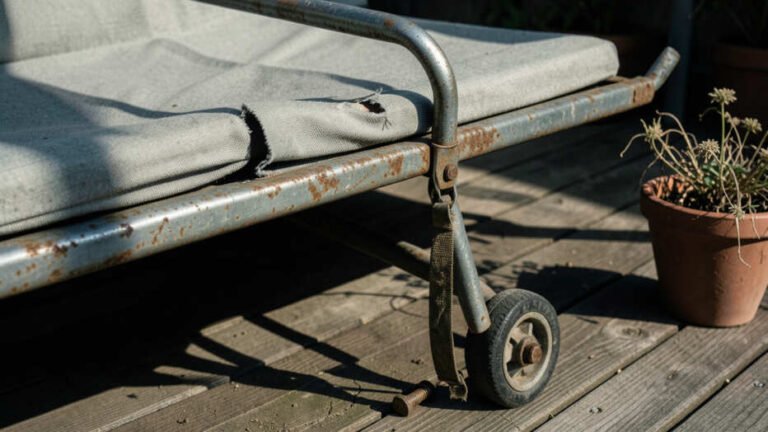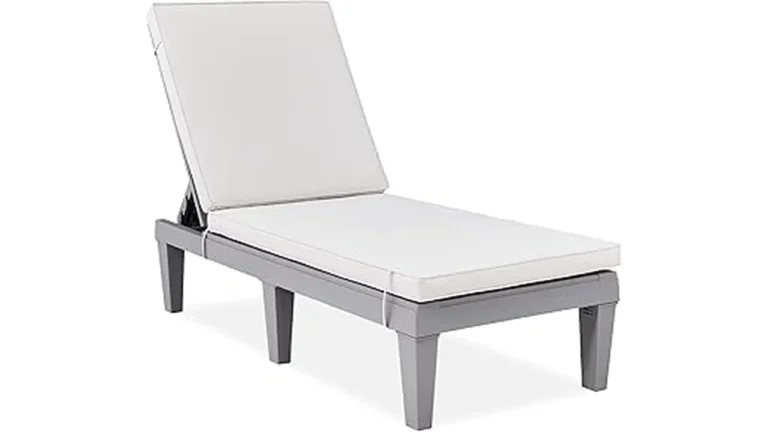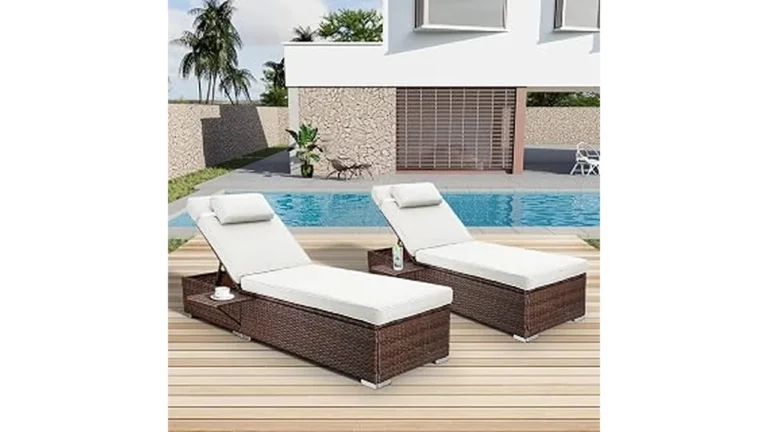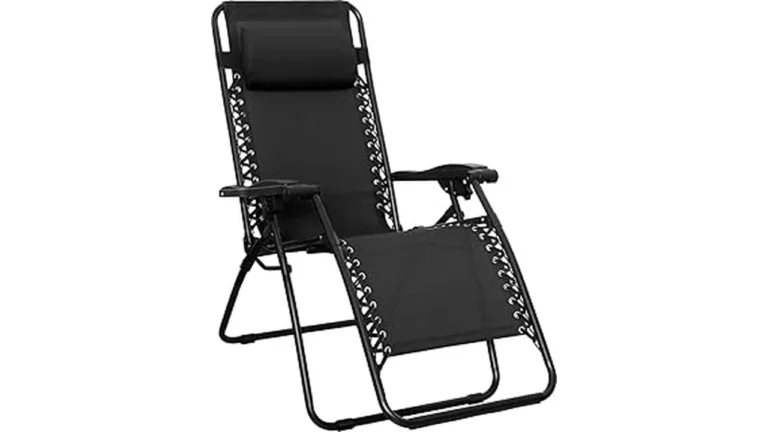
Outdoor chairs cause prolonged discomfort primarily because they lack proper lumbar support, forcing the lower back into a painful C-curve within 15–30 minutes, while seat depths that are too long for your legs restrict blood flow behind the knees and cause numbness. Common design flaws include sling and webbing seats that lose tension over time, straight-backed Adirondack chairs with no curve, and non-contoured hard materials that concentrate pressure on bony areas. To achieve lasting comfort, you must match chair dimensions to your body, ensure adequate lumbar support, and maintain proper sitting posture to avoid slumping, perching, or leaning.
You spend good money on an outdoor chair, yet after 20 minutes your back aches or your legs go numb. The problem is not you – it is the chair’s design. This post explains why your outdoor chair keeps making you uncomfortable and how to fix it.
Quick Verdict: Outdoor chairs cause discomfort due to poor lumbar support, incorrect seat depth, hard or unsupportive materials, and lack of proper angle adjustability. Your posture, the chair’s design, and the seat’s dimensions all work together to either support or strain your body. Fixing these factors can make any outdoor seat comfortable.
Key Takeaways
- Most outdoor chairs lack proper lumbar support, which forces your lower back into a C-curve and causes pain within 15-30 minutes.
- Seat depth that is too long for your legs creates pressure behind the knees and restricts blood flow, leading to numbness.
- Sling and webbing chairs stretch over time, losing the tension needed to support your weight evenly.
- Armrests that are too high or too low create shoulder and neck strain by forcing unnatural positioning.
- Solid or hard materials without contouring concentrate pressure on the bony parts of your body, especially the tailbone and hips.
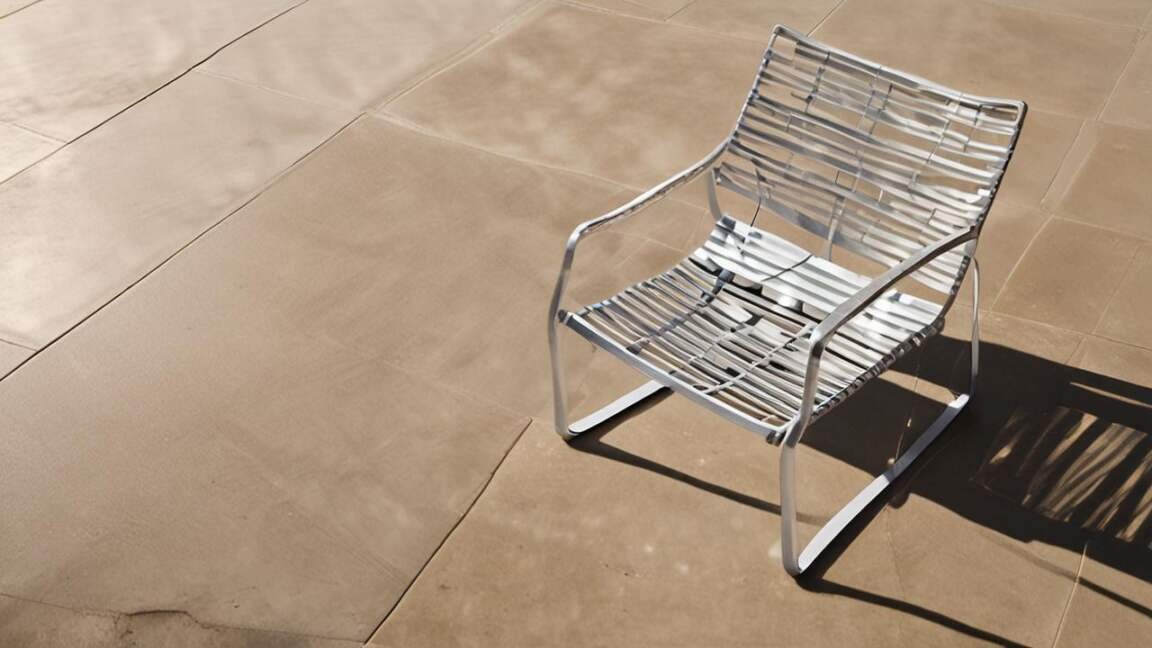
What Causes Outdoor Chairs to Be Uncomfortable?
The main cause of outdoor chair discomfort is a mismatch between the chair’s design and your body’s natural posture. According to the, over 80% of people experience back pain at some point, and poor seating is a major contributor. Outdoor chairs often prioritize aesthetics and weather resistance over ergonomics.
Tip: The human spine has a natural S-curve. A flat or sagging outdoor chair flattens this curve, increasing pressure on your discs by up to 40%, according to research from.
Common design flaws include:
- Flat or concave seats that force your pelvis to tilt backward, creating a slouch.
- Lack of lumbar support – most outdoor chairs have a straight backrest with no curve at the lower back.
- Hard materials like aluminum, plastic, or wood without padding or contouring.
- Seat depth that is too deep, causing you to lean back too far or sit on the edge.
- Rigid armrests that are at the wrong height for your body.
How Does Your Sitting Posture Affect Comfort?
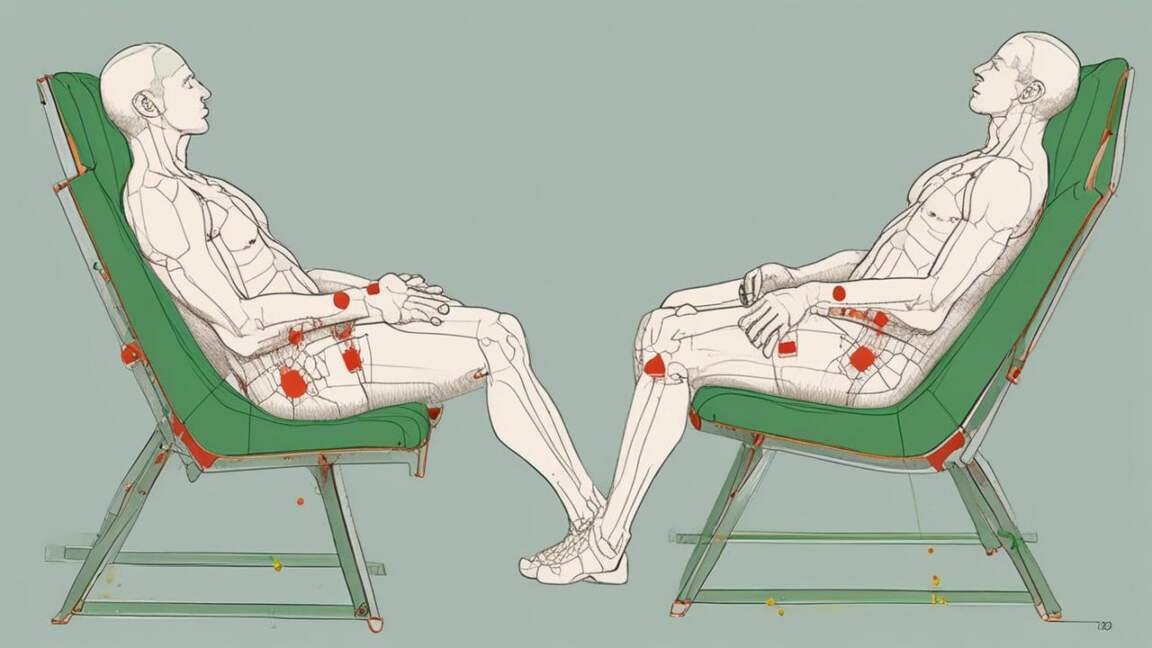
Your posture interacts with the chair’s design to create either comfort or pain. When you sit in an outdoor chair, your pelvis, spine, and legs form a kinetic chain. If the chair does not support each link, strain transfers to your muscles and joints.
A study from the notes that poor seating can lead to chronic lower back pain by compressing spinal discs. The key is to maintain the natural inward curve of the lower back called lumbar lordosis.
The Slump
In most outdoor chairs, especially sling or web chairs, your hips sink below your knees. This tilts your pelvis backward and flattens the lumbar curve. Your head then moves forward to compensate, straining your neck.
The Perch
When the seat is too deep, you sit on the front edge to keep your feet flat. This creates a “perched” posture that puts all your weight on your tailbone. According to the, sitting without back support increases spinal disc pressure by 30%.
The Lean
Some outdoor chairs have a reclined angle that forces you to crane your neck forward to read or talk. This forward head posture multiplies strain on your cervical spine, with each inch of forward lean doubling the load on your neck muscles.
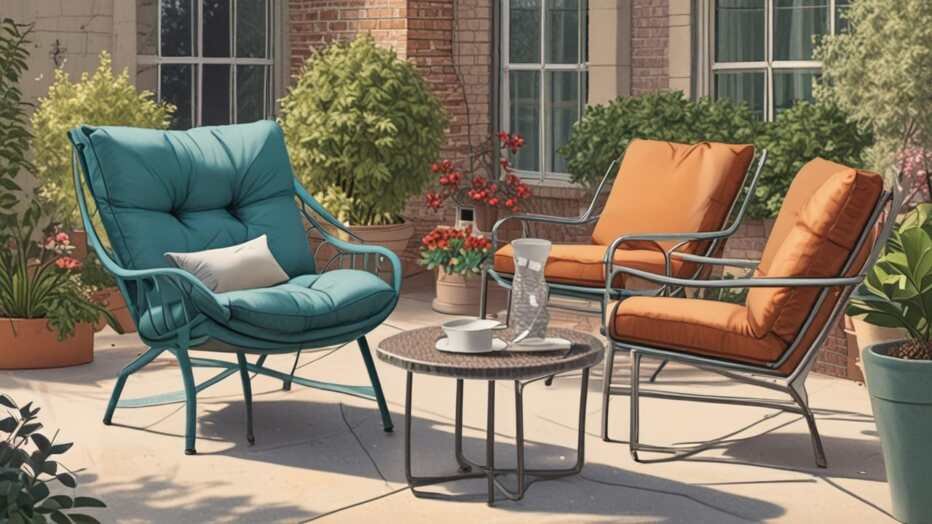
What Are the Common Design Flaws in Outdoor Chairs?
Outdoor chairs differ from indoor seating because they must resist sun, rain, and temperature changes. This leads manufacturers to choose materials and shapes that are durable but not comfortable. Here are the top design flaws and how they affect you.
1. Sling and Webbing Seats Stretch Over Time
Many outdoor chairs use a fabric sling that is stretched across a metal frame. These slings are made from vinyl, polyester, or acrylic. As they age, the fabric loses elasticity and sags. A sagging sling creates a hammock-like shape that rounds your lower back and puts pressure on your tailbone.
According to, 60% of outdoor furniture complaints involve seat comfort, with sling chair sagging being the top issue after two seasons.
2. Adirondack Chairs Have a Straight Back
Adirondack chairs are iconic for their wide armrests and sloping seat. But their backrest is almost always dead flat. Without lumbar support, your lower back muscles must work constantly to hold you upright. This leads to fatigue and muscle spasms within an hour.
Warning: Adirondack chairs are among the worst for lumbar support. If you own one, add a rolled towel or a dedicated lumbar cushion behind your lower back. Do not rely on the chair’s design alone.
3. Seat Angle and Depth Mismatch
Most outdoor chairs have a fixed seat angle of about 15-20 degrees of recline. For shorter people (under 5’6″), this angle often creates pressure behind the knees because the seat edge hits the back of the thigh. For taller people, the seat may be too shallow, forcing their legs to splay outward.
A proper seat should allow your feet to rest flat on the ground with your knees at a 90-degree angle. The seat depth should leave 2-4 inches between the back of your knee and the front edge of the chair.
4. Armrests at the Wrong Height
Armrests on outdoor chairs are often placed at the same height for all users. The ideal armrest height allows your shoulders to relax while your forearms rest lightly on the pads. If armrests are too high, you shrug your shoulders and create neck tension. If too low, you lean sideways to use them, creating spinal misalignment.
5. Hard Materials Without Contouring
Chairs made from wood, aluminum, or all-weather resin (like poly lumber) often have flat or slightly curved seats. Without cushioning, these hard surfaces concentrate pressure on the ischial tuberosities (your sit bones). Over time, this causes soreness and restricts blood flow to your legs.
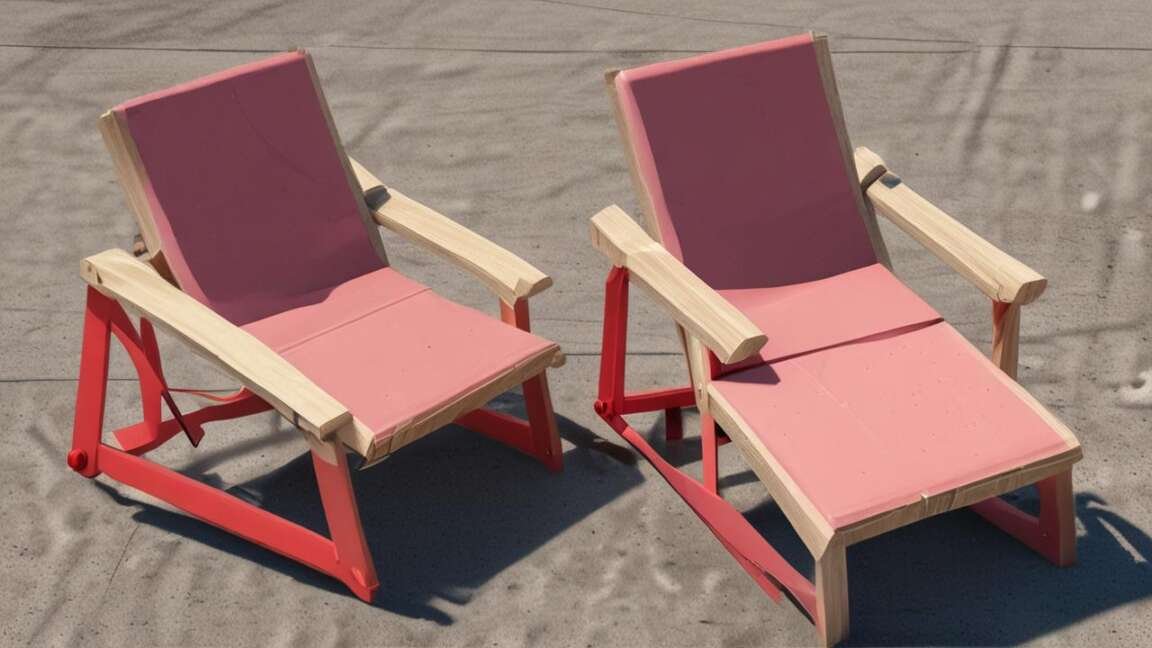
Why Does Seat Angle and Depth Matter?
The angle and depth of your outdoor chair’s seat directly affect your spinal alignment and leg circulation. Here is how:
| Seat Depth | Effect on Your Body | Who Is Affected Most |
|---|---|---|
| Too deep (over 20 inches) | You sit on the front edge or lean back too far; increased tailbone pressure | Shorter individuals (under 5’6″) |
| Too shallow (under 16 inches) | Thighs hang off edge; uncomfortable pressure under legs | Taller individuals (over 6’0″) |
| Seat angle too reclined (>20 degrees) | Sliding forward; head craning; increased neck strain | Anyone, but worse for those with weak core muscles |
| Seat angle too flat (0-5 degrees) | No natural recline; forces upright posture with no lumbar support | People with lower back problems |
Your outdoor chair should allow your hips to be slightly higher than your knees (hips at 90-100 degrees). This opens the hip angle and maintains the natural lumbar curve. If your chair forces your hips lower than your knees (as in a low-slung chair), you will slump.
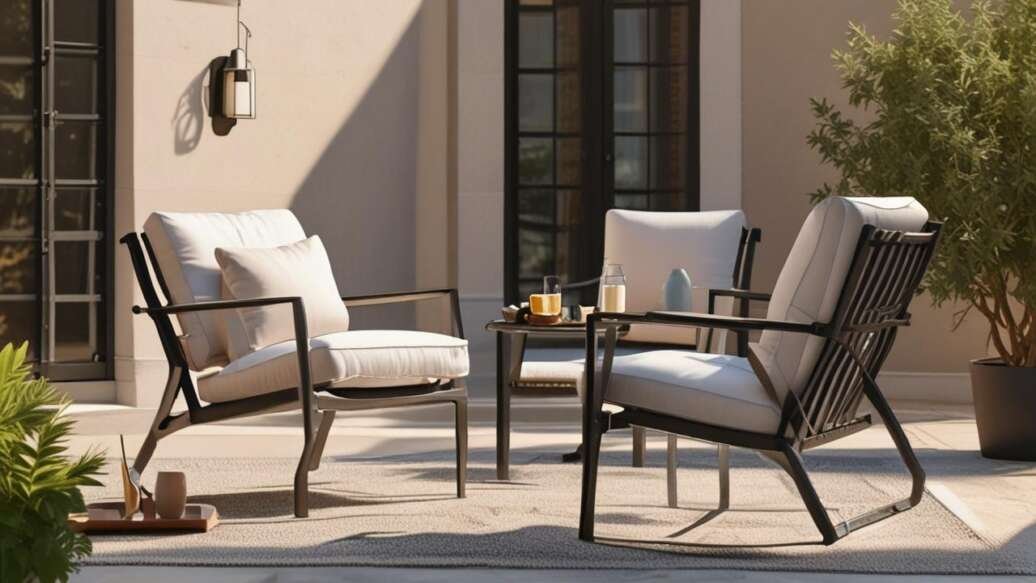
How to Choose a Comfortable Outdoor Chair
Now that you know the causes, here is a step-by-step process to find an outdoor chair that will not hurt.
Step 1: Check Lumbar Support
Look for a chair with a curved backrest that follows your spine, not a straight plank. Some chairs have built-in lumbar pads or an adjustable tension system. If the backrest is straight, plan to add a cushion or rolled towel.
Step 2: Measure Seat Depth
Sit with your back against the chair’s backrest. Measure the distance from the back of your buttocks to the back of your knee. The ideal seat depth is that measurement minus 2 inches. For most adults, this is 17-19 inches.
Step 3: Test Armrest Height
Sit with your shoulders relaxed. Your forearms should rest on the armrests with your elbows at a 90-degree angle. Adjustable armrests are rare in outdoor chairs, so test before buying.
Step 4: Choose the Right Material
- Mesh (like Phifertex or Sunbrella) – offers some give and breathability, but sags over time. Good for occasional use.
- Poly lumber with cushion – more comfortable if you add a thick outdoor cushion. Look for high-density foam that is at least 3 inches thick.
- Wicker / rattan (over a frame) – firm but can be comfortable if the weave is tight and the frame is curved.
- Metal (aluminum or steel) – very hard. Requires cushion or sling. Avoid bare metal seats.
- Wood (teak, eucalyptus) – firm. Slatted wood seats can be tolerable if the slats are spaced closely and you add a cushion.
Step 5: Consider Adjustability
Some outdoor chairs now come with reclining backrests, adjustable headrests, or removable cushions. If you plan to sit for more than an hour, adjustable features are worth the extra cost. Brands like Polywood and Treasure Garden offer ergonomic models.
Common Myths vs Facts
Myth 1: A thick cushion fixes any uncomfortable outdoor chair.
Fact: A thick cushion can improve comfort but cannot fix fundamental design flaws. If the seat depth is wrong or lumbar support is missing, a cushion only masks the problem. Cushions also trap heat and require storing when not in use.
Myth 2: Sling chairs are comfortable because they conform to your body.
Fact: Sling chairs conform to your body in a hammock shape that rounds your shoulders and flattens your lower back. The lack of firm support forces your muscles to work constantly. According to a, sling seating produces 25% more spinal disc pressure than a chair with proper lumbar support.
Myth 3: Reclining automatically makes a chair comfortable.
Fact: A reclined angle can help reduce spinal compression, but only if the chair supports your entire back, including the lumbar region. Many reclining outdoor chairs have a gap at the lower back. This gap forces you to arch backward without support, straining the lower back muscles.
Frequently Asked Questions
How can I make my current outdoor chair more comfortable?
Add a lumbar support cushion or rolled towel behind your lower back. Use a seat cushion that is at least 3 inches thick with memory foam. If the seat is too deep, place a small pillow behind your back to adjust depth. Ensure your feet rest flat on the ground or on a footrest.
Why does my sling chair hurt my tailbone?
Sling chairs allow your pelvis to tilt backward and sink, concentrating weight on your tailbone. The fabric lacks the firm support of a solid seat. Adding a firm cushion or wedge can tilt your pelvis forward and relieve tailbone pressure.
Are Adirondack chairs bad for your back?
Adirondack chairs have a straight, flat backrest that provides no lumbar support. Sitting in one for over 30 minutes can cause lower back pain. To make them more comfortable, add a lumbar cushion or use a reclined position with a footrest to take pressure off the spine.
What is the most comfortable type of outdoor chair for long-term sitting?
Outdoor chaise lounges with adjustable backs and thick cushions tend to be best for extended sitting. Look for models with built-in lumbar support, a seat depth of 18-20 inches, and high-density foam cushions. Mesh chairs with good tension and curved supports can also work well.
Should I buy a rocking outdoor chair for comfort?
Rocking chairs can improve comfort by allowing subtle movement, which reduces static loading on your spine. However, they still need good lumbar support and proper seat depth. A rocking chair with a curved, supportive backrest is better than one with a flat back.
Final Thoughts
Your outdoor chair causes discomfort because it lacks the ergonomic features found in indoor seating – lumbar support, correct seat depth, and contoured materials. You can either modify your current chair with cushions and supports or buy a new one designed for extended sitting. Prioritize adjustability and proper posture over style next time you shop.