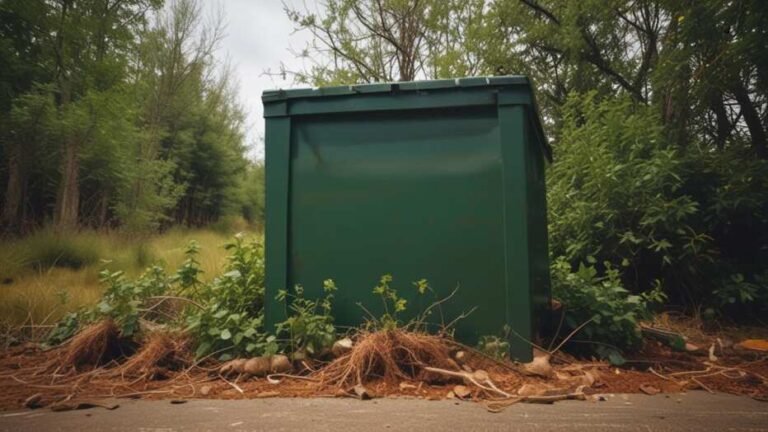
Outdoor bench storage fails within months because manufacturers omit drainage, airflow, and moisture barriers, trapping rain and ground moisture under the seat. Water enters through lid gaps, hinge seams, and the solid bottom resting on damp concrete or grass, while materials like thin plywood and untreated pine quickly degrade. Adding a simple moisture barrier and drainage holes can extend the life of any storage bench significantly, with resin or cedar benches using stainless steel hardware lasting two to three times longer than painted pine.
Your outdoor storage bench promised to keep patio cushions and tools dry. Within weeks, everything inside feels damp.
This guide explains the real reasons bench storage fails and how to prevent it.
Simply put, most outdoor storage benches trap moisture under the seat. Rain seeps through lid gaps while the bottom sits directly on damp ground. Without drainage and airflow, cushions and items develop mold and mildew. The storage function fails in just a few months because the design ignores real weather conditions.
Key Takeaways
- Most outdoor bench storage fails because manufacturers skip proper drainage, airflow, and moisture barriers beneath the seat.
- The materials used in budget benched – thin plywood, untreated pine, and low-grade hardware – cannot survive rain, humidity, and temperature swings.
- Water enters through lid gaps, hinge seams, and the bottom where the bench rests on damp concrete or grass.
- A simple moisture barrier and a few drainage holes can extend the life of any storage bench by years.
- Resin and cedar benched with stainless steel hardware consistently outlast painted pine benched by two to three times.
What Causes Outdoor Bench Storage to Fail
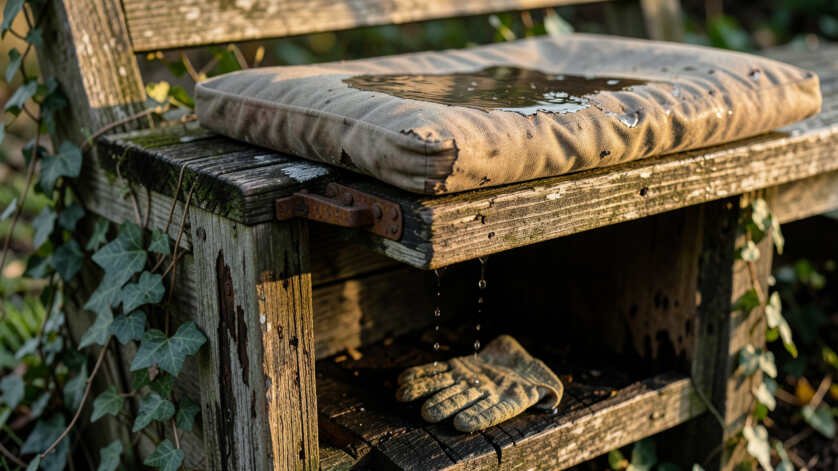
Why your outdoor bench storage stops working after just a few months comes down to three root causes. Water always finds a way in. The design gives it nowhere to escape.
First, the lid is never fully sealed. Even quality benched have gaps around the hinges and the lip where the lid meets the body. Rain splashes through these gaps during storms. Dew forms overnight and drips inside.
Second, the bottom of the bench traps moisture. Most benched sit flush on the ground or on short plastic feet. Moisture from wet concrete or grass wicks up into the wood or resin base. The inside floor stays damp for days.
Third, there is no airflow inside a closed bench. The sealed box environment creates a perfect greenhouse for mold and mildew. According to the, mold can start growing within 24 to 48 hours on a damp surface. Your storage bench provides that environment every time it rains.
Important: The problem is not just rain. Condensation forms inside the bench when warm humid air meets the cooler surfaces of stored items. This happens even when the lid stays closed.
Material Choices That Determine Success or Failure
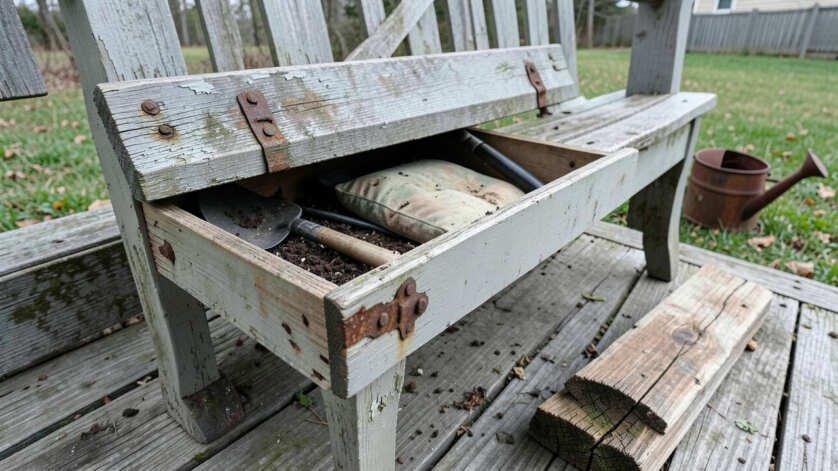
The material your bench is made from decides how long it survives outdoors. Some materials handle moisture naturally. Others rot quickly.
| Material | Average Lifespan Outdoors | Moisture Resistance | Maintenance Needed |
|---|---|---|---|
| Untreated pine | 6 – 12 months | Very low | Annual sealing required |
| Pressure-treated lumber | 3 – 5 years | Moderate | Seal every 2 years |
| Cedar or redwood | 5 – 10 years | High (natural oils) | Oil every 2 – 3 years |
| Teak | 10 – 20 years | Very high (natural oils) | Minimal – oil optional |
| Resin / polypropylene | 5 – 15 years | Excellent | None – rinse with hose |
| Powder-coated steel | 3 – 7 years | Good (if coating intact) | Touch up scratches |
Pine is the most common material for budget storage benches. It is also the worst choice. Untreated pine acts like a sponge. It absorbs rain and ground moisture. The notes that untreated softwood left in ground contact can show decay in under one year in humid climates.
Cedar and teak contain natural oils that repel water. These oils make them the best wood choices for outdoor storage. Resin benches never rot. They are the most reliable option for wet climates.
Design Flaws That Ruin Storage Benches
Even good materials fail with bad design. Manufacturers often cut corners that cause your outdoor bench storage to stop working after just a few months.
The Solid-Bottom Problem
Most storage benches have a solid floor. Rain splashes in and pools on the bottom. The water has nowhere to go. It sits there until it evaporates. This keeps stored items damp and encourages rot.
Warning: A solid bottom turns your bench into a bathtub. Water collects, cushions soak it up, and mold spreads to everything inside. This is the number one design flaw in outdoor storage benches.
The Flat-Lid Trap
A flat lid encourages water to pool on top instead of running off. Over time the pooled water finds its way through the lid material or around the edges. Flat lids also collect leaves and debris that hold moisture against the surface.
Bare-Hinge Seams
The hinges that attach the lid to the body create small gaps. Rain runs into these gaps and drips directly into the storage area. Most budget benches use exposed steel hinges that rust, creating larger gaps over time.
No Vents
A completely sealed bench prevents air from moving. Warm air trapped inside condenses on cooler surfaces. This condensation soaks into stored fabrics and papers. Vents allow trapped moisture to escape.
How to Weatherproof Your Outdoor Storage Bench
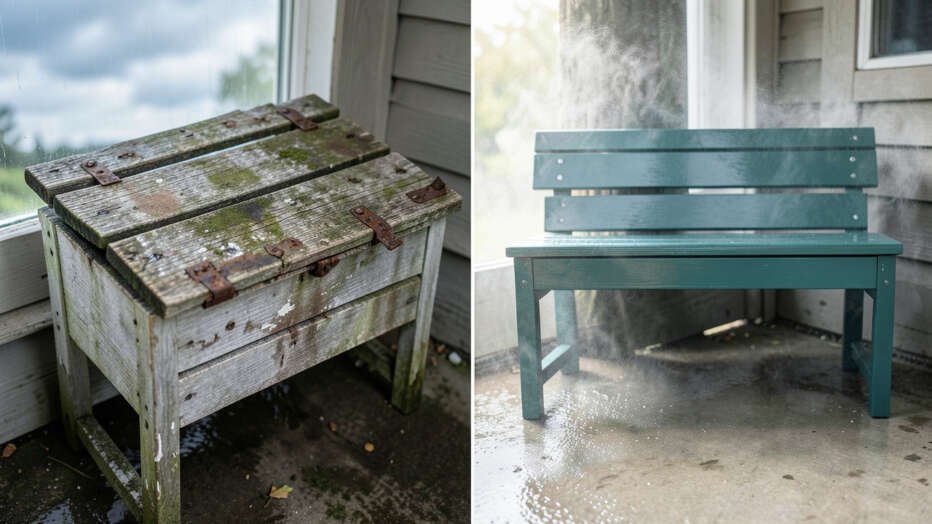
You can fix most of these problems with simple upgrades. These steps work on new benched and benched that have already started to fail.
Tip: Spend 30 minutes on these weatherproofing steps. You will extend the bench life by 2 to 3 years or more.
Step 1 – Add Drainage Holes
Drill four to six half-inch holes in the bottom of the bench. Space them evenly across the floor. Place the bench on gravel or pavers so water drains away underneath. Do not let the holes rest directly on grass or mud.
Step 2 – Install a Moisture Barrier
Line the inside bottom of the bench with a plastic or rubber mat. Cut it to fit the full floor area. This barrier prevents ground moisture from wicking up into your stored items.
- Measure the inside floor dimensions.
- Cut a plastic sheeting or rubber liner to size.
- Lay the barrier flat. Do not tape or glue it down.
- Place items on top of the barrier.
Step 3 – Seal the Lid and Hinges
Apply a marine-grade sealant to the hinge screws and the gap between the hinge plate and the lid. Use silicone caulk to seal the lip where the lid meets the body. Do not seal it completely shut – leave a small gap for air exchange.
Step 4 – Add Ventilation
Drill two to four small holes (one-quarter inch) on each side of the bench near the top. Cover them with mesh or screening to keep bugs out. These vents allow hot moist air to escape instead of condensing inside.
Step 5 – Elevate the Bench
Place the bench on concrete pavers, bricks, or rubber deck tiles. The bottom should be at least one inch above the ground. This gap prevents moisture from wicking up from the surface below.
Costs and Timeline for Weatherproofing
You do not need to spend a lot of money. Most weatherproofing materials cost under 30 dollars total. The work takes about one hour.
| Task | Time Required | Materials Cost | Tools Needed |
|---|---|---|---|
| Drill drainage holes | 10 minutes | $0 (if you own a drill) | Drill with half-inch bit |
| Install moisture barrier | 15 minutes | $5 – $10 | Scissors, tape measure |
| Seal lid and hinges | 20 minutes | $8 – $15 | Silicone caulk, caulk gun |
| Add ventilation holes | 15 minutes | $0 – $3 | Drill with quarter-inch bit |
| Elevate the bench | 10 minutes | $5 – $15 | Level, pavers or tiles |
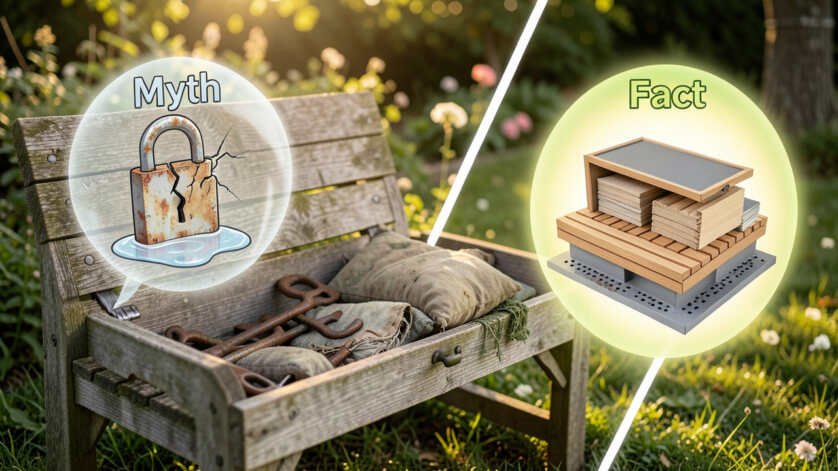
Common Myths vs Facts About Outdoor Bench Storage
Myth: Paint seals wood completely against moisture
Paint forms a hard shell that cracks under UV exposure and temperature changes. Cracked paint traps moisture between the coating and the wood. According to the, painted outdoor wood surfaces require repainting every 2 to 3 years. Stains and oils penetrate deeper and flex with the wood.
Myth: A storage bench is waterproof if the lid stays closed
No storage bench is fully waterproof. Moisture enters through hinge gaps, condensation forms inside, and ground moisture wicks up through the bottom. The standard for outdoor furniture allows for minor water ingress in sealed box tests. Even the best benches are water-resistant, not waterproof.
Myth: Plastic resin benches do not need any maintenance
Resin benches do not rot or rust, but they still need basic care. Debris builds up on the bottom and blocks drainage. UV exposure can make resin brittle over time. The simple maintenance step of rinsing the bench monthly prevents most long-term problems.
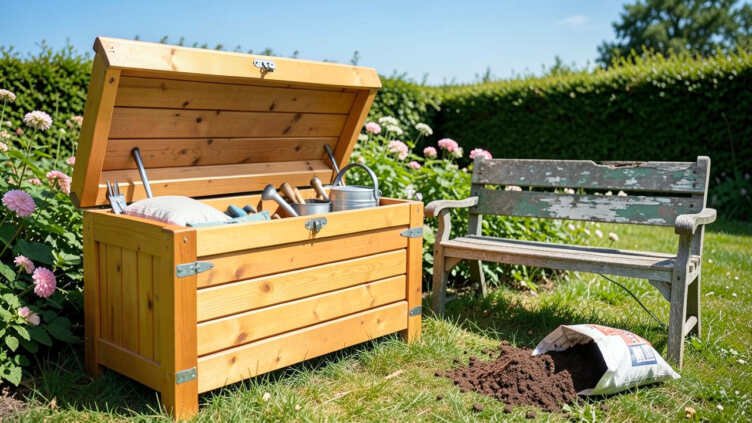
How to Choose a Storage Bench That Lasts
If you are shopping for a new bench instead of fixing an old one, focus on these features. A bench with the right design from the start will outlast a budget bench by years.
What to Look For
- Slatted or perforated bottom that allows water to drain through instead of pooling.
- Sloped or domed lid that sheds water instead of collecting it.
- Cedar, teak, or heavy-gauge resin as the primary material.
- Stainless steel or marine-grade galvanized hardware that will not rust.
- Pre-drilled ventilation slots or gaps in the side panels.
- A warranty of at least 5 years from the manufacturer.
What to Avoid
- Pine or MDF panels labeled as wood – these rot in under a year outdoors.
- Flat lids with no overhang – water drips directly into the storage box.
- Particle board or plywood bottom panels that will delaminate from moisture.
- Exposed steel hardware that shows rust after one season.
- Benches sold as assembly-required kits with unsealed cut edges.
Pro Tips for Long-Term Outdoor Bench Storage
These tips come from builders and outdoor furniture specialists who deal with bench failures every season.
- Store cushions separately. Keep outdoor cushions in a sealed deck box or bring them inside during rain. Cushions hold moisture against the bench floor and prevent drainage.
- Use moisture-absorbing packets. Place silica gel packets or desiccant canisters inside the bench during humid months. Replace them monthly. They absorb moisture that vents cannot remove.
- Reapply sealant annually. Wood benches need a fresh coat of waterproof sealant or stain each spring. This takes 30 minutes. It prevents the wood from absorbing water over the winter.
- Do not store damp items. Wet towels, damp gardening gloves, and sweaty workout gear create moisture inside the bench. Dry everything before storing it. This single habit prevents most mold problems.
- Check the ground underneath. Lift the bench every two months and look at the surface below. If the ground is consistently wet, move the bench to a drier spot. A wet base rots the bottom quickly.
Important: The climate you live in changes how often you need to maintain your bench. Humid coastal areas need ventilation and drainage upgrades. Dry inland climates need UV protection on wood surfaces. Match your maintenance to your local weather patterns.
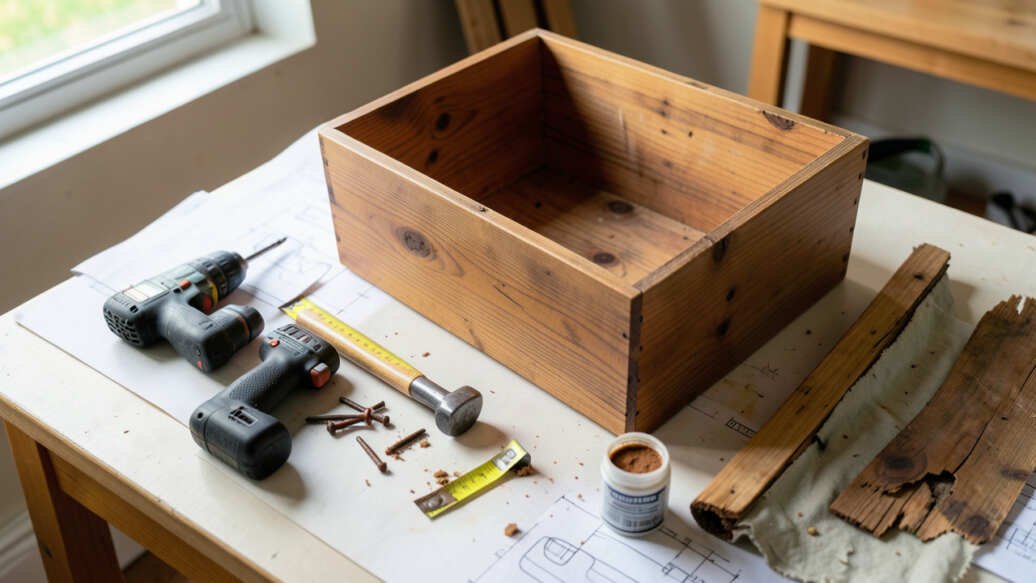
Resources and Tools
American Wood Council – Provides wood species durability ratings and treatment guidelines for outdoor structures.
US Forest Products Laboratory – Publishes research on wood decay, finishes, and outdoor wood protection best practices.
Environmental Protection Agency Mold Guide – Official guide to mold prevention and removal in household and outdoor environments.
ASTM International Outdoor Furniture Standards – Industry standards for weather resistance and durability testing in outdoor furniture and storage.
Frequently Asked Questions
Why does my outdoor bench smell like mildew after only a few weeks?
Mildew develops because moisture gets trapped inside the bench. The dark, damp environment allows mold spores to grow quickly. Drilling ventilation holes and adding a moisture barrier typically stops the smell within days.
Can I use a storage bench in rainy climates?
Yes, but you need to choose the right materials and design. Resin or cedar benches with sloped lids and raised bottoms perform best. Apply sealant to wood benches twice per year in climates with heavy rainfall.
How do I fix a storage bench that already has mold inside?
Remove all items and clean the interior with a mixture of one part bleach to ten parts water. Scrub all surfaces and let the bench dry completely in direct sun for 24 hours. Then install drainage holes and a moisture barrier before using it again.
Is it better to buy wood or resin for outdoor storage?
Resin benches need less maintenance and resist moisture better. Wood benches look more natural but require annual sealing. For wet climates, resin is the better choice. For dry climates, quality cedar or teak lasts a long time with basic care.
How long should an outdoor storage bench last?
A well-built bench made from cedar, teak, or resin should last 5 to 10 years with proper maintenance. Budget pine benches with no weatherproofing often fail in under one year. The design quality matters more than the price tag.
Final Thoughts
Outdoor bench storage fails because moisture has nowhere to escape. A few simple upgrades – drainage holes, a moisture barrier, lid sealant, and ventilation – can transform any bench into durable storage. Choose cedar or resin benched with sloped lids and raised bottoms for the best long-term results. Your storage bench can last years if you give water a way out.