
The seven primary mistakes to avoid when making crepes are incorrect batter consistency, insufficient resting time, and improper pan temperature. These errors lead to common failures such as crepes that are torn, rubbery, or unevenly cooked. Because crepes cook very rapidly, achieving the perfect delicate texture depends on precise technique from batter preparation through cooking.
Making crepes can seem tricky at first, and many people run into similar problems. If you’ve tried before and ended up with ripped, burnt, or uneven pancakes, don’t worry! This guide will walk you through the 7 Mistakes to Avoid When Making Crepes.
We’ll show you exactly how to get perfect, thin crepes every time, no fuss. Get ready to master this delicious treat!
Key Takeaways
- You’ll learn the common pitfalls that lead to crepe failures.
- Discover how the right batter consistency is key for success.
- Understand the importance of pan temperature and how to manage it.
- Find out why not letting the batter rest can hurt your crepes.
- Learn simple techniques for flipping your crepes without tearing.
- Get tips on how to avoid rubbery or tough crepes.
Understanding the Crepe Challenge
Why Crepes Can Be Tricky
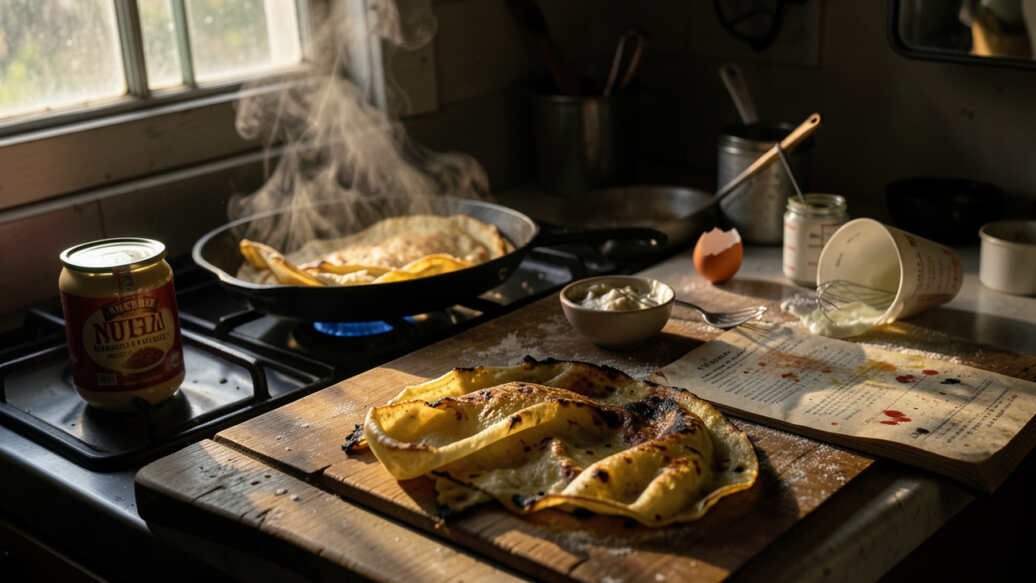
Crepes are thin pancakes that cook very quickly. This means they need a bit of attention to get them just right. Unlike thick pancakes that can hide some mistakes, crepes show every little error.
This is why knowing the common slip-ups helps a lot.
The Goal: Perfect, Delicate Crepes
The aim is to make crepes that are light, delicate, and evenly cooked. They should be easy to fold or roll with fillings. Getting this right means avoiding a few common traps that many home cooks fall into.
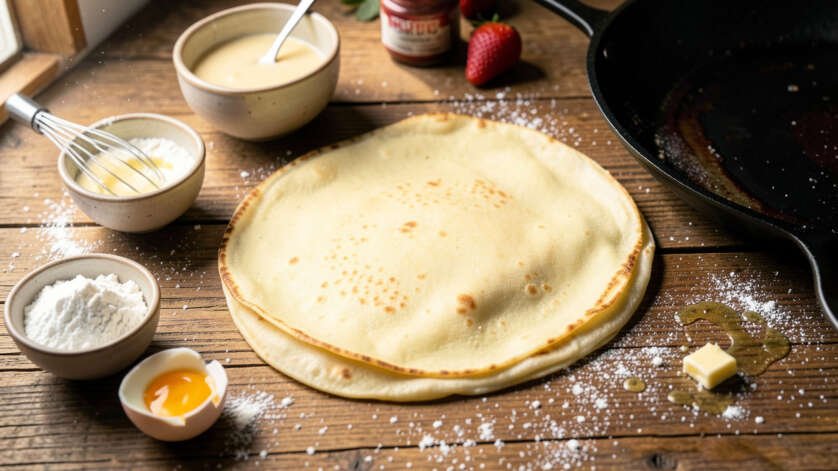
7 Mistakes to Avoid When Making Crepes
Mistake 1: The Batter is Too Thick or Too Thin
This is probably the most common issue. If your batter is too thick, your crepes will be doughy and might not spread thinly in the pan. If it’s too thin, they can be very fragile and hard to handle.
A good crepe batter should have the consistency of heavy cream or runny pancake batter. It should pour easily from a ladle and spread smoothly across the pan.
How to fix it:
- Too thick: Add milk or water, a tablespoon at a time, until you reach the right consistency. Whisk gently to combine.
- Too thin: Add a tablespoon of flour at a time. Be careful not to add too much, or it will become too thick.
Mistake 2: Not Letting the Batter Rest
Many recipes skip this step, but it’s important. When you mix crepe batter, you develop gluten in the flour. Letting the batter rest for at least 30 minutes (or up to 2 hours in the fridge) allows the gluten to relax.
This relaxation makes the crepes more tender and less likely to tear. It also gives the flour time to fully absorb the liquid, leading to a smoother batter.
Try this: After mixing your batter, cover it and let it sit on the counter for 30 minutes. If you’re not using it right away, you can store it in the refrigerator for a day or two.
Mistake 3: The Pan is Not Hot Enough (or Too Hot!)
Getting the pan temperature right is crucial. If the pan isn’t hot enough, the batter won’t set quickly, leading to thick, pale, and sometimes gummy crepes. They might also stick to the pan.
On the other hand, a pan that’s too hot will burn the crepes before they can cook through. You’ll get dark, burnt spots and a raw center.
Finding the sweet spot:
- Use a non-stick skillet or a well-seasoned cast-iron pan.
- Heat the pan over medium heat.
- Test the heat: Flick a drop of water onto the pan. It should sizzle and evaporate quickly. If it just sits there, the pan is too cool. If it disappears instantly with a loud hiss, it’s too hot.
- Adjust the heat as needed. You might need to turn it down slightly after the first crepe.
Mistake 4: Not Greasing the Pan Enough (or Too Much!)
A little bit of fat in the pan is necessary for crepes to release easily. However, too much oil or butter can make the crepes greasy and unevenly browned.
You need just enough to coat the bottom of the pan thinly. This helps prevent sticking and gives them a nice, even color.
What to do:
- Lightly brush the pan with melted butter or oil using a pastry brush or a paper towel.
- For most batters, you only need to grease the pan before the first crepe or every few crepes, depending on your pan and batter.
- Wipe out any excess oil before pouring in the batter.
Mistake 5: Using Too Much Batter
Overfilling the pan is a common mistake that leads to thick crepes, not the delicate ones you want. The batter needs space to spread thinly.
A standard crepe pan or 8-inch skillet usually needs about 1/4 cup of batter. For a larger pan, you might need a little more.
Get it right:
- Start with a smaller amount of batter, like 1/4 cup.
- Pour the batter into the center of the hot, greased pan.
- Immediately tilt and swirl the pan to spread the batter in a thin, even layer. If you used too much, the crepe will be too thick to spread properly. Add a little more batter if it’s too thin to cover the pan.
Mistake 6: Trying to Flip Too Soon
Patience is key when cooking crepes. If you try to flip them before the edges are set and slightly golden, they will likely tear or break apart.
You need to let the crepe cook long enough on the first side. The edges will start to look dry and slightly lifted, and you’ll see small bubbles forming on the surface.
When to flip:
- Watch for the edges to pull away from the sides of the pan.
- The surface should look mostly set, not wet and runny.
- The underside should be lightly golden brown.
- Use a thin, flexible spatula to gently lift an edge and peek. If it’s ready, it will lift easily.
Mistake 7: Incorrect Flipping Technique
Even with a perfectly cooked crepe, a clumsy flip can ruin it. Using the wrong tool or a jerky motion can cause tears.
A thin, flexible spatula is your best friend here. It slides easily under the crepe without tearing it.
Master the flip:
- Slide your spatula completely under the crepe.
- Lift the crepe slightly.
- With a quick, confident motion, flip it over.
- For a truly adventurous cook, the pan flip is an option, but it takes practice!
Frequently Asked Questions
Question: How can I make my crepes less rubbery?
Answer: Rubbery crepes usually happen when the batter is too thick, or you overcook them. Make sure your batter is thin and rests properly. Cook them just until golden on both sides, not for too long.
Question: My crepes keep sticking to the pan. What am I doing wrong?
Answer: This is often because the pan isn’t hot enough, or you aren’t greasing it enough. Make sure your pan is well-heated and lightly greased before each crepe. A good non-stick pan also helps a lot.
Question: Can I make crepe batter ahead of time?
Answer: Yes, you can! Crepe batter actually tastes better if it rests in the refrigerator for at least 30 minutes, or even overnight. This allows the gluten to relax and the flavors to meld.
Question: What’s the best pan for making crepes?
Answer: A non-stick skillet or a seasoned cast-iron crepe pan is ideal. They should have low, straight sides to make spreading the batter and flipping easier.
Question: My crepes are not round. How can I fix this?
Answer: Getting perfectly round crepes takes practice. The key is to pour the batter into the center and then immediately swirl the pan in a circular motion to spread it thinly and evenly. Don’t worry too much if they aren’t perfect at first; they’ll still taste great!
Final Thoughts
Learning to make crepes involves avoiding a few common pitfalls. By paying attention to your batter’s consistency, resting it properly, and managing your pan’s heat, you’re already on the right track. Don’t let the fear of tearing or sticking hold you back.
With simple adjustments to your technique, you can consistently create those beautiful, thin crepes everyone loves. Keep practicing, and soon you’ll be making them like a pro!

![Spring Home Maintenance Checklist to Start the Year Right[1]](https://creativehouseblog.com/wp-content/uploads/2026/05/Spring_Home_Maintenance_Checklist_to_Start_the_Year_Right1-768x403.jpg)
![7 Foods That Taste Better In A Steam Oven[1]](https://creativehouseblog.com/wp-content/uploads/2026/04/7_Foods_That_Taste_Better_In_A_Steam_Oven1-768x448.jpg)
![How Air Fryer Heating Elements Work[1]](https://creativehouseblog.com/wp-content/uploads/2026/03/How_Air_Fryer_Heating_Elements_Work1-768x448.jpg)
![Electrical Safety Checks Every Homeowner Should Know[1]](https://creativehouseblog.com/wp-content/uploads/2026/05/Electrical_Safety_Checks_Every_Homeowner_Should_Know1-768x403.jpg)
![Air Fryer Safety Features Explained For Beginners[1]](https://creativehouseblog.com/wp-content/uploads/2026/03/Air_Fryer_Safety_Features_Explained_For_Beginners1-768x448.jpg)
![Home Maintenance Mistakes Cost Homeowners Yearly[1]](https://creativehouseblog.com/wp-content/uploads/2026/05/Home_Maintenance_Mistakes_Cost_Homeowners_Yearly1-1-768x403.jpg)