
Making espresso wrong often involves signs like excessive bitterness or sourness in the final shot. Common mistakes include using an incorrect grind size, improper water temperature, uneven coffee distribution, and incorrect tamping pressure, all of which disrupt the extraction balance. Fixing these issues by adjusting your grind, temperature, and technique will lead to a balanced, flavorful espresso.
Making good espresso at home can feel tricky. You might be wondering if your shots are just okay or if there’s something you’re missing. It’s easy to get confused when you first start out.
But don’t worry! We’ll show you the simple things to look for. This guide will help you spot what might be going wrong and how to fix it easily.
Get ready to make better coffee right at home.
Key Takeaways
- You’ll learn the common mistakes beginners make when brewing espresso.
- We’ll explain how to identify if your espresso is under-extracted.
- You’ll discover the signs of over-extracted espresso.
- This post will guide you on how to adjust your grind size for better results.
- We will cover why water temperature matters for perfect espresso.
- You’ll find out how to tell if your tamping is just right.
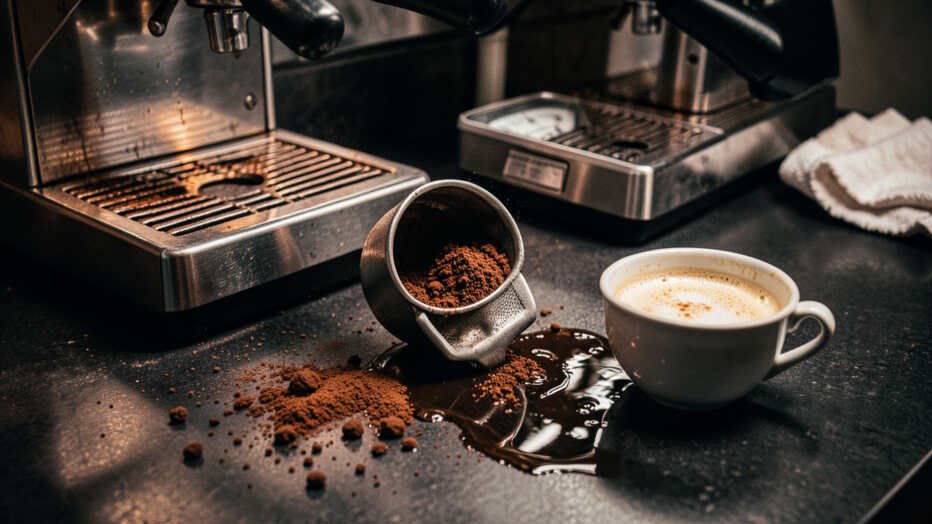
7 Signs You’re Making Espresso Wrong
The Bitter Truth: Signs of Over-Extraction
Espresso should be balanced, with sweet and slightly bitter notes. When it tastes too bitter, it’s often a sign that something went wrong during brewing. This happens when the coffee grounds are exposed to water for too long, or the water is too hot.
The coffee then releases too many bitter compounds. Think of it like over-steeping tea; it gets harsh and unpleasant.
Too Much Bitter Taste
If your espresso has a strong, burning, or acrid taste, it’s likely over-extracted. It might make you want to spit it out! This is a clear signal that the brewing process pulled too much from the coffee grounds.
Quick Shot Time
Espresso usually takes between 25 to 30 seconds to brew. If your shot finishes much faster, like in 15-20 seconds, it might not have extracted enough flavor. This is called under-extraction, and it leads to a sour, weak taste.
On the flip side, if your shot takes way too long, maybe 45 seconds or more, to produce a small amount of liquid, it’s also a problem. This usually means the coffee grounds are too fine, and the water is struggling to get through. This can also lead to bitterness.
The Sour Side: Signs of Under-Extraction
Under-extraction is the opposite problem. This happens when not enough flavor is pulled from the coffee grounds. The water might be too cool, the grind might be too coarse, or the shot might have been too fast.
Sour or Tangy Flavor
Espresso that is under-extracted tastes sour, sharp, or like weak, acidic coffee. It might even make your mouth pucker. It doesn’t have the rich, complex flavors you expect from good espresso.
Light Color and Thin Crema
When you pull a shot, you should see a nice, reddish-brown crema on top. If the crema is very thin, pale, or disappears quickly, it’s a sign of under-extraction. The color of the liquid itself might also be very light.
Grind Size Matters
The size of your coffee grounds is super important for espresso. It affects how fast or slow the water flows through the coffee puck. If your grind is too coarse, water rushes through, leading to under-extraction.
If it’s too fine, water struggles, causing over-extraction.
Grind Too Coarse
This leads to sour, weak espresso. The shot runs too fast, often in less than 20 seconds. The crema will be thin and bubbly.
You might see large channels in the coffee puck after brewing. It looks like rivers have formed.
Grind Too Fine
This results in bitter, burnt-tasting espresso. The shot will run very slowly, taking longer than 30-35 seconds. Very little espresso will come out.
The puck might be wet and muddy after brewing. The steam might hiss loudly from the group head if it’s too packed.
Finding the right grind is key. It’s usually a fine powder, like table salt. You need to experiment and adjust it a little at a time until your shots taste just right.
Water Temperature: Not Too Hot, Not Too Cold
The temperature of your water plays a big role in how well the coffee flavors are extracted. Too hot, and you risk burning the coffee, leading to bitterness. Too cold, and you won’t extract enough flavor, resulting in sourness.
Water Too Hot
If your espresso machine’s boiler is too hot, or if you’re using boiling water (which you shouldn’t for most machines), the coffee can become bitter and harsh. It extracts the wrong kinds of compounds too quickly.
Water Too Cold
If the water is not hot enough, it won’t dissolve the coffee solids properly. This leads to a sour, weak, and underdeveloped shot. The ideal temperature range for espresso is usually between 195°F and 205°F (90°C and 96°C).
Many modern espresso machines have temperature control. If yours doesn’t, you might need to let it heat up for a while longer before brewing, or flush it with a bit of hot water to stabilize the temperature.
Tamping Pressure: The Gentle Push
Tamping is pressing the coffee grounds down evenly in the portafilter. This creates a dense puck that the water will flow through evenly. Uneven tamping or tamping too hard or too soft can cause problems.
Uneven Tamping
If you tamp one side harder than the other, or if the grounds aren’t level, the water will find the path of least resistance. This creates ‘channeling,’ where water blasts through weak spots, leading to uneven extraction and a mix of bitter and sour flavors.
Tamping Too Light
If you don’t tamp firmly enough, the coffee puck will be too loose. Water will flow through too quickly, leading to under-extraction, sourness, and thin crema. It’s like not packing your suitcase well; things shift and don’t fit.
Tamping Too Hard
While less common, tamping too hard can make it very difficult for water to pass through the coffee. This can lead to over-extraction, bitterness, and a shot that runs extremely slowly. It can also put extra stress on your espresso machine.
The goal is a firm, even tamp. Many baristas aim for about 30 pounds of pressure. A good way to practice is to tamp and then gently tap the portafilter on the counter.
If your grounds shift or create a gap, you know your tamp wasn’t level.
Uneven Distribution
Before you even tamp, how you distribute the coffee grounds in the portafilter matters a lot. If the grounds are clumped in some areas and sparse in others, the water will flow unevenly.
Clumpy Grounds
This is especially true if your grinder produces a lot of fines (very small coffee particles). These fines can stick together, creating dense spots and airy spots in your puck. This leads to channeling and uneven extraction.
Distribution Too Random
Just dumping the grounds in and tamping won’t work well. You need to ensure the coffee is spread out evenly. This means gently breaking up clumps and making the surface flat and level before tamping.
Tools like distribution tools (also called WDT tools) can help break up clumps and create a perfectly even bed of coffee grounds. This is a simple step that makes a big difference.
Brew Time is Off
As mentioned before, brew time is a critical indicator. It’s a sign of how well your grind, dose, and tamp are working together. A shot that’s too fast or too slow is rarely a good shot.
Shot Runs Too Fast
If your espresso pulls in under 20 seconds, it’s a classic sign of under-extraction. The water hasn’t spent enough time with the coffee to pull out the good flavors. This usually points to a grind that’s too coarse, or not enough coffee being used.
Shot Runs Too Slow
If your espresso takes over 35 seconds to drip out, it’s likely over-extracted. The water is taking too long to get through, pulling out too many bitter compounds. This often means the grind is too fine, or the coffee is tamped too hard.
The sweet spot is usually 25-30 seconds for a double shot. This is a guideline, and your specific coffee might need slight adjustments.
Your Beans Might Be Old
Freshness matters a lot for espresso. Coffee beans start to lose their flavor and aroma shortly after roasting. Very old beans can make it hard to get good espresso, no matter how well you brew.
Stale Beans
If your beans were roasted months ago, they won’t have the bright flavors and rich crema you want. They might taste flat or even a little woody. Even if you’re brewing perfectly, stale beans can’t give you a great shot.
No Crema or Poor Crema
Freshly roasted beans produce a lovely crema. As beans age, they release less CO2, which is what creates that foamy layer. Old beans will often result in very little to no crema, or a crema that breaks down very quickly.
Try to buy whole beans that have a roast date on the bag. Use them within 2-4 weeks of the roast date for the best results. Store them in an airtight container away from light and heat.
Frequently Asked Questions
Question: What is the ideal grind size for espresso?
Answer: The ideal grind size for espresso is usually fine, similar to the texture of table salt. It needs to be fine enough to create resistance for the water but not so fine that it clogs the machine. You’ll need to experiment to find the perfect setting for your grinder and beans.
Question: How do I know if my espresso is under-extracted?
Answer: Under-extracted espresso tastes sour, sharp, or tangy. It will likely have a thin, pale crema and the shot will pull very quickly, often in less than 20 seconds. The flavor will be weak and lack sweetness.
Question: What causes channeling in espresso?
Answer: Channeling happens when water finds an easy path through the coffee puck, bypassing some grounds. This is often caused by uneven tamping, uneven distribution of coffee grounds, or a grind that is not consistent. This leads to uneven extraction and poor flavor.
Question: How long should an espresso shot take to brew?
Answer: A standard double espresso shot typically takes between 25 to 30 seconds to brew. This time frame allows for optimal extraction of flavors. If your shot is significantly faster or slower, it’s a sign that something needs adjustment.
Question: Is it okay to use very dark roasted beans for espresso?
Answer: While many people like dark roasts for espresso, they can be more prone to bitterness. If you use dark roasts, you need to be extra careful with your brewing. They can over-extract easily if the water is too hot or the grind is too fine.
Lighter or medium roasts often offer more flexibility for beginners.
Final Thoughts
Spotting these common issues with your espresso is the first step to better coffee. You’ve learned about the signs of over-extraction, like bitterness, and under-extraction, like sourness. You now know why grind size, water temperature, and tamping pressure are so important.
Paying attention to how your coffee looks, smells, and tastes will guide you. Don’t get discouraged; small adjustments make a big difference. Keep practicing, and soon you’ll be making delicious espresso every time!


![9 Foods That Last Longer With Vacuum Sealing[1]](https://creativehouseblog.com/wp-content/uploads/2026/04/9_Foods_That_Last_Longer_With_Vacuum_Sealing1-768x448.jpg)
![Induction vs Gas Cooktops Which Is Best[1]](https://creativehouseblog.com/wp-content/uploads/2026/03/Induction_vs_Gas_Cooktops_Which_Is_Best1-768x448.jpg)
![Fixing Common Coffee Maker Problems[1]](https://creativehouseblog.com/wp-content/uploads/2026/03/Fixing_Common_Coffee_Maker_Problems1-768x448.jpg)
![Air Fryer Basket vs Oven Style Models Comparison[1]](https://creativehouseblog.com/wp-content/uploads/2026/03/Air_Fryer_Basket_vs_Oven_Style_Models_Comparison1-768x448.jpg)
![How to Clean Your Air Fryer the Easy Way[1]](https://creativehouseblog.com/wp-content/uploads/2026/03/How_to_Clean_Your_Air_Fryer_the_Easy_Way1-768x448.jpg)