
Eight effective cleaning hacks for limescale removal involve using common household items like vinegar, lemon juice, baking soda, dish soap, and salt. These methods provide a non-toxic and cost-effective way to dissolve mineral buildup on taps, showerheads, kettles, and other surfaces. Consistent application of these solutions can both eliminate existing deposits and help prevent future accumulation.
Dealing with limescale can be a sticky problem, especially when you’re just starting out. That chalky buildup on your taps, showerheads, and kettles seems to appear out of nowhere! But don’t worry, we’ve got your back.
We’ll show you easy ways to tackle that limescale. Get ready to discover 8 Cleaning Hacks for Limescale Removal that are simple to follow and really work.
Key Takeaways
- You’ll learn how to make your own effective limescale removers.
- Discover simple household items that can combat limescale.
- Find out how to clean different surfaces without harsh chemicals.
- Understand quick methods to keep limescale from coming back.
- Get easy-to-follow steps for each cleaning hack.
Understanding Limescale and How to Fight It
What is Limescale?
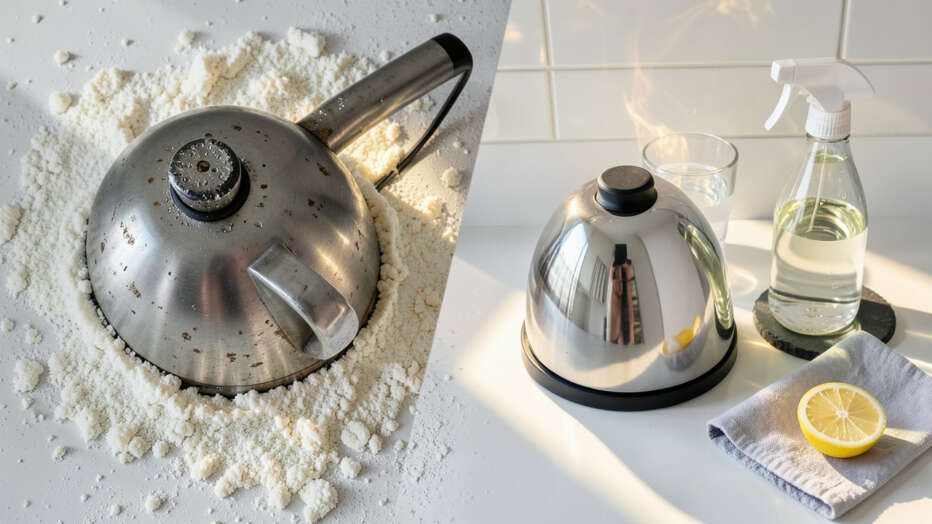
Limescale is that white, chalky stuff you see in places with hard water. It’s mostly made of calcium carbonate. When water heats up or evaporates, it leaves these minerals behind.
Think about your kettle, your shower screen, or even the drains in your bathroom. Limescale builds up over time.
It’s not just ugly; it can also cause problems. Limescale can clog pipes and showerheads, making water flow slower. It can also make your appliances work harder, using more energy.
For beginners, seeing this buildup might feel a bit overwhelming. But it doesn’t have to be a big chore to get rid of it.
Why Limescale is Tricky
Limescale can stick tightly to surfaces. This makes it hard to scrub away with just soap and water. Many cleaning products for limescale can be strong.
They might have fumes or require gloves. For someone new to cleaning, this can be a bit much.
The good news is that many natural and common household items can be just as effective. You don’t need fancy or expensive cleaners. The key is knowing what to use and how to use it.
We’ll show you how to make these simple solutions work wonders.
8 Cleaning Hacks for Limescale Removal
1. Vinegar Power
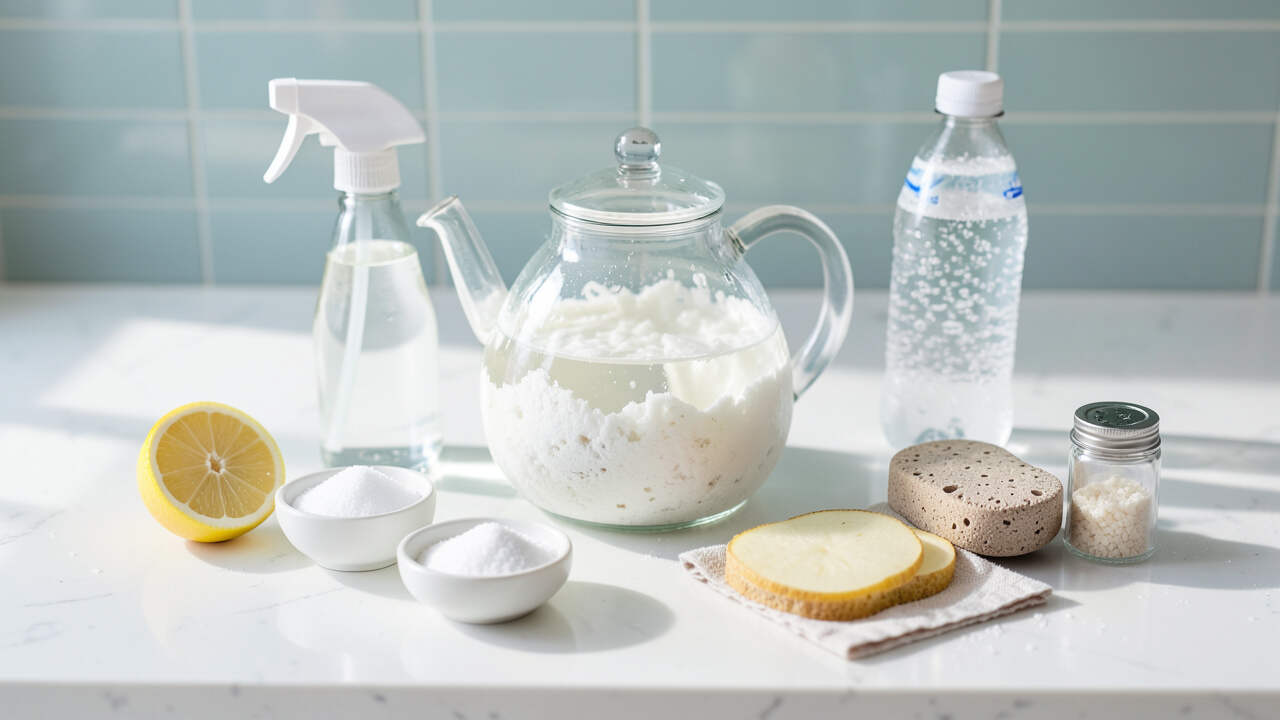
White vinegar is a superhero for fighting limescale. Its acidity breaks down the mineral deposits. For taps and sinks, soak a cloth in white vinegar and wrap it around the affected area.
Leave it for an hour or two. Then, wipe and rinse.
For showerheads, unscrew them if you can. Submerge them in a bowl of white vinegar overnight. If you can’t remove the showerhead, fill a plastic bag with vinegar.
Tie it around the showerhead so it’s covered. This hack is super easy and uses something you probably already have.
2. Lemon Juice Magic
Lemon juice is another natural acid that works well. It has a nice smell too! You can use it in a similar way to vinegar.
Cut a lemon in half. Rub the cut side directly onto limescale spots on chrome or porcelain. Let the juice sit for about 15-30 minutes.
For tougher spots, you can make a paste. Mix lemon juice with a bit of baking soda. Apply the paste to the limescale.
Let it sit, then scrub gently. Rinse thoroughly. This is a great option if you don’t like the smell of vinegar.
3. Baking Soda Paste
Baking soda is a mild abrasive. It helps to scrub away loosened limescale. It’s also a natural deodorizer.
Mix baking soda with a little water to create a paste. Apply this paste to the limescale. Let it sit for a while, maybe 30 minutes.
Then, use a soft cloth or an old toothbrush to scrub the area. The baking soda will help lift the limescale. Rinse the area well afterward.
This is perfect for surfaces like countertops or inside sinks.
4. Dish Soap and Vinegar Combo
Sometimes, a mix of common items is best. Combine equal parts white vinegar and dish soap in a spray bottle. Shake it gently.
Spray this mixture directly onto limescale. Let it sit for about 20-30 minutes. The soap helps to lift grease, while the vinegar tackles the limescale.
After it has sat, scrub the area with a cloth or sponge. Rinse with warm water. This is a great all-around cleaner for bathrooms and kitchens.
It’s effective and doesn’t require harsh chemicals.
5. Salt Scrub
Salt can act as a gentle abrasive. It can help to scrape away limescale, especially when combined with an acid. For stubborn spots on surfaces like ceramic tiles, you can make a paste of salt and lemon juice or vinegar.
Apply the paste.
Let it sit for a bit. Then, gently scrub the area with a cloth or sponge. The salt granules help to lift the loosened limescale.
Be careful not to scratch delicate surfaces. Always test in a small, hidden spot first.
6. Old Toothbrush Power
Don’t throw away those old toothbrushes! They are perfect for scrubbing limescale in tight spots. Think around faucet bases, grout lines, or showerhead nozzles.
Use your chosen cleaning solution (like vinegar or lemon juice). Dip the toothbrush into the solution.
Scrub the limescale directly. For faucet aerators, you might need to take them apart. Use the toothbrush to clean the small parts.
This tool helps you reach places larger cloths can’t.
7. Steam Cleaner (If You Have One)
If you own a steam cleaner, it can be a fantastic tool for limescale. The hot steam can soften and loosen the mineral deposits. Use the appropriate nozzle for the surface.
Move the steam cleaner slowly over the limescale area. The heat and moisture will help break it down.
Immediately after steaming, wipe the area with a clean cloth. You might need to repeat this for very tough buildup. Steam cleaning is a chemical-free way to clean and can be used on many surfaces.
8. Cola Soak for Kettles
This one might surprise you! The phosphoric acid in cola can help dissolve limescale. It’s a simple trick for cleaning kettles.
Pour enough cola into your kettle to cover the limescale deposits. Let it sit for a few hours, or even overnight.
Then, empty the kettle and rinse it thoroughly. Boil some fresh water in the kettle and discard it. This helps to remove any cola taste.
It’s a quirky but effective method for appliance limescale.
Frequently Asked Questions
Question: How often should I clean limescale?
Answer: It depends on how hard your water is. For very hard water, you might need to clean every few weeks. For softer water, once a month or every other month might be enough.
Question: Can I use these hacks on stainless steel?
Answer: Yes, most of these methods are safe for stainless steel. Always use a soft cloth and scrub gently. Avoid harsh scrubbing that could scratch the surface.
Question: Will vinegar damage my surfaces?
Answer: White vinegar is generally safe for most surfaces. However, avoid using it on natural stone like marble or granite, as the acid can etch it. Test in a small area first if you’re unsure.
Question: How can I prevent limescale buildup?
Answer: Wiping surfaces dry after use is the best prevention. Keep a squeegee or microfiber cloth handy in your bathroom and kitchen. This removes water before it can evaporate and leave minerals.
Question: Are there any hacks for tough, old limescale?
Answer: For very old, thick limescale, you might need to try a combination of methods. Let a strong acid like vinegar or lemon juice soak for longer. You might need to repeat the cleaning process several times.
Gentle scraping with a plastic scraper can also help after soaking.
Final Thoughts
Getting rid of limescale doesn’t have to be a chore. You’ve learned how simple household items like vinegar and lemon juice can be powerful allies. These 8 cleaning hacks for limescale removal offer easy, effective ways to tackle that chalky buildup.
Remember to dry surfaces after use to prevent it from coming back. Your taps, showerheads, and appliances will thank you!

![How to Maintain Your Boiler So It Lasts Much Longer[1]](https://creativehouseblog.com/wp-content/uploads/2026/05/How_to_Maintain_Your_Boiler_So_It_Lasts_Much_Longer1-768x403.jpg)
![Stop Air Fryer Fails Common Mistakes[1]](https://creativehouseblog.com/wp-content/uploads/2026/03/Stop_Air_Fryer_Fails_Common_Mistakes1-768x448.jpg)
![Air Fryer Maintenance Guide For Beginners[1]](https://creativehouseblog.com/wp-content/uploads/2026/03/Air_Fryer_Maintenance_Guide_For_Beginners1-768x448.jpg)
![What Materials Are Used in Air Fryers[1]](https://creativehouseblog.com/wp-content/uploads/2026/03/What_Materials_Are_Used_in_Air_Fryers1-768x448.jpg)
![7 Mistakes To Avoid When Making Crepes[1]](https://creativehouseblog.com/wp-content/uploads/2026/04/7_Mistakes_To_Avoid_When_Making_Crepes1-768x448.jpg)
![What Is a Slow Cooker Used For[1]](https://creativehouseblog.com/wp-content/uploads/2026/03/What_Is_a_Slow_Cooker_Used_For1-768x448.jpg)