
A dehydrator allows you to make nine specific healthy snacks, including fruit leather, dried fruit slices, and vegetable chips. This simple food preservation method removes water to create nutrient-rich, chewy treats that are straightforward to prepare using common ingredients. The process results in healthier, cost-effective alternatives to store-bought snacks while effectively preserving the food for longer shelf life.
Thinking about making your own snacks? Sometimes it can seem a little tricky to know where to start with a dehydrator. But don’t worry!
We’re going to show you just how easy it is. You’ll soon be making delicious and healthy treats. Get ready to discover how simple it is to create 9 Healthy Snacks You Can Make with a Dehydrator.
Let’s see what’s next!
Key Takeaways
- Dehydrating is a simple way to preserve food and make healthy snacks.
- You can make a wide variety of tasty snacks using common fruits, vegetables, and even meats.
- Preparing your ingredients is usually as easy as slicing and arranging them.
- Dehydrating locks in nutrients and creates satisfyingly chewy textures.
- These homemade snacks are often healthier and cheaper than store-bought options.
- You’ll learn simple techniques to get started right away.
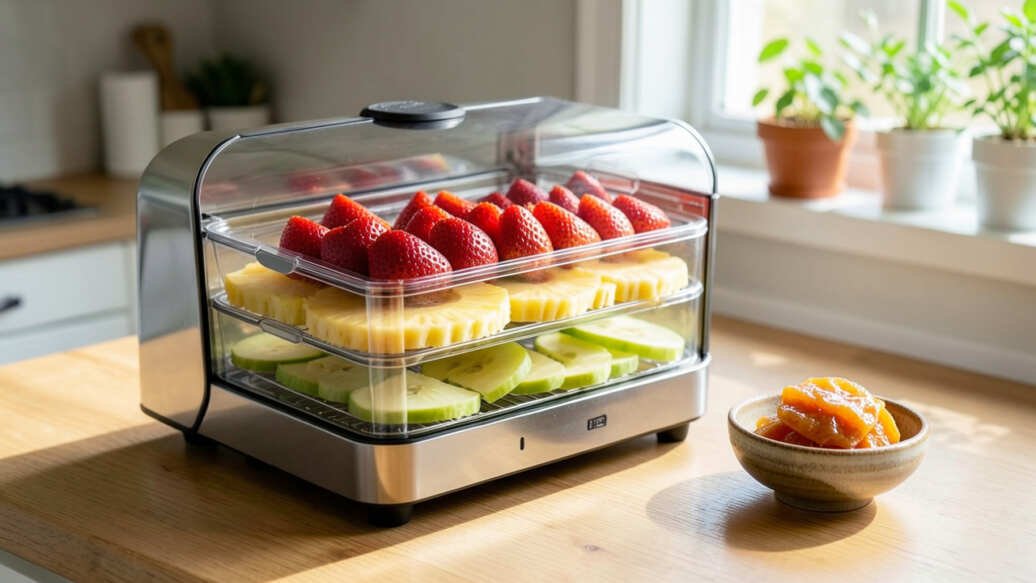
What is Food Dehydrating?
Food dehydrating is a way to remove most of the water from food. This process helps food last a lot longer. It also makes food chewy and tasty.
Think of it like preserving food from a long time ago, but now we have machines to help.
When you take the water out, it stops tiny germs from growing. This is why the food doesn’t spoil. It’s a natural way to keep food fresh without adding chemicals.
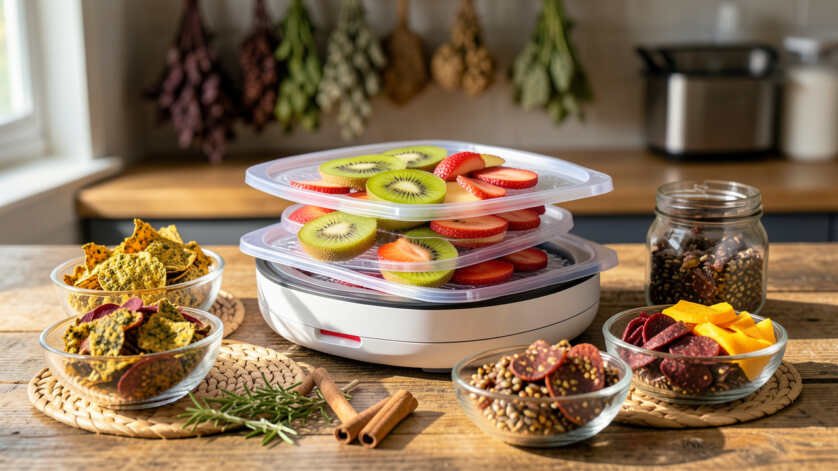
Why Use a Dehydrator for Snacks?
Using a dehydrator for snacks is a smart choice. You get to control what goes into your food. This means you can avoid added sugars and unhealthy fats often found in store-bought snacks.
Plus, dehydrating keeps most of the good stuff, like vitamins and minerals, in the food. It also changes the texture, making fruits and veggies wonderfully chewy and satisfying. This is great for people who like a good crunch or chew in their snacks.
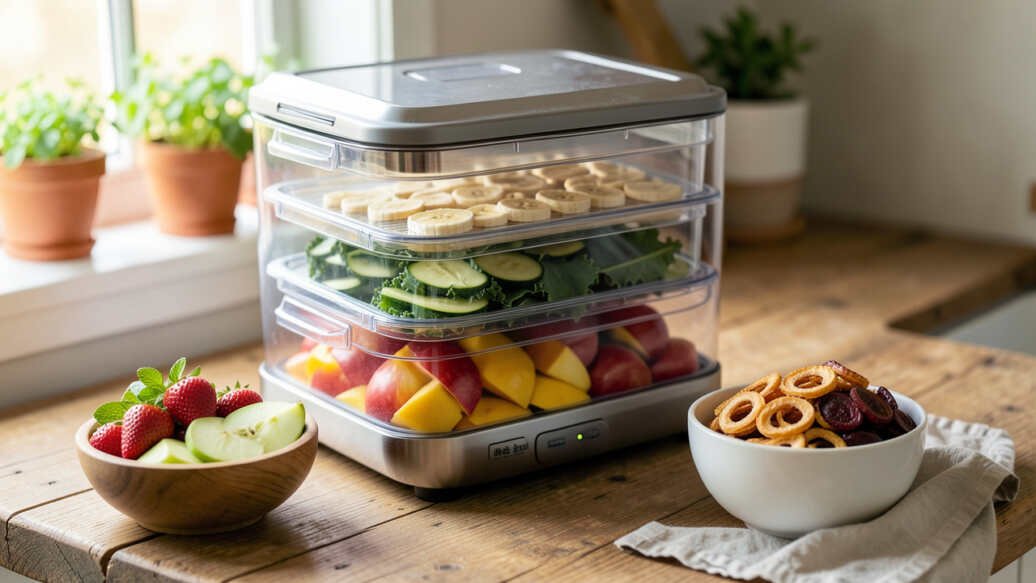
Getting Started with Your Dehydrator
Starting with a food dehydrator is easier than you might think. Most dehydrators have simple controls. You just need to set the temperature and the time.
First, choose what you want to dehydrate. Fresh, ripe fruits and firm vegetables work best. Wash them well.
Then, slice them evenly. Even slices help them dry at the same rate. This means you won’t have some pieces dry and others still wet.
Preparing Your Food
Preparation is a key step. For fruits like apples or bananas, you’ll want to slice them thinly. A mandoline slicer can help you get even slices.
For vegetables, like zucchini or peppers, you might want to cut them into strips or rings.
Some foods, like berries, can be placed whole on the trays. Others, like kale for chips, might need a little prep like washing and tearing. The goal is to give the air a good way to move around each piece.
Arranging on Trays
Once your food is prepped, it’s time to put it on the dehydrator trays. Don’t pile the food up. Each piece should have space around it.
This allows air to circulate freely.
If pieces touch, they might not dry properly. This can also lead to mold growth. So, take your time to arrange everything nicely.
This simple step makes a big difference in the end result.
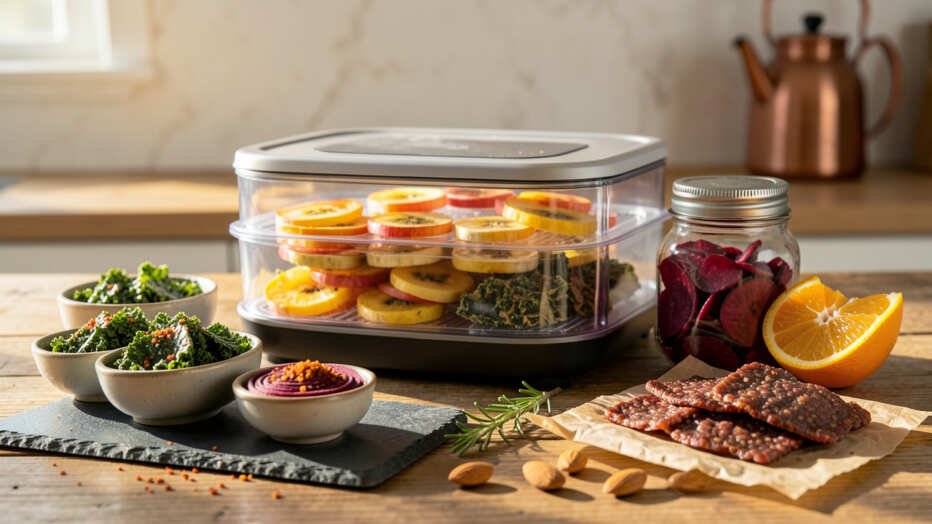
9 Healthy Snacks You Can Make with a Dehydrator
1. Fruit Leather
Fruit leather is a family favorite. You can make it with almost any fruit. Apples, berries, peaches, and mangoes are popular choices.
You can even mix fruits for new flavors.
To make fruit leather, you puree ripe fruit. You can add a little honey or maple syrup if you like it sweeter, but ripe fruit is often sweet enough. Spread the puree thinly on a dehydrator tray liner.
Then, let the dehydrator do its work. Once dry, it peels off easily and can be cut into strips.
2. Dried Fruit Slices
This is one of the simplest snacks. Apples, bananas, pears, and pineapple all dehydrate beautifully. Slice them thinly and place them on the trays.
Dried apple rings are a classic. Banana chips offer a sweet, chewy treat. Dried pineapple is great for a tropical flavor.
These are perfect for snacking on their own or adding to granola and trail mix.
3. Vegetable Chips
Who needs potato chips when you can make veggie chips? Sweet potatoes, zucchini, beets, and kale are great for this. Slice them thin and season them.
You can toss them with a little olive oil and salt. Some people add herbs or spices like paprika or garlic powder. Kale chips are a very popular and healthy option.
They get wonderfully crispy.
4. Beef Jerky
Making your own beef jerky is rewarding. You control the flavor and the saltiness. Choose lean cuts of beef.
Slice them very thinly, often against the grain.
Marinate the meat in your favorite jerky marinade. Soy sauce, Worcestershire sauce, and spices are common. Then, lay the strips on the dehydrator trays.
It takes several hours, but the result is a savory, chewy snack.
5. Fruit and Vegetable Powders
Once you have dried fruits and vegetables, you can turn them into powders. This is great for adding flavor to smoothies, yogurt, or baked goods. Dried berries, apples, or even spinach can be powdered.
Just put the dried items into a high-powered blender or food processor. Grind them until they are a fine powder. Store the powder in an airtight container.
6. Dried Herbs
If you grow your own herbs, dehydrating them is a fantastic way to preserve them. Basil, mint, oregano, and rosemary all dehydrate well.
Wash the herbs and pat them dry. Lay them on the dehydrator trays. They dry relatively quickly.
Once dry, you can crumble them and store them in jars for use in cooking throughout the year.
7. Dried Edible Flowers
For a special treat, try dehydrating edible flowers. Pansies, nasturtiums, and calendula can be dried. Make sure they are safe to eat and haven’t been sprayed with pesticides.
Place them carefully on the trays. They are delicate, so handle them with care. Dried edible flowers can be used to decorate cakes or cookies, or added to teas.
8. Banana “Nice” Cream Base
While not a snack in the traditional sense, dehydrating bananas can create a base for healthy desserts. Dehydrate banana slices until they are leathery. Then, when you want a treat, blend these dried bananas with a little liquid and a touch of sweetener.
This creates a creamy, ice cream-like dessert without any added sugar or dairy. It’s a great way to use up overripe bananas too.
9. Fruit and Nut Rolls
These are like a healthier version of a candy bar. Combine dried fruits like dates and apricots with nuts like almonds or walnuts. Process them in a food processor until they form a sticky dough.
Press this mixture into thin sheets on a dehydrator tray liner. Dehydrate until firm and chewy. Cut into bars for a portable, energy-boosting snack.
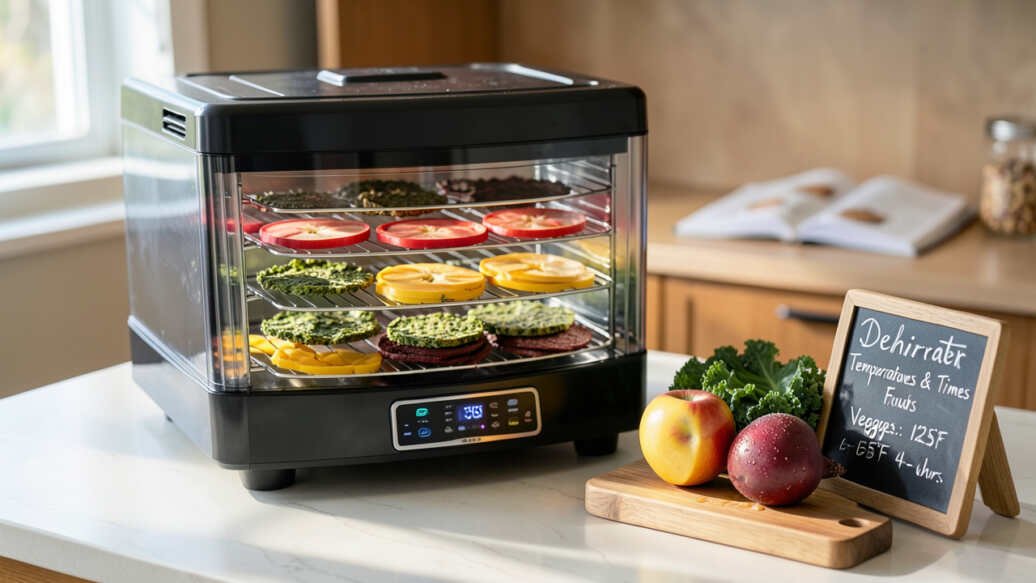
Dehydrator Temperatures and Times
The right temperature and time are key for successful dehydrating. These can vary depending on your dehydrator model and the food you’re preparing.
| Snack Type | Temperature (°F) | Time (Hours) |
|---|---|---|
| Fruit Leather | 135°F | 6-12 |
| Fruit Slices (Apples, Bananas) | 135°F | 6-8 |
| Vegetable Chips (Sweet Potato, Zucchini) | 125°F | 6-10 |
| Beef Jerky | 160°F | 4-8 |
| Herbs | 95-115°F | 1-4 |
Remember, these are just guidelines. Check your food often, especially as it gets closer to being done. You want it to be dried but not burnt.
Storing Your Dehydrated Snacks
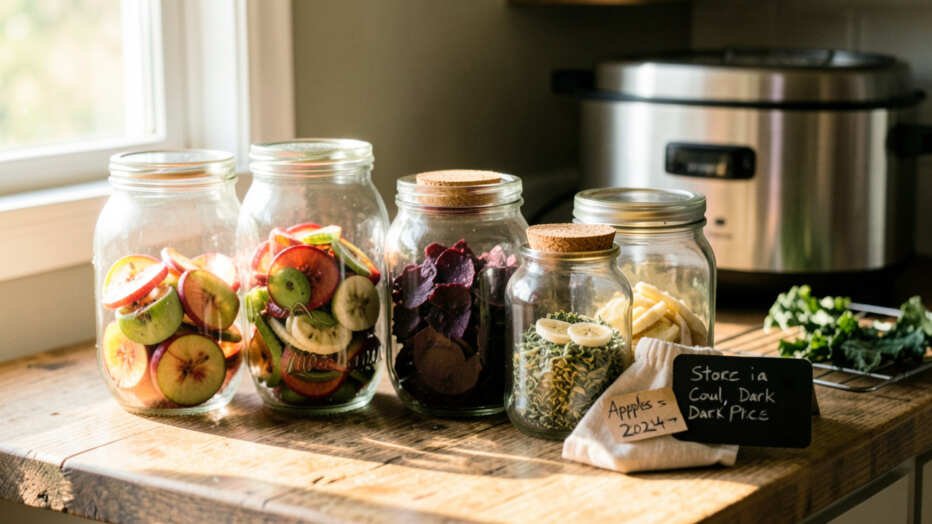
Proper storage is important to keep your homemade snacks fresh and tasty. Use airtight containers. Glass jars with tight lids are excellent.
You can also use vacuum-sealed bags.
Store your dehydrated snacks in a cool, dark place. This helps prevent them from losing their flavor or texture. If stored correctly, most dehydrated snacks can last for several months, or even longer.
Frequently Asked Questions
Question: How long does it take to dehydrate food?
Answer: Drying times vary a lot. It can take anywhere from a few hours for herbs to 12 hours or more for fruit leather or jerky. It depends on the food’s moisture content, the thickness of the pieces, and your dehydrator’s settings.
Question: Can I use my oven to dehydrate food if I don’t have a dehydrator?
Answer: Yes, you can. Set your oven to its lowest temperature setting (usually around 140-170°F or 60-77°C). Prop the oven door open a little to let moisture escape.
It takes more attention than a dehydrator, but it works.
Question: What are the best fruits for dehydrating?
Answer: Most fruits work well. Apples, bananas, pears, peaches, apricots, berries, and pineapple are all great choices. They become chewy and flavorful when dried.
Question: How do I know when my dehydrated food is ready?
Answer: For fruits and vegetables, they should feel dry to the touch and be leathery or brittle, depending on the item. They should not feel sticky or moist. For jerky, it should be firm and bend without breaking.
Let it cool completely before testing, as it becomes drier as it cools.
Question: Is dehydrating healthy?
Answer: Yes, dehydrating is a very healthy way to preserve food. It removes water but keeps most of the vitamins and minerals. Plus, when you make snacks yourself, you control the ingredients, avoiding added sugars and preservatives.
Final Thoughts
You now have a great starting point for making your own healthy snacks. You’ve seen how simple it is to prepare fruits, vegetables, and even meats for dehydrating. With a little slicing and arranging, you can transform fresh foods into delicious, portable treats.
These 9 Healthy Snacks You Can Make with a Dehydrator offer variety and great taste. They are perfect for busy days or when you need a healthy option. Enjoy making and eating your creations!

![10 Foods You Should Never Store In A Freezer[1]](https://creativehouseblog.com/wp-content/uploads/2026/04/10_Foods_You_Should_Never_Store_In_A_Freezer1-768x448.jpg)
![Benefits Of Fresh Juice Vs Store Bought[1]](https://creativehouseblog.com/wp-content/uploads/2026/04/Benefits_Of_Fresh_Juice_Vs_Store-Bought1-1-768x448.jpg)
![Why Your Water Pressure Is Low And How To Fix It[1]](https://creativehouseblog.com/wp-content/uploads/2026/05/Why_Your_Water_Pressure_Is_Low_And_How_To_Fix_It1-768x403.jpg)

![How to Use a Rice Cooker Properly[1]](https://creativehouseblog.com/wp-content/uploads/2026/03/How_to_Use_a_Rice_Cooker_Properly1-768x448.jpg)
![How to Use a Pressure Cooker Safely[1]](https://creativehouseblog.com/wp-content/uploads/2026/03/How_to_Use_a_Pressure_Cooker_Safely1-768x448.jpg)