
Choosing between a food processor and a blender can seem tricky when you’re just starting in the kitchen.
Many people wonder When to Use a Food Processor Instead of a Blender because they look so similar but do different jobs. Don’t worry, it’s simpler than you think!
We’ll show you exactly what each one is best for, step-by-step. Get ready to make your kitchen tasks a breeze.
Key Takeaways
- Food processors are great for chopping, slicing, shredding, and kneading dough.
- Blenders excel at pureeing, liquefying, and creating smooth textures like smoothies and soups.
- The size and shape of the blade and bowl are key differences determining their function.
- Consider the desired texture of your food to decide which appliance to use.
- For tasks requiring bulk processing or varied textures, a food processor is often the better choice.
- For smooth, liquid-based results, a blender is typically the go-to appliance.
![When to Use a Food Processor Versus Blender[1]](https://creativehouseblog.com/wp-content/uploads/2026/03/When_to_Use_a_Food_Processor_Versus_Blender1.jpg)

Food Processor Versus Blender Main Differences
What Makes Them Different
Food processors and blenders are both kitchen helpers that use spinning blades to process food. But they do different things really well. Think about what you want to make.
Do you need something smooth and runny, or do you want bits of food chopped up?
Food Processor Jobs
A food processor has a wide bowl and blades that spin close to the bottom. This design is perfect for tasks where you need to chop, slice, shred, or even knead dough. It can handle bigger amounts of food and gives you more control over the texture.
Imagine making a salad. You want to chop up veggies, not turn them into mush. A food processor with its slicing or shredding disk attachment is your friend here.
It can grate cheese in seconds or finely chop onions without making a paste.
Here are some common food processor tasks:
- Chopping vegetables for salsa or mirepoix
- Shredding cheese or making coleslaw
- Making bread crumbs from stale bread
- Kneading dough for pies or pizza
- Making nut butter
- Pureeing cooked vegetables for baby food (if you want a slightly coarser texture)
Blender Jobs
A blender has a tall, narrow jar and blades at the very bottom. This shape is made for creating smooth, liquid mixtures. The blades pull the food down, creating a vortex that helps everything blend into a consistent liquid.
Think about making a morning smoothie. You want all the fruit, yogurt, and liquid to turn into one smooth, drinkable mix. A blender does this perfectly.
It’s also great for making creamy soups, sauces, and even frozen drinks.
Here are some common blender tasks:
- Making smoothies and milkshakes
- Pureeing soups and sauces until very smooth
- Crushing ice for cocktails or slushies
- Making salad dressings
- Liquefying fruits and vegetables for juices
When to Use a Food Processor Instead of a Blender
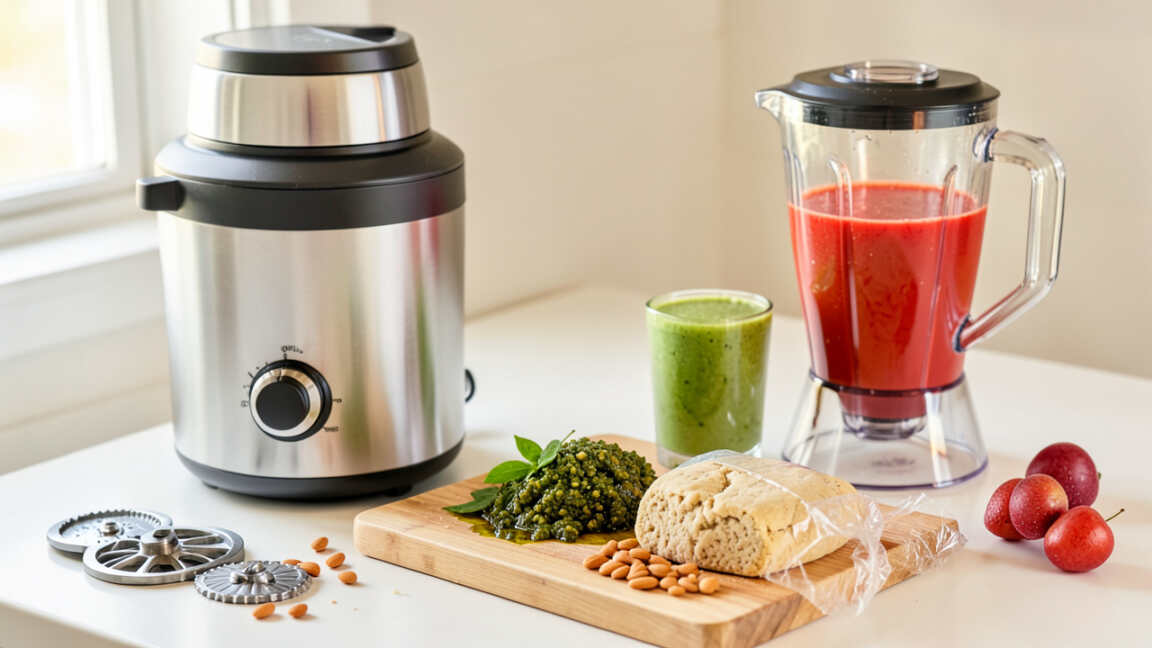
So, When to Use a Food Processor Instead of a Blender? The main reason is the type of texture you want to achieve. If you need distinct pieces of ingredients, or you want to process a larger volume of food with varying textures, a food processor is usually the better choice.
For example, if you’re making pesto, you want finely chopped basil, garlic, and nuts, but not a completely smooth paste. A food processor can do this beautifully. If you tried to make pesto in a blender, you might end up with a watery, unevenly chopped mess.
Chopping Versus Pureeing
The core difference lies in the action. Blenders are designed to liquefy. Food processors are designed to chop, slice, and shred.
While a blender can chop, it often goes too far and turns things into a liquid too quickly.
A food processor gives you more control. You can pulse it to chop ingredients into small, distinct pieces, or run it longer to get a finer chop, but it’s harder for it to become completely liquid unless you add a lot of liquid and run it for a long time.
Texture Control
The blades in a food processor are usually broader and designed to cut through ingredients more like a knife. The blades in a blender are often sharper and smaller, designed to create a fast-moving liquid flow.
If you’re making hummus, you might start with a food processor to break down the chickpeas and tahini. Then, you might transfer it to a blender if you want it extra smooth. But for most hummus recipes, the food processor does the job well enough.
Volume and Variety of Tasks
Food processors typically come with different attachments, like slicing and shredding disks. This makes them very versatile for preparing ingredients for a meal. You can slice potatoes for a gratin or shred cabbage for slaw in minutes.
Blenders are usually less versatile. They are built for one primary job: making things smooth and liquid. While some high-powered blenders can do more, they generally don’t offer the same range of prep tasks as a food processor.
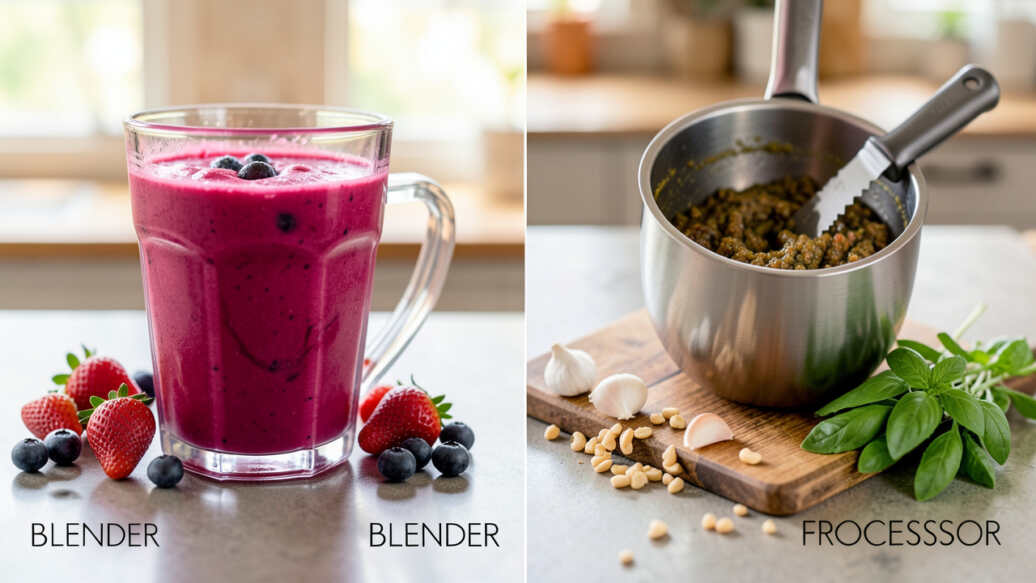
Comparing Appliances Side-by-Side
Let’s look at how they stack up for common tasks:
| Task | Best Appliance | Why |
|---|---|---|
| Smoothies | Blender | Creates a smooth, liquid consistency. |
| Chopping Onions | Food Processor | Offers better control over chop size, prevents mush. |
| Making Soups (smooth) | Blender | Achieves a silky, uniform texture. |
| Shredding Cheese | Food Processor | Uses a shredding disk for even shreds. |
| Making Pesto | Food Processor | Chops ingredients well without over-processing. |
| Crushing Ice | Blender (especially a high-powered one) | Designed for liquefying and breaking down solids. |
| Kneading Dough | Food Processor | Can handle thicker doughs for baking. |
| Making Nut Butter | Food Processor | Handles thick pastes and can process large amounts. |
When a Blender Might Be Preferred Even for Chopping
There are a few times when you might use a blender for something that sounds like a food processor job. If you want a very fine, almost paste-like consistency for something like a curry paste or a small amount of finely minced garlic for a sauce, a blender can work well.
However, you must be careful. Blenders can quickly turn chopped ingredients into liquid. You’ll need to use the pulse function and stop often to check the texture.
It’s often easier to get the exact texture you want with a food processor.
When a Food Processor is Essential
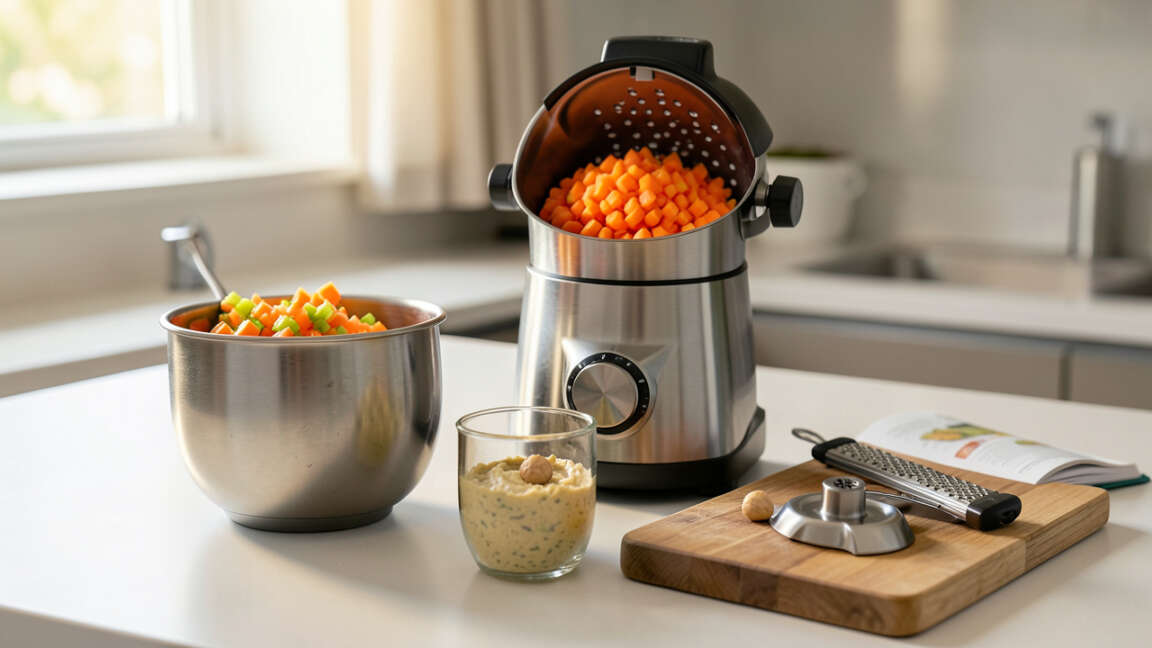
Certain recipes just won’t turn out right without a food processor. Making pastry dough, for instance, benefits from the quick chopping action that a food processor provides. It cuts the butter into the flour evenly, creating the flaky texture you want.
If you plan on doing a lot of baking, making dips from scratch, or preparing ingredients for multiple dishes at once, a food processor is a great investment. It saves so much time and effort on tasks that would be very tedious by hand.
Understanding Blade Design and Bowl Shape
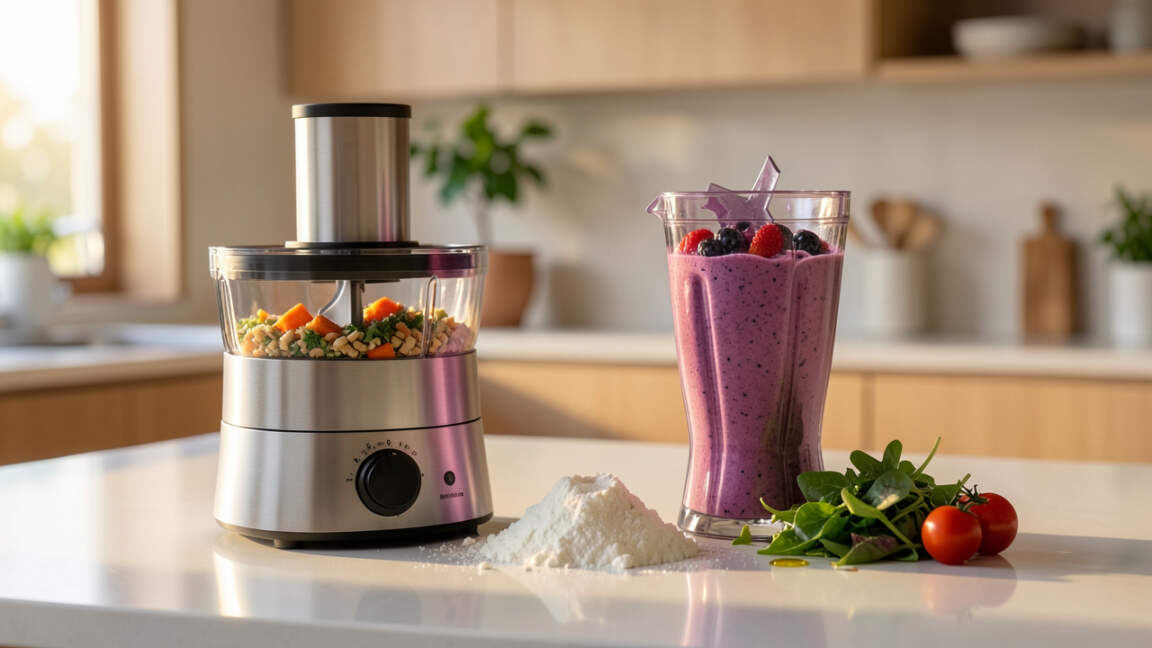
The physical design of these appliances is key. A food processor has a broad, shallow bowl. This allows ingredients to spread out and come into contact with the blades evenly for chopping or slicing.
The blades are often S-shaped and sit low in the bowl.
A blender’s jar is tall and narrow. The blades are at the bottom, designed to create a strong suction that pulls food down into them. This action is great for liquidizing but not so good for keeping ingredients in distinct pieces.
Blade Action
Food processor blades are like mini knives, cutting and chopping. Blender blades are more like propellers, creating a powerful vortex that pulverizes and liquefies. This fundamental difference dictates their primary uses.
Bowl Size Matters
Food processors often come in various sizes, from small 3-cup models to large 14-cup ones. This allows you to process small batches or large amounts of food efficiently. Blenders also come in different sizes, but their tall shape is less suited for processing large quantities of solid ingredients without adding liquid.

Creative Uses for Both Appliances
Don’t be afraid to experiment! Sometimes, using one appliance can inspire creative uses for the other. For example, you can make a quick fruit puree in a food processor if you’re out of the house without a blender, though it might be a little less smooth.
Likewise, you can sometimes chop ingredients in a blender if you’re careful with the pulsing. The trick is to understand the limitations of each and work within them to get the best results for your cooking.
FAQ Of When to Use a Food Processor Versus Blender
Question: Can I use a blender to chop vegetables if I don’t have a food processor
Answer: Yes, you can chop vegetables in a blender, but you need to be very careful. Use the pulse button in short bursts and check the texture frequently. It’s easy to over-process and end up with mush instead of chopped pieces.
Question: What is the best appliance for making smooth soups
Answer: A blender is best for making smooth soups. Its design creates a powerful vortex that purifies ingredients into a silky, uniform liquid consistency.
Question: Can a food processor make nut butter
Answer: Yes, a food processor is excellent for making nut butter. It can handle the thick consistency of nuts and process them into a smooth or chunky butter.
Question: Is it better to use a food processor or a blender for bread crumbs
Answer: A food processor is generally better for making bread crumbs. It can efficiently break down stale bread into consistent crumb sizes without turning it into a paste.
Question: Can I use a food processor to make a smoothie
Answer: You can use a food processor to make a smoothie, but the texture might not be as smooth as one made in a blender. It works best for thicker, chunkier smoothie bowls rather than drinkable smoothies.
Final Thoughts
Knowing When to Use a Food Processor Instead of a Blender makes cooking much easier.
Food processors are for chopping slicing and shredding. Blenders are for liquefying and pureeing into smooth liquids.
Choose the right tool for the job to get perfect results every time. Happy cooking!

![Is Pressure Cooking Healthy For You[1]](https://creativehouseblog.com/wp-content/uploads/2026/03/Is_Pressure_Cooking_Healthy_For_You1-768x448.jpg)
![How To Clean Your Toaster Safely[1]](https://creativehouseblog.com/wp-content/uploads/2026/03/How_To_Clean_Your_Toaster_Safely1-768x448.jpg)
![8 Tips For Perfect Thin Crepes Every Time[1]](https://creativehouseblog.com/wp-content/uploads/2026/04/8_Tips_For_Perfect_Thin_Crepes_Every_Time1-768x448.jpg)
![Troubleshooting Common Bread Maker Problems[1]](https://creativehouseblog.com/wp-content/uploads/2026/03/Troubleshooting_Common_Bread_Maker_Problems1-768x448.jpg)
![Outdoor Maintenance Jobs To Complete Before Summer Ends[1]](https://creativehouseblog.com/wp-content/uploads/2026/05/Outdoor_Maintenance_Jobs_To_Complete_Before_Summer_Ends1-768x403.jpg)
![Air Fryer Basket vs Oven Style Models Comparison[1]](https://creativehouseblog.com/wp-content/uploads/2026/03/Air_Fryer_Basket_vs_Oven_Style_Models_Comparison1-768x448.jpg)