
Choosing the right espresso machine can feel tricky when you’re just starting. Many beginners wonder about the differences between Manual vs Automatic Espresso Machines. It’s a common question because each type offers something unique.
Key Takeaways
- Manual espresso machines give you full control over every step of making espresso.
- Automatic espresso machines do most of the work for you with just a button press.
- Choosing depends on how much control you want and how much time you have.
- Manual machines can produce amazing espresso but require practice and skill.
- Automatic machines offer convenience and consistent results with less effort.
- Your budget and how seriously you take your coffee hobby are important factors.
Don’t worry, we’ll make it simple. This guide will walk you through everything you need to know, step by step, so you can pick the perfect machine for your home. Get ready to learn what makes them tick and which one is best for you.
![Manual Versus Automatic Espresso Machines[1]](https://creativehouseblog.com/wp-content/uploads/2026/03/Manual_Versus_Automatic_Espresso_Machines1.jpg)
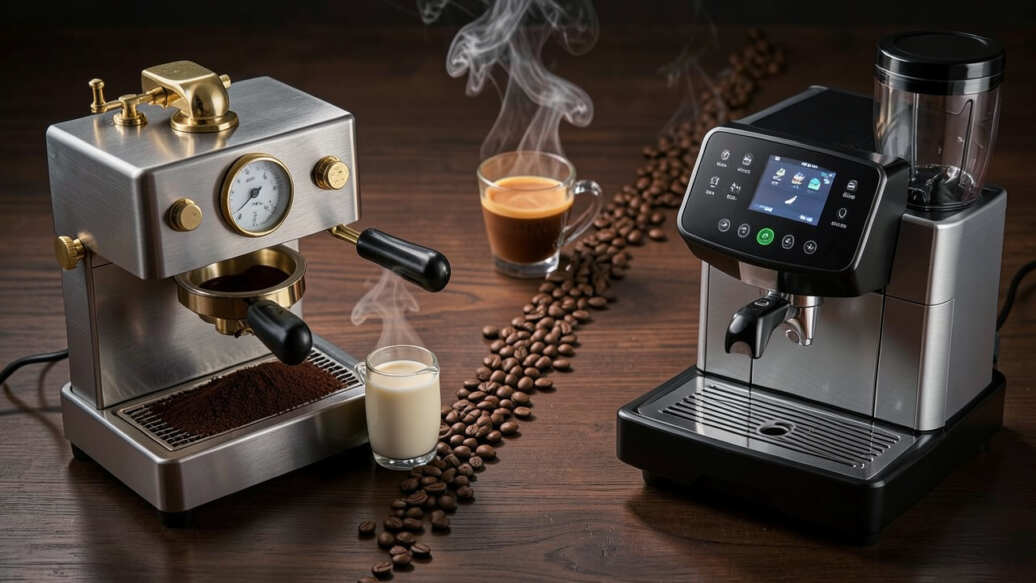
Understanding Espresso Machine Types
Choosing your first espresso machine often leads to a big question: Manual vs Automatic Espresso Machines. This is where things can get a little confusing for newcomers.
What Makes a Machine Manual?
A manual espresso machine, sometimes called a lever espresso machine, puts you in charge of everything. You control the water temperature, the pressure, and how long the water hits the coffee grounds. Think of it like a chef cooking a meal from scratch. You add the ingredients, you use the tools, and you decide exactly how everything comes together. This gives you a lot of power to create a truly custom cup of espresso.
The process usually involves grinding your coffee beans, tamping them into a portafilter, locking that into the machine, and then pulling a lever. This lever is what builds the pressure needed to force hot water through the coffee. It’s a hands-on experience. You can feel the resistance as you pull the lever, and this feedback is part of what makes it so engaging for coffee lovers.
What Makes a Machine Automatic?
An automatic espresso machine aims for simplicity and speed. These machines take over many of the tasks that are manual on other types. You typically grind your beans and put them in the portafilter, but the machine handles the water heating and pressure application. Some automatic machines even have built-in grinders and milk frothers, making them all-in-one coffee makers.
With an automatic machine, you might press a button, and it brews the espresso for you. It has pre-programmed settings that aim to deliver a consistent shot every time. This is great if you want a good cup of coffee quickly without needing to become a barista expert. They are designed for convenience.
Semi-Automatic Machines
It’s important to mention semi-automatic machines too, as they are very common. These are a middle ground between fully manual and fully automatic. You control the grind and tamp, but once you start the brew cycle, the machine controls the duration and pressure. You usually stop the brew cycle yourself when you think the shot is ready. This gives you more control than a fully automatic machine but is easier to learn than a fully manual one. For many home users, a semi-automatic is a great starting point.
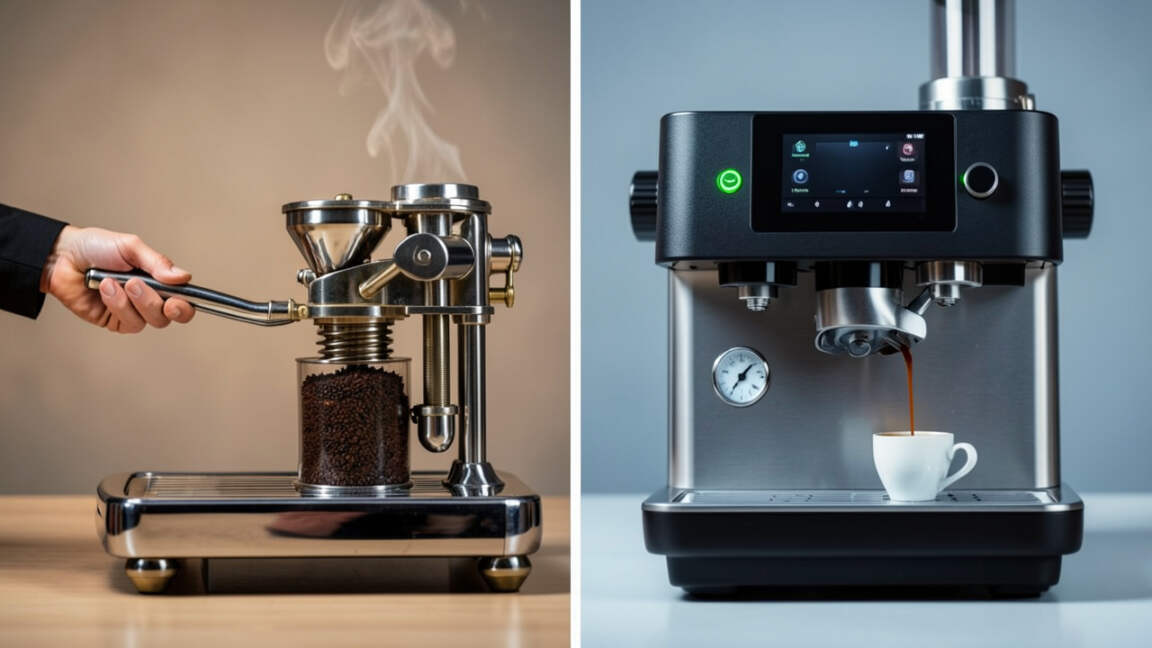
How They Work Differently
The main difference in how Manual vs Automatic Espresso Machines operate comes down to user intervention and automation.
The Brewing Process
On a manual machine, you are the engine. You physically create the pressure by pulling a lever. This means you can vary the pressure throughout the shot. You might start with a lighter touch, increase it, and then ease off. This level of control can lead to very nuanced and complex espresso flavors if done correctly. However, it also means there’s a learning curve to master this technique.
Automatic machines, on the other hand, use a pump to create consistent pressure. This pump is activated by a button or a timer. The machine’s internal programming dictates how the water is delivered and at what pressure. While this consistency is a plus for ease of use, it means you have less ability to fine-tune the brewing process for specific coffees or tastes.
Water Temperature Control
Temperature is vital for good espresso. Manual machines sometimes require you to learn how to manage this. You might need to run a little hot water through the group head before brewing or wait a specific amount of time after the machine heats up. Some high-end manual machines have advanced temperature control, but simpler ones rely on the user’s judgment.
Automatic machines usually have thermostats that keep the water at a stable temperature. This takes the guesswork out of it. You turn on the machine, and it’s ready to brew at the right temperature. This reliability is a big advantage for those who want predictable results.
Grinding and Tamping
Both manual and automatic machines require you to grind your coffee beans and tamp them into the portafilter. This part is usually done by hand. A good grinder is essential for either type of machine, and learning to tamp evenly is a key skill for making good espresso. However, some super-automatic machines will grind your beans and tamp them internally, taking this step away from you entirely.

Pros and Cons
Let’s break down the good and the not-so-good of each type of machine when comparing Manual vs Automatic Espresso Machines.
Manual Espresso Machines
Pros
- Complete control over brewing parameters.
- Potential for unique and exceptional espresso flavors.
- Rewarding and engaging hands-on experience.
- Often built with durable, long-lasting materials.
- Can be more affordable upfront for basic lever machines.
Cons
- Steep learning curve and requires practice.
- Can be difficult to achieve consistent results.
- Requires more physical effort.
- Might need separate equipment for grinding and milk frothing.
- Can be messy if not used carefully.
Automatic Espresso Machines
Pros
- Easy to use with minimal training.
- Consistent espresso quality with every shot.
- Fast brewing times.
- Ideal for busy mornings or entertaining guests.
- Many models offer integrated grinders and milk systems.
Cons
- Less control over brewing variables.
- Less opportunity for customization.
- Can be more expensive, especially feature-rich models.
- May require more maintenance and specialized parts.
- Less engaging for enthusiasts who enjoy the craft.

Who Are They For?
The choice between Manual vs Automatic Espresso Machines really comes down to your personal coffee style and preferences.
The Enthusiast and the Learner
If you love the idea of mastering a craft, enjoy the process of making coffee, and want to experiment with different beans and techniques, a manual or semi-automatic machine is likely for you. You get to be involved in every stage, tweaking variables to find your perfect shot. It’s a hobby that can be incredibly satisfying. You’re not just making coffee; you’re engaging in a ritual.
The Busy Coffee Drinker
For those who want great coffee without the fuss, an automatic machine is a lifesaver. You want a delicious espresso or latte quickly before heading out the door, or perhaps you want to make coffee for friends and family without needing to be a barista for them. The convenience and consistent results of automatic machines make them a popular choice for everyday use.
The Budget-Conscious Buyer
Basic manual lever machines can sometimes be found at a lower price point than their automatic counterparts. However, if you’re looking at super-automatic machines with all the bells and whistles, they can be quite expensive. Semi-automatic machines often offer a good balance of price, control, and convenience, making them a solid choice for many starting out.
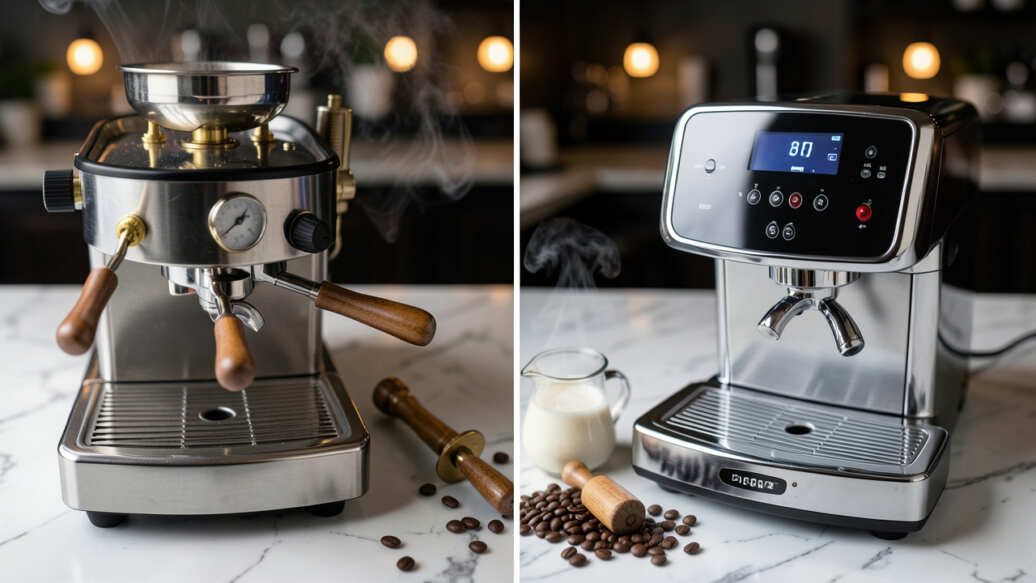
Features to Consider
When you’re looking at Manual vs Automatic Espresso Machines, some specific features can help you decide.
Size and Counter Space
Espresso machines come in all shapes and sizes. Manual lever machines can sometimes be more compact, while some automatic machines, especially those with built-in grinders and milk carafes, can take up a significant amount of counter space. Think about where you plan to keep your machine.
Built-in Grinder
Some automatic machines have a built-in grinder. This adds to the convenience, as you don’t need a separate grinder. However, separate grinders often offer more control and better grind quality, which can be important for achieving excellent espresso. If you opt for a machine with a built-in grinder, check reviews to ensure its quality.
Milk Frothing Capabilities
Do you enjoy lattes, cappuccinos, and other milk-based drinks? Most machines come with a steam wand for frothing milk. Some have manual steam wands, which require skill to create perfect microfoam. Others have automatic frothers or milk carafes that do the work for you, often creating a consistent texture but with less control over the final result.
Ease of Cleaning and Maintenance
All espresso machines require cleaning and regular maintenance to keep them working well. Manual machines might have fewer complex parts to clean. Automatic machines, especially super-automatics, can have more intricate systems that need descaling and periodic deep cleaning. Consider how much time you’re willing to spend on upkeep.

Making Your Choice
Deciding between Manual vs Automatic Espresso Machines comes down to what you value most in your coffee-making experience.
Test Them If You Can
If possible, try using different types of machines at a friend’s house, a local coffee shop, or a store. Getting a feel for the operation and tasting the coffee produced can be very telling.
Consider Your Daily Routine
How much time do you have in the morning? Do you enjoy a relaxing coffee ritual, or do you need your caffeine fix fast? Your daily schedule plays a big role in which machine will fit seamlessly into your life.
FAQ Of Manual Versus Automatic Espresso Machines
Question: What is the main difference between manual and automatic espresso machines
Answer: Manual machines require the user to control water pressure and brewing time, often by pulling a lever. Automatic machines use a pump and pre-programmed settings to brew espresso with the press of a button.
Question: Which type of machine is better for beginners
Answer: Semi-automatic machines are often recommended for beginners because they offer a balance of control and automation, making them easier to learn than fully manual machines but providing more flexibility than fully automatic ones.
Question: Can manual machines make better tasting espresso
Answer: Yes, skilled users of manual machines can achieve exceptional espresso by fine-tuning variables like pressure and temperature, resulting in nuanced flavors that may be harder to replicate with automatic machines.
Question: Are automatic espresso machines always more expensive
Answer: Not necessarily. Basic automatic machines can be comparable in price to semi-automatic ones. However, high-end super-automatic machines with advanced features are typically more expensive than most manual or semi-automatic options.
Question: How much maintenance do these machines require
Answer: All espresso machines need cleaning. Manual machines may have fewer complex parts to maintain. Automatic machines, especially super-automatics, might require more regular descaling and deeper cleaning of their integrated systems.
Final Thoughts
Choosing between Manual vs Automatic Espresso Machines depends on your coffee style. Manual machines offer full control for enthusiasts who enjoy the craft, allowing for unique flavors.
Automatic machines provide convenience and consistent results with minimal effort, perfect for busy mornings. Consider your time, skill level, and desired coffee experience to find the best fit for your home.

![Summer Home Maintenance Tasks You Should Do[1]](https://creativehouseblog.com/wp-content/uploads/2026/05/Summer_Home_Maintenance_Tasks_You_Should_Do1-768x403.jpg)
![High Speed Versus Regular Blenders Explained[1]](https://creativehouseblog.com/wp-content/uploads/2026/03/High-Speed_Versus_Regular_Blenders_Explained1-768x448.jpg)

![Air Fryer Safety Features Explained For Beginners[1]](https://creativehouseblog.com/wp-content/uploads/2026/03/Air_Fryer_Safety_Features_Explained_For_Beginners1-768x448.jpg)
![Simple Monthly Checklist To Keep Your Home In Shape[1]](https://creativehouseblog.com/wp-content/uploads/2026/05/Simple_Monthly_Checklist_To_Keep_Your_Home_In_Shape1-768x403.jpg)
![Air Fryer Digital Vs Manual Controls A Simple Guide[1]](https://creativehouseblog.com/wp-content/uploads/2026/03/Air_Fryer_Digital_Vs_Manual_Controls_A_Simple_Guide1-768x448.jpg)